
After yesterday’s rainy and cold afternoon it was a delight to awake to sunshine and not a cloud in the sky.
We were not in a big rush this morning so breakfast was a leisurely event and we then took a quick walk to the nearest convenience store to buy some sandwiches and muesli bars for our lunch later today.
We had a new bus and driver today and we left Takayama at around 10:00 and parked at a nearby Buddhist monastery with beautiful cherry blossoms and conifers.
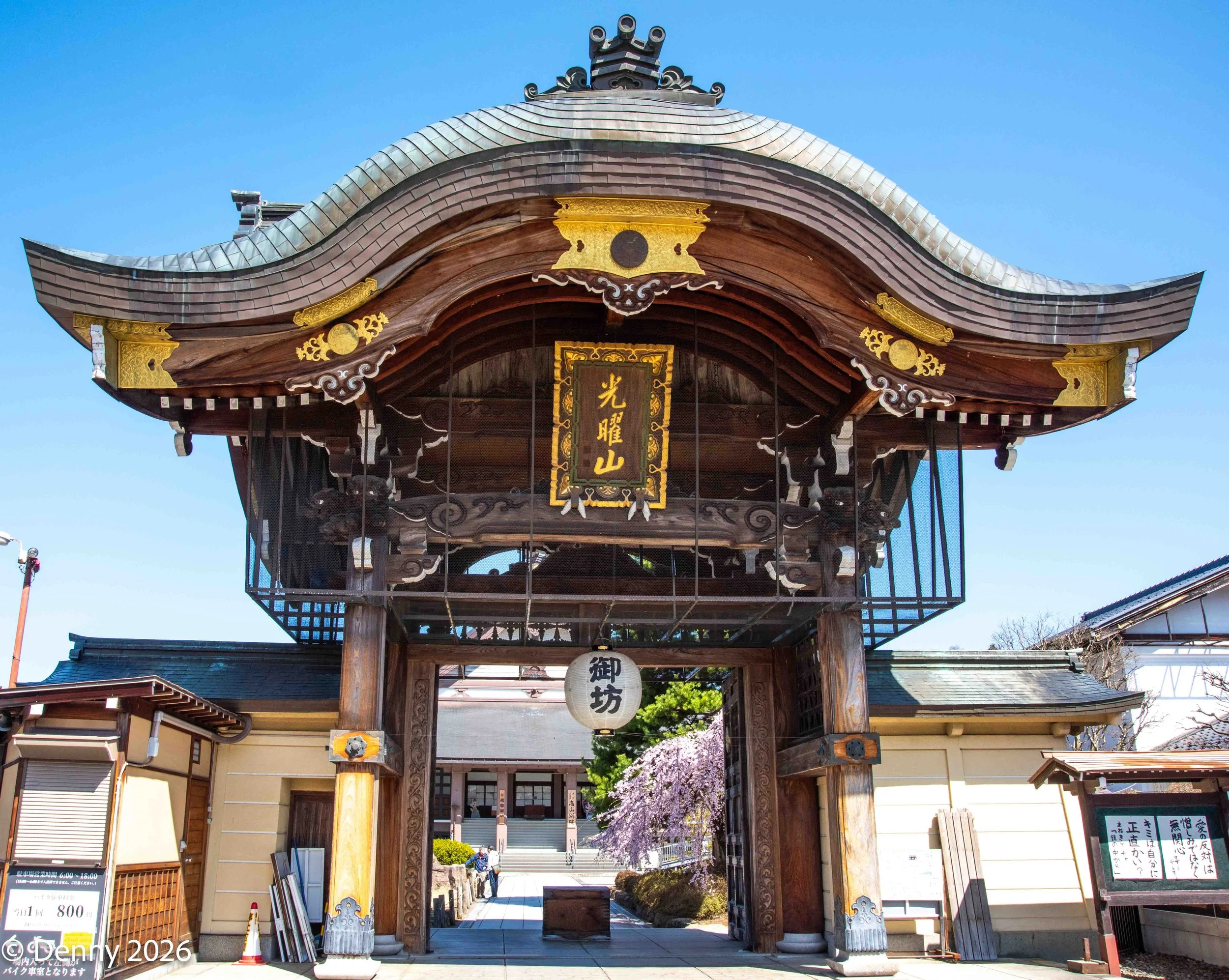
Entrance to Buddhist monastery, Takayama
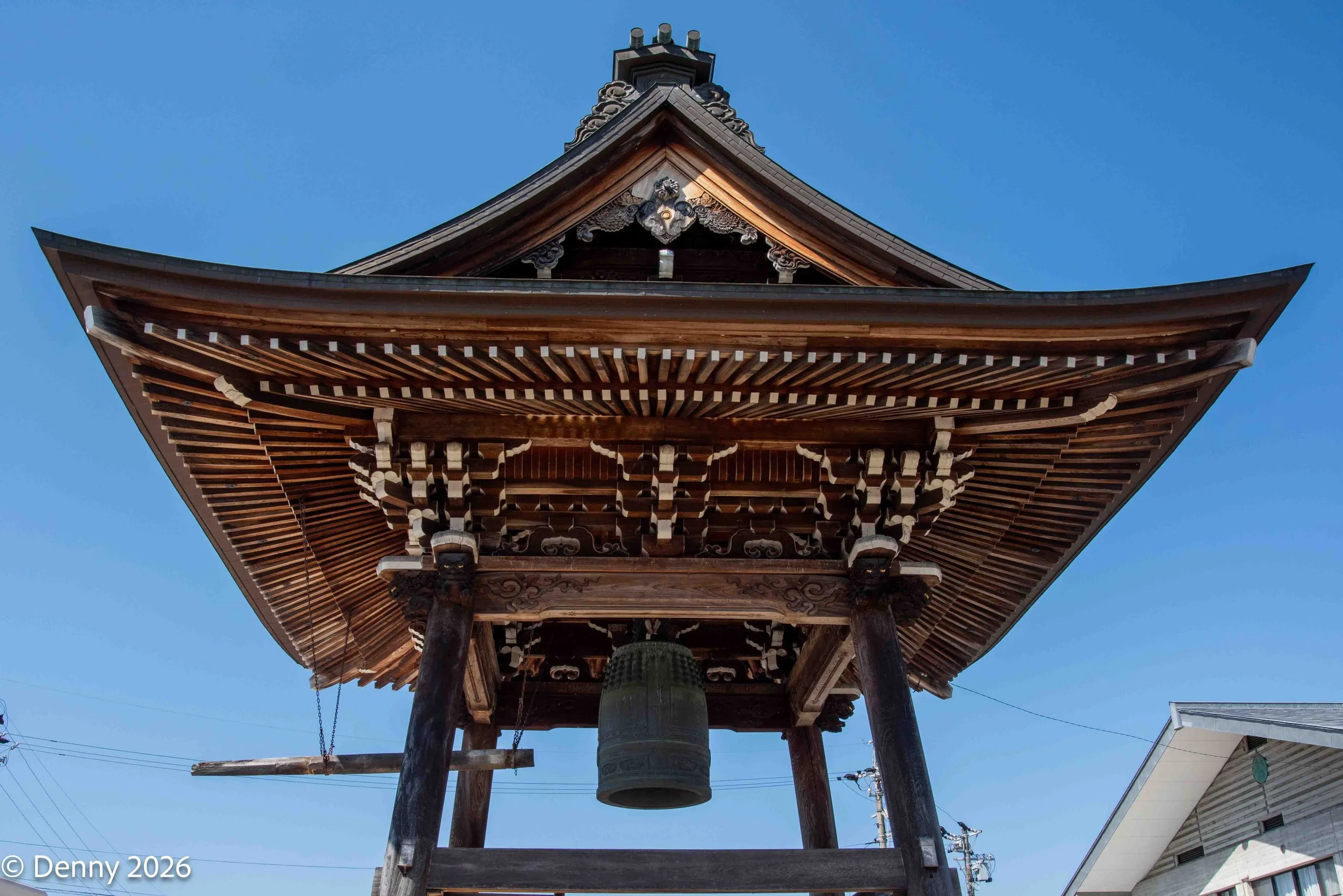
Bell tower, Buddhist monastery Takayama
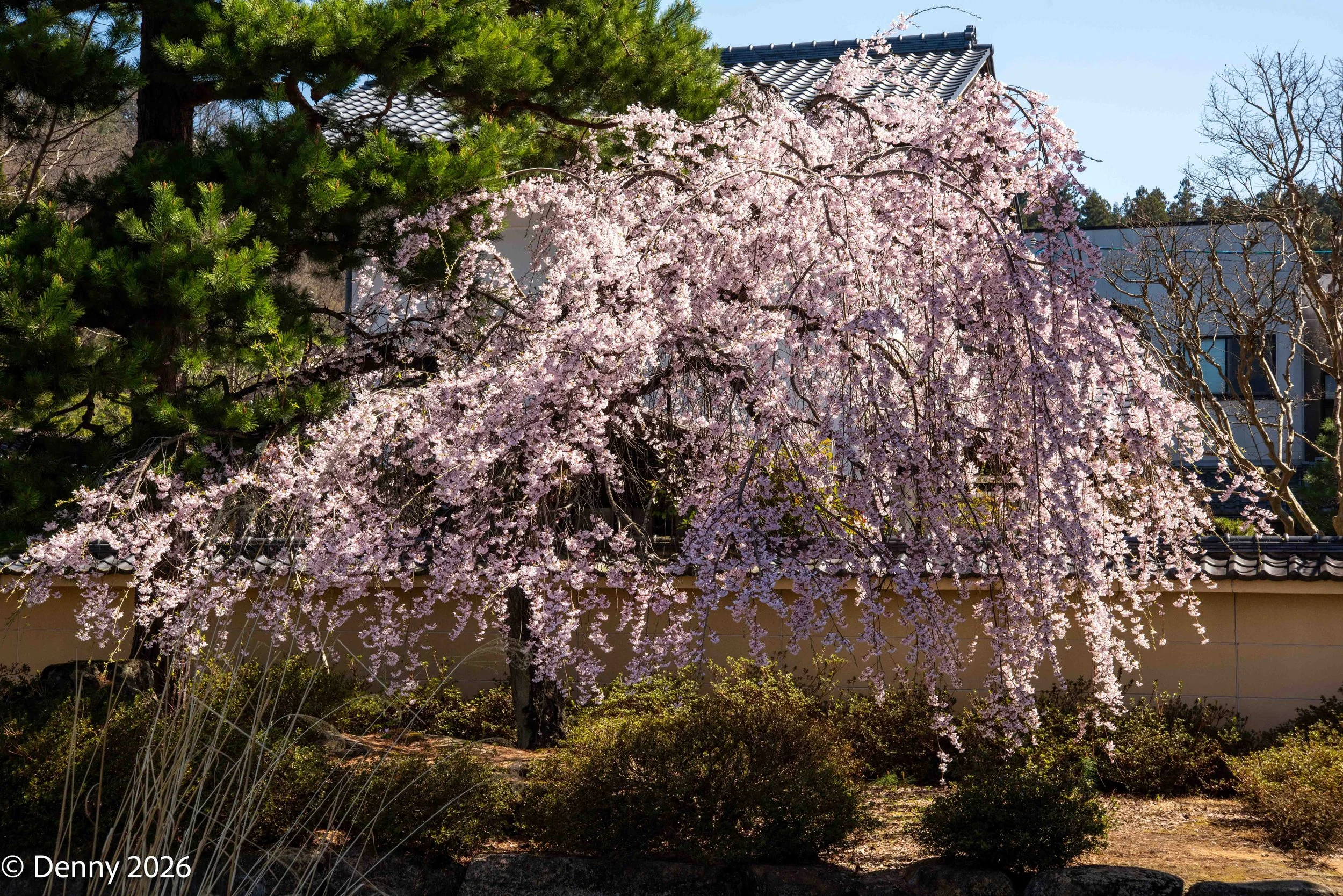
Cherry blossom at Buddhist monastery, Takayama
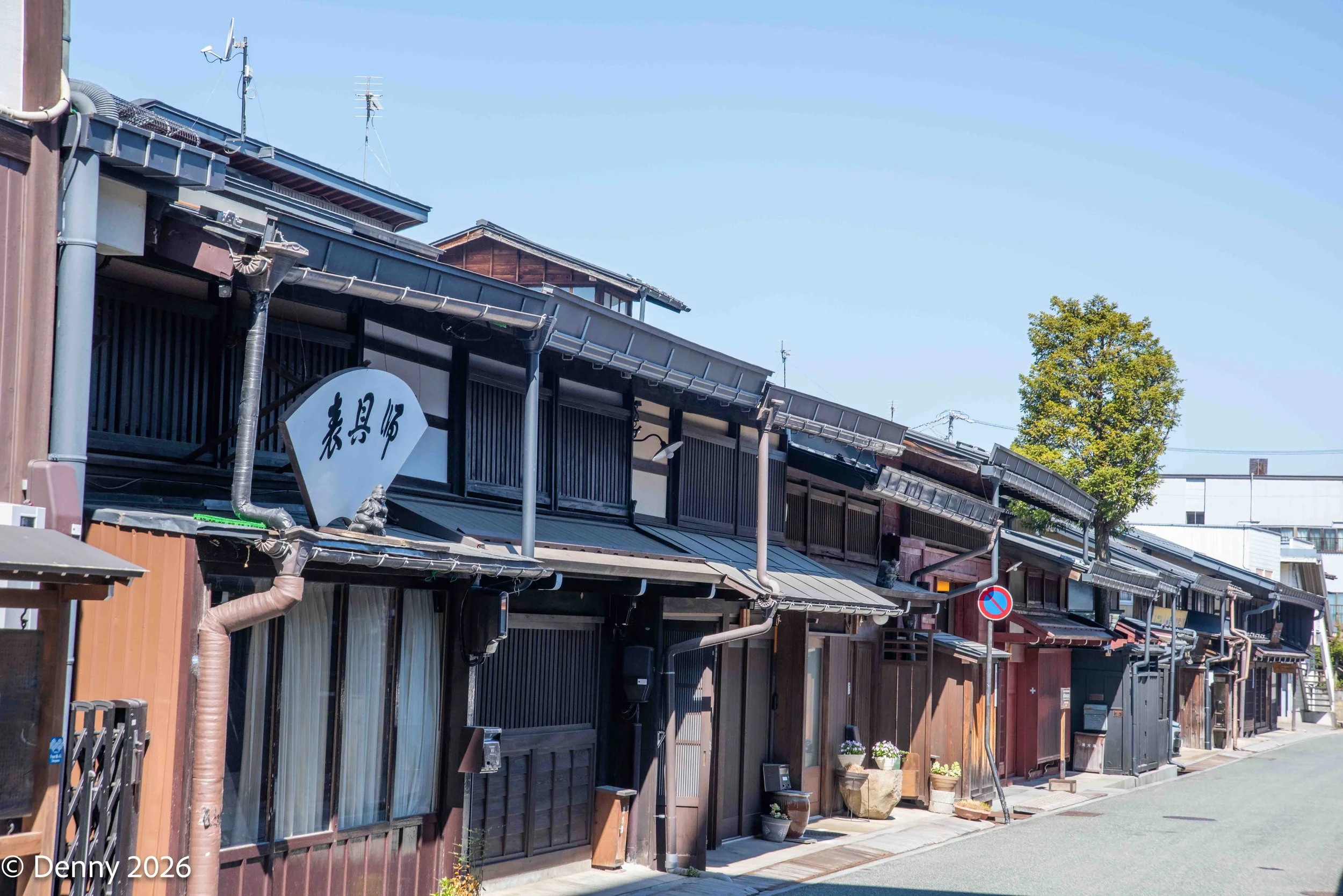
Original houses, Takayama
From here we walked to the local market which was a collection of handicraft stalls set along the right bank of the Miyagawa River.

Miyagawa Morning Market, Miyagawa River, Takayama
In glorious sunshine we strolled for an hour past produce made principally by local women. There were lots of interesting handicraft items and jewellery for sale but the most unusual was coffee sold in a cup that could be eaten after finishing the drink!

Lady selling plants, Miyagawa Morning Market

Coffee in a cookie, Miyagawa Morning Market
In the Miyagawa River were some large fish, probably carp and an elegant grey heron was wading nearby.
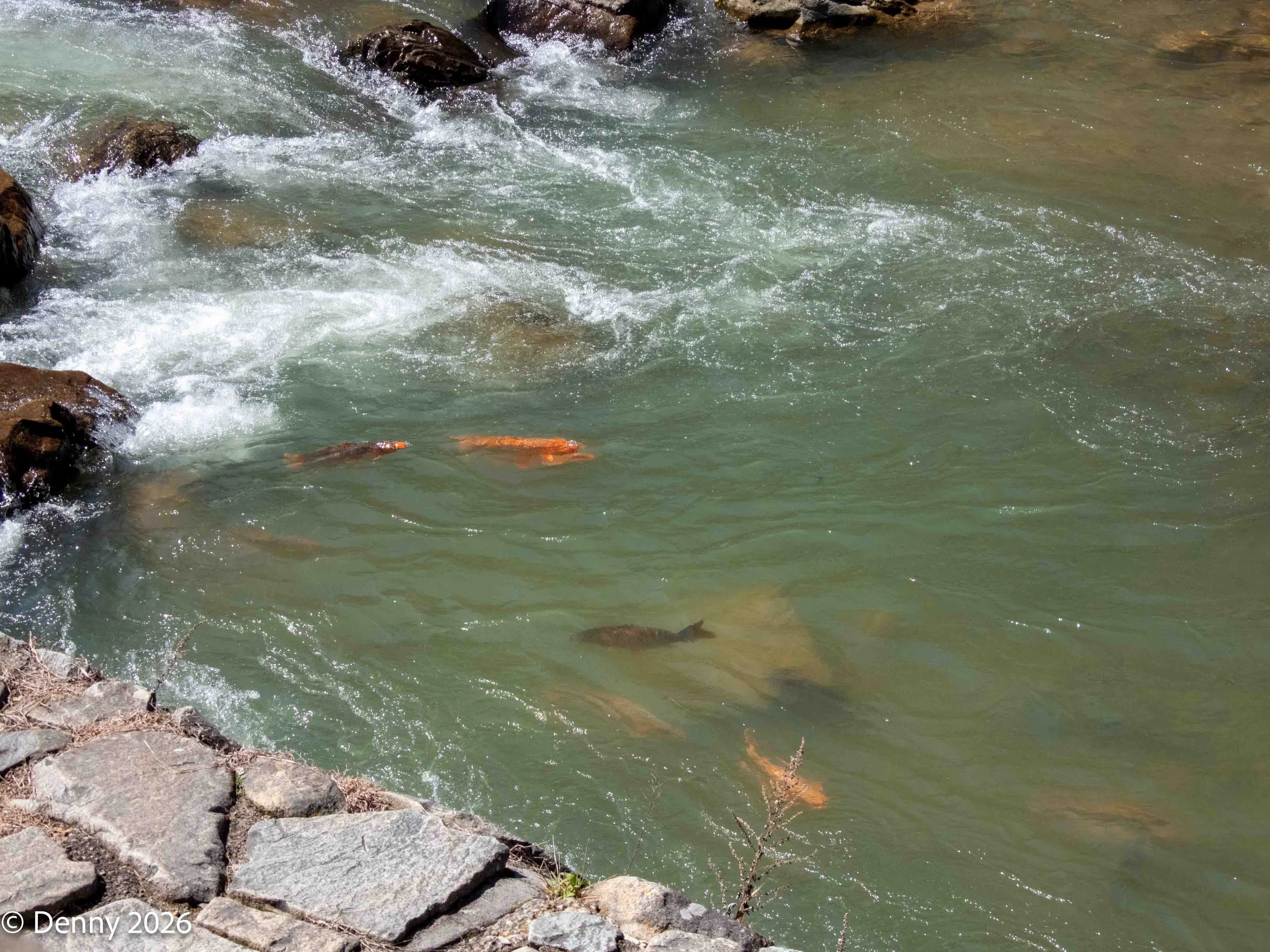
Carp, Miyagawa River

Gray Heron (Ardea cinerea, known as aosagi in Japan), Miyagawa River, Takayama

Eastern Spot-billed Duck, Miyagawa River

Cherry blossom, Miyagawa River

Cherry blossom, Miyagawa River

Cherry blossom, Miyagawa Morning Market, Miyagawa River
On returning to our bus, we went north-west for about an hour and a half heading for the town of Shirakawa-go. The route was principally through mountainous terrain with steep hillsides and many streams and rivers flowing through the valleys and rocky gorges.
The road to Shirakawa-go involved passing through numerous tunnels with the longest being over 10 km long. It seemed like a quarter of our total travel time was in tunnels.

Tunnel en route from Takayama to Shirakawa-go

Snow capped mountains en route from Takayama to Shirakawa-go

Village en route from Takayama to Shirakawa-go
Shirakawa-go is an UNESCO World Heritage listed site and is a delightful village famous for its thatched roof houses. This is a mountain region subject to the extremes of winter and these amazing ‘gassho-zukuri’ houses have their steep thatched roofs designed to cope with heavy snowfalls. The exceedingly thick thatches are made from pampas straw and provide a very effective thermal insulation although there were lots of warning signs concerning the dangers of fires.
The word gassho means ‘hands pressed together in prayer’ and with a little imagination that’s what the roofs looked like.

Thatched roof buildings at entrance to Shirakawa-go
We crossed the suspension bridge walkway above the greenish waters of the Shirakawa River and commenced our tour by visiting the village museum.

Our group crossing the suspension bridge at Shirakawa-go

Shirakawa River viewed from the suspension bridge
This village museum building is a three storey thatched timber structure filled with a vast array of historical artifacts.
Amongst the displays that caught our attention was an elaborate family shrine where deceased family relatives were respected and honoured.
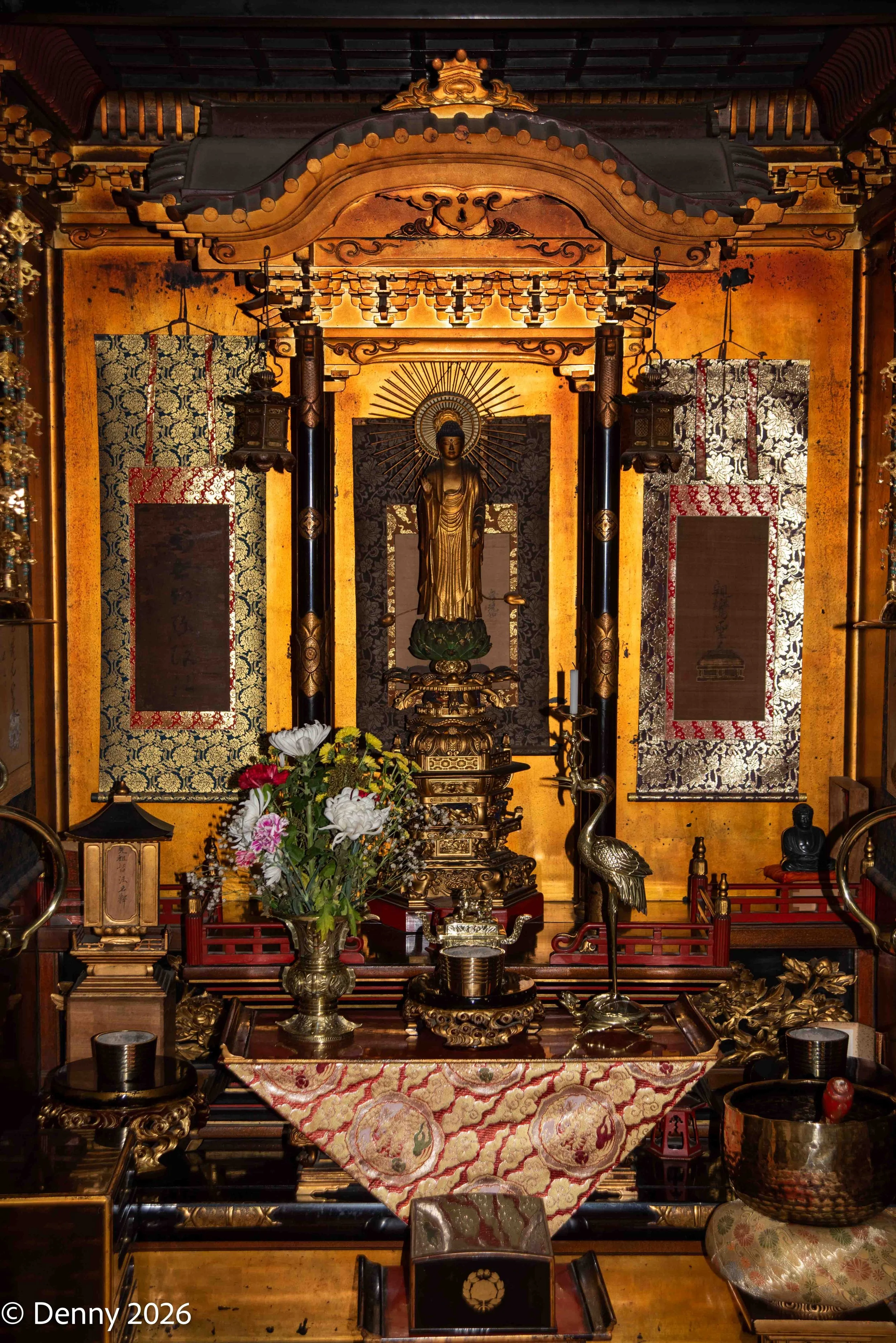
Shrine inside museum, Shirakawa-go Gassho-Zukuri Village
Other things of interest included antique pots, lacquerware, carpentry tools, farm implements, sledges and an ancient saddle. We were informed that many of the households were involved in silk production and had silkworm ‘farms’ in the upper storeys where it was warm. Presumably there are lots of mulberry trees in this village but at present it’s the pink and white cherry blossoms that are most apparent.
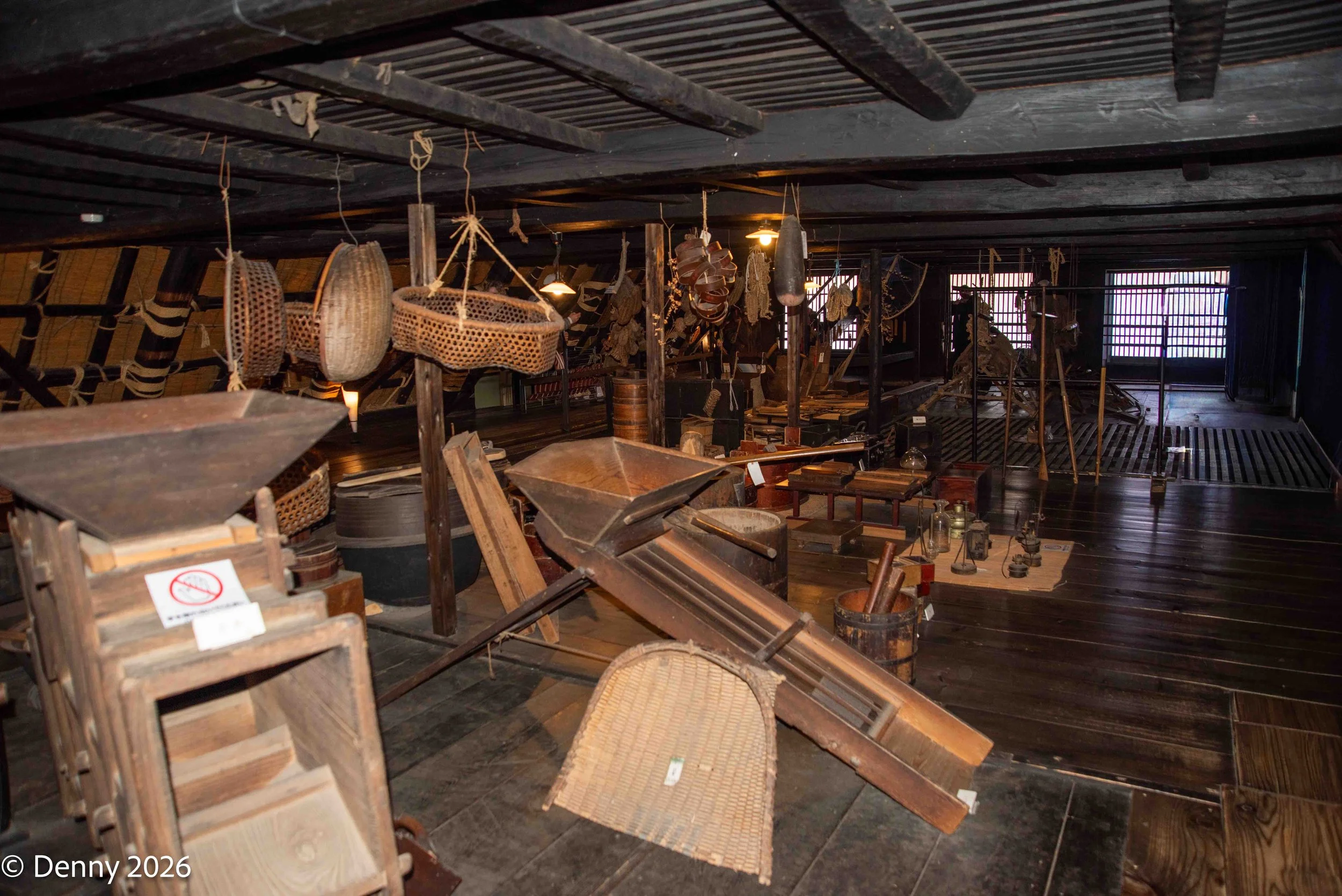
Artefacts inside museum, Shirakawa-go Gassho-Zukuri Village
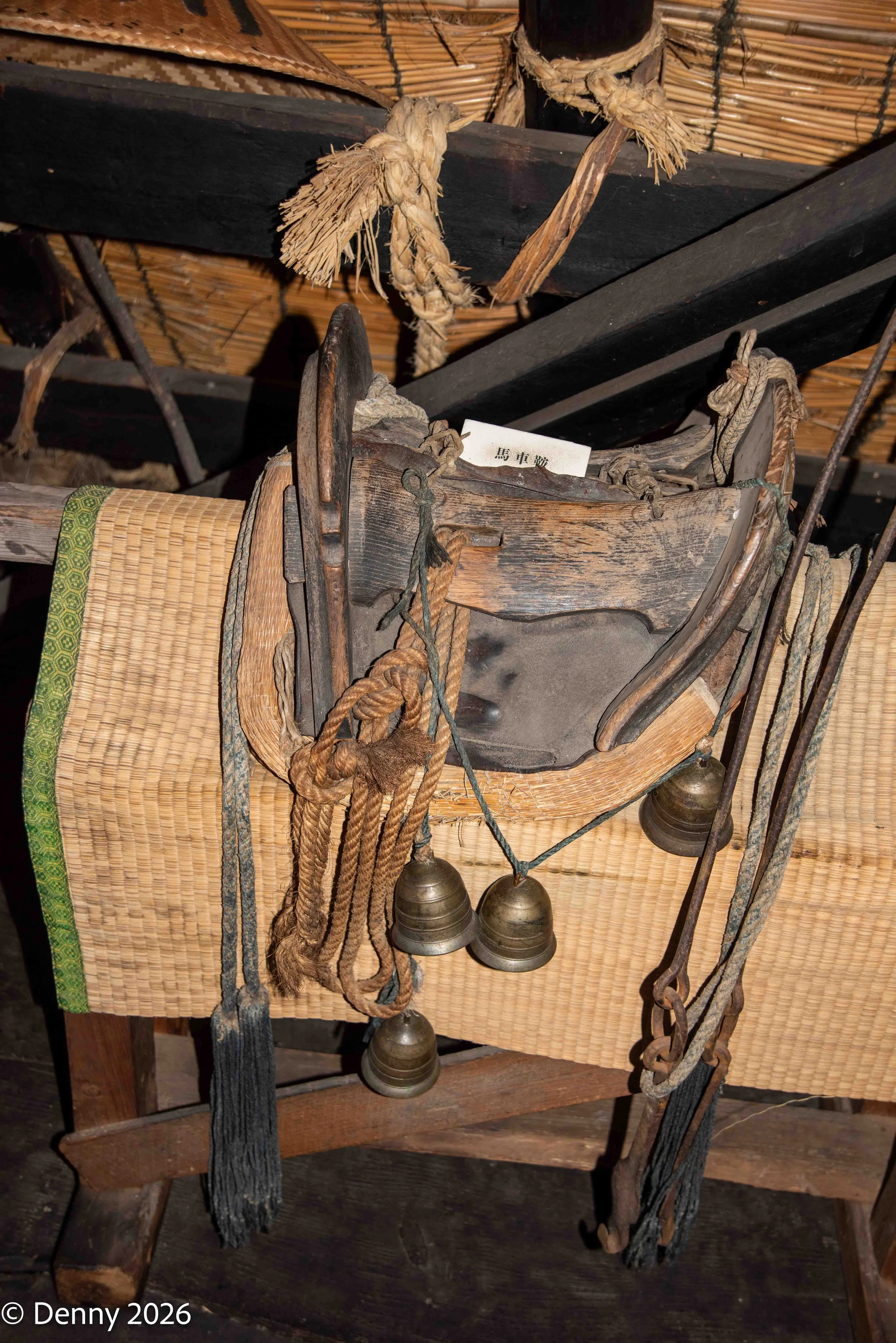
Ancient saddle inside museum, Shirakawa-go Gassho-Zukuri Village
We spent the next hour in glorious weather just wandering through this stunning village observing not just these fabulous houses but the ponds, waterways and fish, including large trout in streams along-side the footpaths.
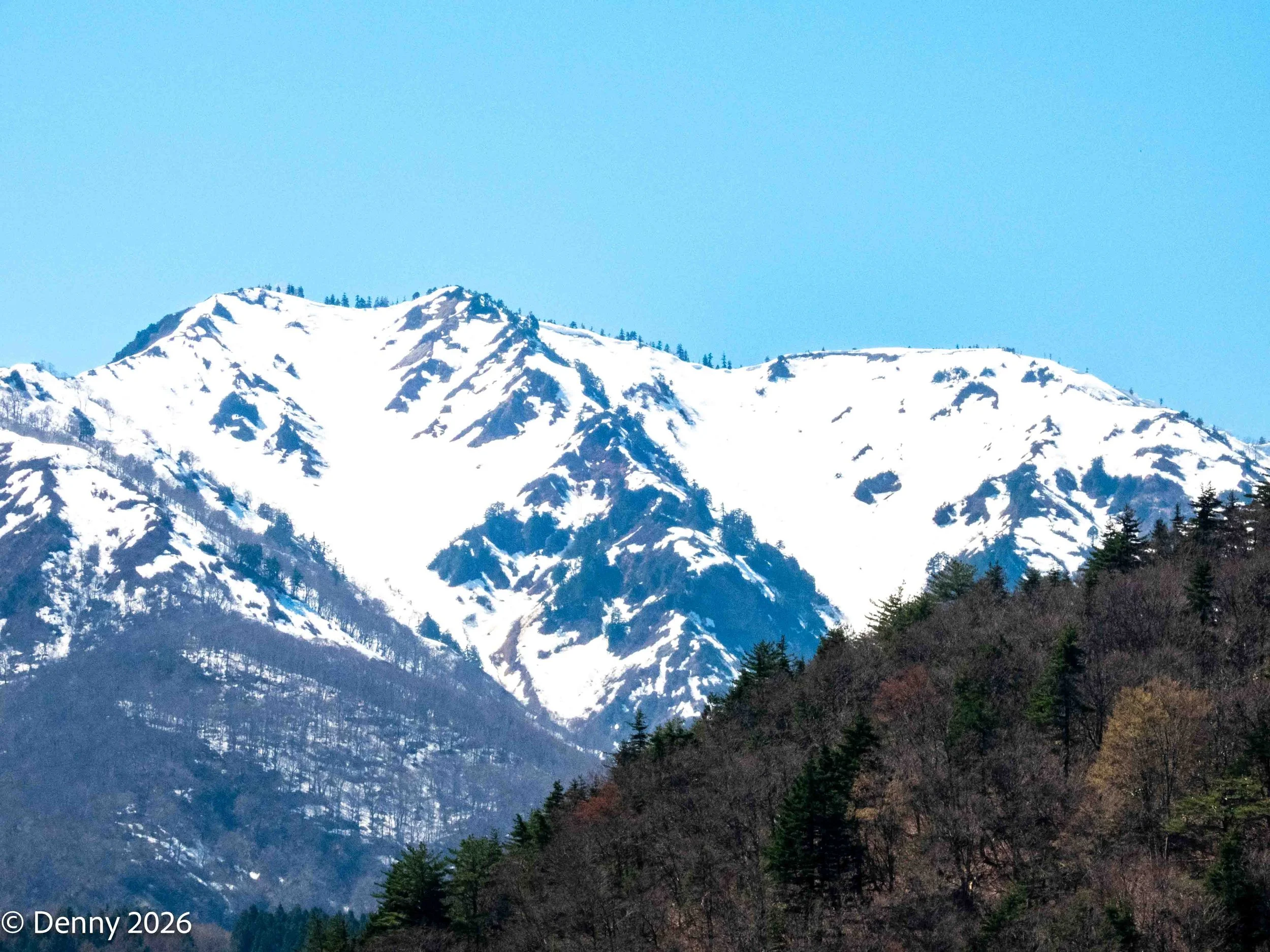
Mountain from Shirakawa-go Gassho-Zukuri Village
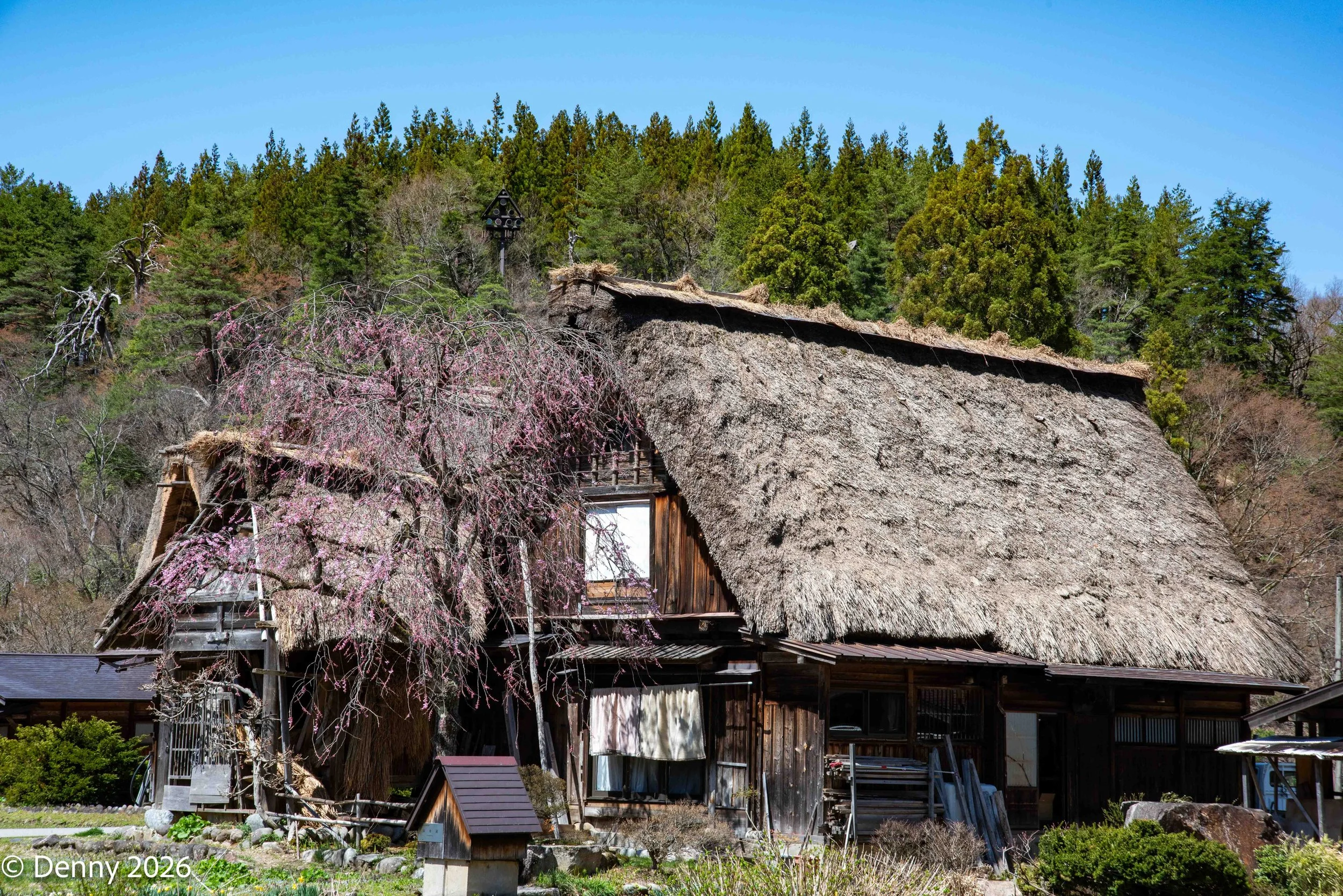
House, Shirakawa-go Gassho-Zukuri Village
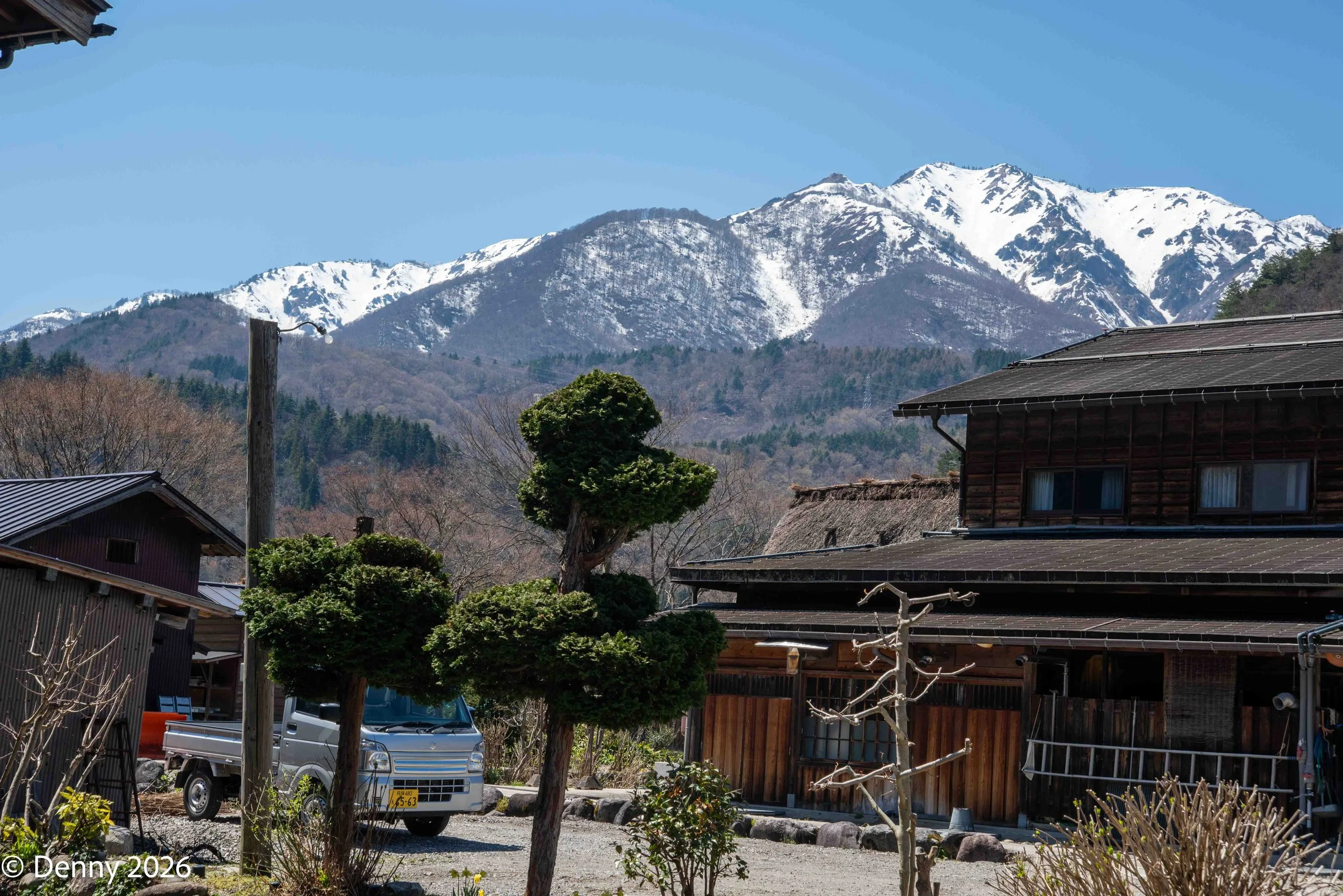
View from the village, Shirakawa-go Gassho-Zukuri Village
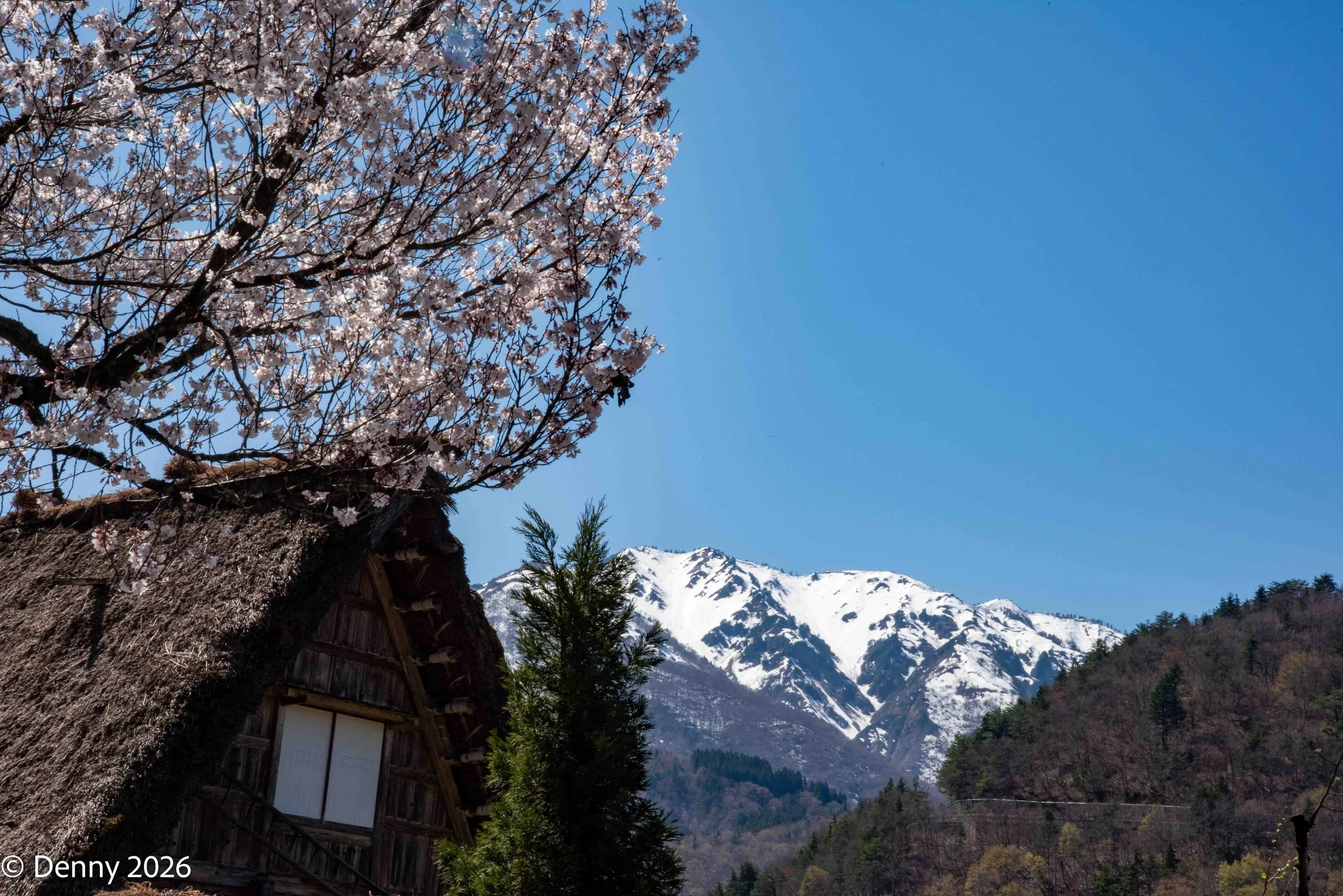
Cherry blossom, Shirakawa-go Gassho-Zukuri Village
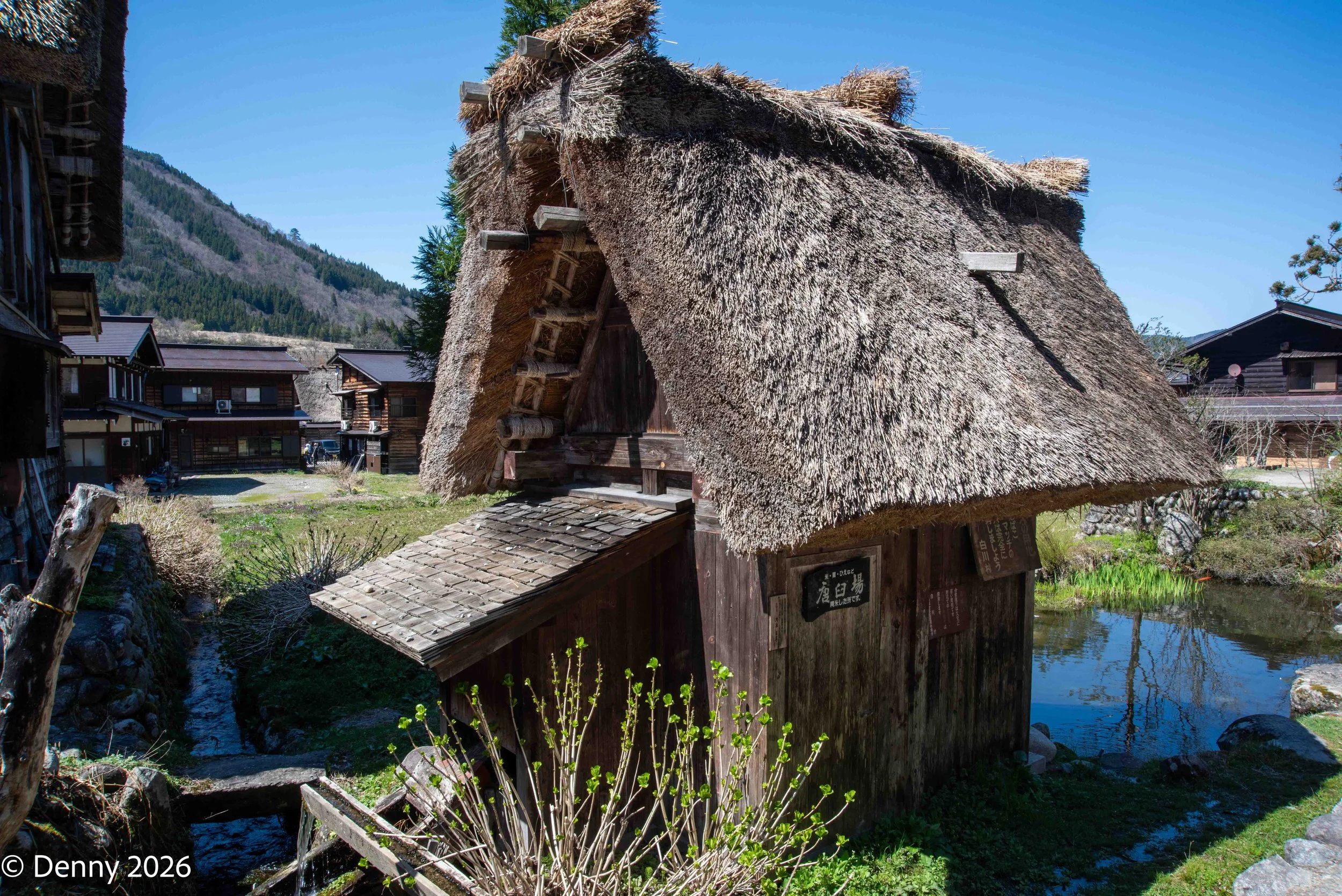
Building, Shirakawa-go Gassho-Zukuri Village
We bought coffees and had our lunch in a quiet playground area away from the general crowd. The backdrop to the village is a mountain range where the higher peaks are still snow covered. This is a popular ski-resort area during winter.

Lunch in the playground, Shirakawa-go Gassho-Zukuri Village
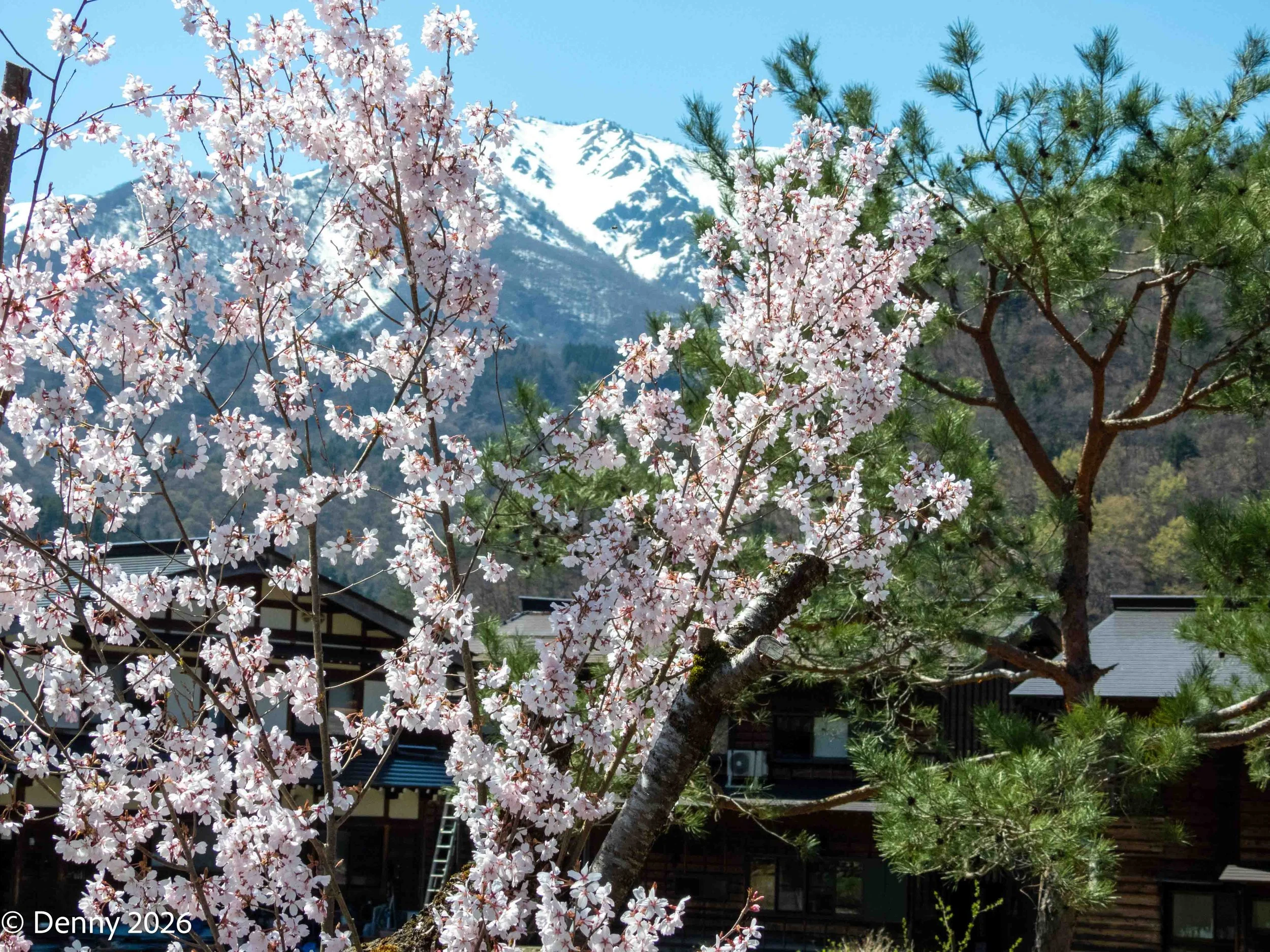
Cherry blossom, Shirakawa-go Gassho-Zukuri Village
While having lunch, a yellow breasted grey wagtail joined us briefly to drink in the stream near us. We managed to get a nice photo of this beautiful bird.

Grey Wagtail (Motacilla cinerea, Japanese/ Kisekirei)
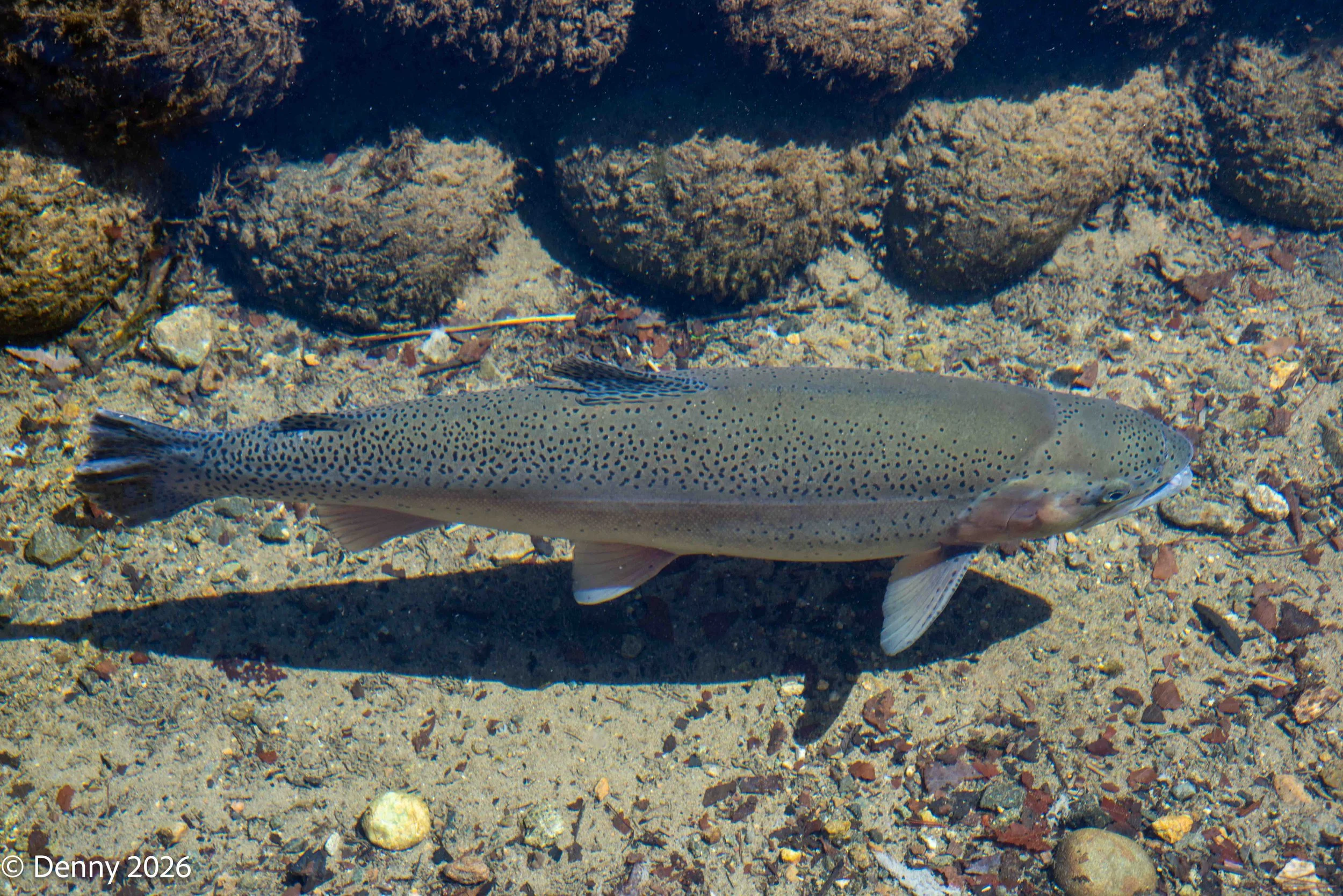
Trout in stream, Shirakawa-go Gassho-Zukuri Village
This visit to Shirakawa-go was an absolute joy with the perfect weather giving the best possible conditions to gain a small clue to the way of life in this serene Japanese mountain village.
We departed Shirakawa-go at 14:00 and were then driven to the small township of Gokayama which is also a UNESCO World Heritage listed site with thatched roof houses very much like Shirakawa-go.
The main purpose of visiting Gokayama was to visit the Japanese Paper Village to learn something of traditional paper making in Japan.
We were given an introductory ten minute video summary of the paper making process. Japanese paper making or ‘washi’ is a centuries old craft using long natural fibres principally from kozo (mulberry) and gampi (genus Wilkstroemia) to create strong and highly durable paper. We were informed that this Japanese paper is used especially as a medium in the restoration of ancient documents and art work. Both the British and the Louvre Museums purchase paper from this factory.
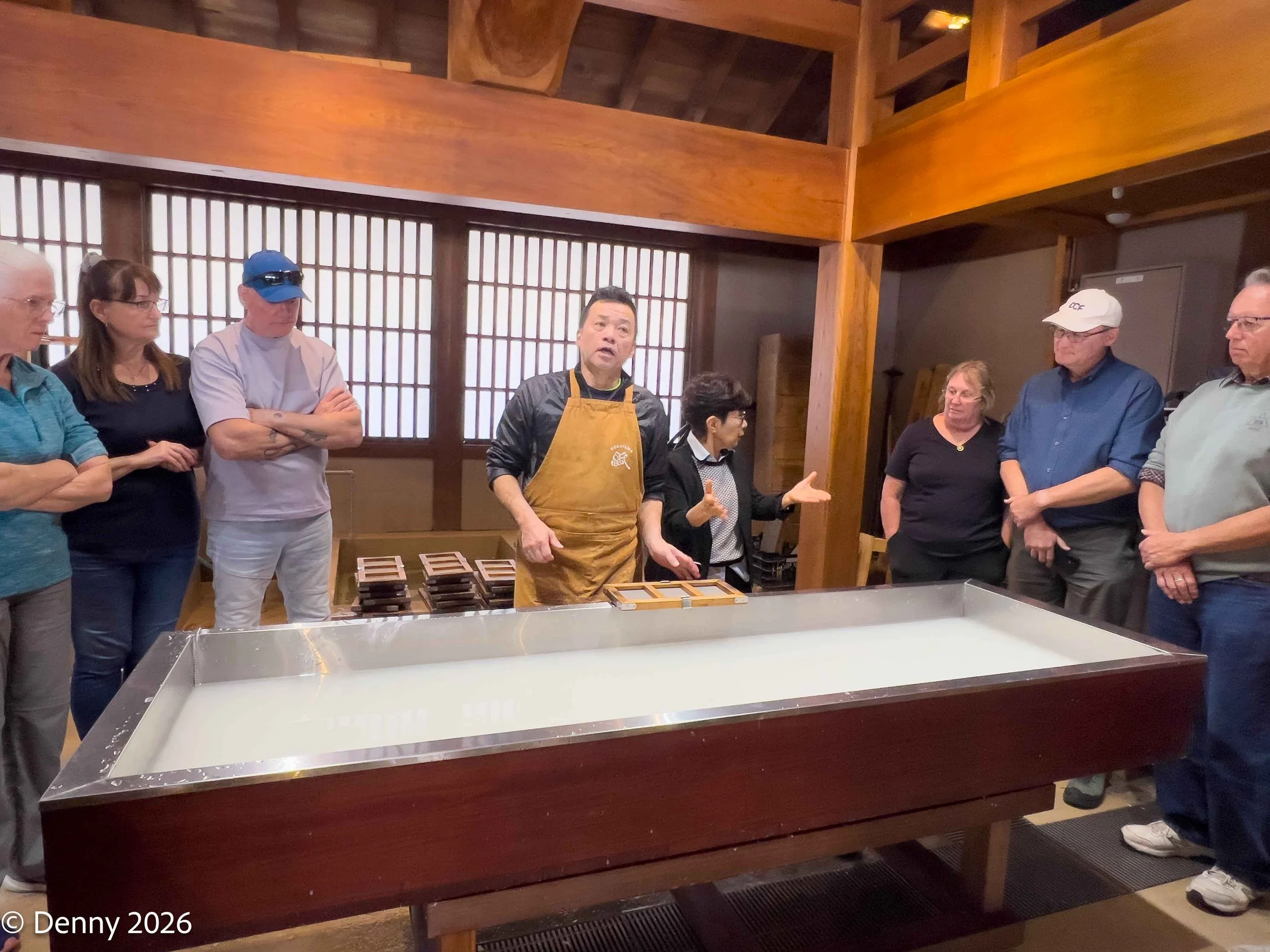
Paper making demonstration, Gokayama

Corinne making paper, Gokayama
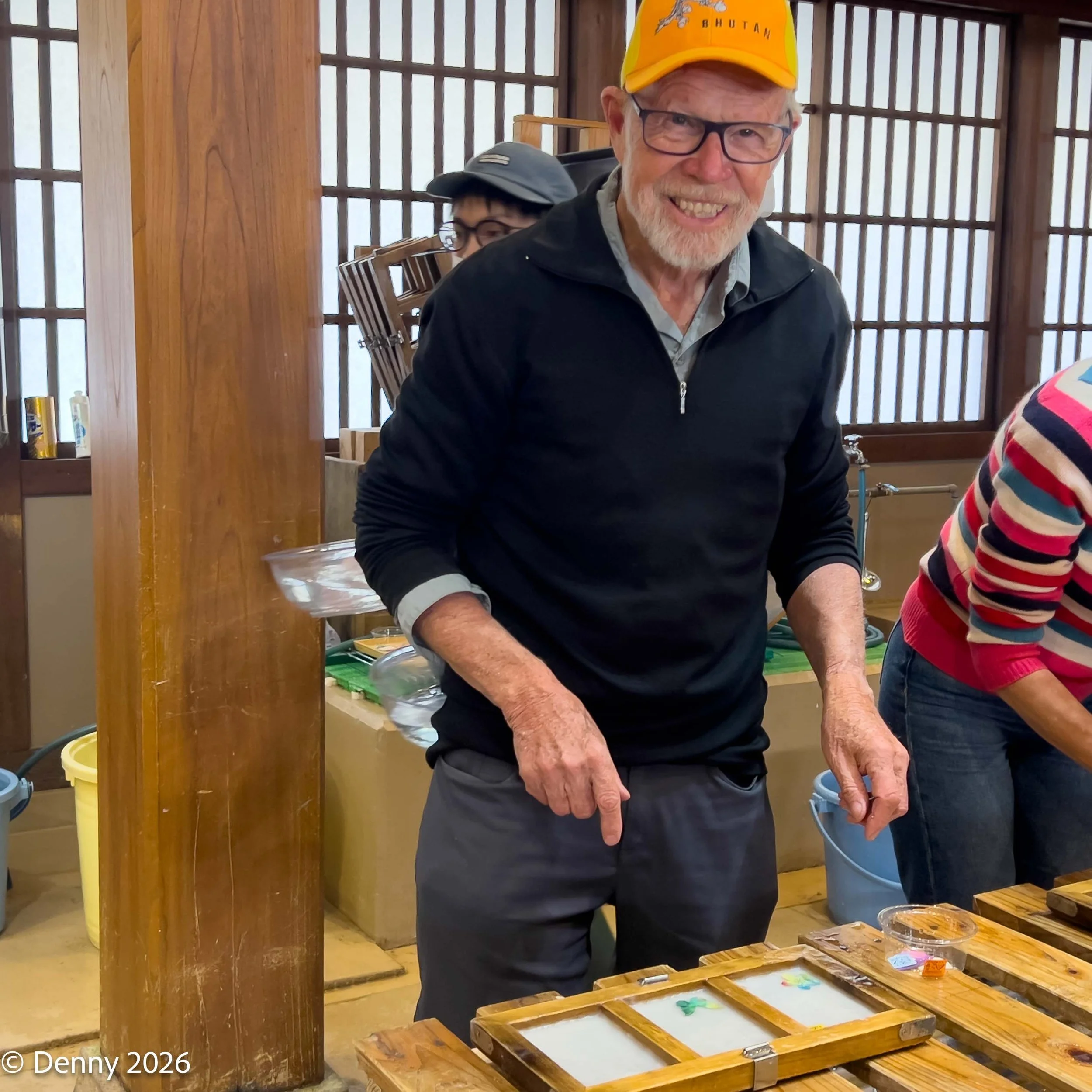
Jak making postcards, Gokayama
The paper making process involves steaming the kozo wood, boiling it and then stripping the bark before cleaning it. The clean bark is then mixed with water and ‘neri’ which is a kind of mucilage then macerated to finally produce the pulp. This pulp is then hand screened to form sheets that are pressed and then air dried.
We all participated in the final process parts, individually doing the screening and ultimately making three small paper post-cards. The whole exercise was great fun and we were all very pleased with our resulting cards.
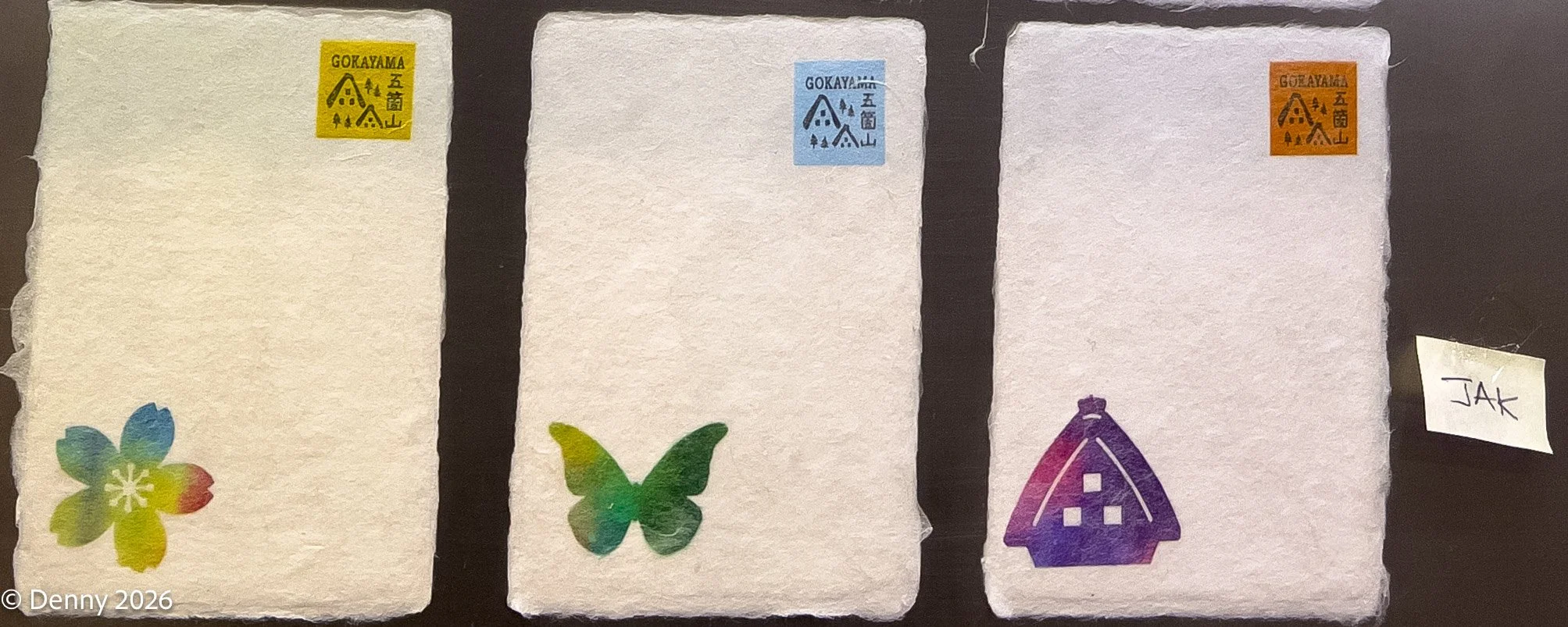
Jak’s postcards, Gokayama paper making
To end this most interesting interlude, we spent time in the paper factory’s shop and bought a wall hanging of irises representing Spring.
On our return to Takayama, the extended periods of darkness spent in tunnels meant that many of us had a ‘nanny nap’ on the way home.
Our evening meal in the Tokyu Stay Hotel was a most enjoyable buffet dinner which included four slices of hida-gyu which is premium Black Wagyu especially from the Gifu Prefecture. This beef has intense marbling caused through a cattle feeding regime covering a period of fourteen months.

Dinner with Black Wagyu beef at Tokyu Stay Hotel
It was delicious, super tender and thoroughly enjoyable.
This has been a fabulous day with lots to see, do and learn about and all this on top of the best weather imaginable.
Tomorrow we spend a good deal of time on trains as we move down to the more southern metropolis of Kyoto.