
The breakfast queuing problem mentioned yesterday was even worse this morning but we did manage to get breakfast and make it in time to the bus for a 08:45 get-away.
The south-westwards drive out of Tokyo initially followed the waterfront where numerous large industrial businesses were close to wharf areas. We passed the Haneda International Airport and then oil refineries, a steel works, general factories and several car and truck manufacturing operations including Nissan.

Harbour en route from Tokyo to Fukasawa

Nissan vehicles in car yard en route from Tokyo to Fukasawa
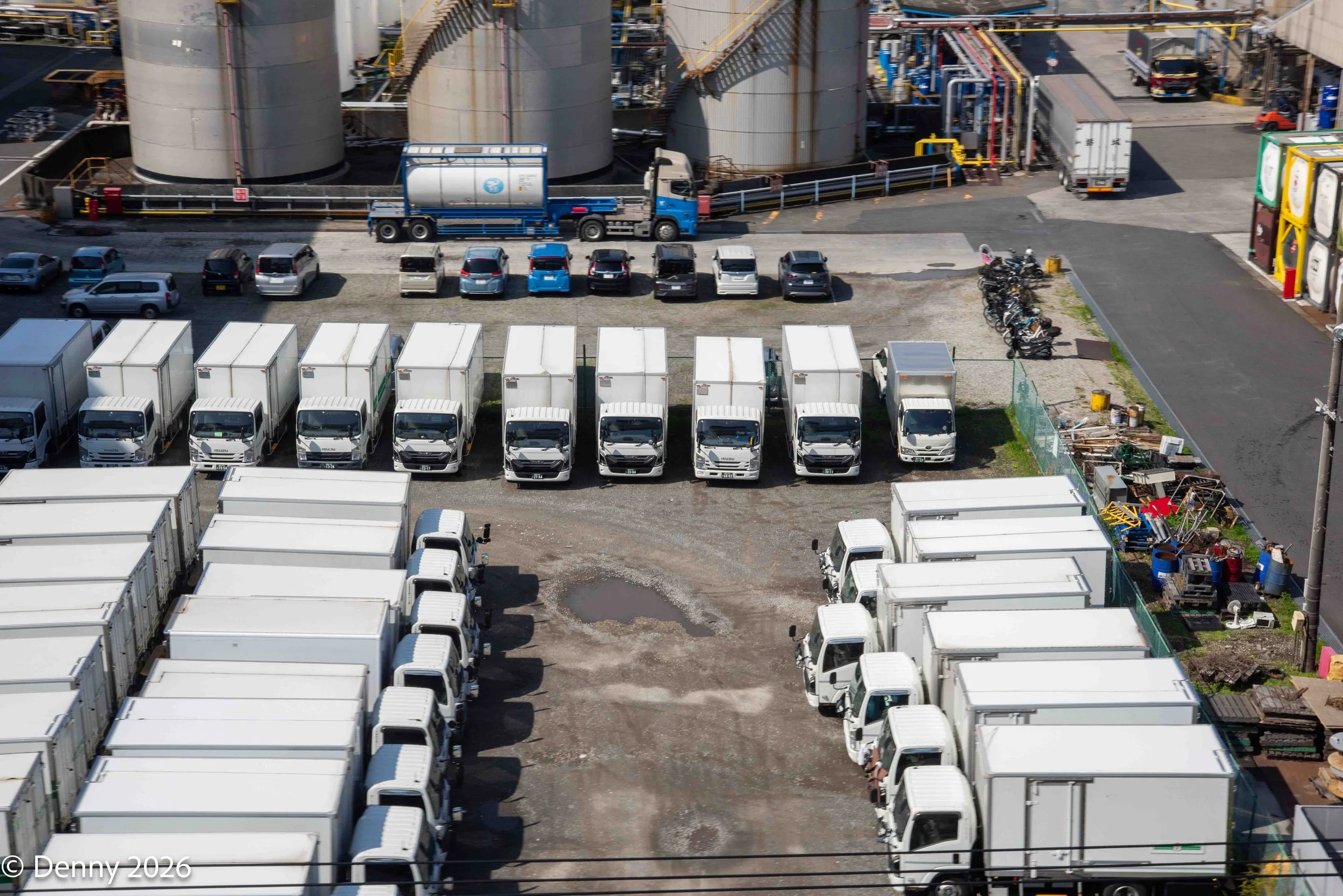
Trucks in yard en route from Tokyo to Fukasawa
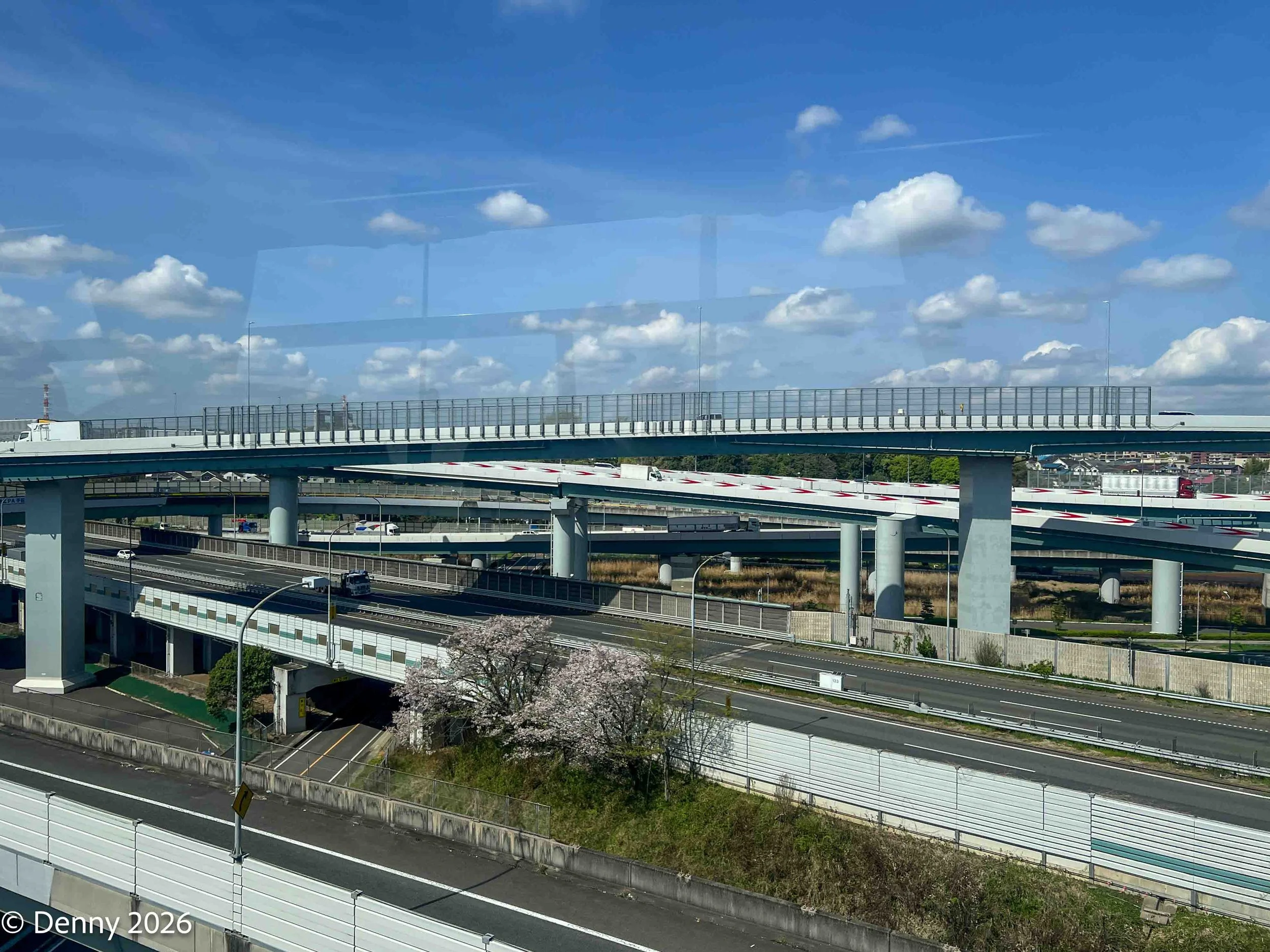
Clover leaf roads (note chery blossom) en route from Tokyo to Fukasawa
Our route involved many tunnels, some quite long. Mitzie informed us that Japan has over 11,000 road tunnels, the longest of which is the Seikan Tunnel between Honshu and Hokkaido being 53.85 km.
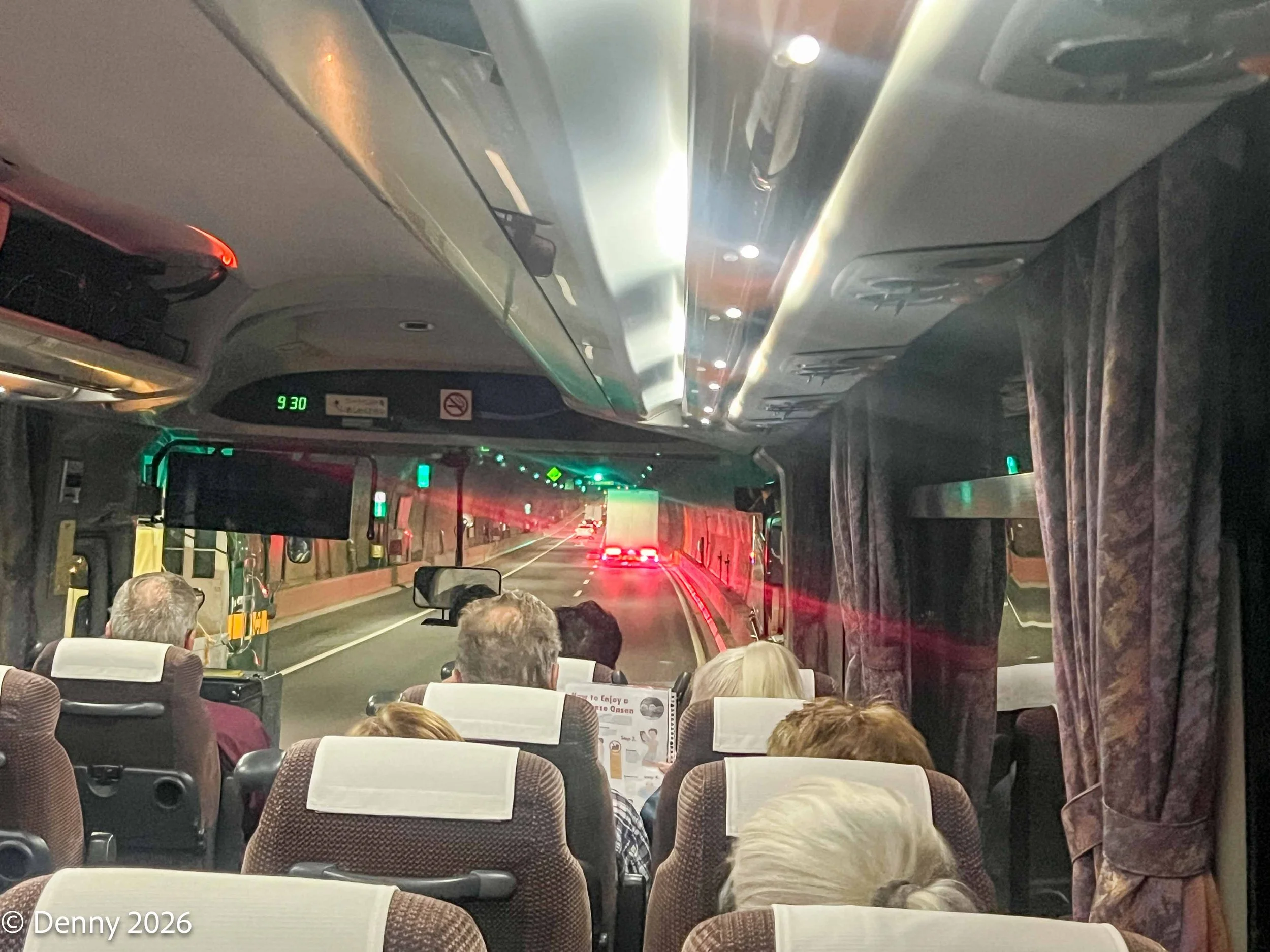
Inside our bus inside tunnel en route from Tokyo to Fukasawa

Farmland en route from Tokyo to Fukasawa
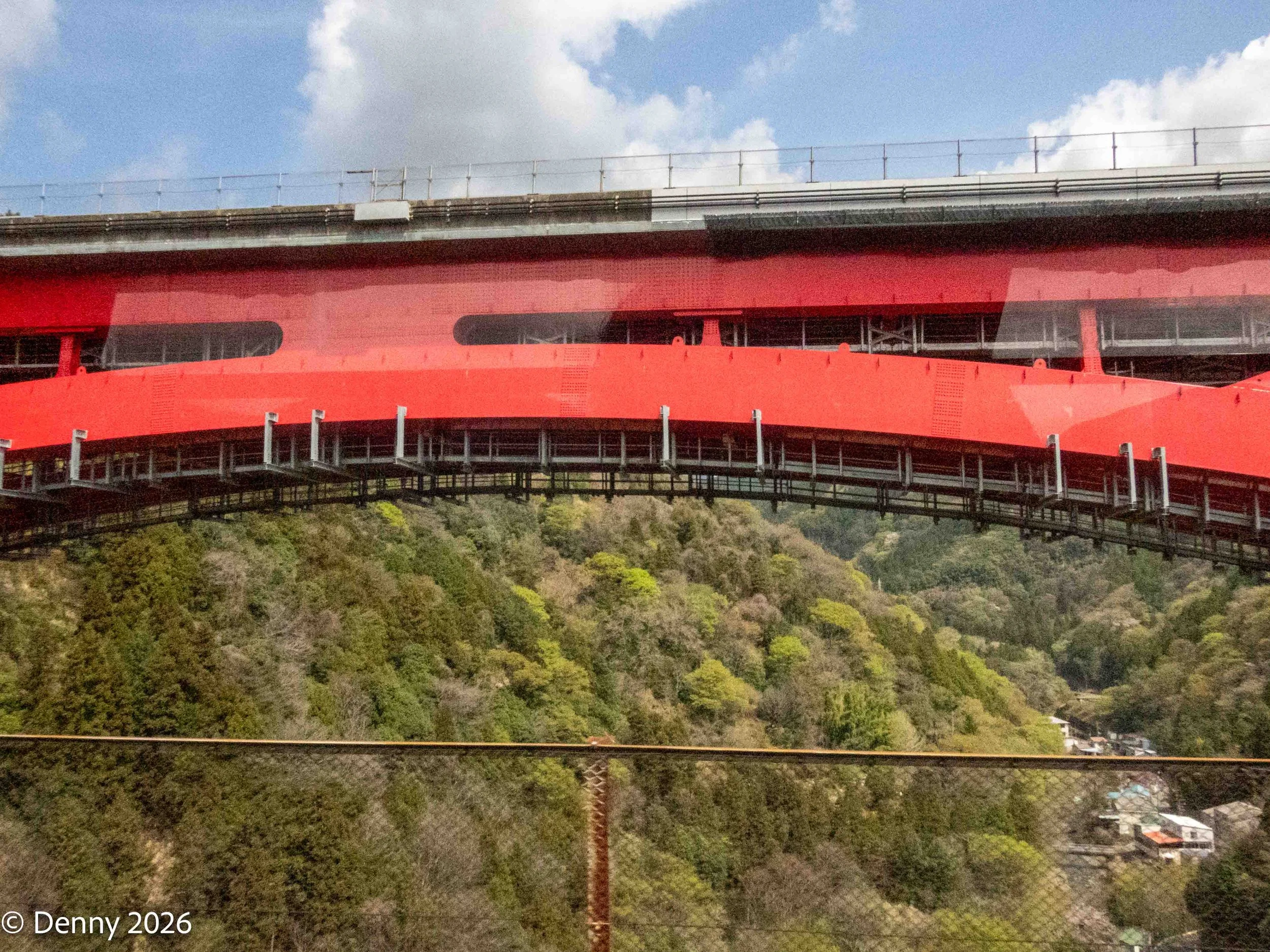
Bridge en route from Tokyo to Fukasawa
After an hour passing through more agricultural areas, we stopped for a brief drinks break before continuing on for a further hour to the town of Fukasawa where there is a very large shopping complex called ‘Gotemba Premium Outlets’.
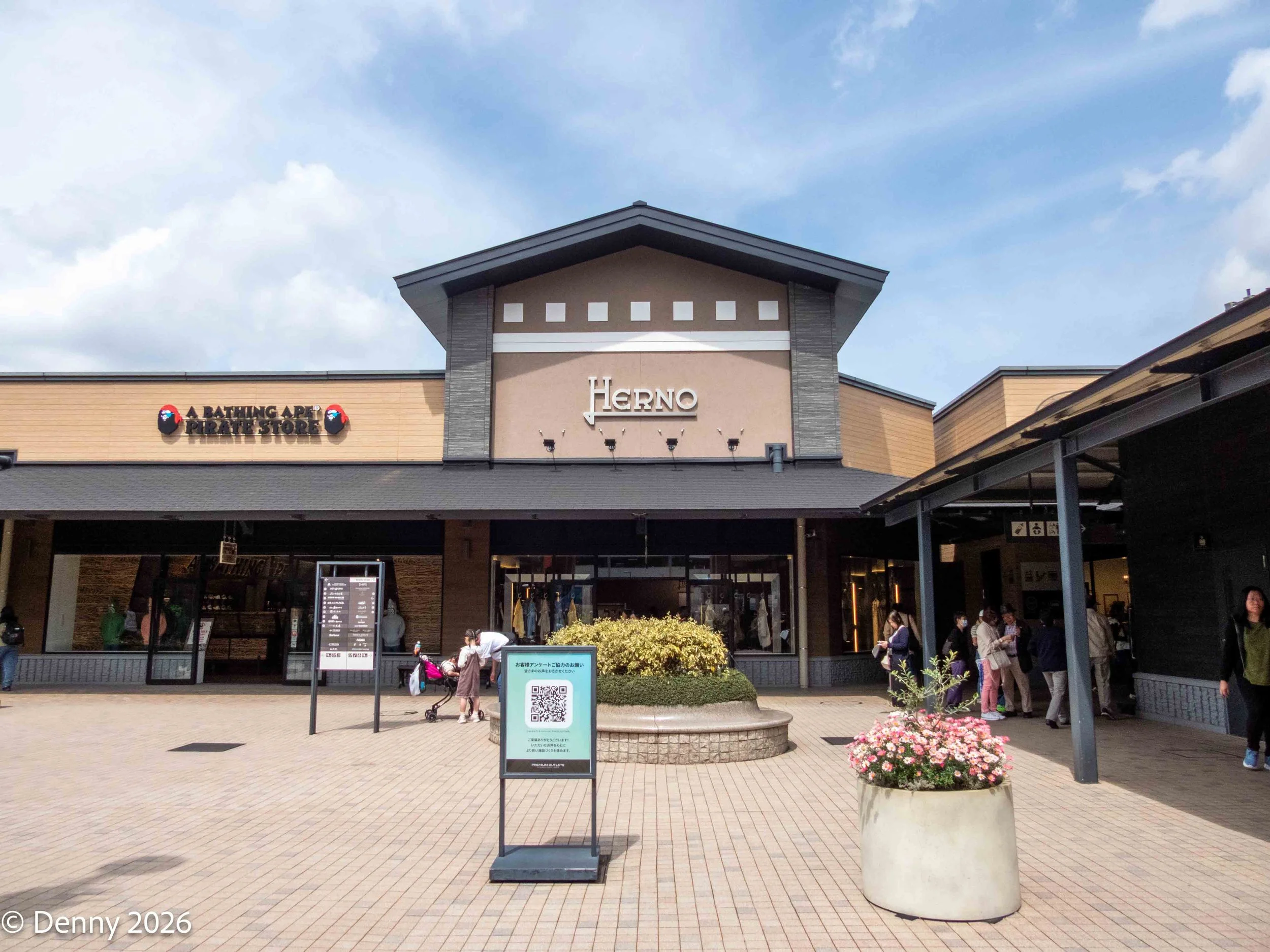
Gotemba shopping precinct, Fukasawa
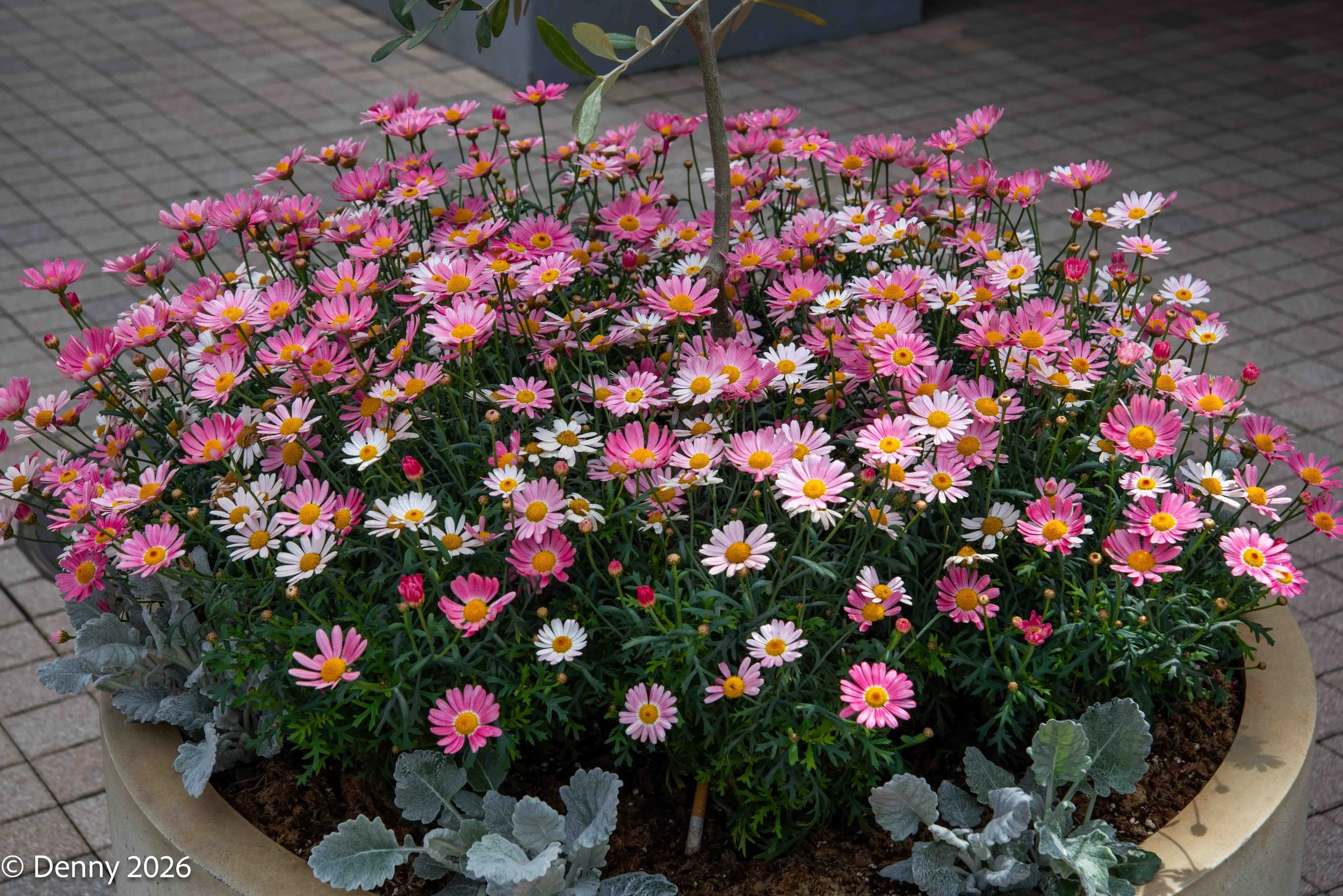
Daisies, Gotemba shopping precinct, Fukasawa
In this three zoned shopping village there are countless outlets claiming to offer special ‘bargain price’ deals, presumably due to this more rural location meaning the shops have significantly lower rental costs than those in the big cities like Tokyo.
It was a pleasant surprise to be in a comparatively uncrowded location and we wandered aimlessly amongst a few of the outlets selling clothing, fashion goods, shoes, cosmetics, technology items, jewellery, expensive watches, sports gear and food from little cafés and larger restaurants.
We found a quiet coffee shop and relaxed whilst waiting expectantly for the cloud to lift so we might see Mt. Fuji which is in the distance but potentially visible from Gotemba.
We managed to get some photos of Mt. Fuji but none was anything much more than a partial glimpse through partly broken cloud.

Our first view of Mt Fuji from Gotemba shopping precinct, Fukasawa
Our shopping visit now over, we returned to our bus when ‘presto’, the cloud lifted and we all managed to get a clear shot of this iconic mountain peak.

Mt Fuji from Gotemba shopping precinct, Fukasawa

The peak of Mt Fuji from Gotemba shopping precinct, Fukasawa
Our driver kindly waited while the photo opportunity was at its best and then we departed for Hakone.
Hakone is a scenic mountain town which has been popular with the Japanese since the 9th century due to the many nearby mineral hot-springs thought to have therapeutic health benefits partly due to the exposure to sulfur, the odour of which is certainly evident in the air.
The Hakone area extends across the collapsed remains of a huge volcano which was active until about 3000 years ago. This volcanic origin explains the geothermal activity present today with the hot springs, steam vents and of yellow sulfur covering some rocks on the hillside.
The mountain pathway we followed was a twisty road and our young driver managed to cope with the ‘S’ bends with ease even when other buses were approaching. The homes along the road had hundreds of cherry trees in blossom which Mitzie said is quite unusual for this early in April.
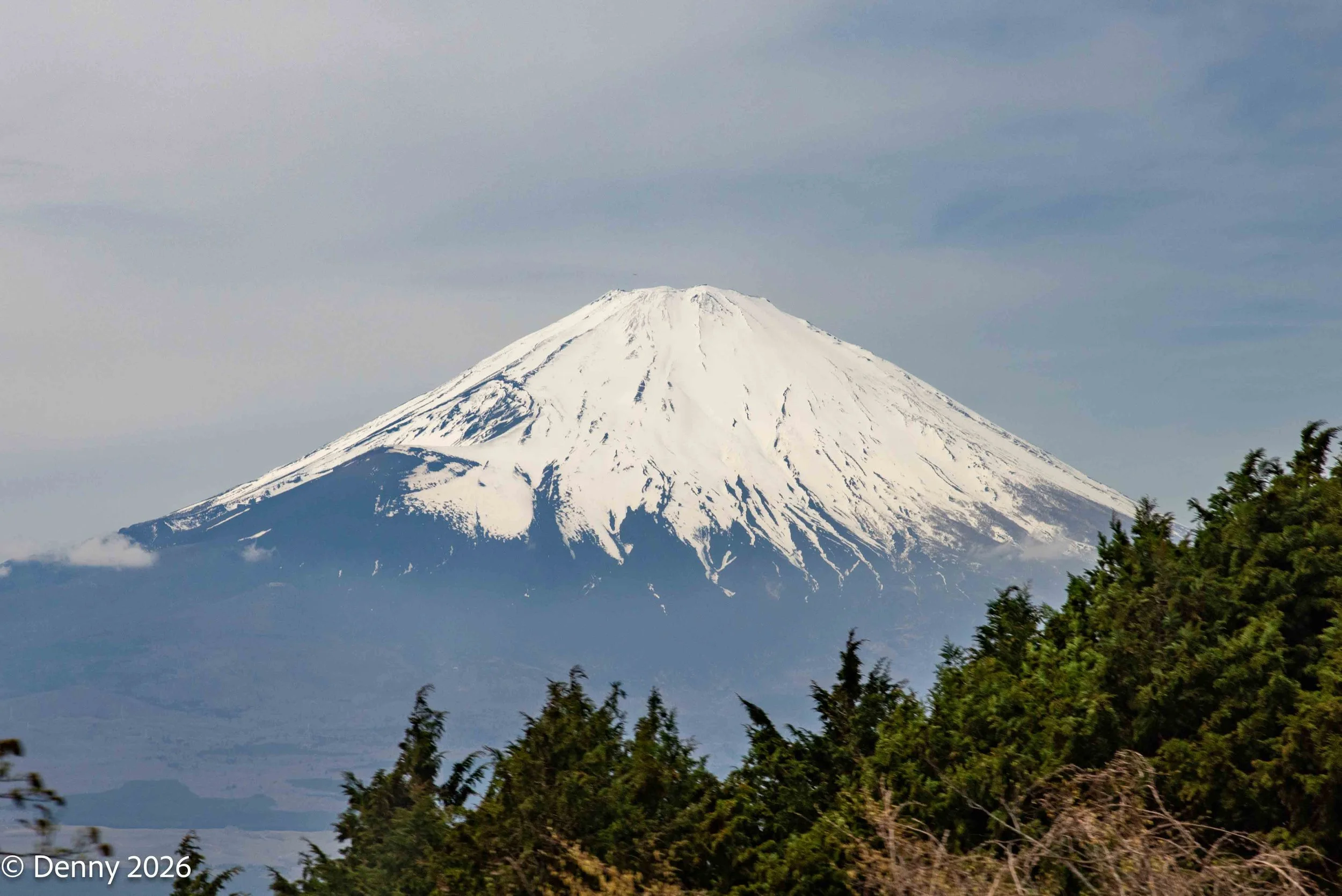
Mt Fuji from the bus en route to Hakone
We arrived at Togendai at an altitude of 741 m and joined a very long queue to eventually board the Hakone Ropeway cable-car.

Wait time for Hakone Ropeway (cable car)
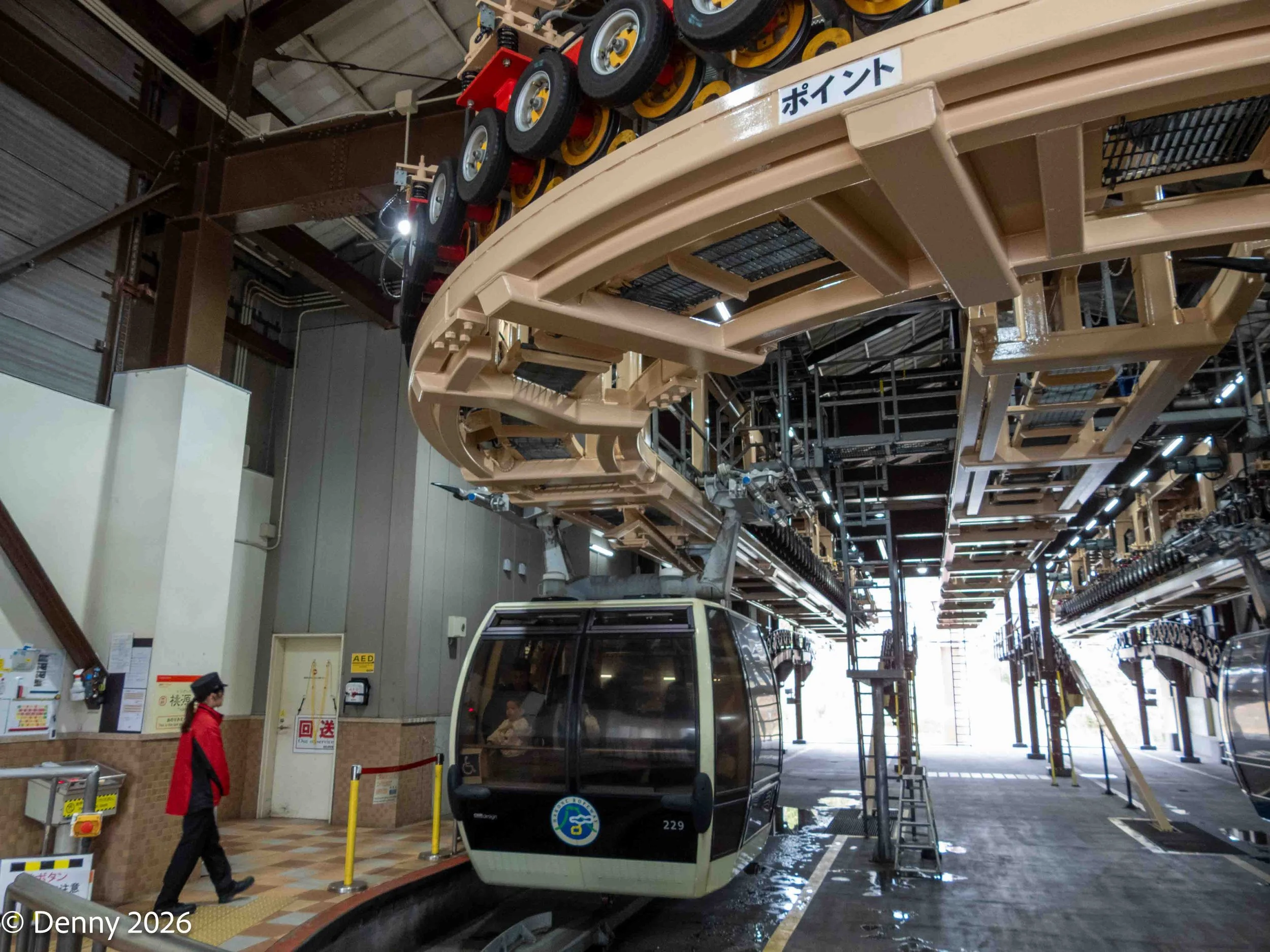
Hakone Ropeway (cable car)
All eighteen of us managed to squeeze into the one carriage and we were transported above a pine forest and grassy slopes to the terminus Owakudani at 1042 m.
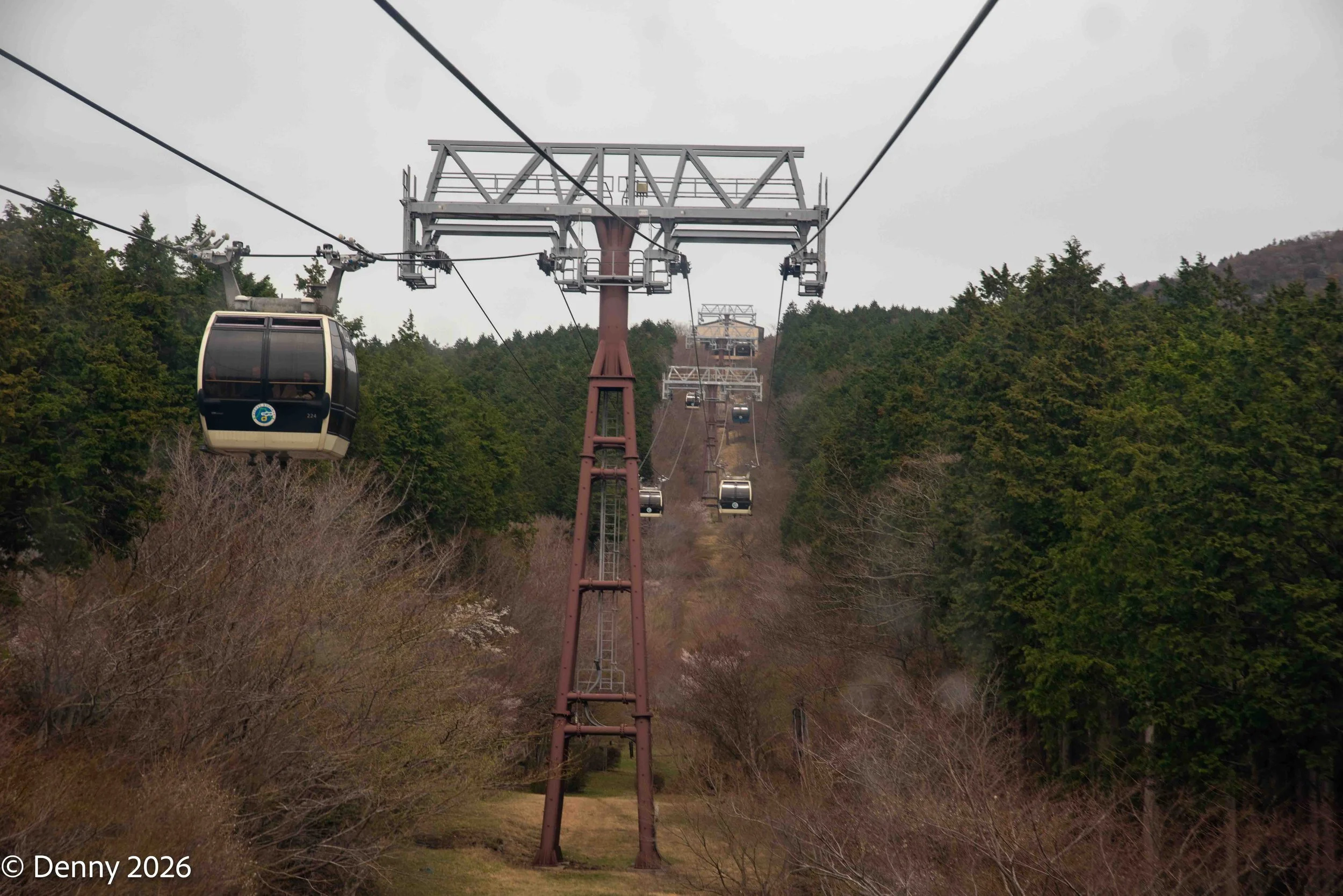
Hakone Ropeway (cable car)

Jak with some of our group on Hakone Ropeway (cable car)
On leaving the cable car, we found the outside conditions to be cold and very windy so we spent minimal time taking photos and soon sought shelter.
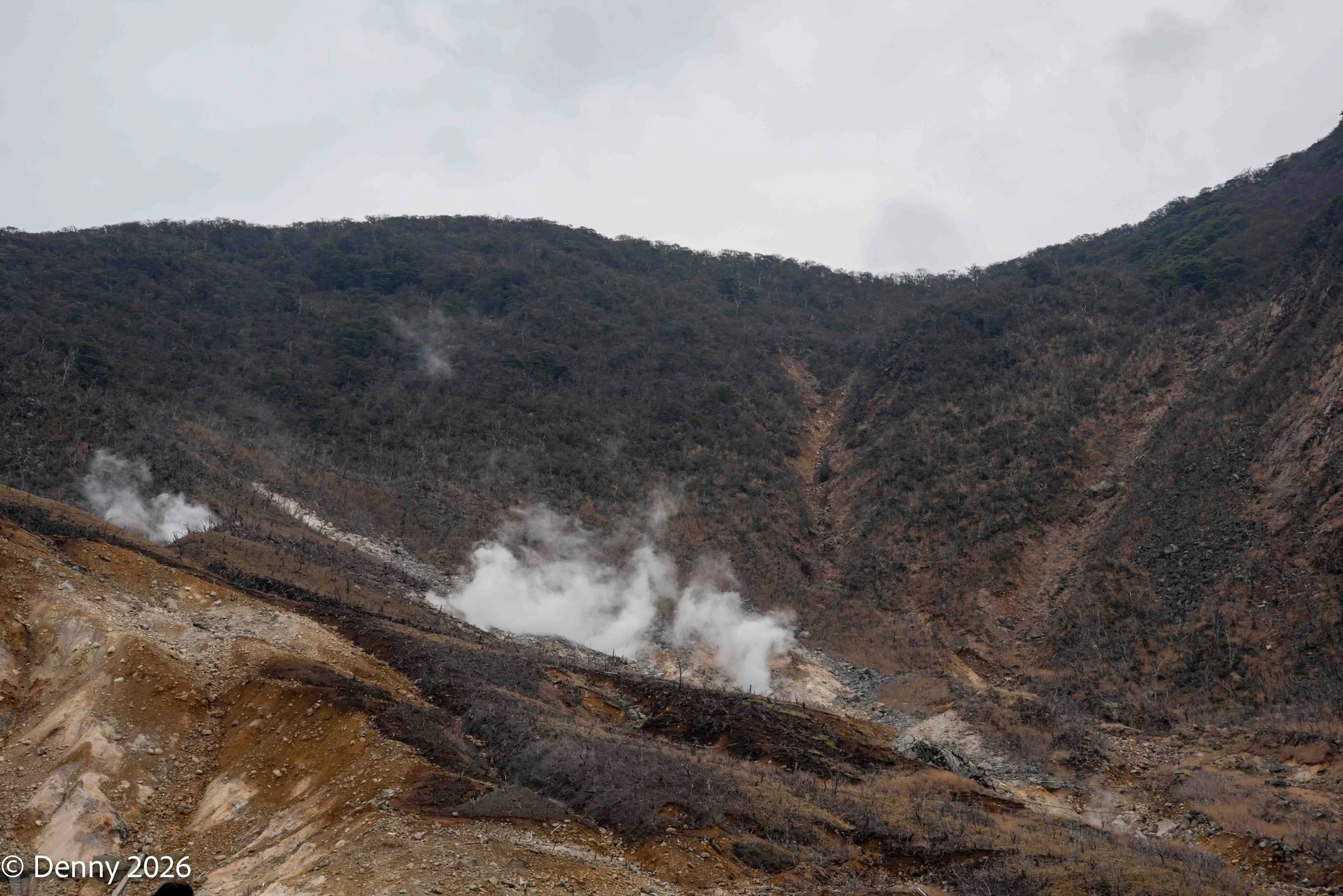
Steam vent, Hakone
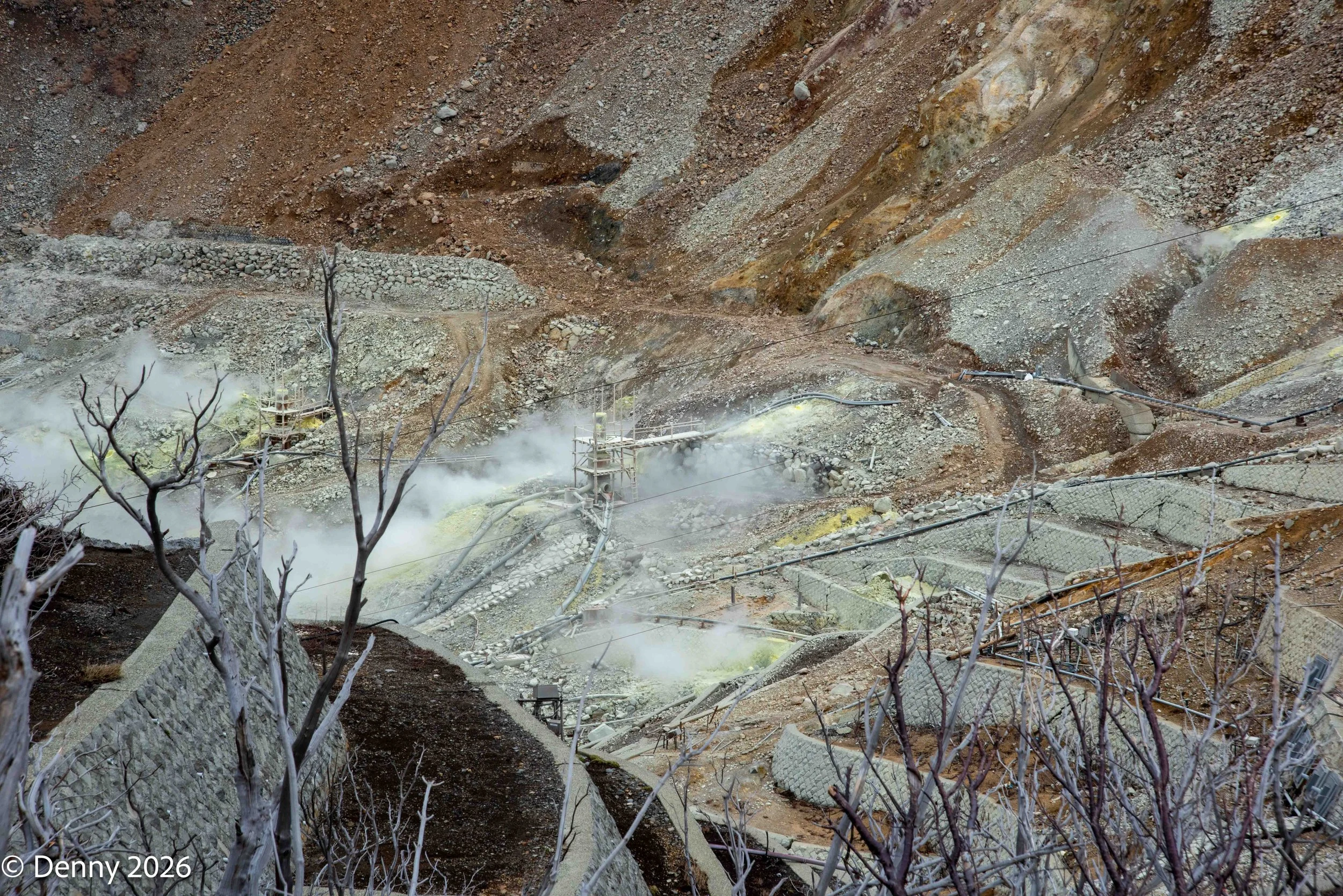
Steam vent, Hakone

Jak & Corinne with Mt Fuji in the background
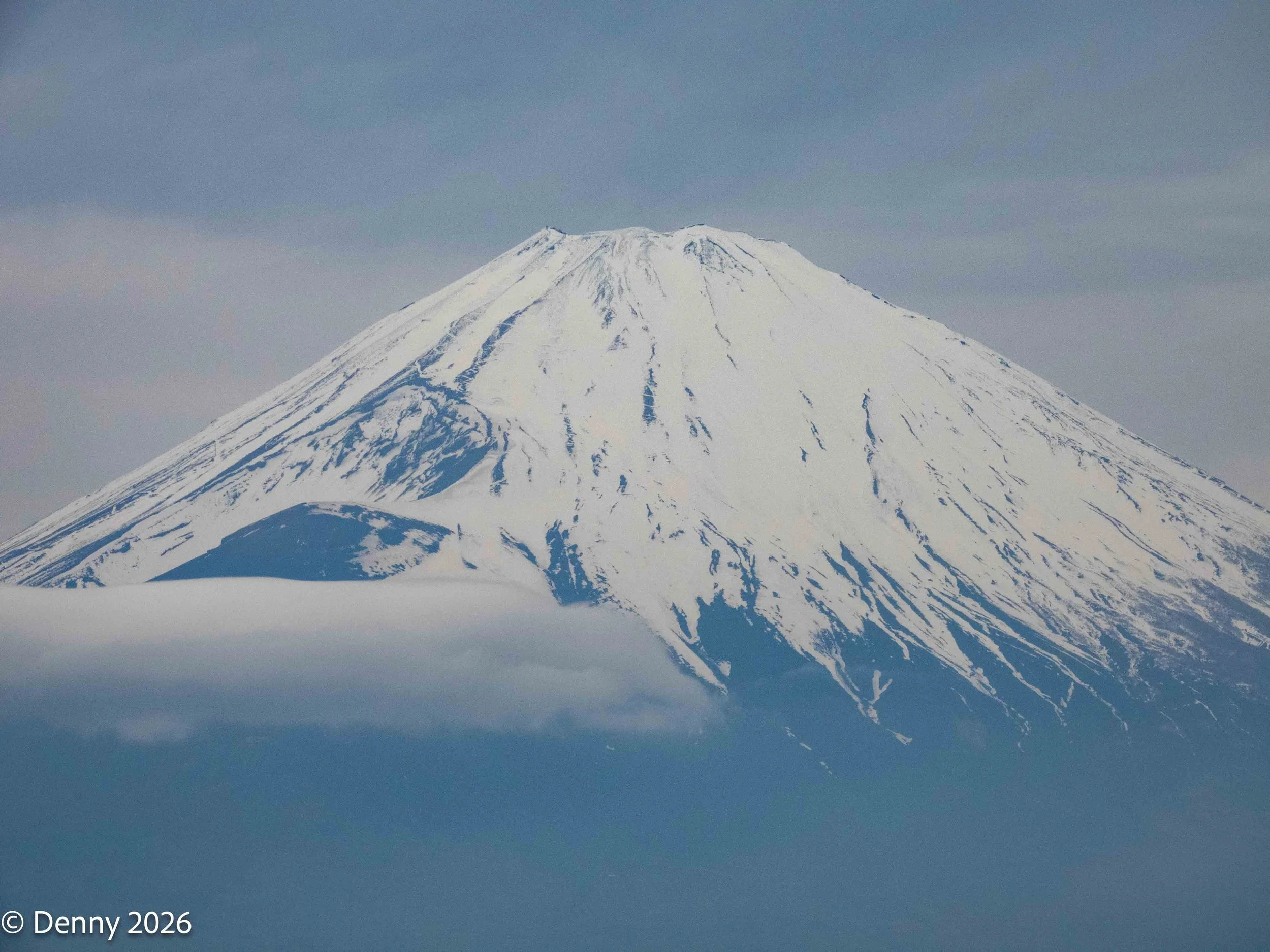
Mt Fuji, Hakone
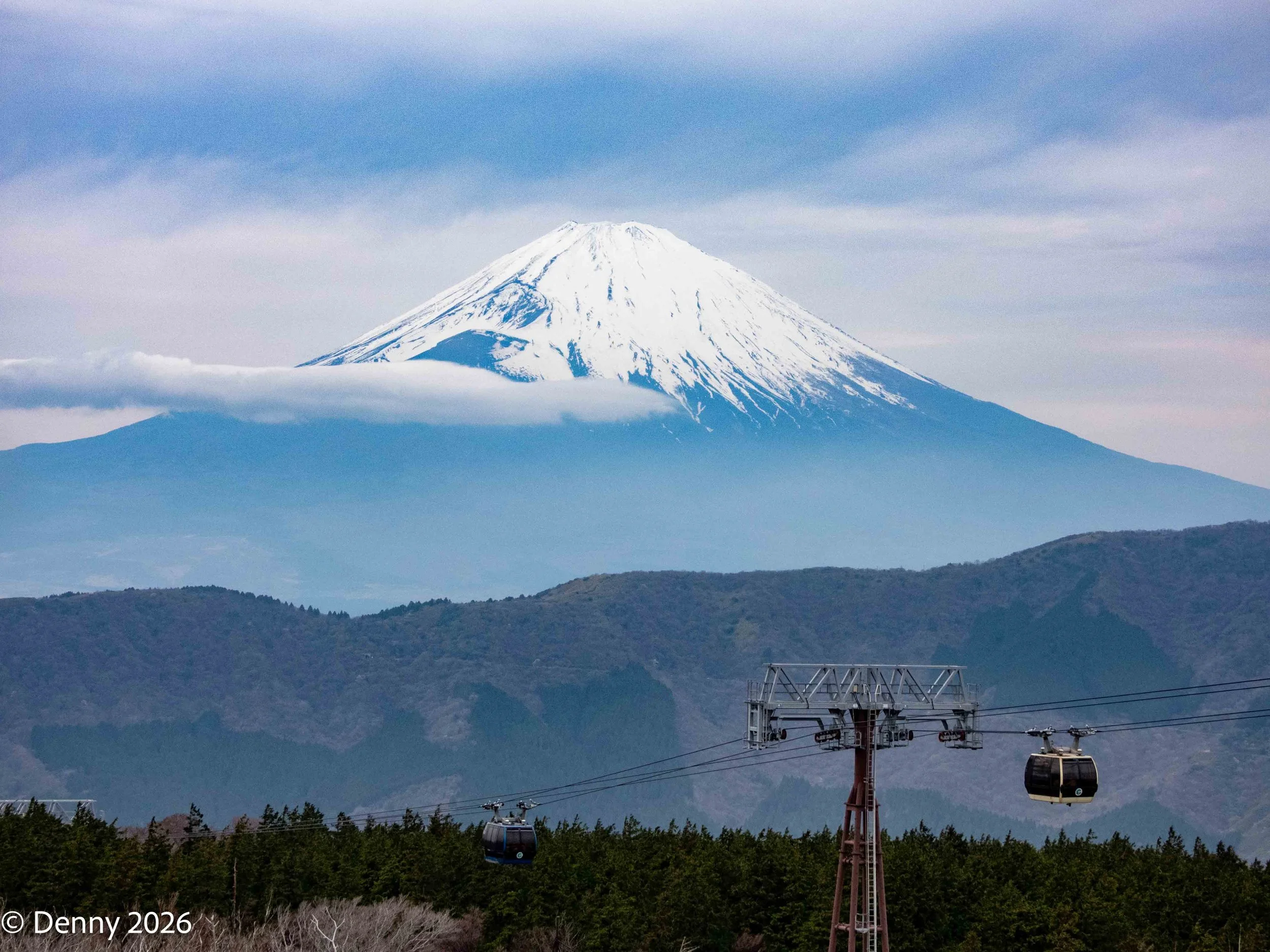
Mt Fuji & cable cars, Hakone
In one of the Owakudani shops they were selling black eggs or kuro tomago. These are normal eggs that have been boiled in water from hot-springs with black dye added. We didn’t try one but legend says that eating them brings good luck and greater longevity.
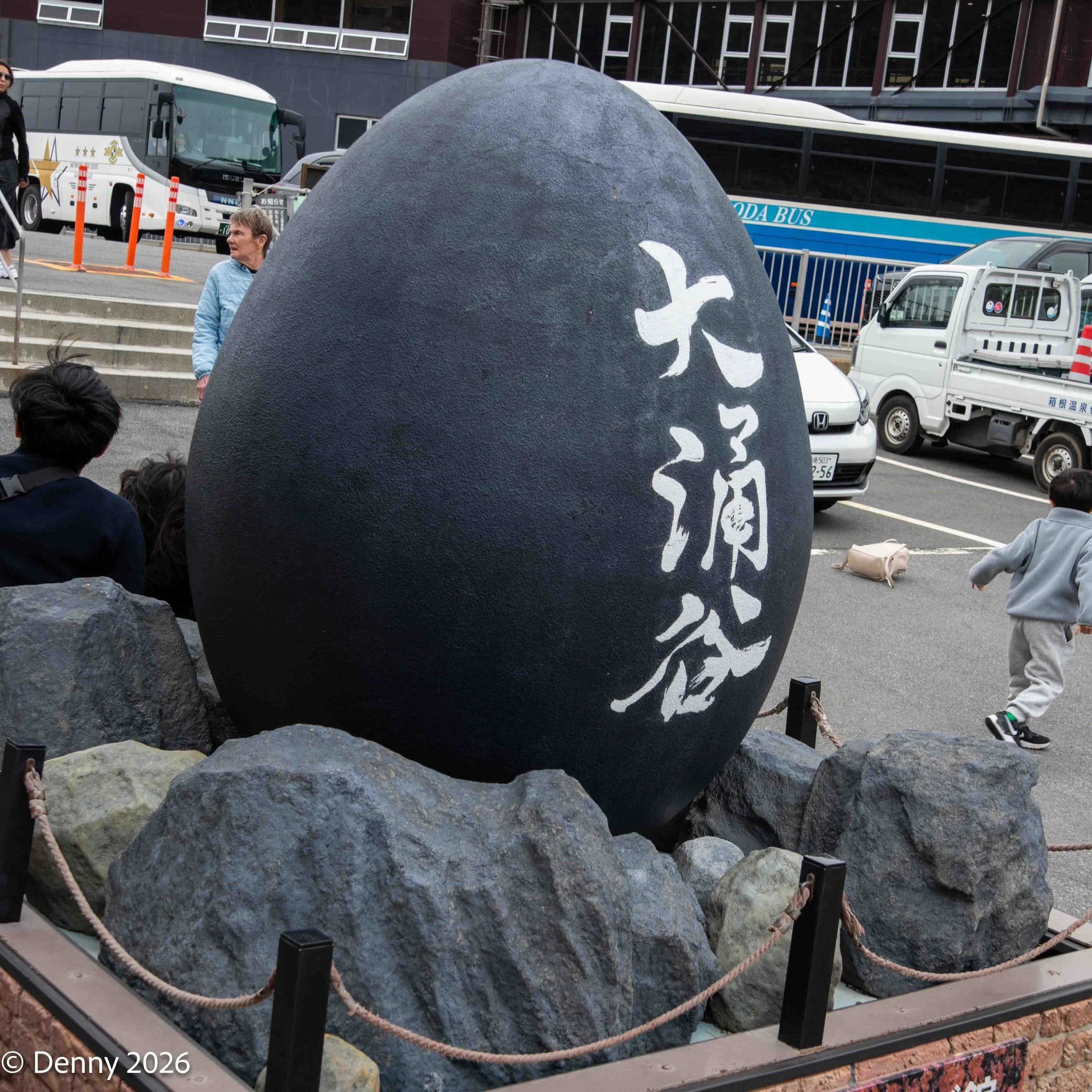
Black egg (kuro tomago) display, Hakone

Corinne sitting on black egg (kuro tomago) seat, Hakone
Mt. Fuji was still visible but from this high point it was quite misty and not like the earlier clear sights we’d been fortunate to experience.
Our final drive for the afternoon was to our Prince Hotel in Hakone. This hotel offers traditional ryokan guesthouse accommodation with a natural mineral hot-springs bath called an onsen on the lower floor. We didn’t participate in the joys of naked bathing where the men and women have separate bath areas.
Outside our bedroom window and beyond is an 18 hole Hakone Yu-no-Hana golf course which appears to be very well maintained although the fairways are showing obvious signs of needing rain. A Japanese wild Seka deer (Cervus nippon) scurried across the fairway in front of us with its spotted coat and distinctive white bottom.
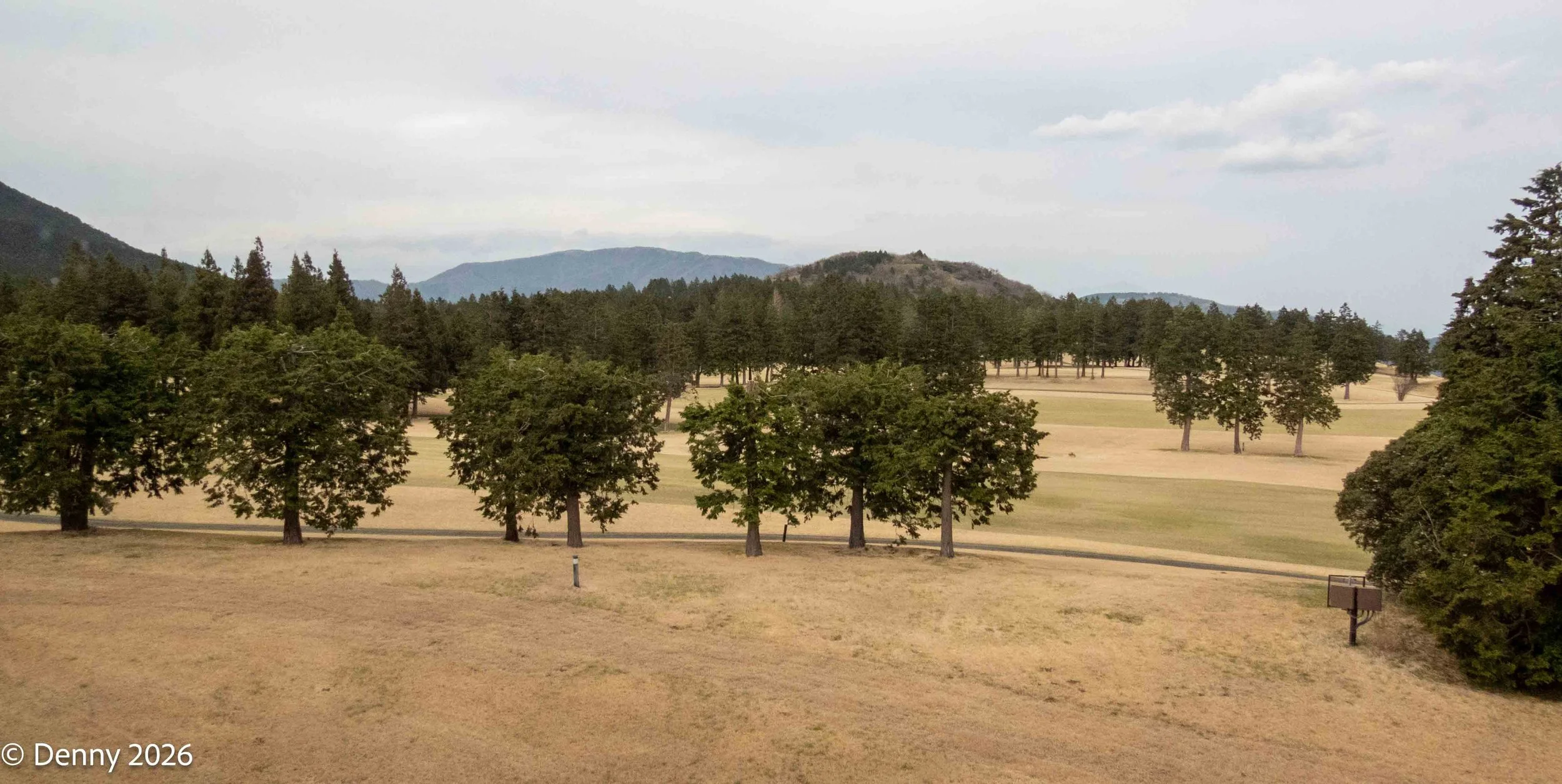
View over 18 hole Hakone Yu-no-Hana golf course from our room at Yunohana Prince Hotel, Hakone

Sika deer (Cervus nippon) on Hakone Yu-no-Hana golf course viewed from our room at Yunohana Prince Hotel, Hakone
The hotel room has woven mats for floor covering and our beds are on the floor.
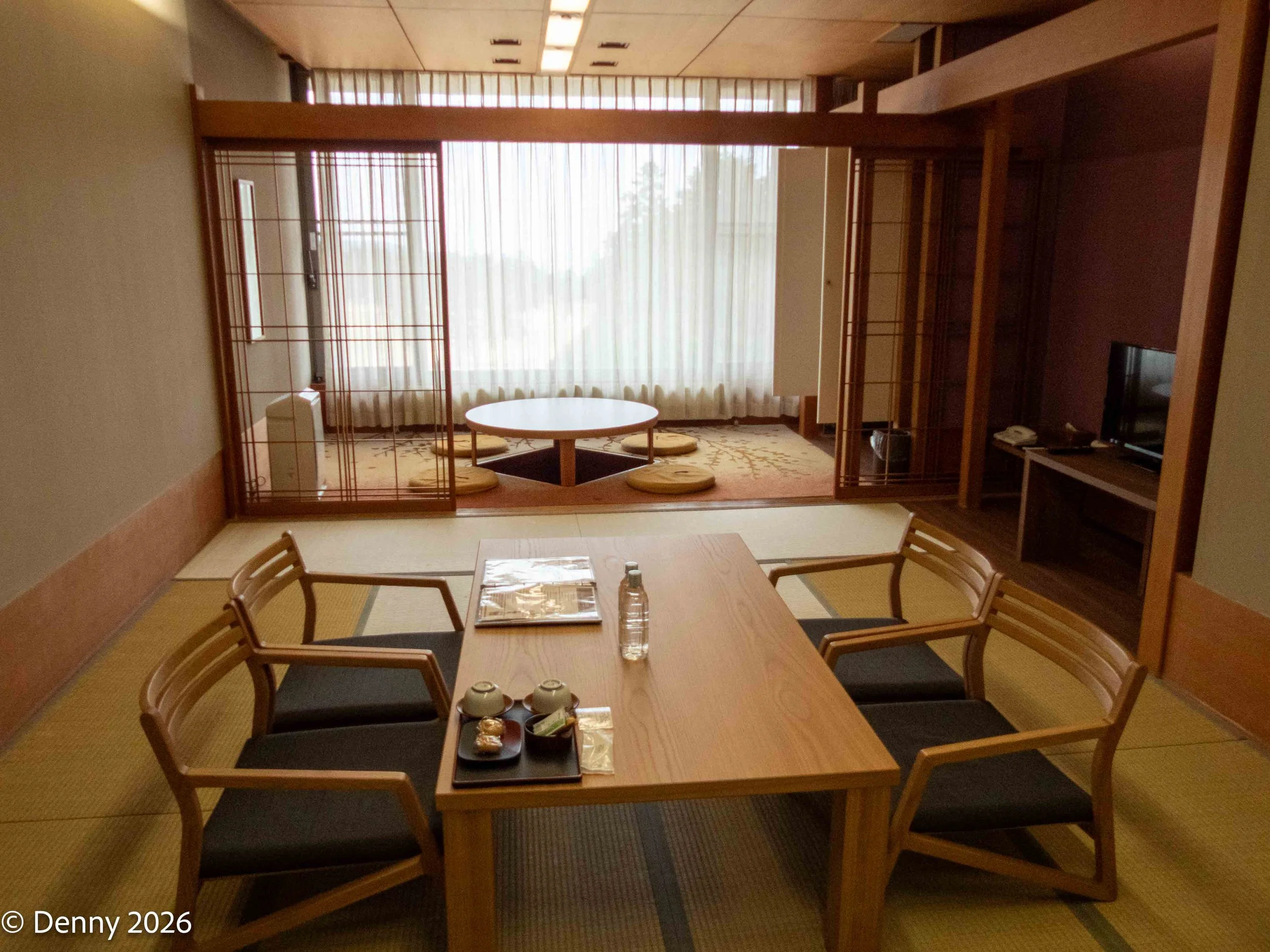
Our room at Yunohana Prince Hotel, Hakone
For our evening meal we dressed in a yukata or casual kimono and had a wide selection of Japanese dishes some of which were cooked in a hot-pot.
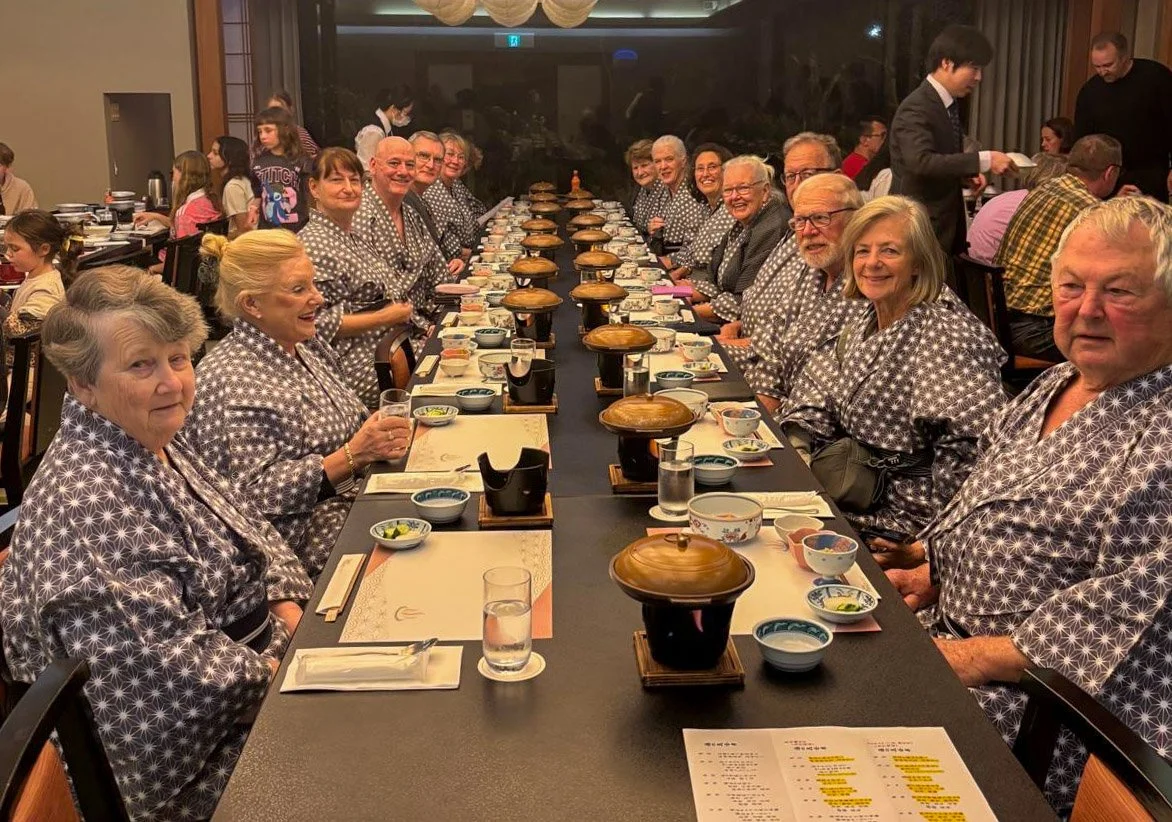
Group at dinner at Yunohana Prince Hotel, Hakone
The sashimi tuna and salmon dipped in soy sauce and spiced further with wasabi was a delectable treat. The thinly sliced beef pieces cooked in the hot-pot with vegetables, noodles and mushrooms were very tender and tasty.
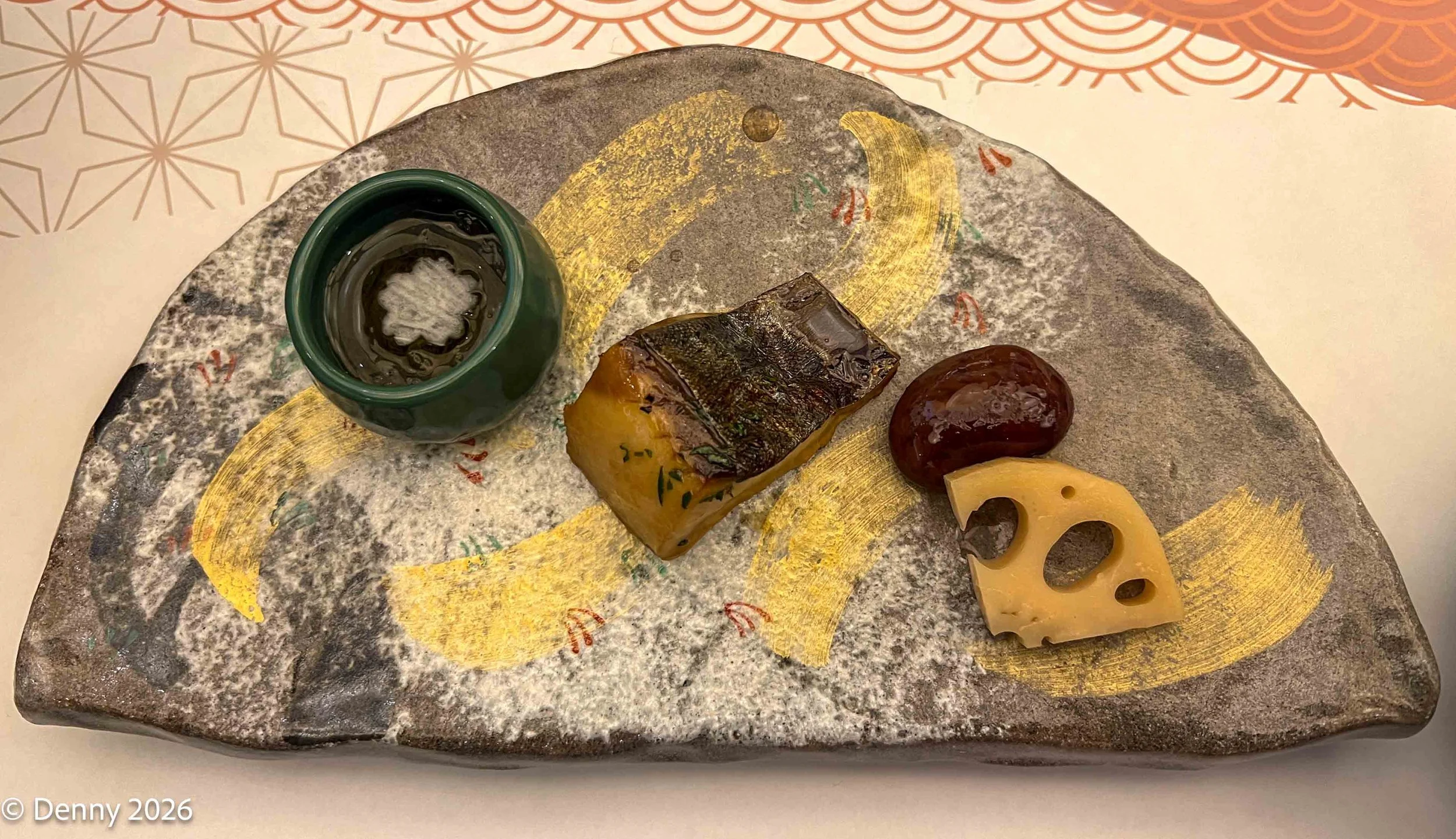
Dinner at Yunohana Prince Hotel, Hakone
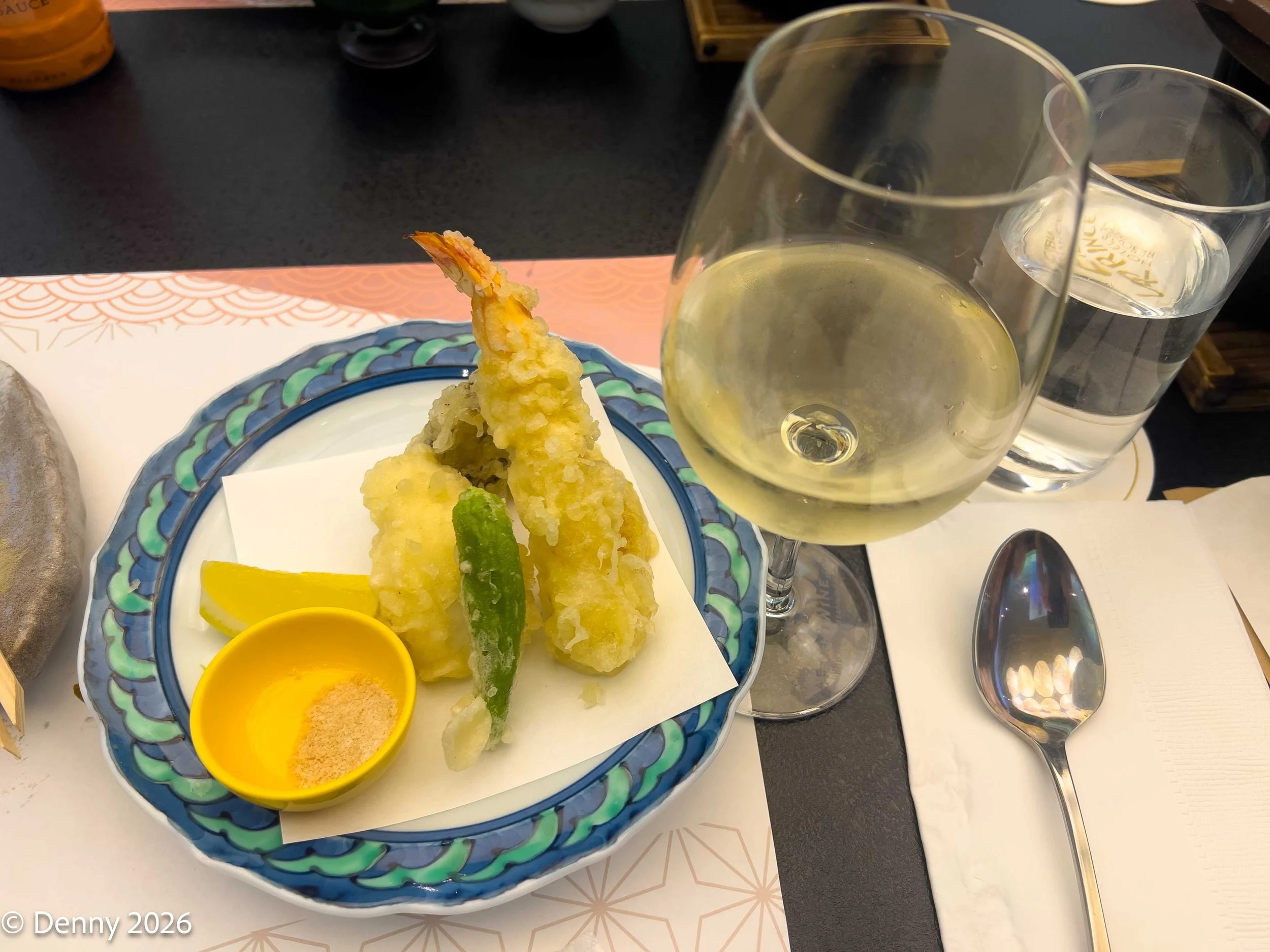
Dinner at Yunohana Prince Hotel, Hakone
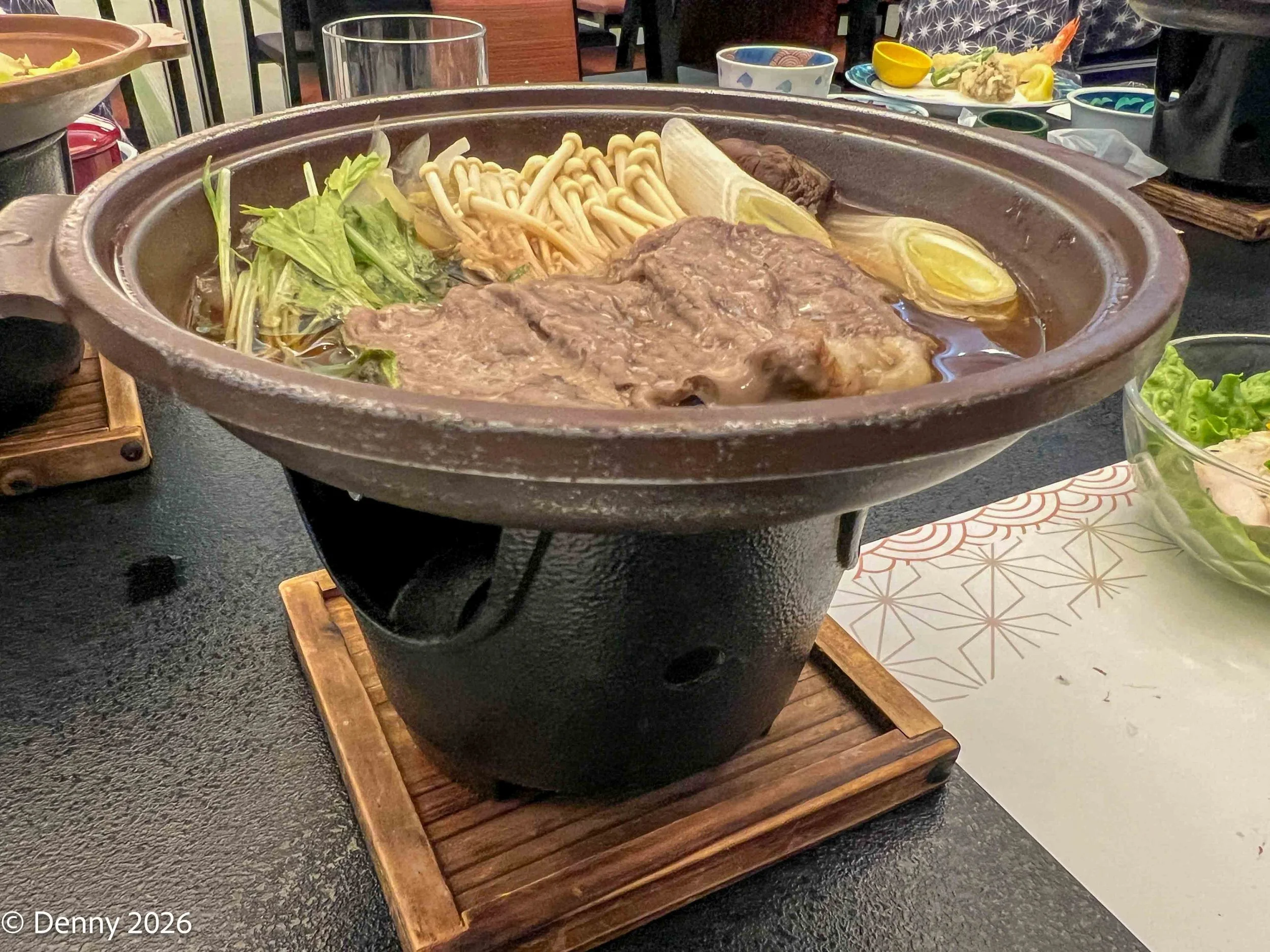
Dinner at Yunohana Prince Hotel, Hakone
At 21:00 we returned to our bedroom to find our beds now set out for us on the floor.
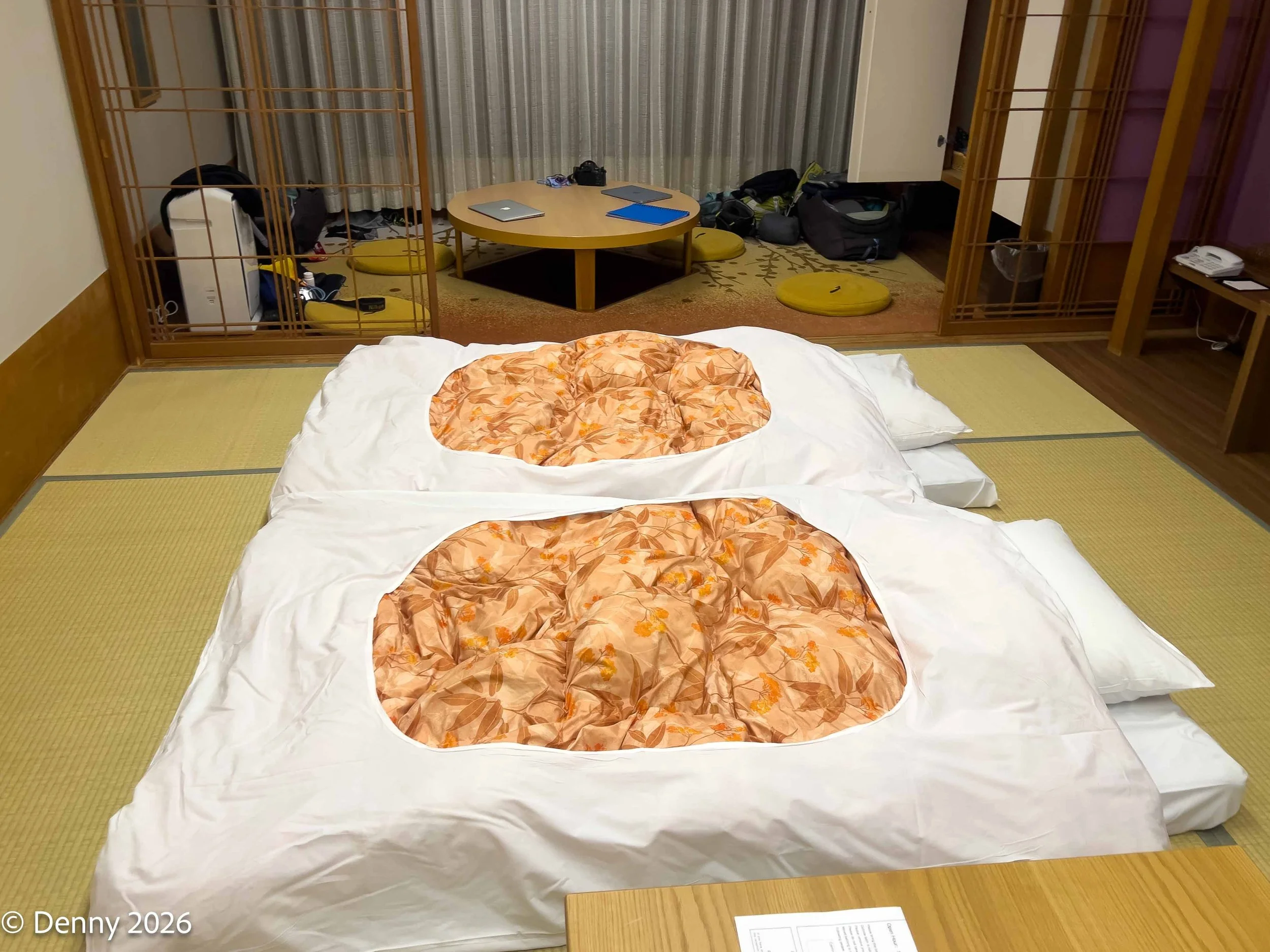
Our room ready for bed at Yunohana Prince Hotel, Hakone
Tomorrow morning we will be travelling by shinkansen (bullet train) to Nagoya and then connecting with a local regional train service to Takayama. As the shinkansen has limited luggage space, our big bags need to be transported by bus to Kyoto where we’ll be in three days time. Consequently, for the next two nights we have to carry an overnight bag with the bare essentials.