
After breakfast sitting in a sunny window corner of the hotel dining room we then departed the Sheraton Grand (aka Marriott Bonvoy) and, for this trip we had our final shinkansen train trip when we boarded the 09:56 train bound for Osaka.

Window seat for breakfast at Sheraton Grand Hiroshima Hotel,
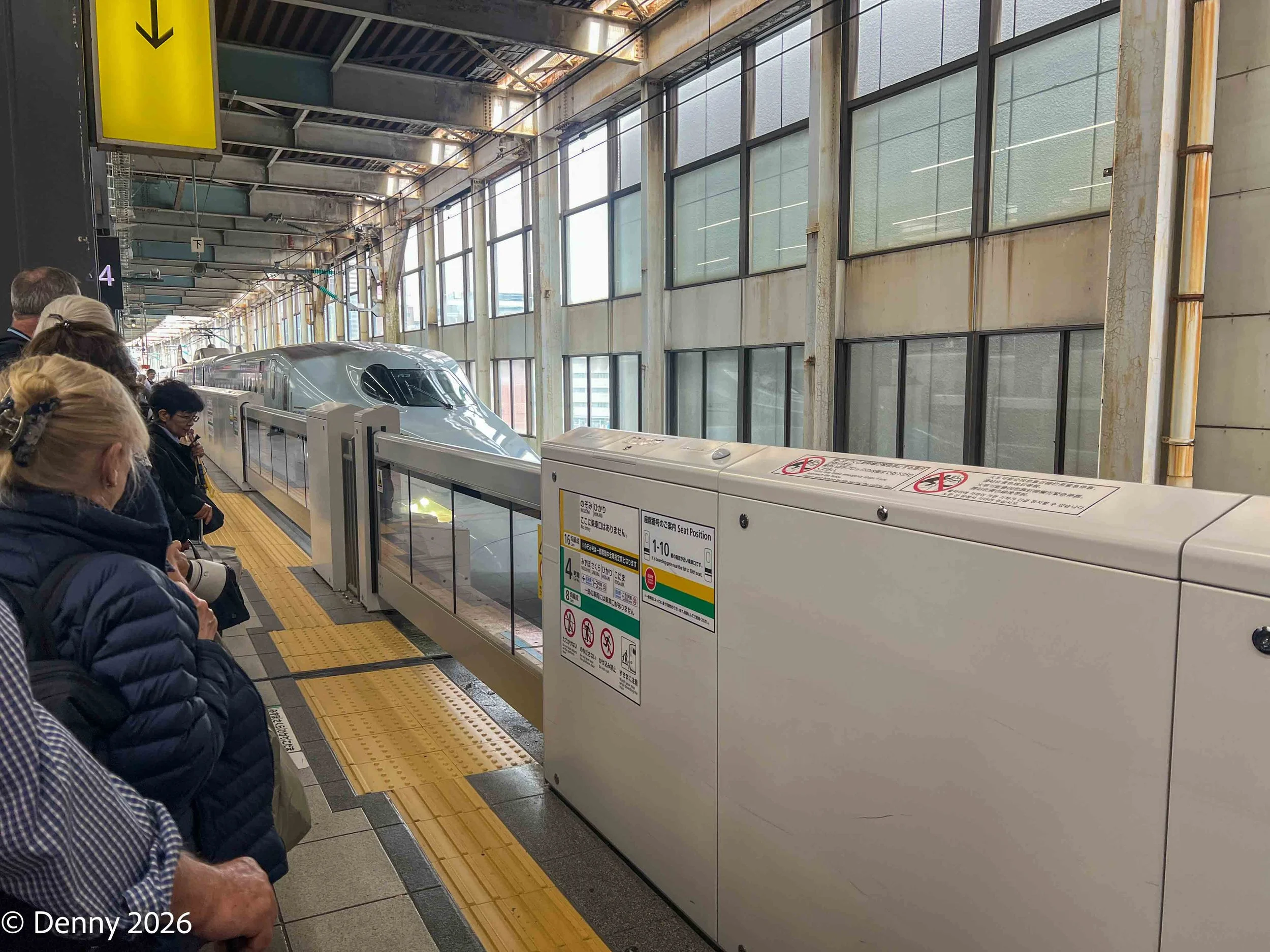
Our Shinkansen bullet train arriving at the station, Hiroshima
We followed an easterly track for an hour at around the 300 km/h mark with only two stops before reaching our midday’s destination of Himeji.
Our new bus and driver were waiting at the station and we then were driven to the parking area adjacent to Himeji-Jo Castle.
This is an incredibly popular tourist site with so called ‘white heron castle’ being an extraordinarily attractive building sitting so prominently on a hilltop and having the appearance of a bird taking flight.
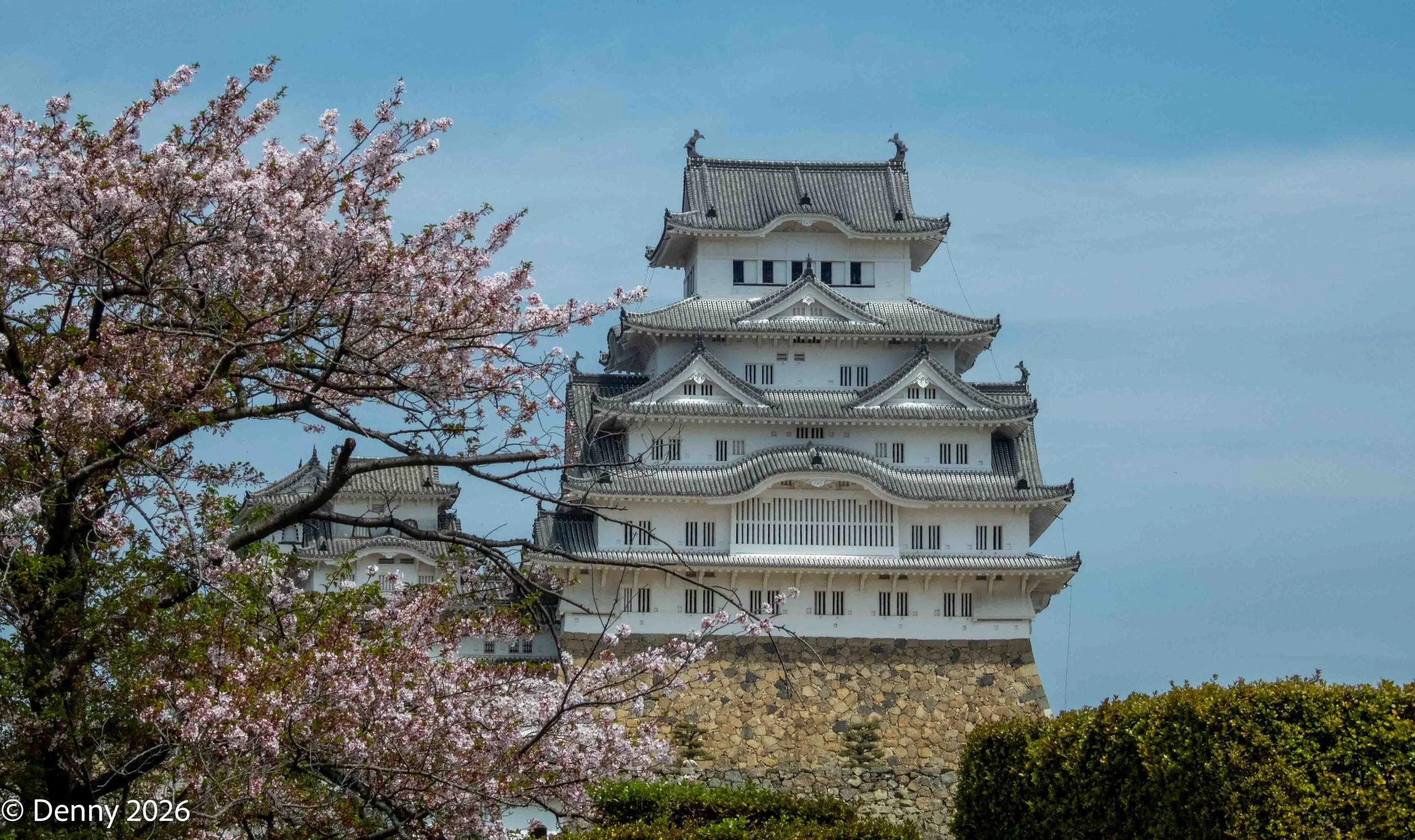
Himeji-Jo Castle
The castle possesses imposing military architecture and its position, perched on this pinnacle accentuates the graceful aesthetic lines with its undulating dormer gables and the visual contrast between the white plastered walls and the black terracotta tile roofs.
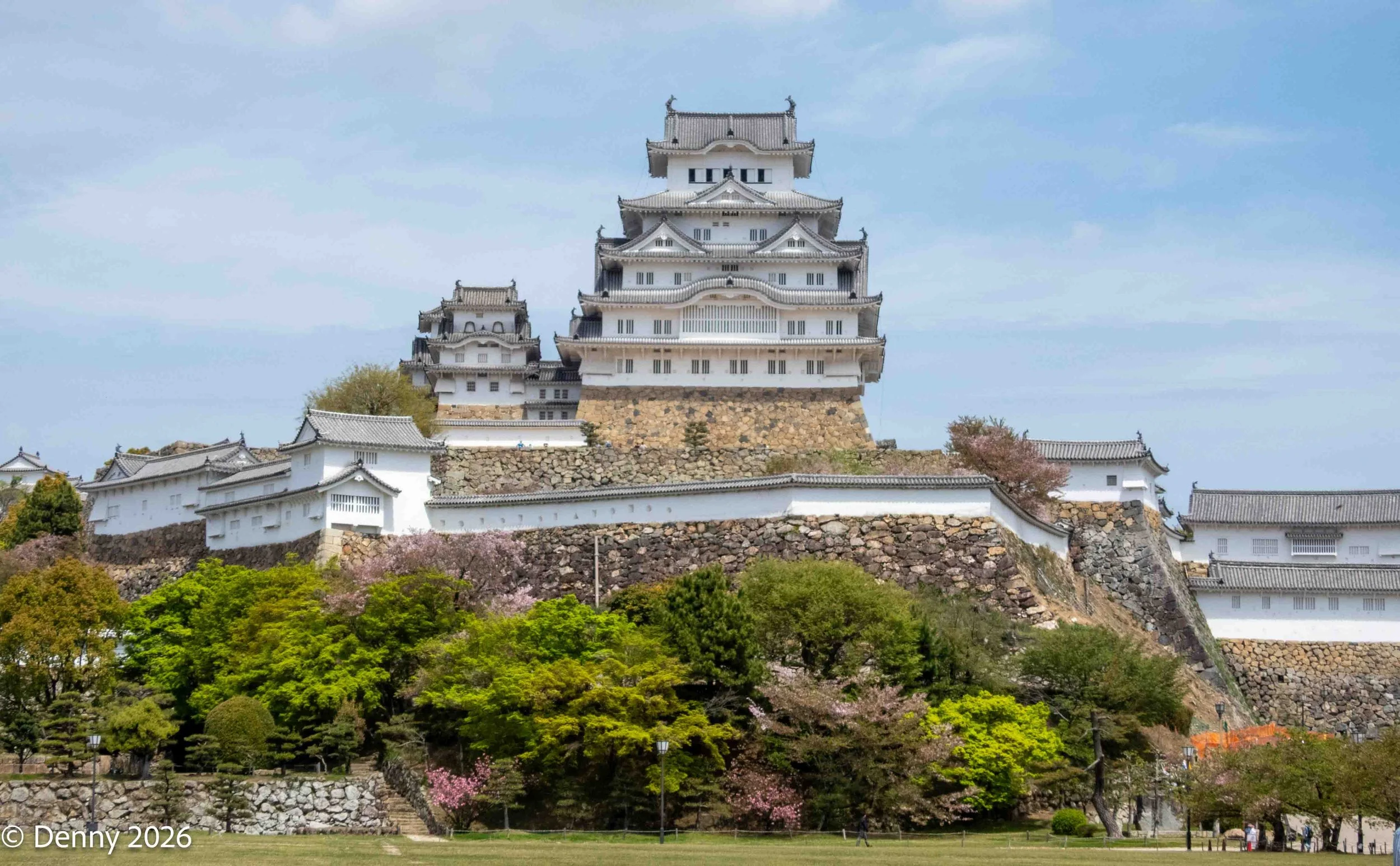
Himeji-Jo Castle, Himeji
The castle’s main donjon (fortified inner tower or ‘keep’) was developed by Terumasa Ikeda in 1609 who transformed this military stronghold into the ultimate symbol of the Tokugawa shogunate’s power.
The castle was adapted to make any form of successful raid virtually impossible. By incorporating steep pathways, tight corners, numerous steps and low height doorways it meant that any attacking army certainly on horseback, faced undoubted failure.

Some of our group passing through narrow doorway, Himeji-Jo Castle
To deter attackers, angled chutes (small holes) were set at numerous points on the castle walls so that stones, boiling oil, arrows and musket fire could be used to defend the castle. The use of gunpowder for military purposes was introduced to Japan by the Portuguese in the 16th century.

Chute in the wall, Himeji-Jo Castle
The Himeji Castle is now listed as a UNESCO World Heritage Site.
We decided to do the climb to the highest castle point (main keep) and so did many others. This meant climbing a succession of ten or more narrow and quite steep, pine timber stairways within the buildings interior which was dark and quite stark being devoid of any interior fittings. On about the fifth level we found a tiny Buddhist temple.
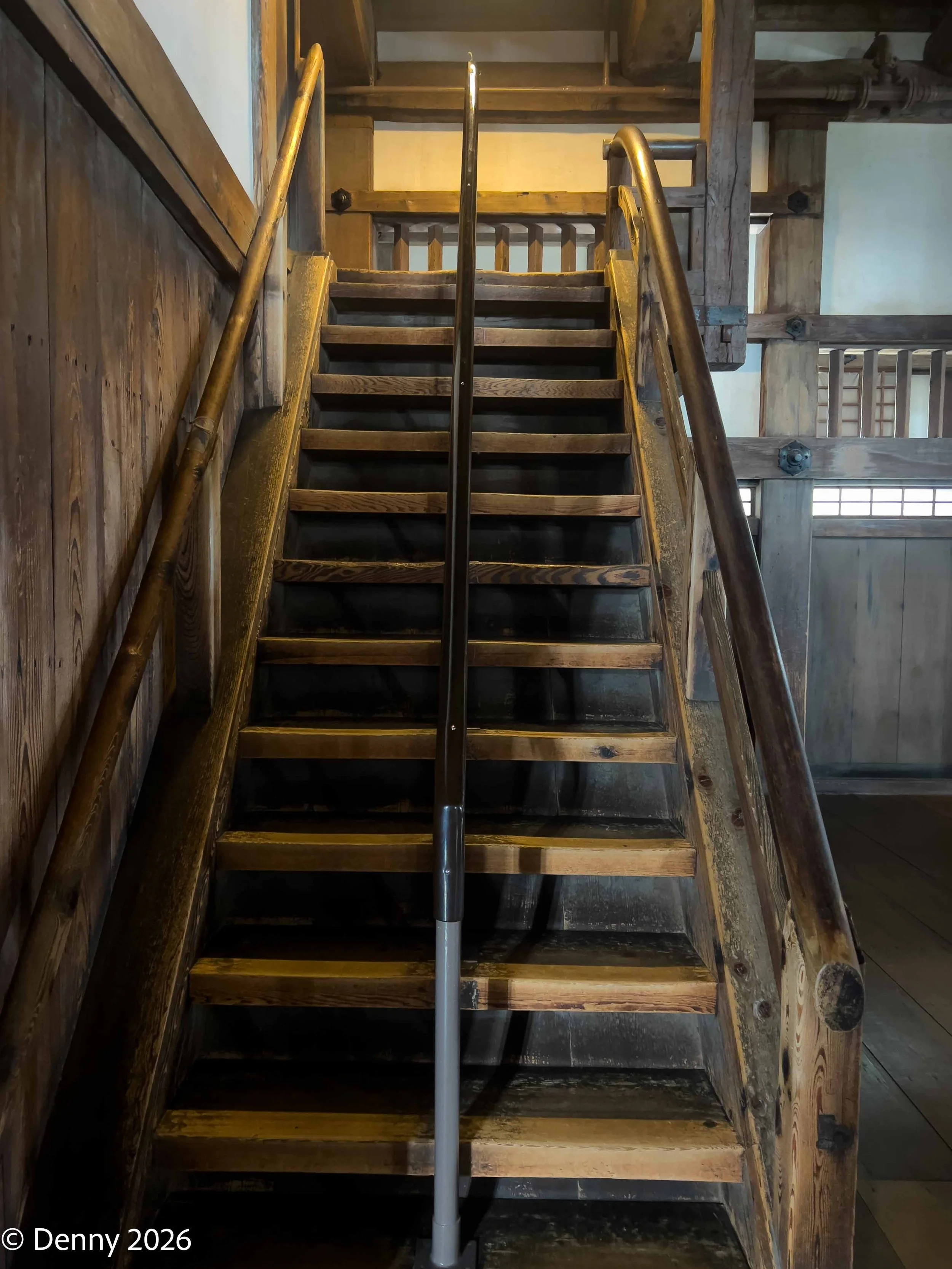
Narrow, steep stairway, Himeji-Jo Castle, Himeji
Having reached the top, we were greeted by an official who was delighted to shake our hands and have his photo taken.

Himeji Castle staff member
The view from this high position at the castle top made the effort of the tedious climb certainly worthwhile.
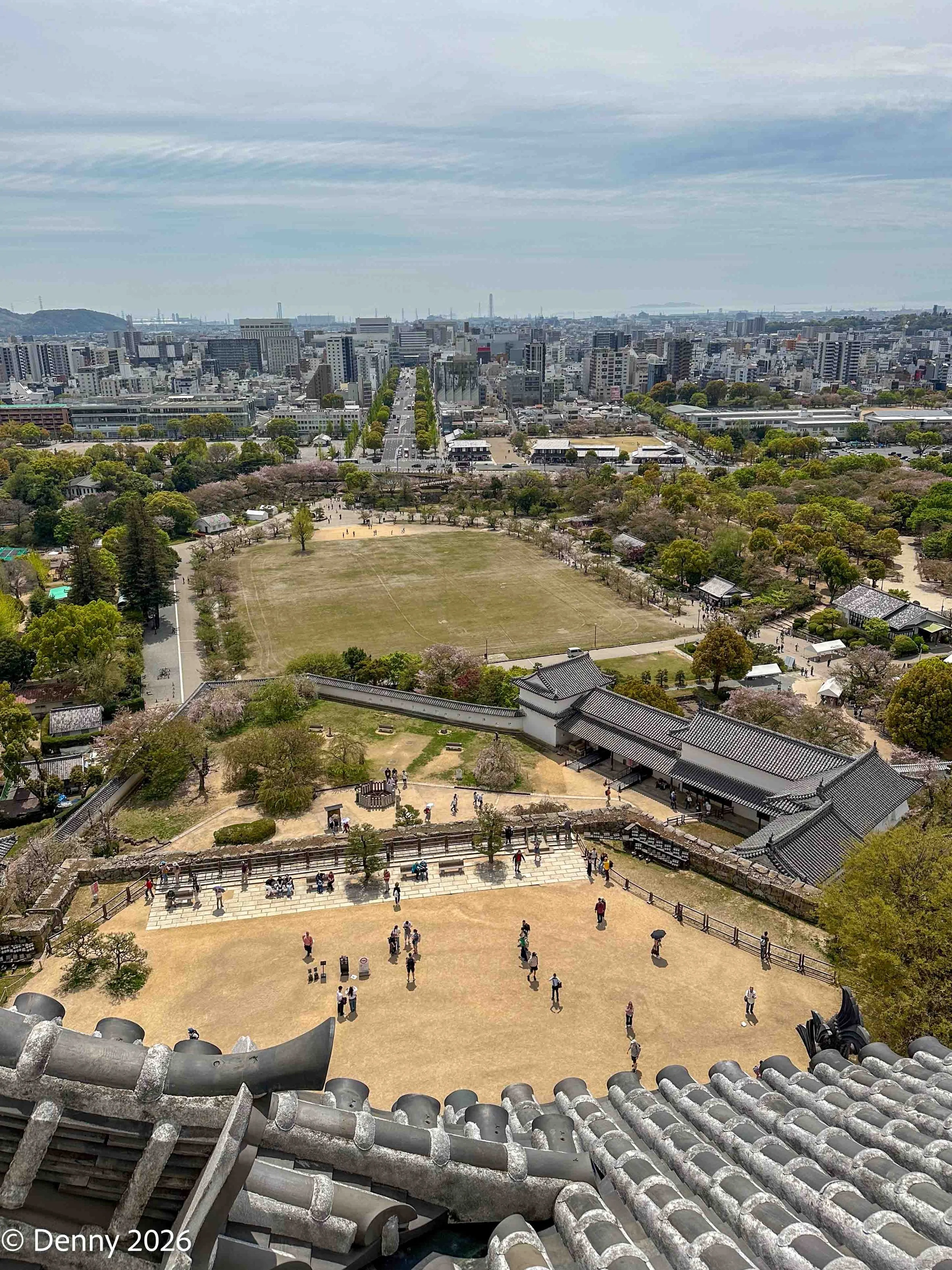
View from the top, Himeji-Jo Castle

Fish-shaped roof ornaments on top of Himeji-jo Castle are Shachihoko (or sachihoko), mythical creatures with a tiger-like head and fish-like body believed to protect against fire

View from the top, Himeji-Jo Castle
The downward journey needed caution as the steep and narrow pine steps were slippery. Some people went down the ‘ladders’ backwards.
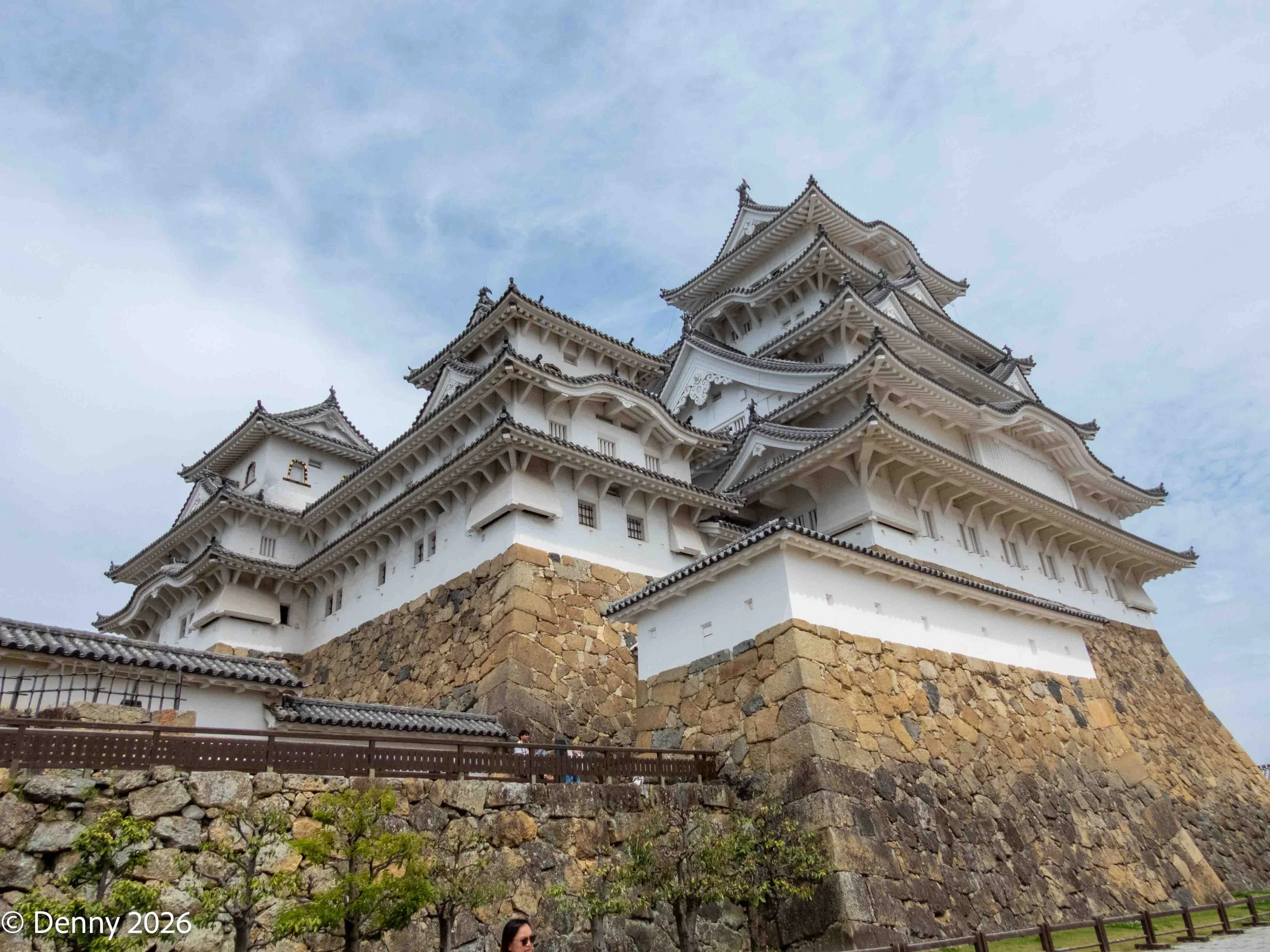
Himeji-Jo Castle from the grounds
We met up with the rest of our group and then spent time wandering through the glorious Koko-En garden which is quite close to the castle.
This is a traditional Japanese garden constructed in 1992 on the site of a former feudal lord’s residence.
The garden covers about 3.5 hectares and has a network of gentle streams flowing through rustic styled gardens and ponds home to large and colourful carp.
The garden features many species of maples, cherry, bamboo and conifers all in a beautifully manicured setting.
The peonies, rhododendrons and azaleas were in flower and at their very best. Despite the mid-April date, there were still a number of different cherry blossoming trees displaying their delightful colours.
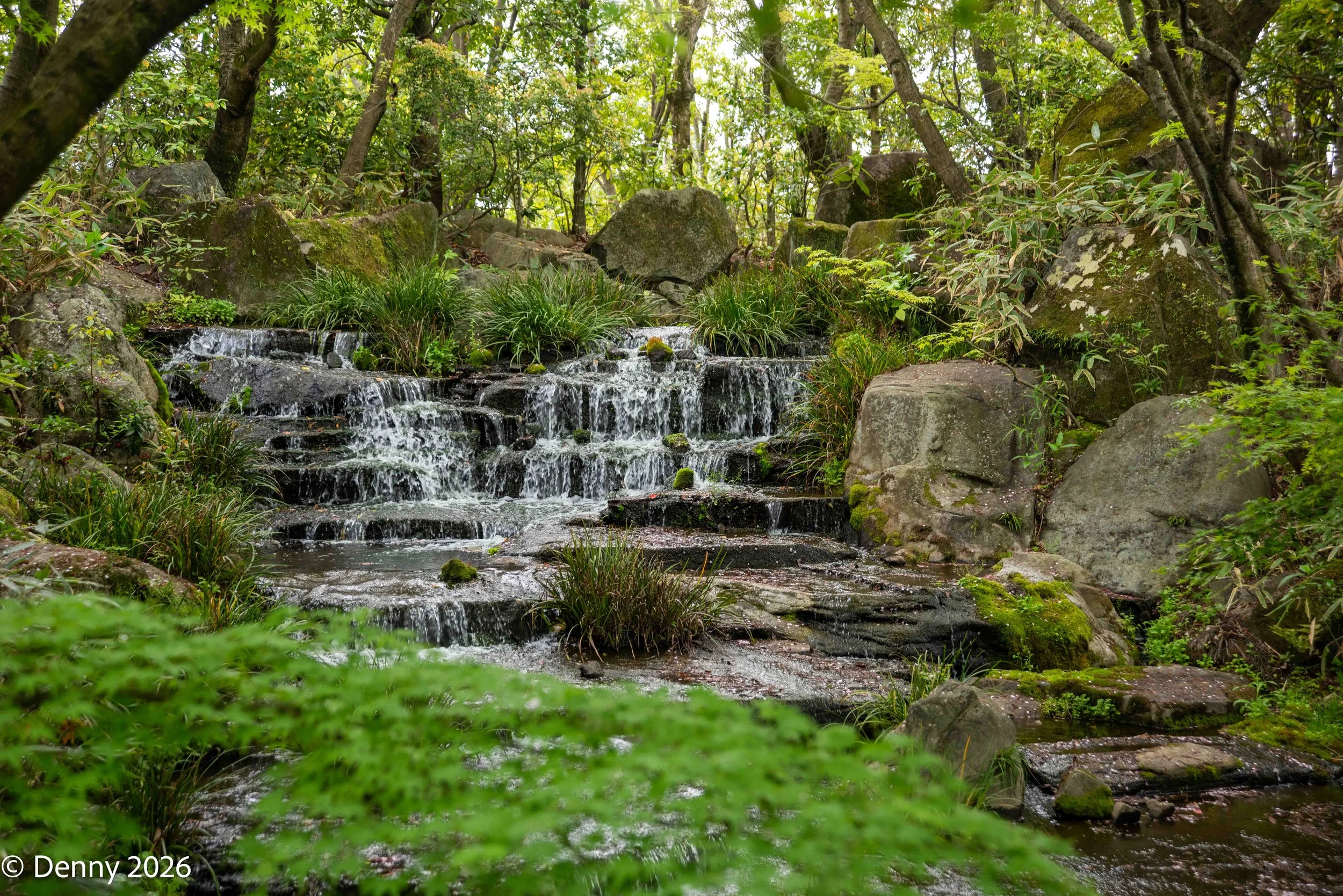
Waterfall, Japanese garden, Himeji
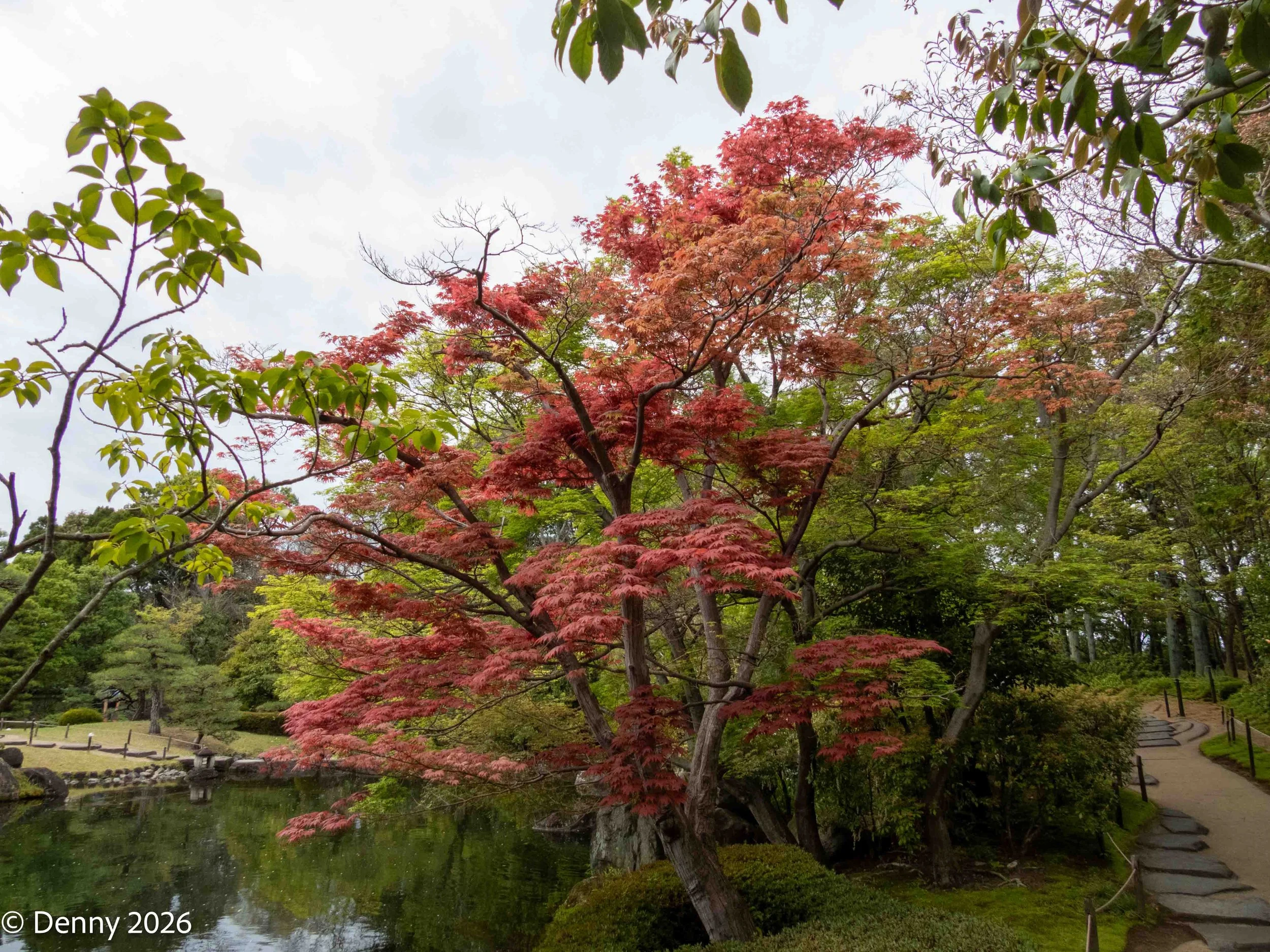
Japanese maple, Japanese garden, Himeji
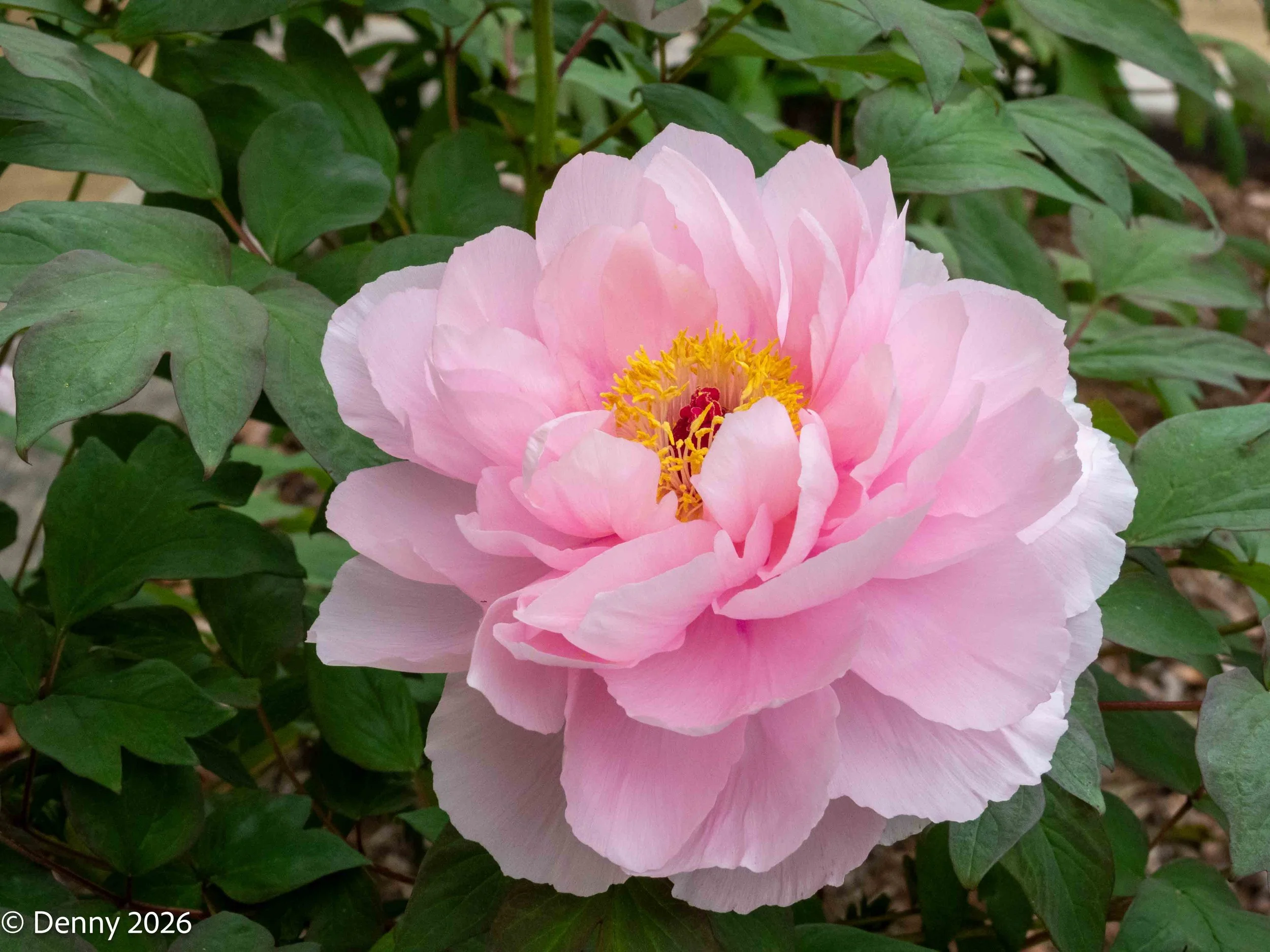
Peonie, Japanese garden, Himeji
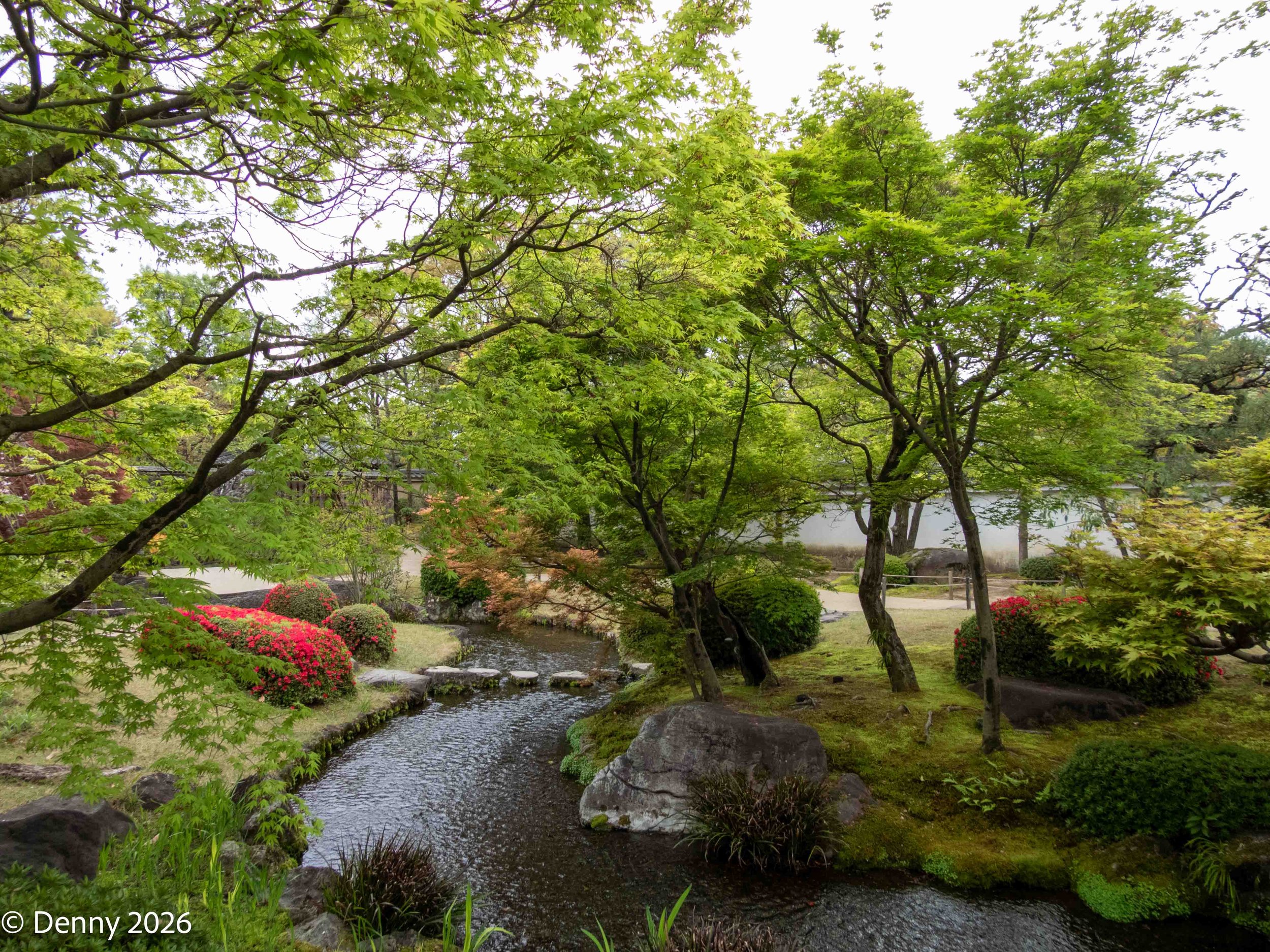
Japanese garden, Himeji
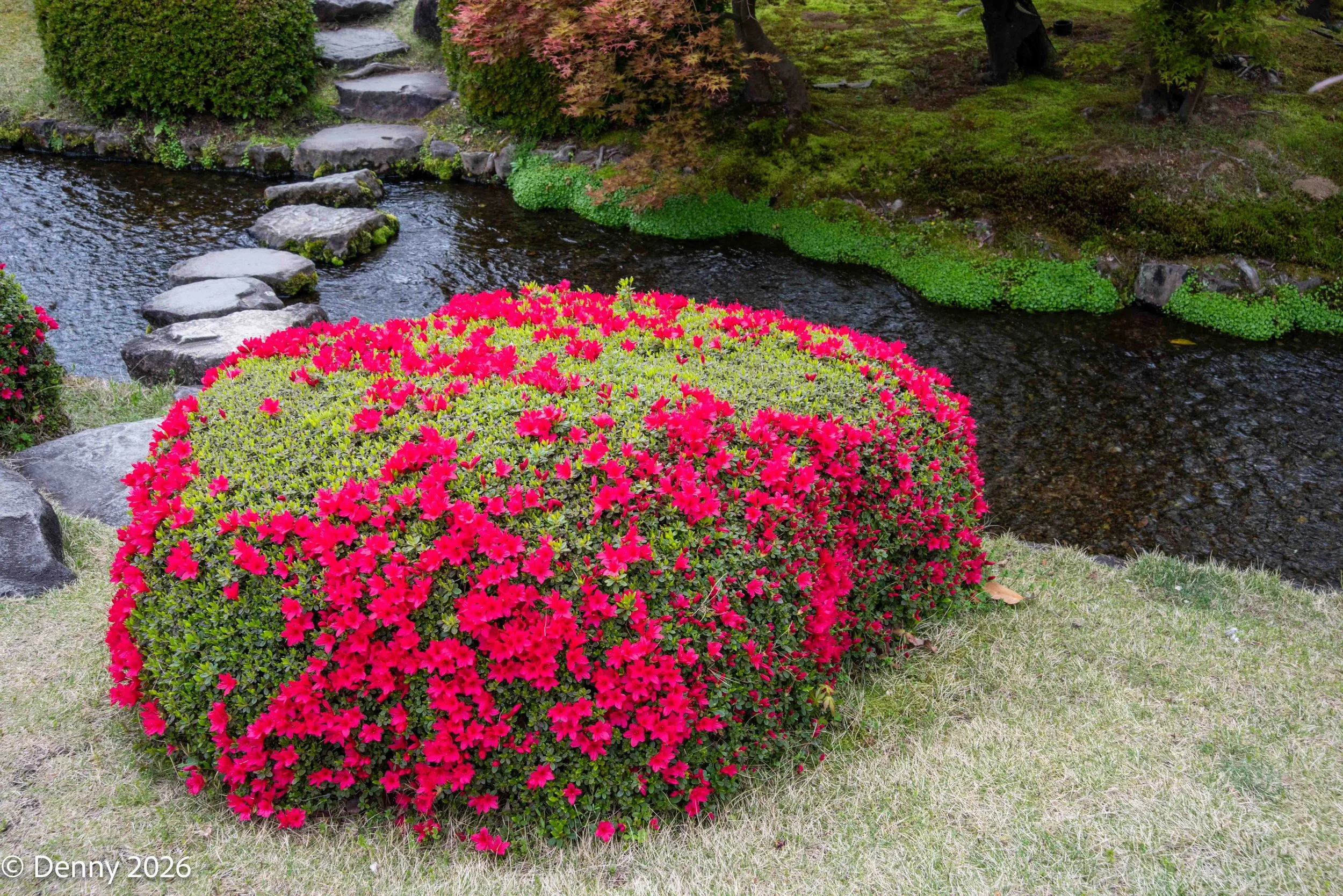
Azaleas, Japanese garden, Himeji
Walking in this garden was a most pleasant and highly desirable antidote to the hustle and bustle of the crowds in the castle.
We then returned to our bus and commenced a two hour bus trip to Osaka via the large port city of Kobe.
Our accommodation for the next two nights in Osaka is at the Sheraton Miyako Hotel and then on Friday we head back home to Australia.
For our final full day in Japan tomorrow, we will visit the city of Nara and hopefully see some samurai sword experts in action.