
After an early breakfast at 06:30 we commenced a very busy day of bus travel, walking and visiting historical sites.
The first part of our day involved a one hour drive south of Hiroshima to the port city of Miyajimaguchi where we boarded the ferry, the ‘Misen Maru’ to Miyajima Island. Mt. Misen is a prominent mountain on the island.
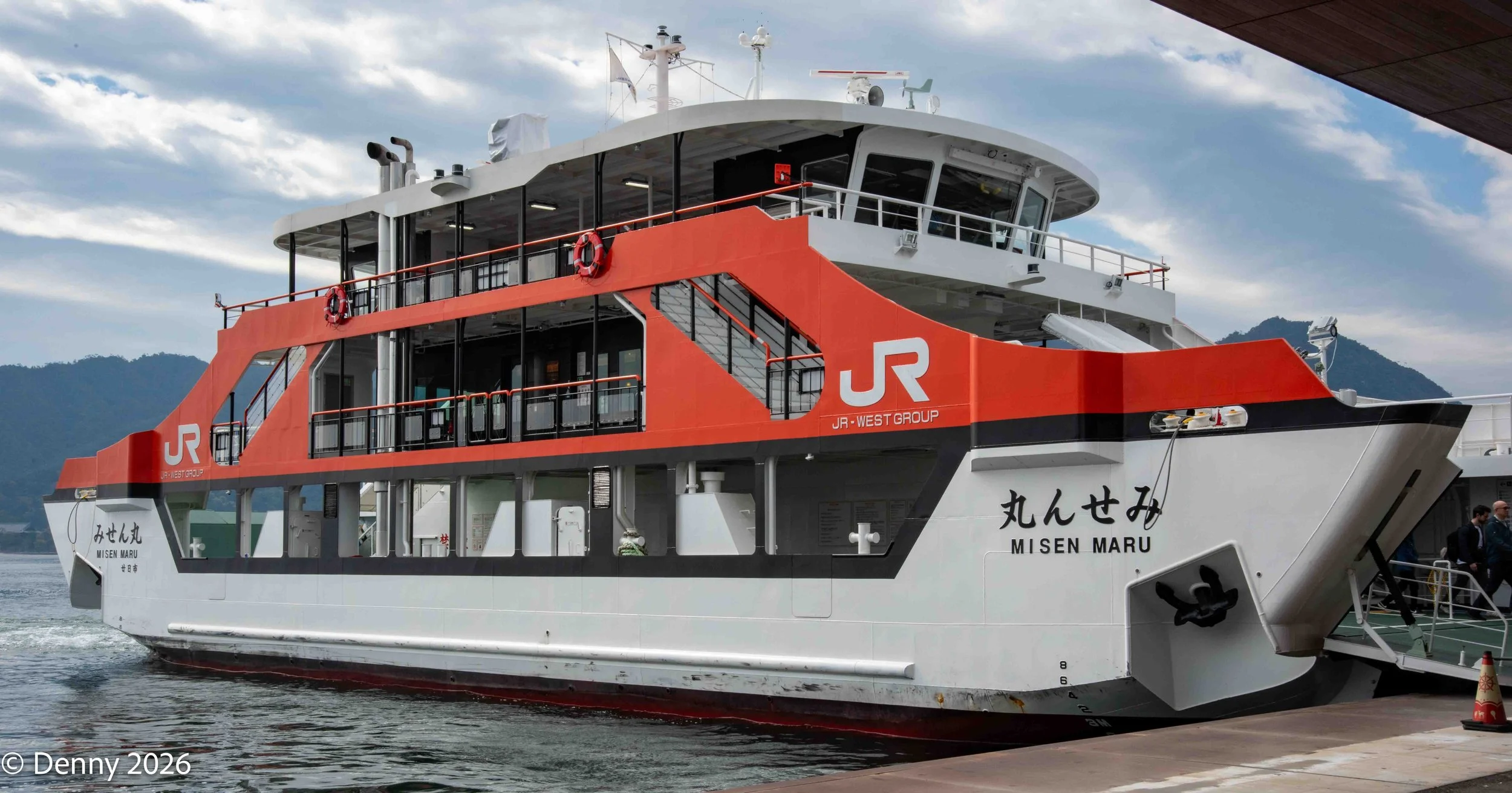
Our ferry ‘Misen Maru’ to Miyajima
The short distance across to the island took about fifteen minutes. We then spent the next three hours exploring the northern section of the island which is regarded as one of Japan’s three most scenic spots.
Our walk followed the coastline passing through a touristy shopping area.
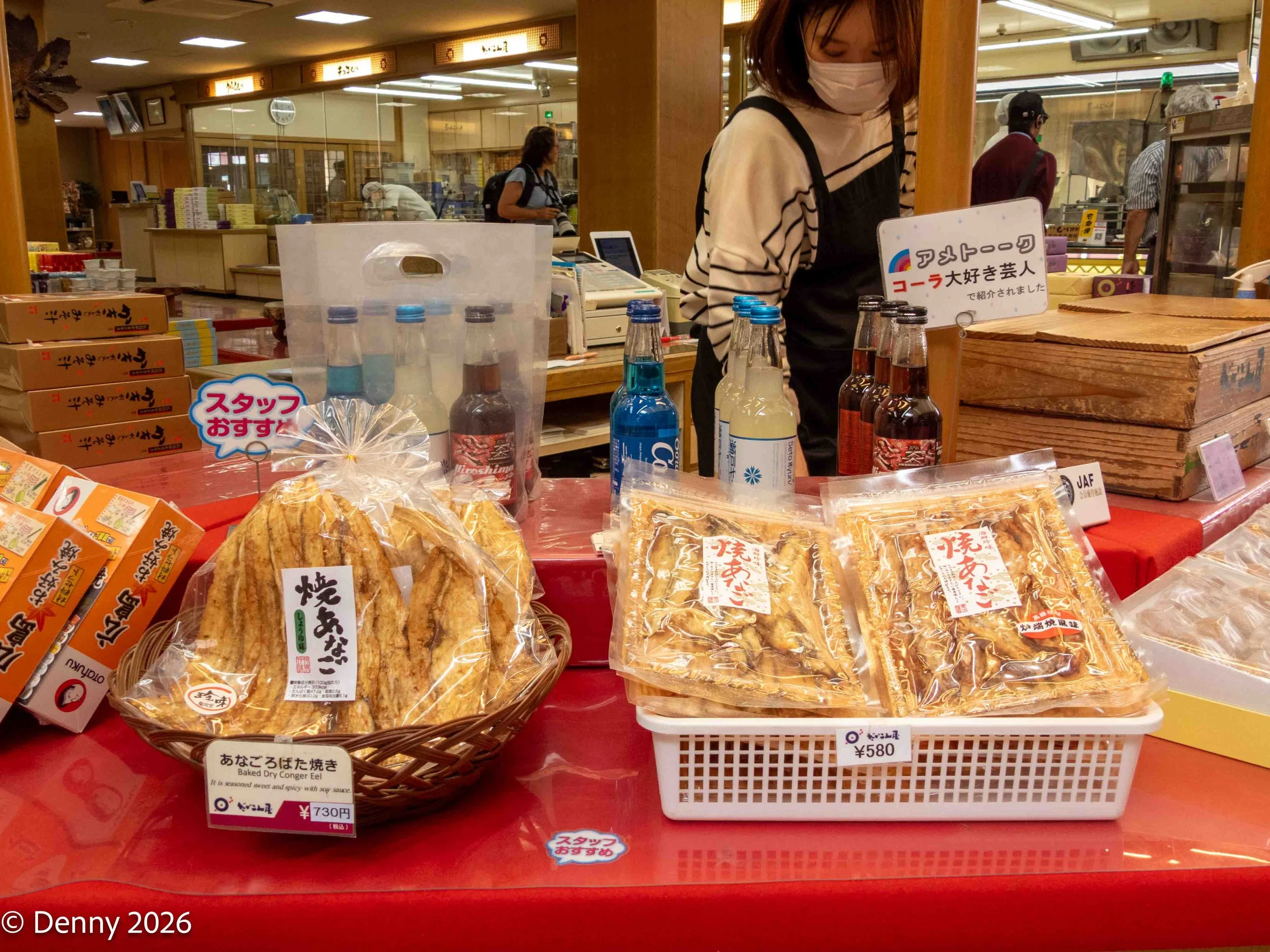
Conger eel produce, Miyajima Island
We then passed under a large Torii Gate with cylindrical granite pillars supporting two massive granite crosspieces. There were two bronze lions at the base of the torii.

Komainu ('lion-dogs) guarding the entrance (honden) to Irsukushima Shrine, Miyajima Island

Komainu ('lion-dog') with open mouth (agyoo), symbolizing the beginning and end of all things, guarding the entrance (honden) to Irsukushima Shrine, Miyajima Island

Komainu ('lion-dog') with closed mouth (ungyoo), symbolizing the end of all things, guarding the entrance (honden) to Irsukushima Shrine, Miyajima Island
Further on we were able to get good photos of the O-torii Gate to the Itsukushima Shrine. The gate, built in 1875 is standing in the water about two hundred metres from the shoreline. The brightly vermilion coloured torii has a height of 16.6 m and weighs about 60 tonnes. The upper cross-member is 24 m in length and is filled with 4 tonnes of stones to give stability. The main vertical supports are made from massive camphor and cedar tree logs.
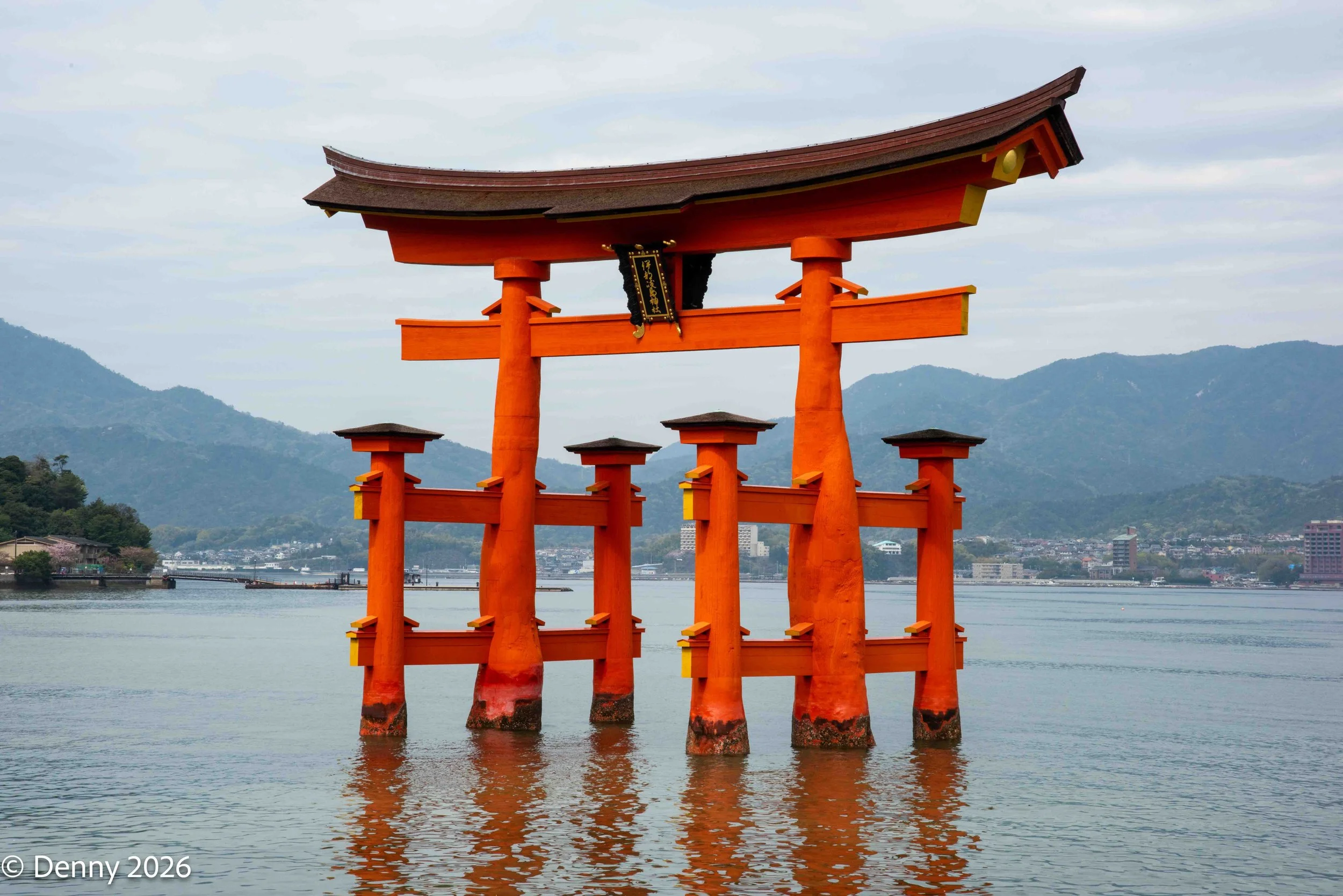
O-torii Gate, Miyajima
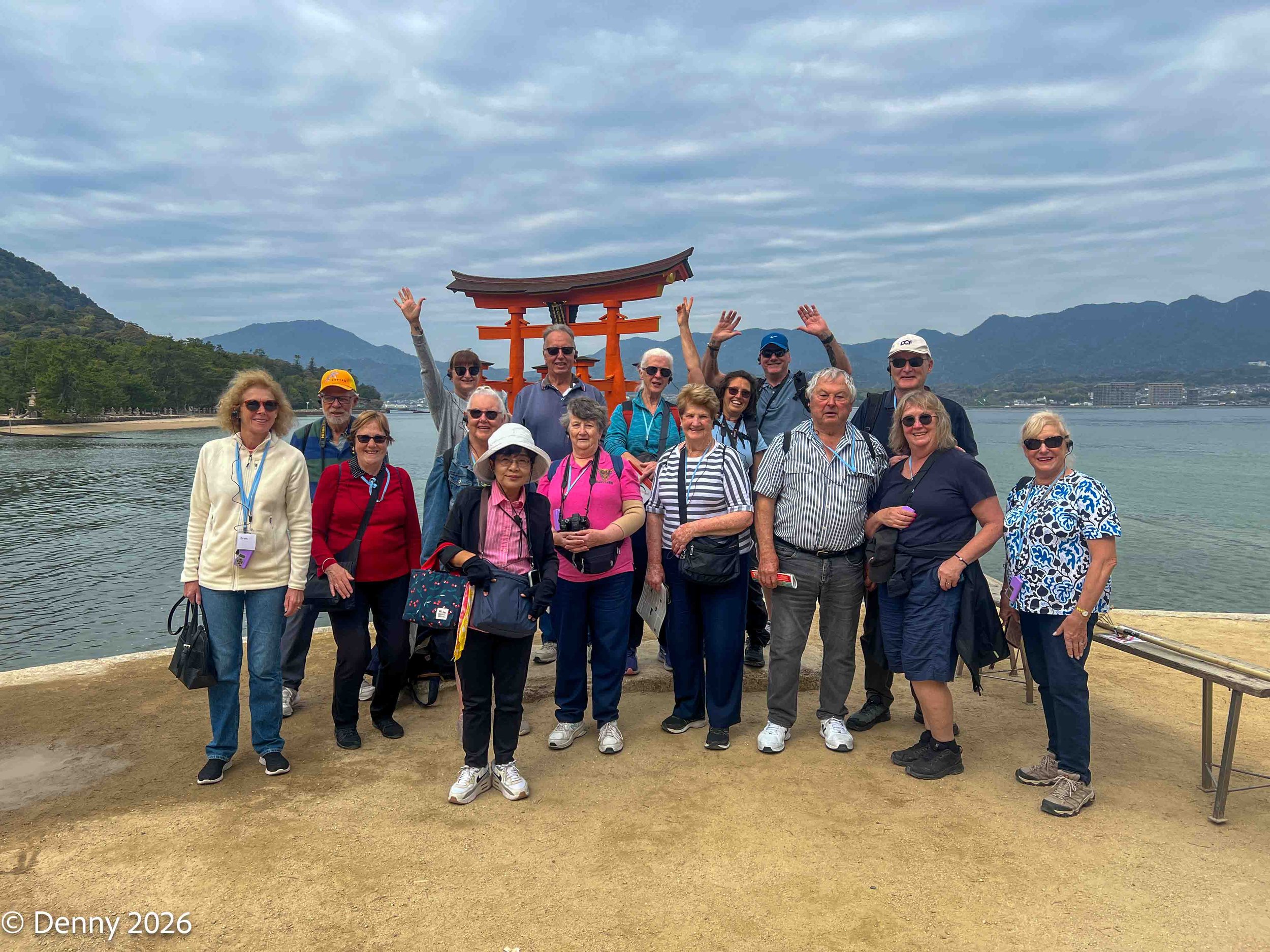
Our group with our amazing guide Mitzie, UNESCO World Heritage-listed Island of Miyajima
Our walk then took us to the nearby Itsukushima Shrine renowned for its architectural beauty and glorious appearance. This Shinto shrine was first built in the 6th century and later remodelled in 1168 by the powerful leader Taira-no-Kiyomori.
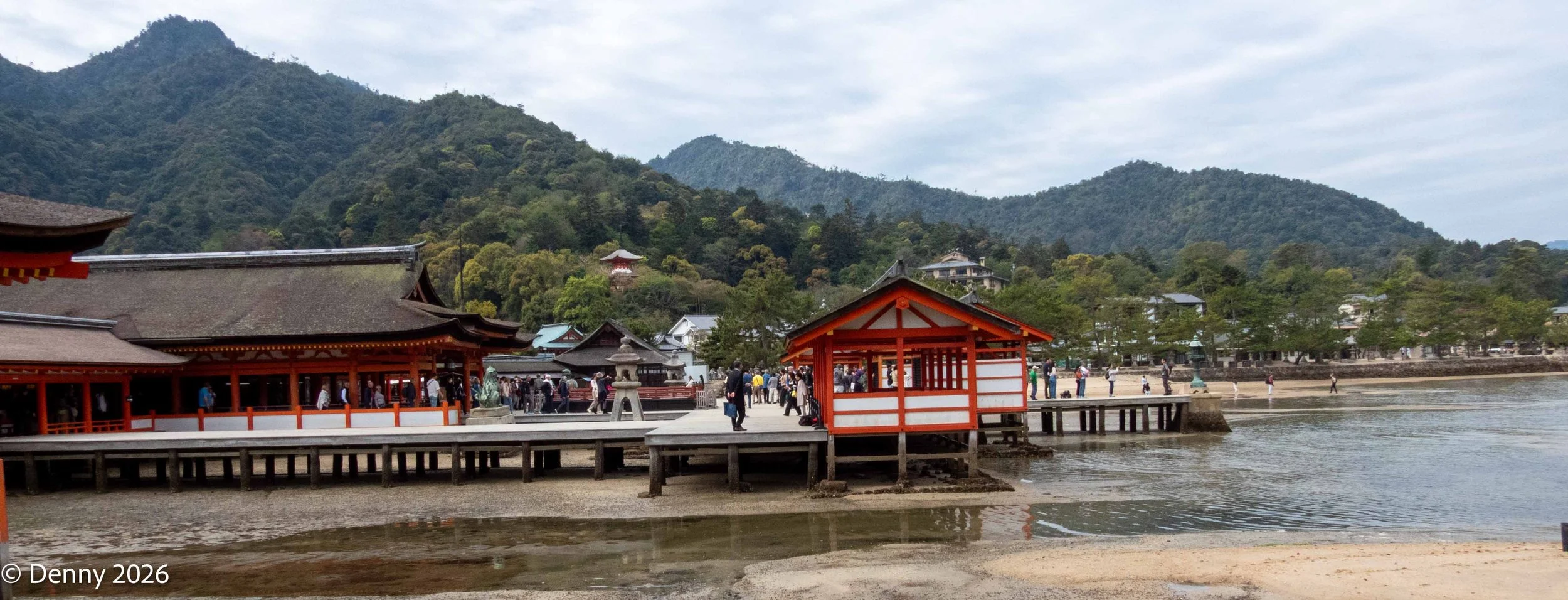
Itsukushima Shrine, Miyajima
The shrine consists of the main hall, a stage area, music rooms together with worship and purification halls. All the timber structures are painted vermilion and the roofs are black terracotta tiles.
While we were at the shrine, a wedding ceremony was being held in the main hall area and a large crowd gathered to watch this occurrence.
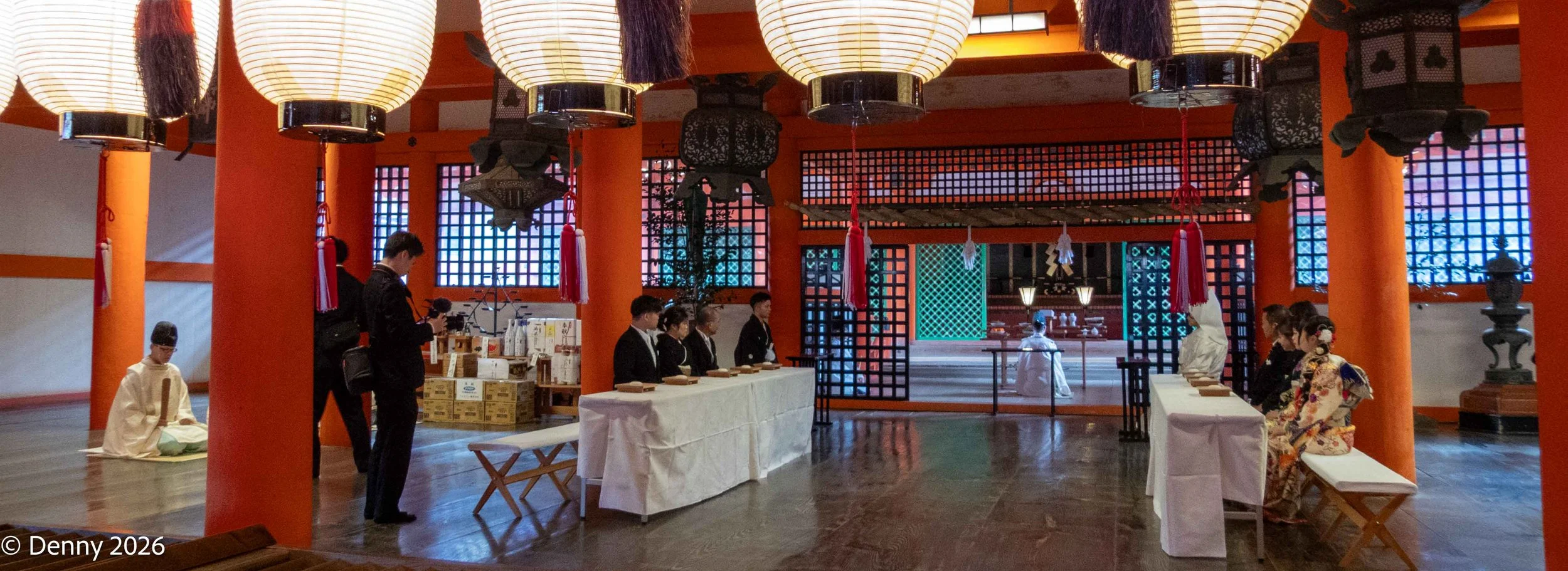
Wedding, Itsukushima Shrine, Miyajima
We spent the next hour or more slowly wandering and observing the buildings, gardens, wooden bridges, stone monuments and the wild deer that are plentiful and don’t appear to be too wild at all.
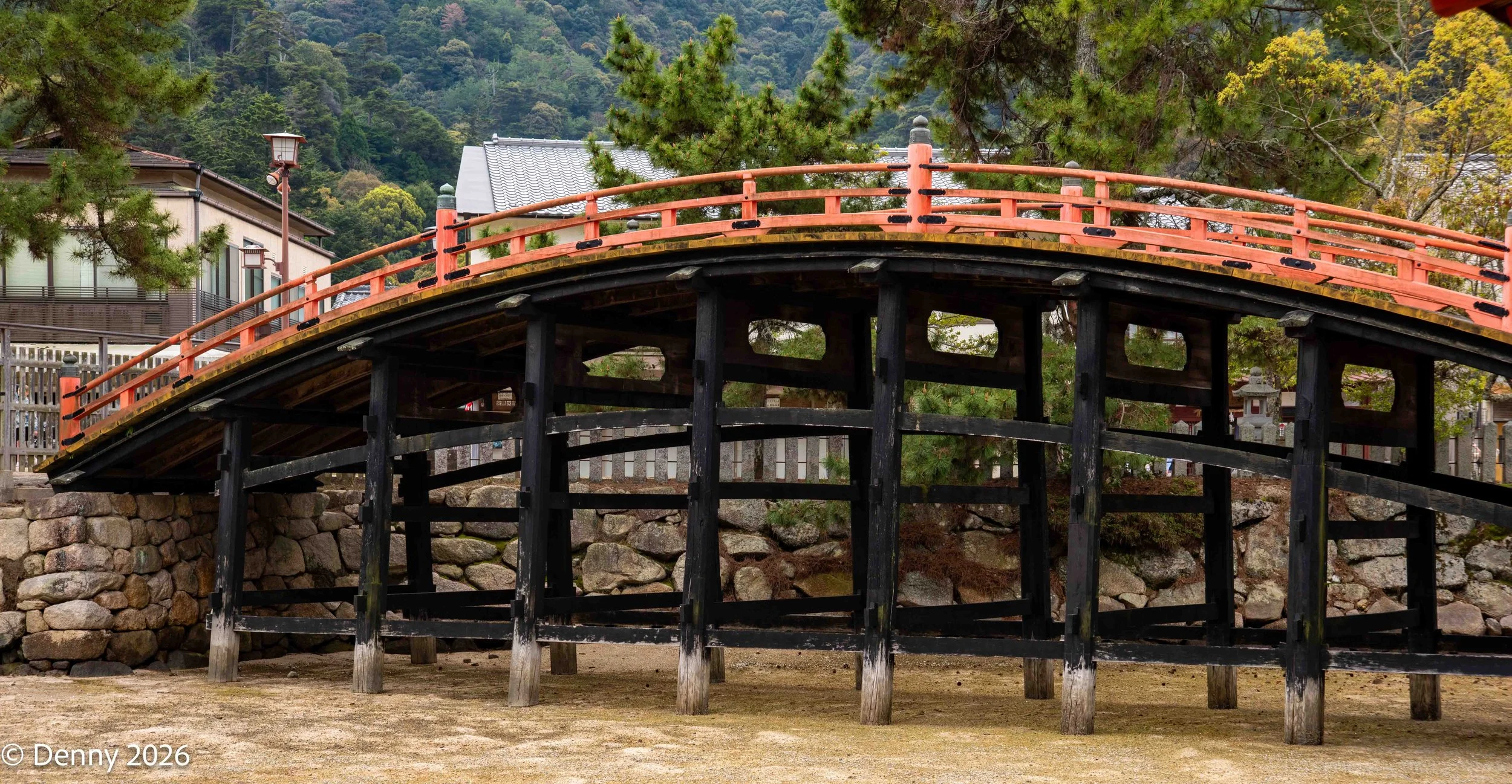
Arch Bridge, Miyajima
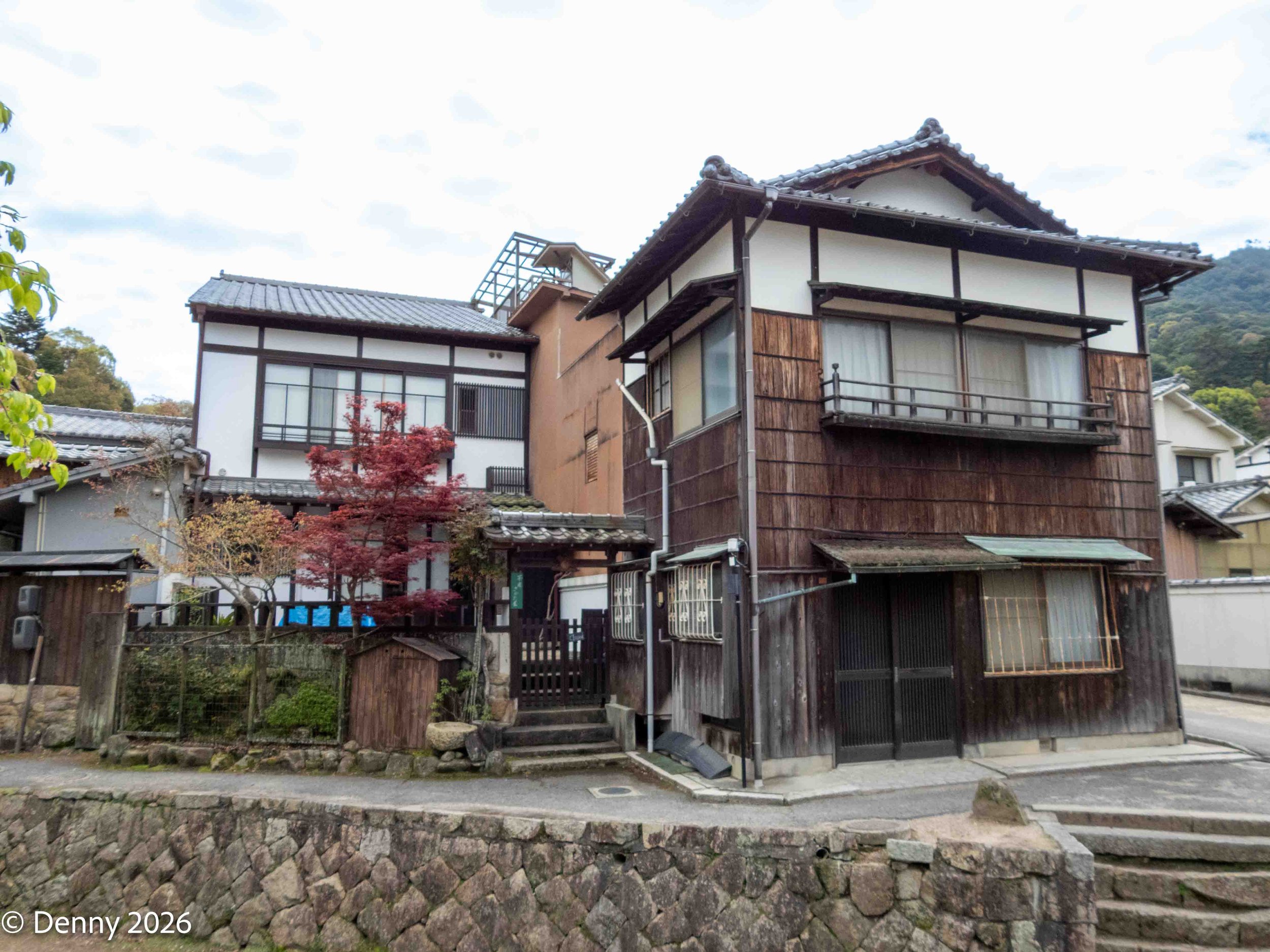
House, Miyajima
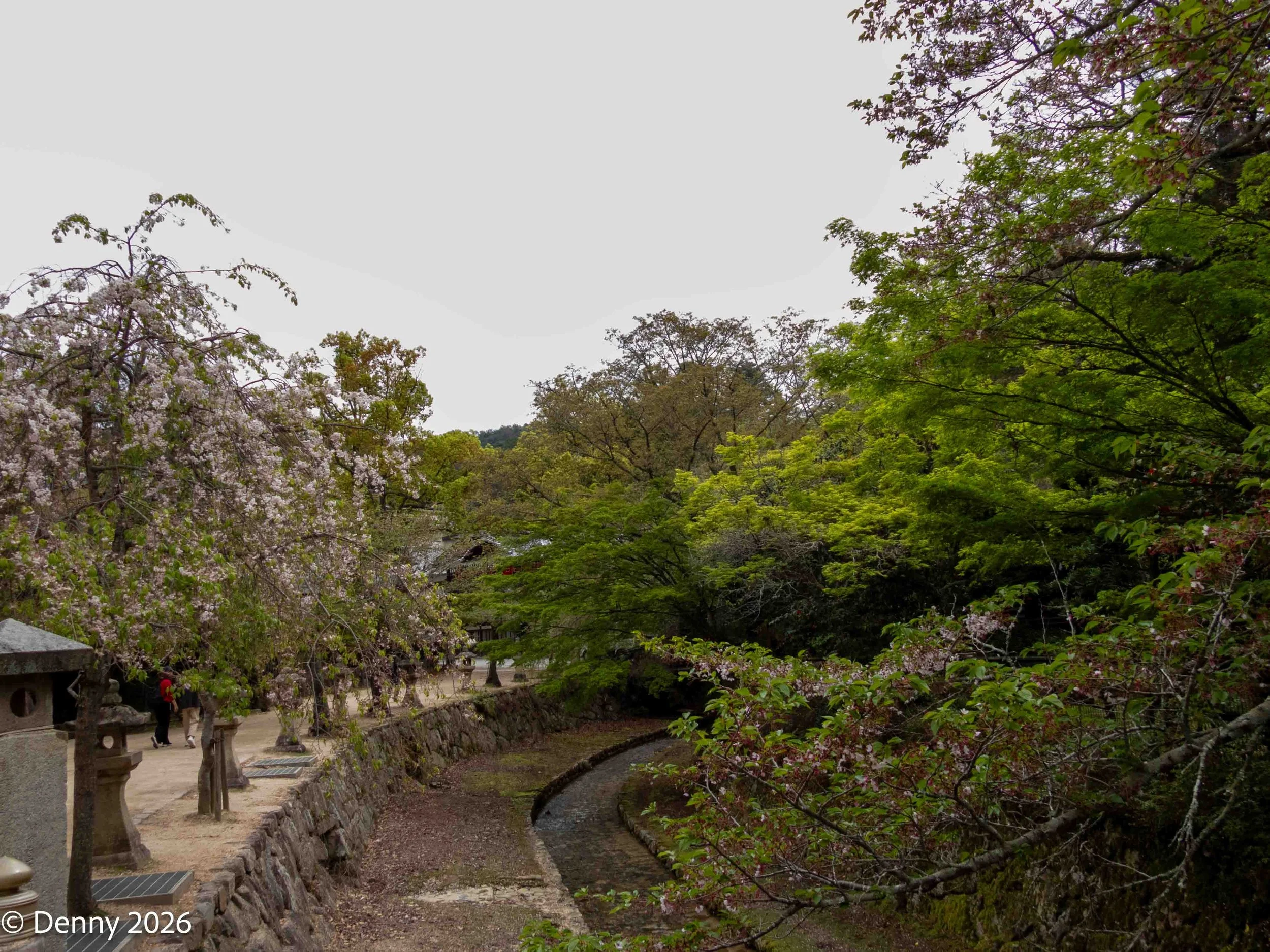
Waterway, Miyajima
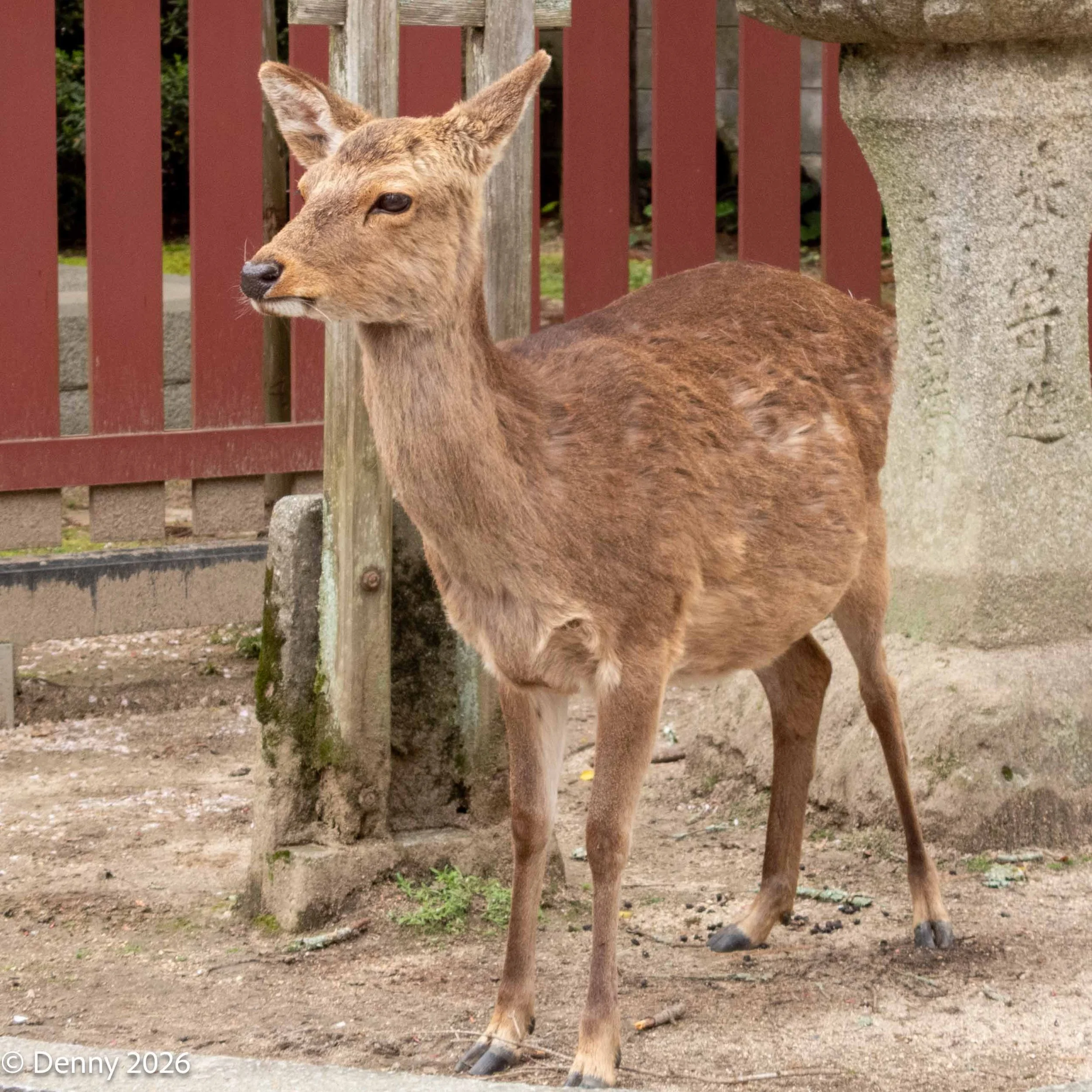
Sika deer (Cervus nippon), Miyajima Island (Itsukushima)
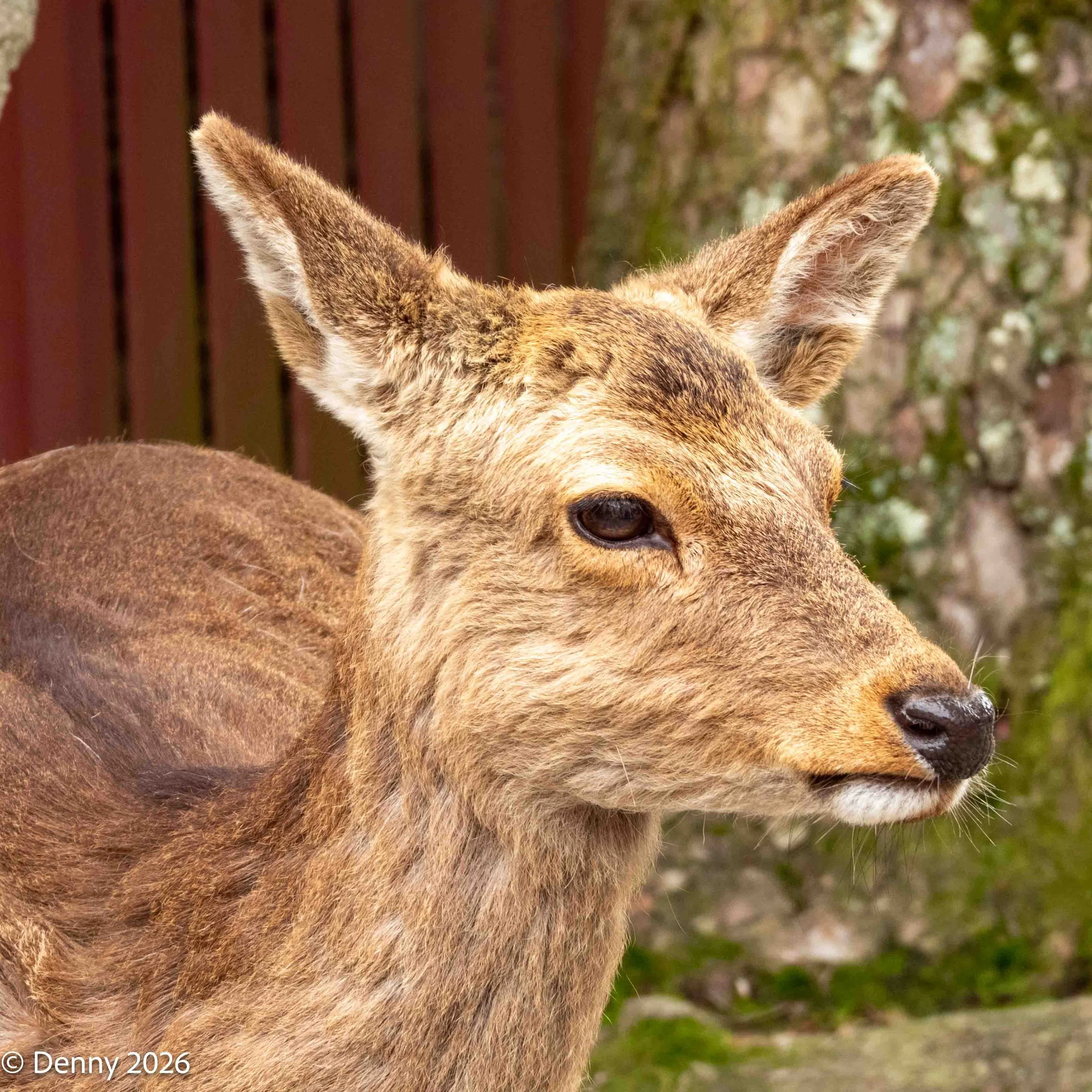
Sika deer (Cervus nippon), Miyajima Island (Itsukushima)

Temple complex with main temple being renovated, Miyajima Island (Itsukushima)
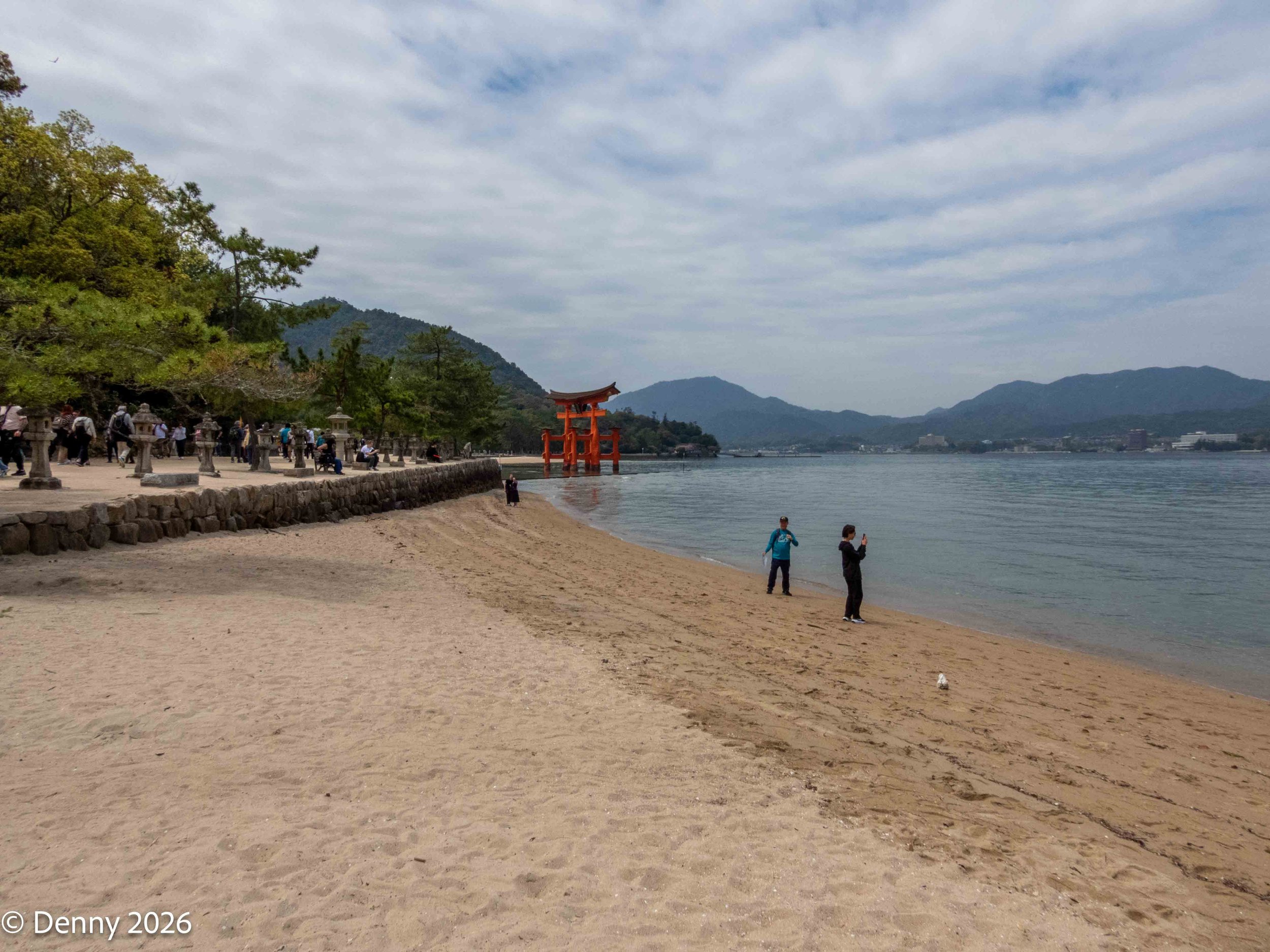
Beach, Miyajima
Our return pathway took us back to Machiya Street which offers an abundance of tourist shops within a neat row of centuries old stores and houses.
We found a delightful Japanese mini-garden out the back of a cafe with massive carp in its pool.
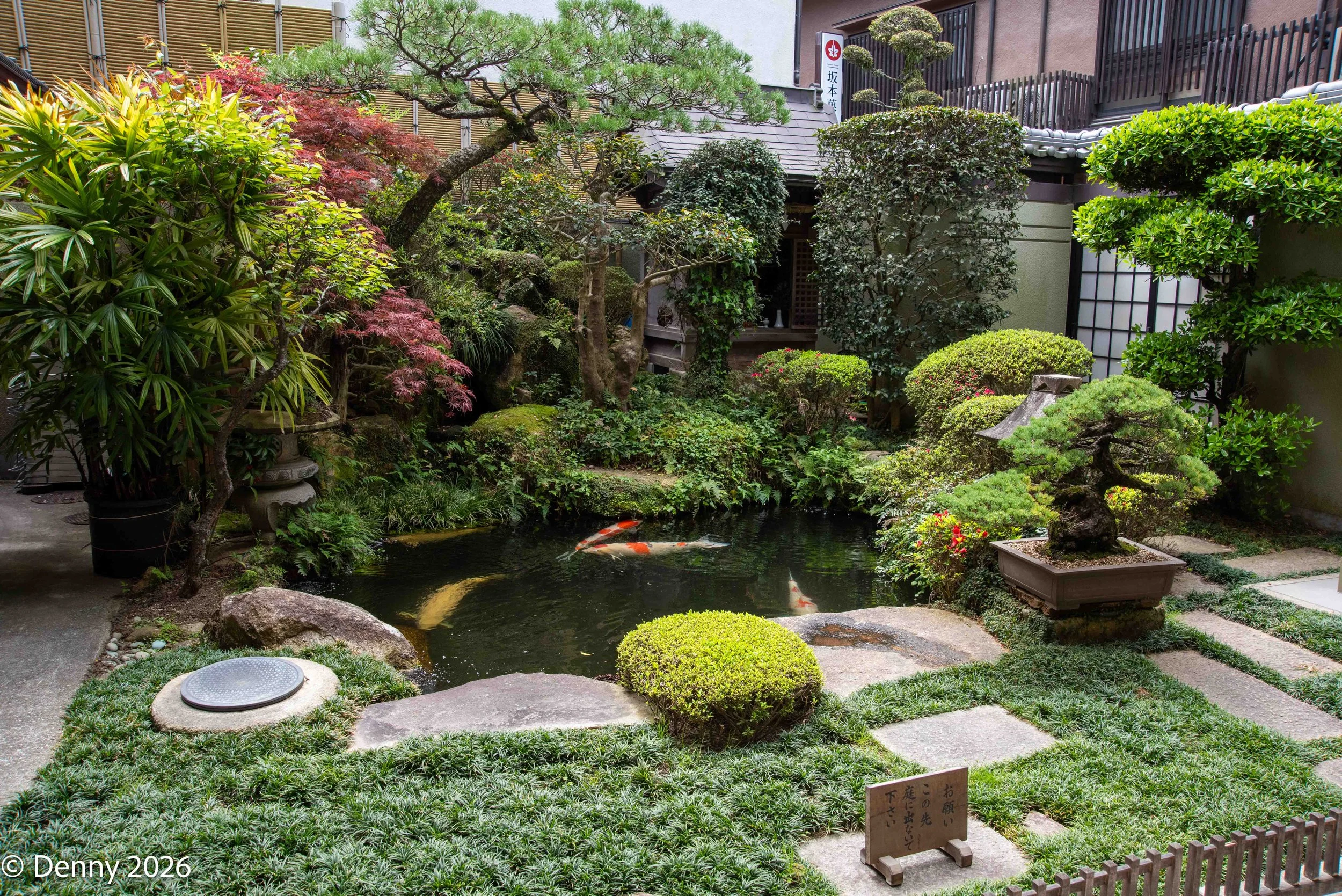
Garden behind cafe, Miyajima
We decided against buying roasted chestnuts which we love, because the ones on sale looked too charred. Nearby was a shop producing biscuits with a basic robotics system controlling the production line.

Machine for producing momiji manju (waffle shaped like a maple leaf), Miyajima Island
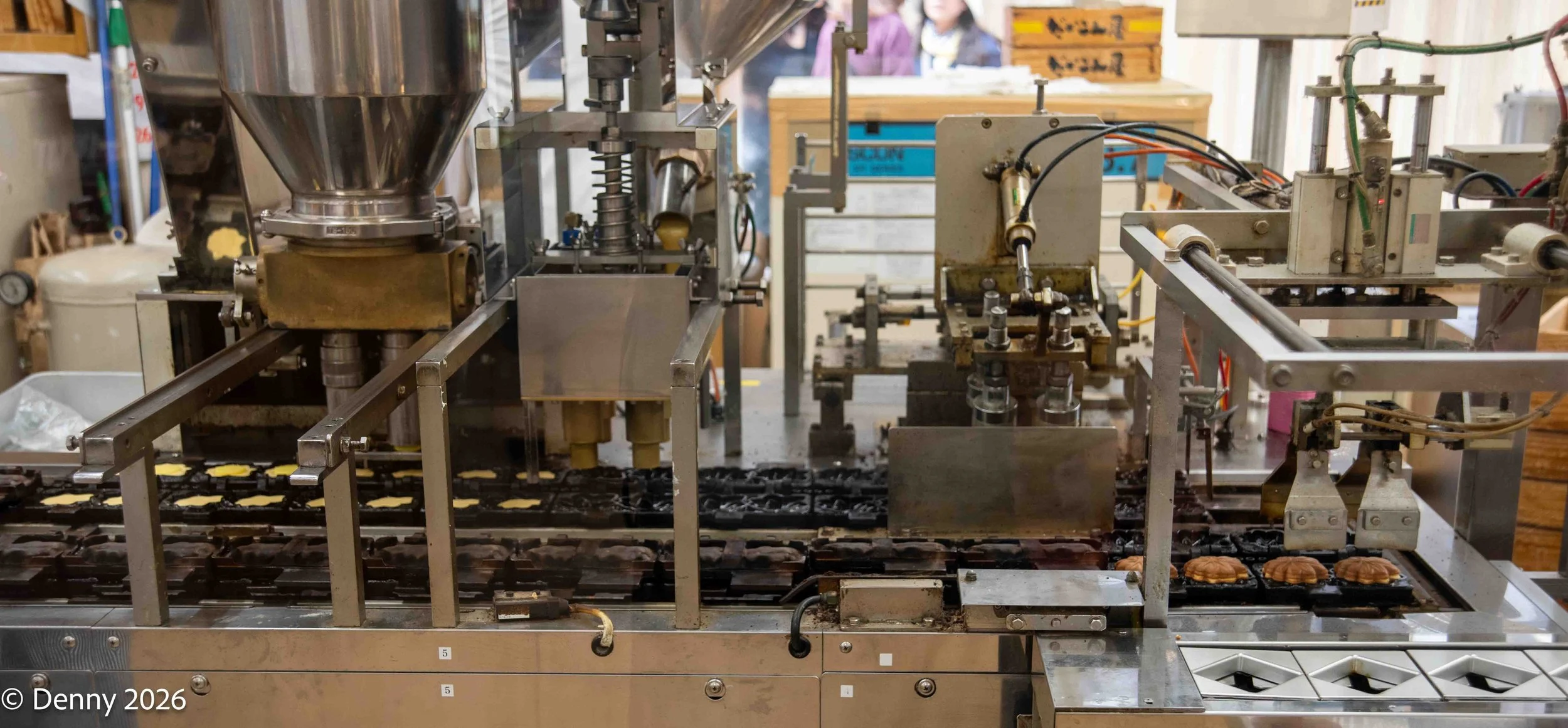
Machine producing momiji manju (waffle shaped like a maple leaf), Miyajima Island

Red bean Box of momiji manju (waffle shaped like a maple leaf), Miyajima Island,
Corinne bought an attractive pendant and chain where the blue shinkai stone is attached to and cradled in a silver double helix.
Another souvenir shop had some small colourful bowls that with their blue pattern and nautical motifs we thought would be ideal for the Anson’s Bay shack. These were purchased at a bargain price.
We departed Miyajima Island on the same ferry and then our bus driver drove us to the Hiroshima Peace Memorial Park where we spent the next three hours.
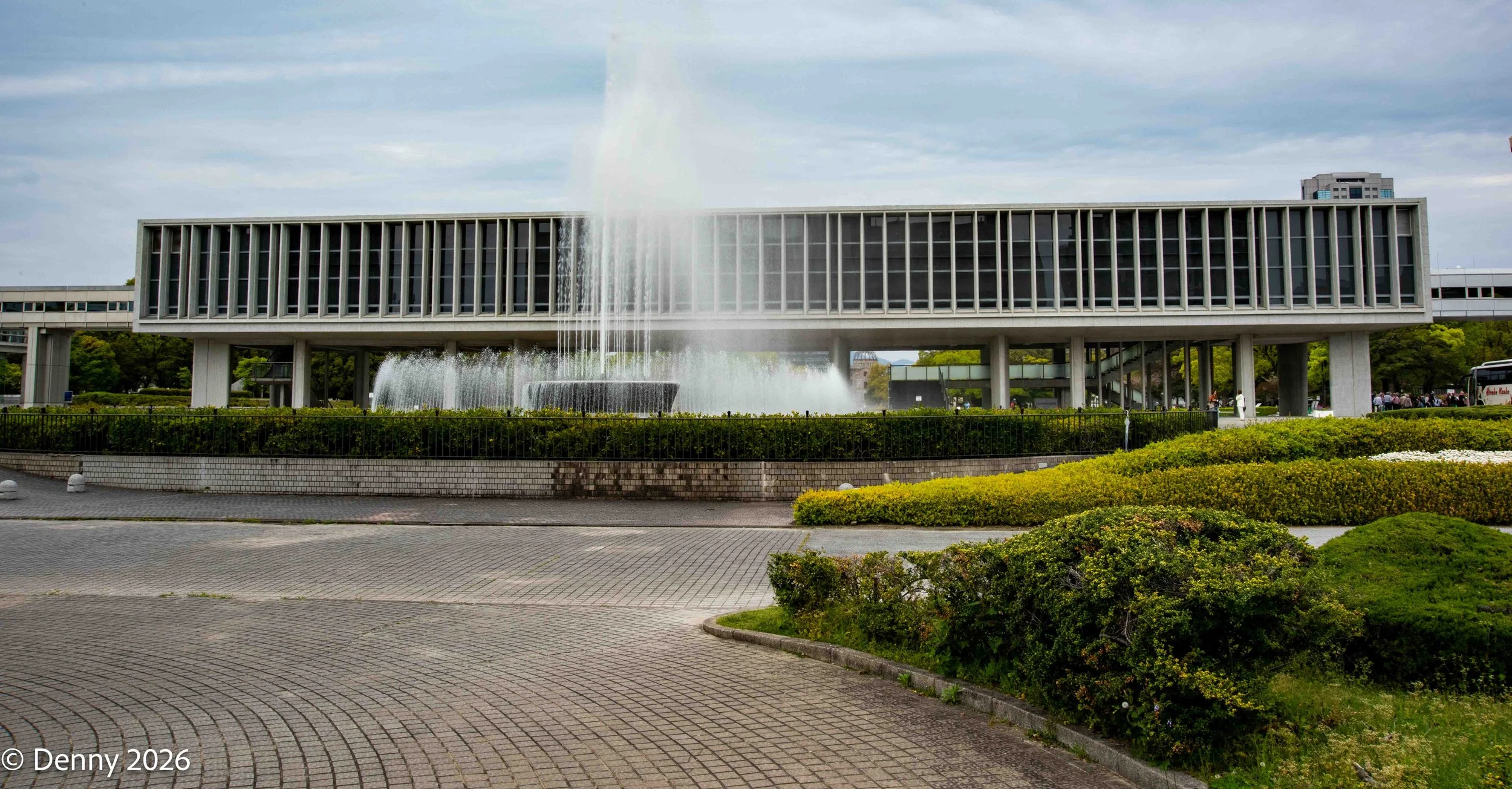
Hiroshima Museum
For the worst of reasons, Hiroshima needs no introduction, but each year millions of visitors are drawn to this city because of one unforgettable cataclysmic event.
At 08:15 on August 6th in 1945 a B-29 bomber ‘Enola Gay’ detonated a nuclear fission bomb called ‘Little Boy’ at an altitude of 580 m above the city centre.

Clock showing the number of hours since the first dropping of the A-bomb & number of days since the latest nuclear test, Hiroshima
Tens of thousands of people were killed instantly by the blast and the toll rose to 300,000 over the following years as the intense gamma radiation effects took hold. The level of destruction caused by this comparatively ‘small’ nuclear bomb could be best described as apocalyptic. A vast proportion of Hiroshima city was utterly destroyed by the bomb’s induced pressure wave and subsequent fires.
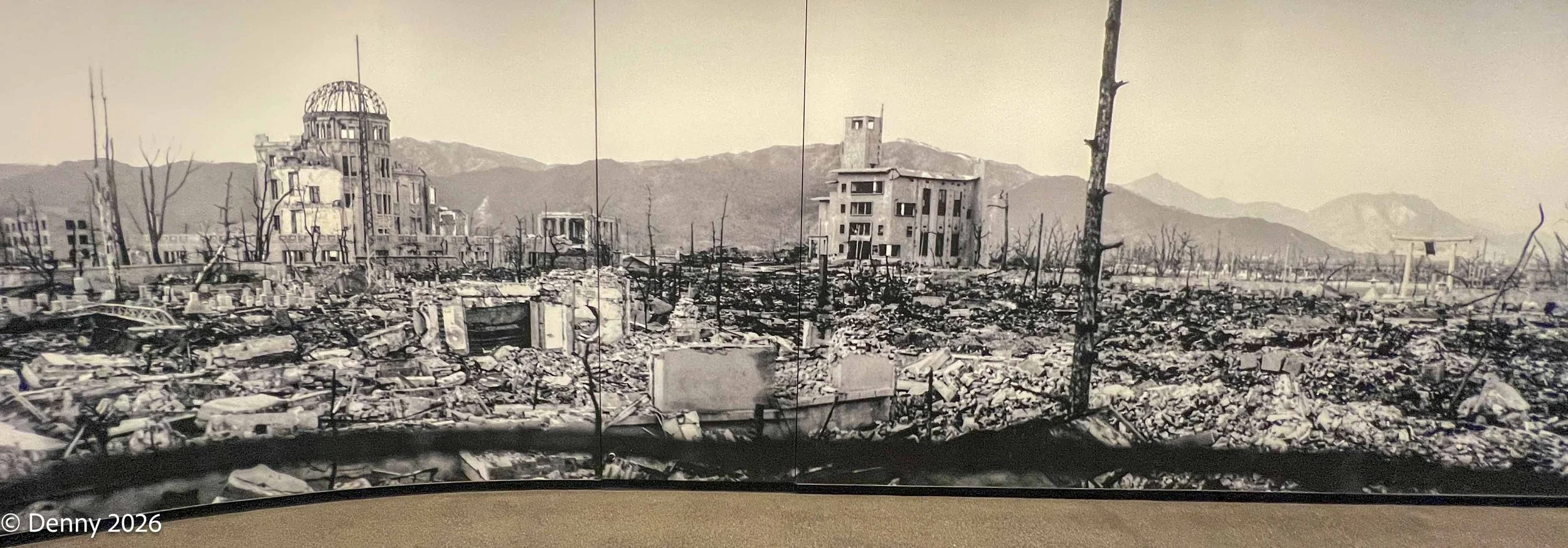
Part of mural showing devastation caused by the nuclear fission bomb, Hiroshima
The first hour in the memorial park was spent in the expansive museum where we walked from room to room following a path wearing a headset that provided comprehensive audio details on many of the numbered exhibits.
The photos and many items recovered from that terrible August day were very confronting and the images of burnt adults and children were utterly horrifying.
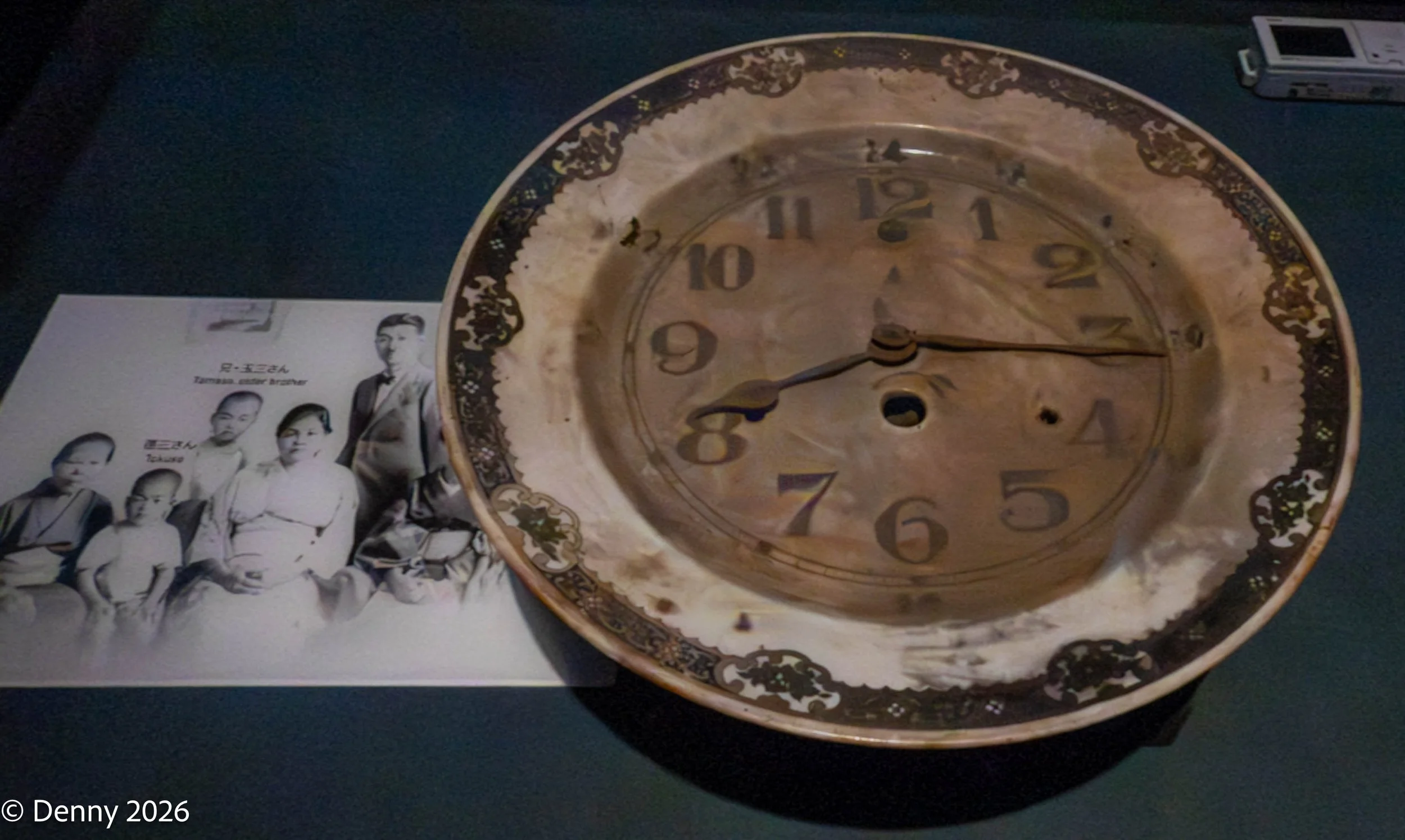
Wall clock - example of displays, Hiroshima Museum
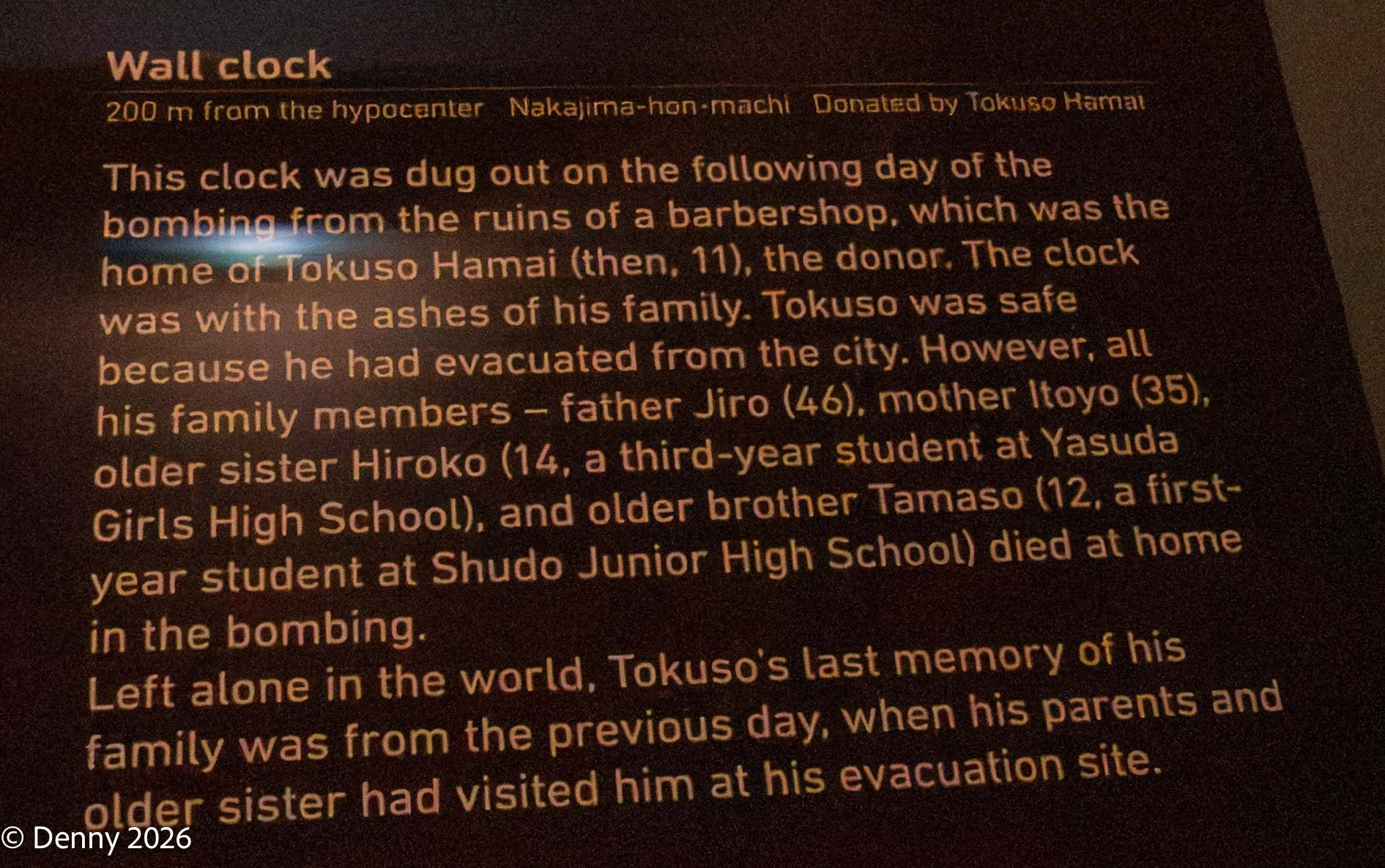
Wall clock annotation, Hiroshima Museum
Following our museum visit it was a relief to get outside to feel the refreshing air around the memorial fountain and to wander amongst the trees and garden of the Memorial Park.

Azaleas in bloom, Hiroshima Museum gardens
We then came upon a bronze statue of a woman with her child playing a trumpet standing on a golden crescent moon; the title being a ‘Prayer for Peace’.

Statue of a woman with her child playing a trumpet standing on a golden crescent moon, Hiroshima Museum gardens
Next there was the curved Cenotaph and the Flame of Peace which will only be extinguished when nuclear weapons have been eliminated. The Cenotaph designed by Kenzo Tange holds beneath its arch a chest which contains the names of all those who died, together with an inscription that reads ‘Rest in Peace. We will never repeat the error’.
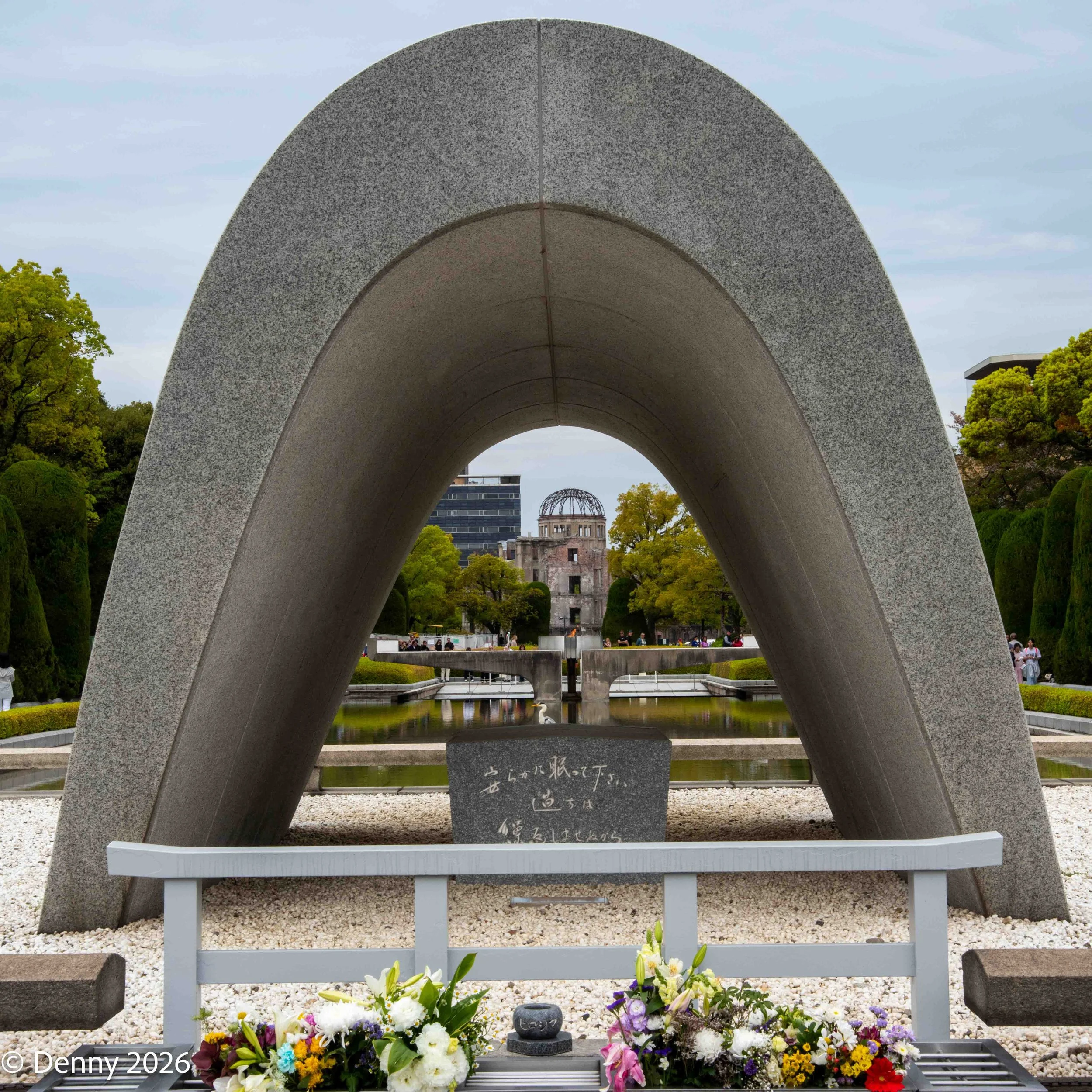
Cenotaph and the Flame of Peace, Hiroshima
The Children’s Peace Monument nearby, depicts a girl with a crane flying above her. Her name is Sasaki Sadako and she was a victim of the bomb. She believed she would survive if she made 1000 origami paper cranes. She did not survive but there are now tens of thousands of paper cranes made by school children that adorn the memorial.

Children’s Peace Monument, depicting a girl with a crane flying above her.
After passing the Peace Bell we now focussed on the iconic relic of Hiroshima, namely the haunting and twisted girders of the ‘A-bomb Dome’.
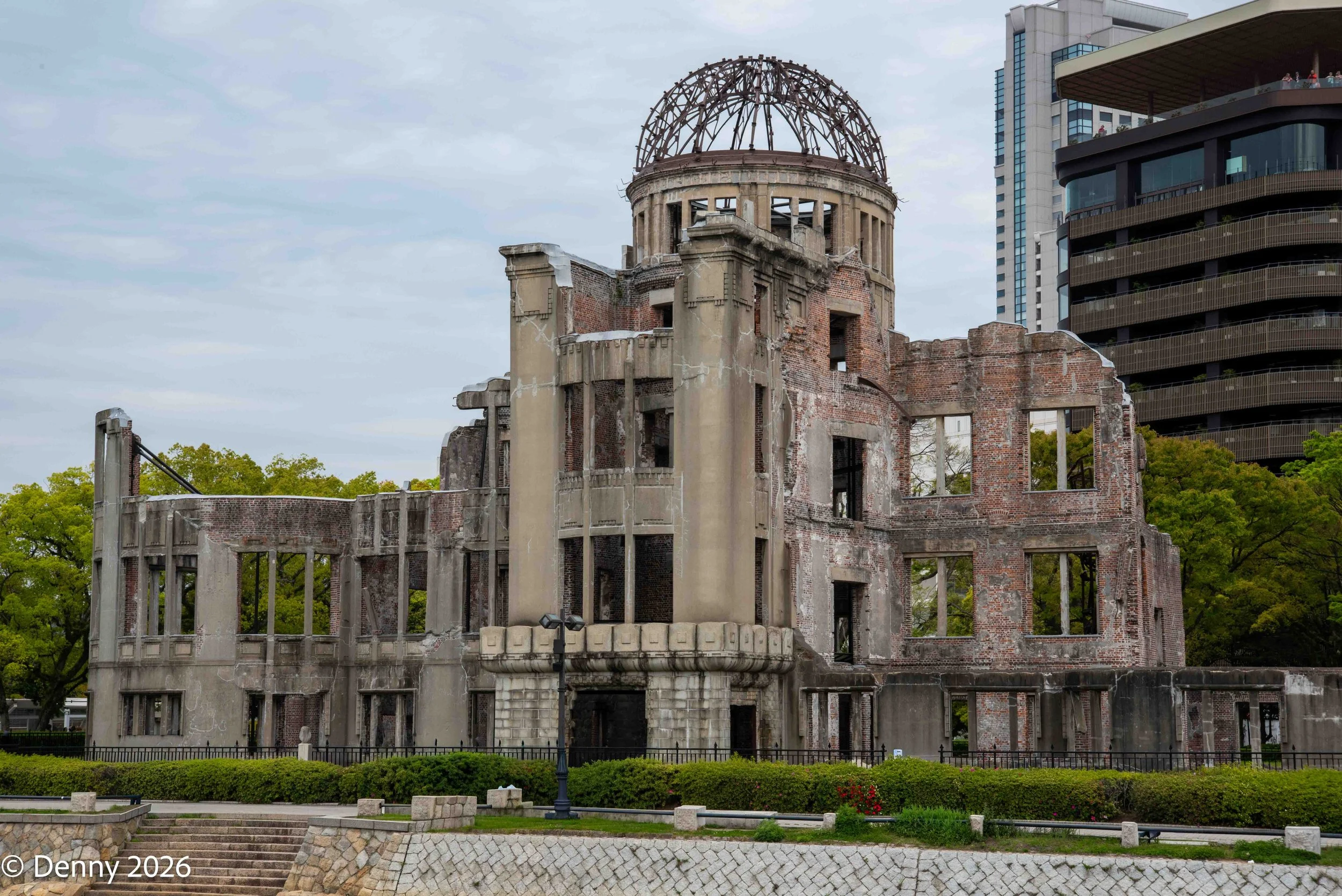
‘A-bomb Dome’, Hiroshima
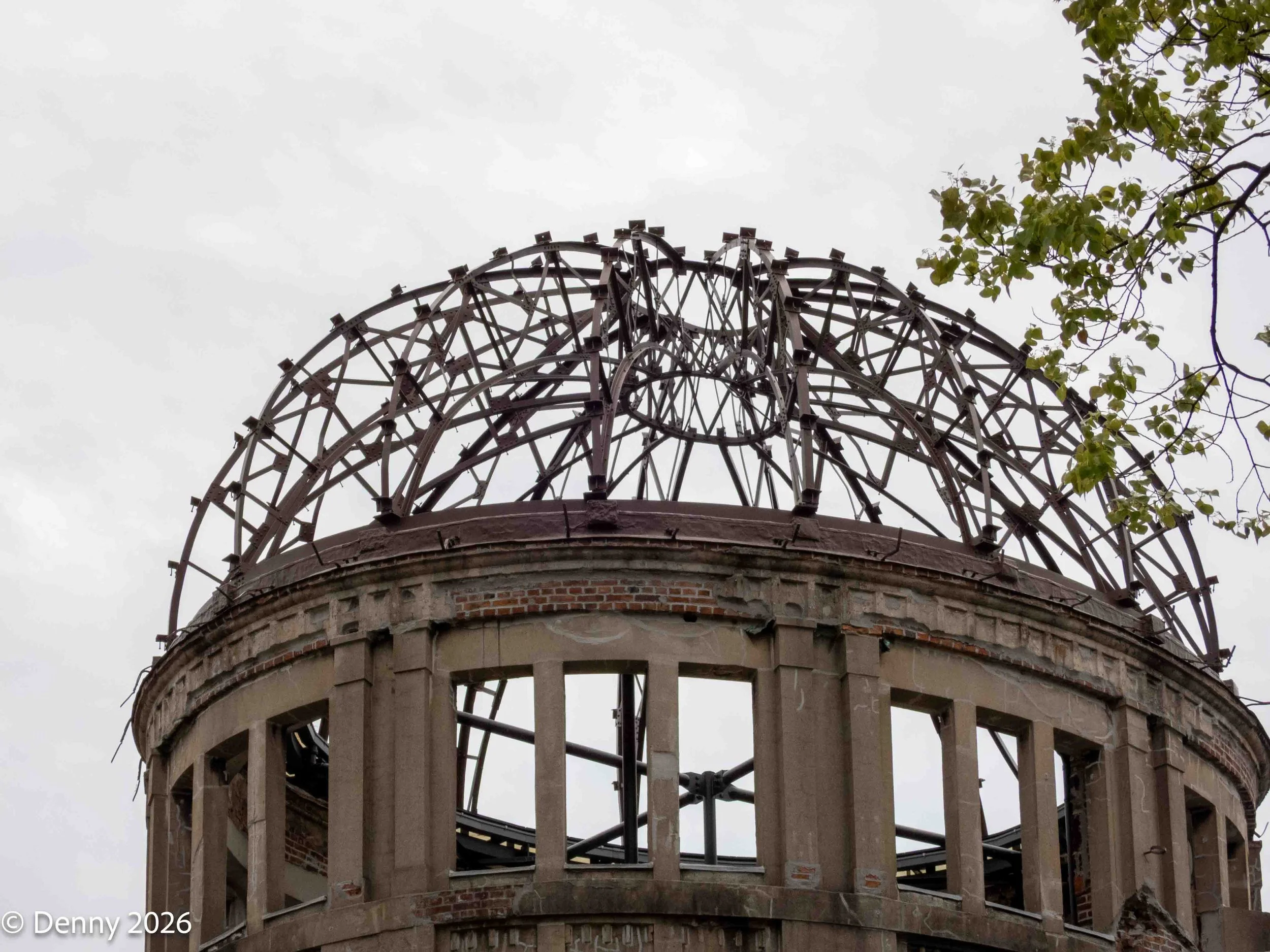
‘A-bomb Dome’, Hiroshima
The original 1915 building was the Hiroshima Prefectural Industrial Promotion Hall which was loved by the local people because of its green tarnished copper dome.
This building was only 160 m from the epicentre of the bomb’s detonation and all its occupants died instantly.
In 1996 this building was added to the UNESCO World Heritage List as a reminder of the horrors of the atomic bomb and as a symbol of world peace.
After a distressing afternoon’s exposure to the tragedy of war we returned to our hotel with a fervent and yet unrealistic wish that there could be a total elimination of all nuclear weapons.
Subsequently, we had a most enjoyable evening meal together with travelling companions Chris and Shelley at a nearby okonomiyaki restaurant. Hiroshima is famous for this savoury pancake, cabbage and noodle specialty, cooked on a hotplate in front of you.
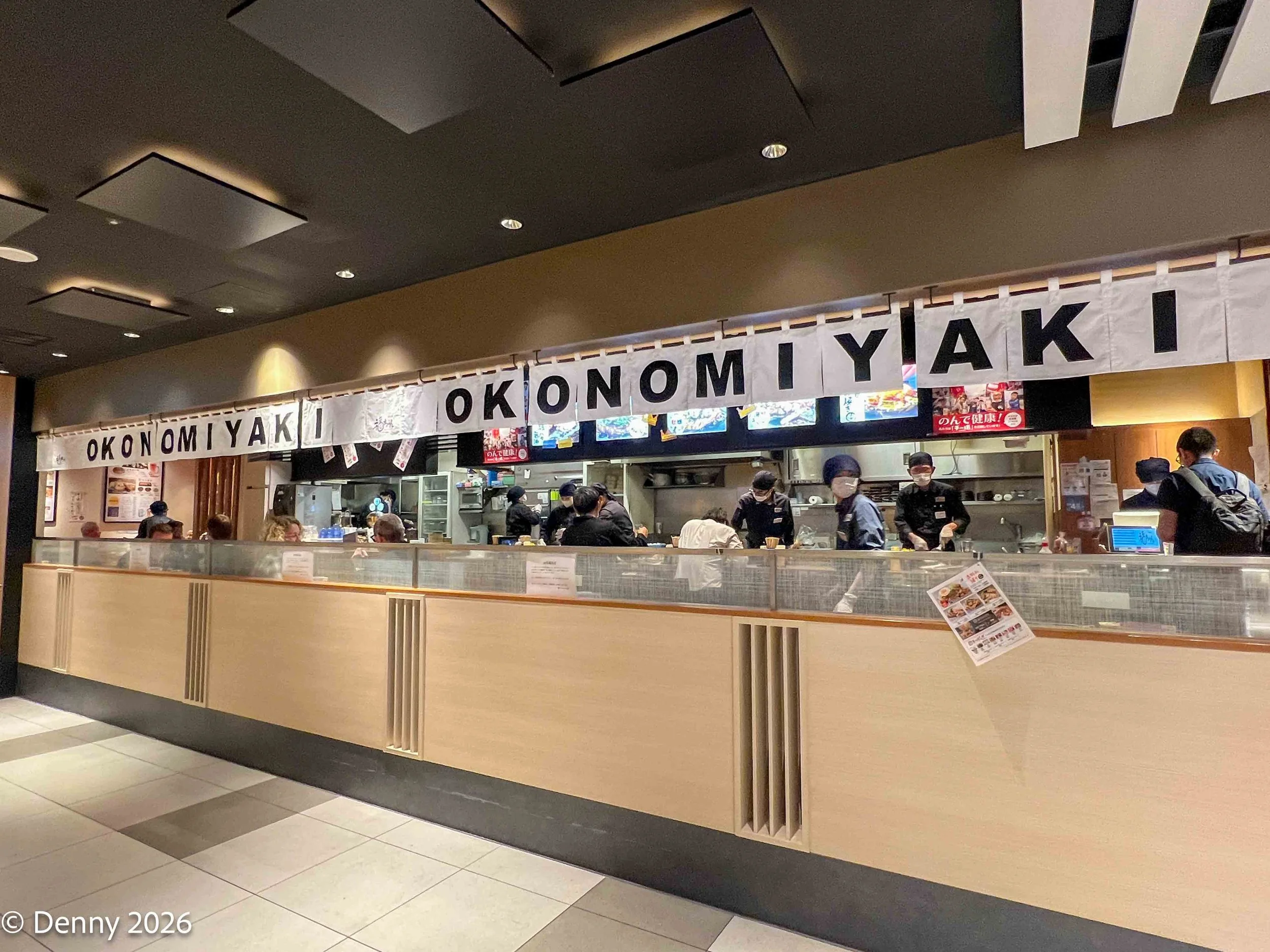
Ikonomiyaki Restaurant, Hiroshima
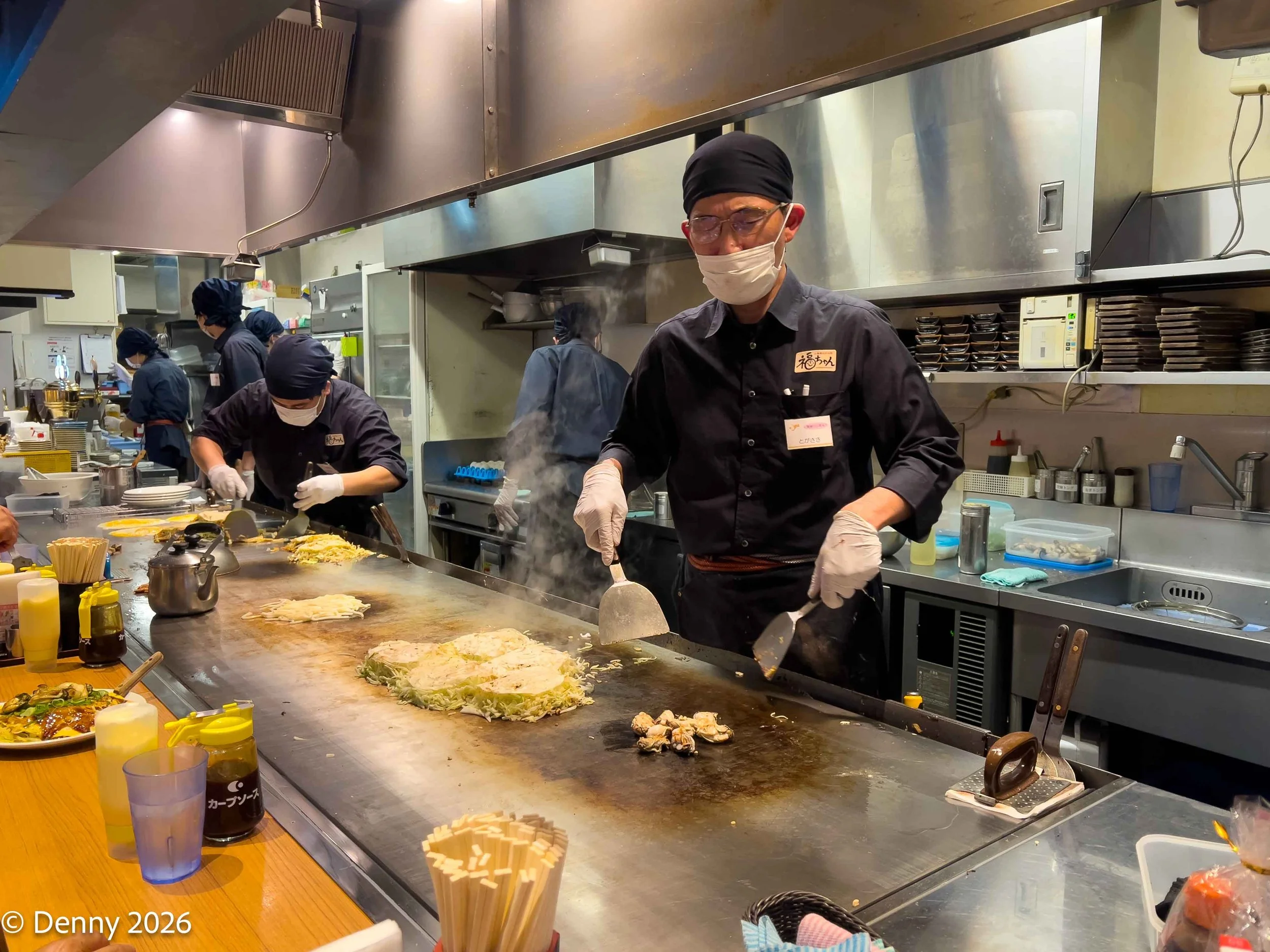
Chefs at Ikonomiyaki Restaurant, Hiroshima

Sheraton Grand Hiroshima Hotel (our room was on 10th floor), Hiroshima
Tomorrow we’ll leave Hiroshima and move on the Himeji and end the day in Osaka.