
Our early departure and it being Sunday morning, meant that we made good progress heading northwards out of Busan. The northern suburbs were typically jammed with multi-storey apartment blocks with seldom more than 20 m between each high-rise building.
We were informed that many of the locals are employed by major construction companies especially Hyundai which not only produces millions of cars but also builds skyscrapers and is very heavily involved in ship building. South Korea and China are the two biggest ship builders in the world today.
Our destination for today is Gyeongju, often referred to as the ‘museum town without walls’. The city is famous for its Buddhist tombs, temples, pagodas and other historic bits and pieces.
After an hour and a half’s driving, we stopped at a small museum and spent some time seeing an exhibit of models and learning something of the construction of the Seokguram Temple which we are due to visit later this morning.
Our wonderful driver Mr. Kim did a fabulous job in driving our bus up the ten kilometres of winding road to the major pilgrimage site of Seokguram, the ‘Buddhist Temple in a Grotto’.
Alighting from the bus we then had a one kilometre walk along a pathway in amongst pines and maples to reach the grotto.
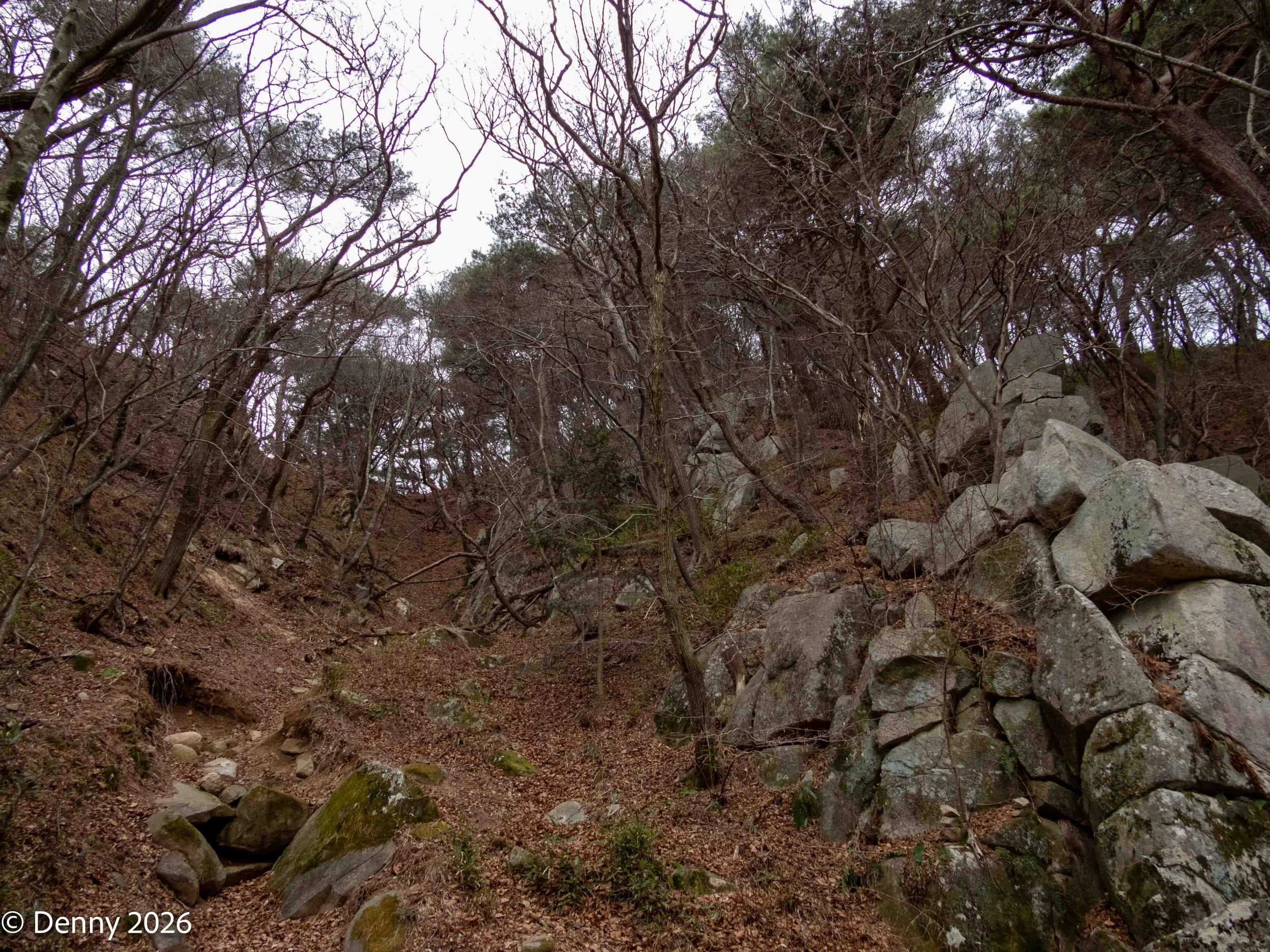
Pathway to grotto, Seokguram
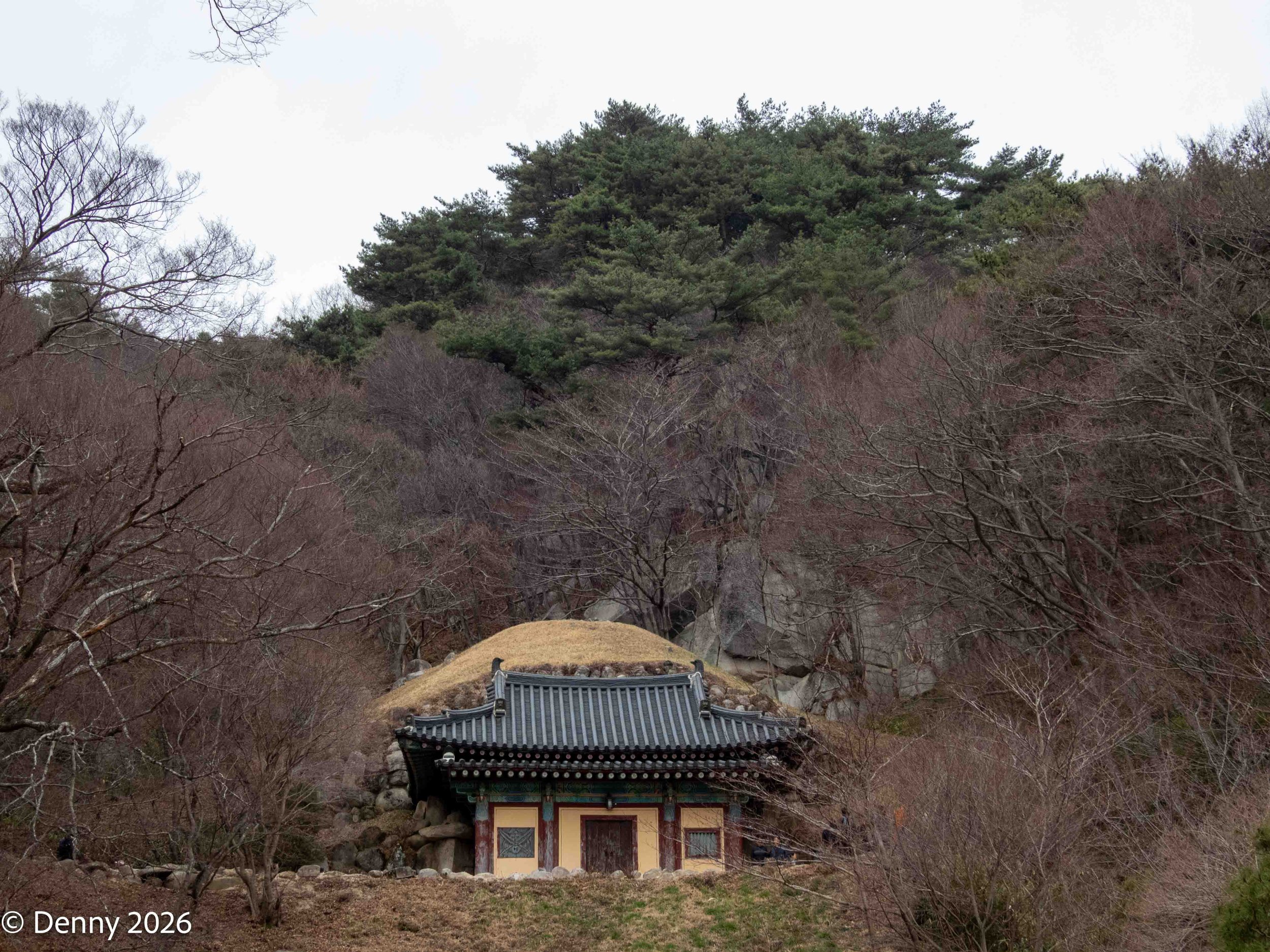
Grotto, Seokguram
The Sakyamuni Buddha image is enshrined within a granite hillside perched at the top of steep steps leading to the temple.
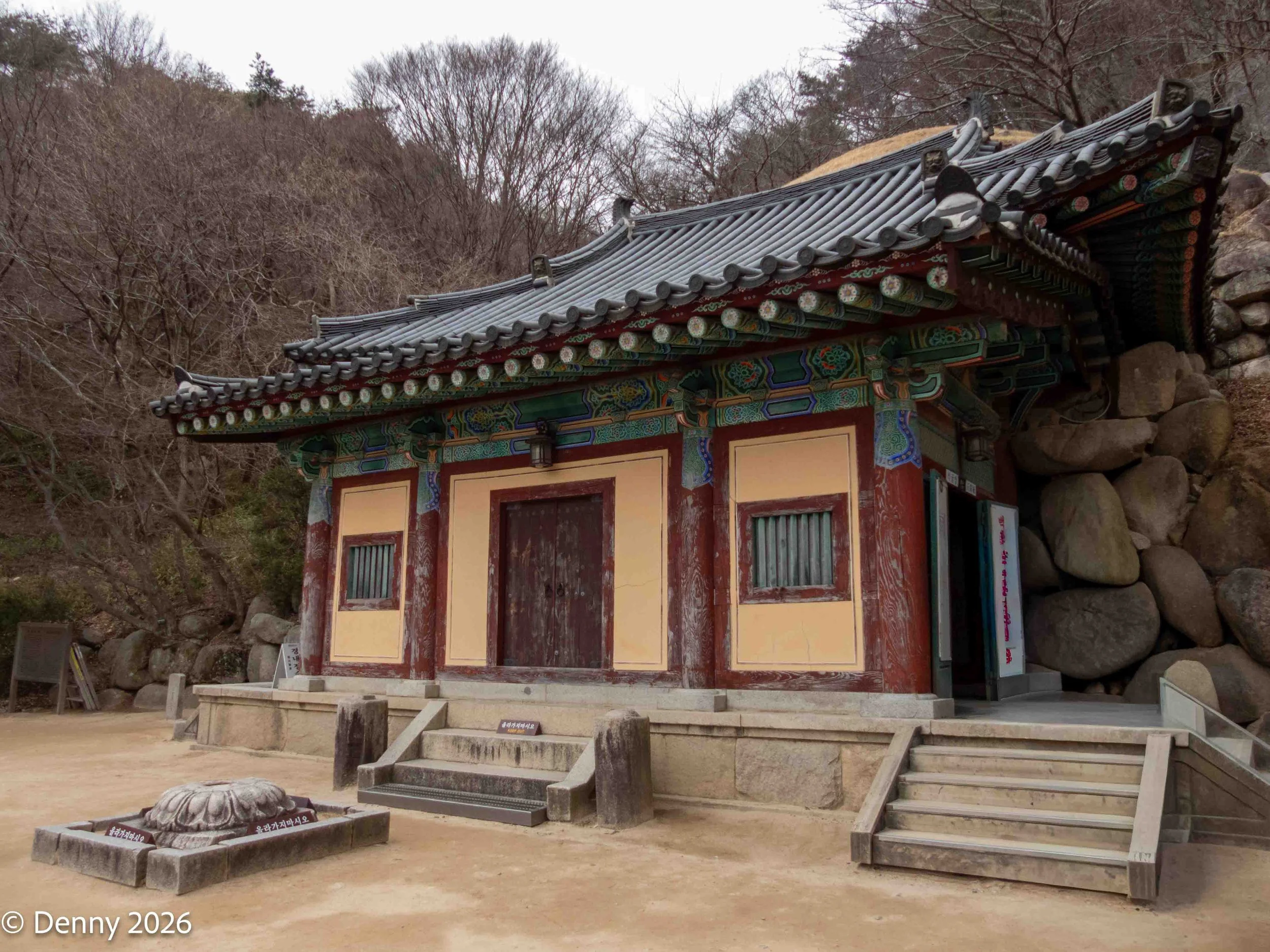
Grotto temple, Seokguram
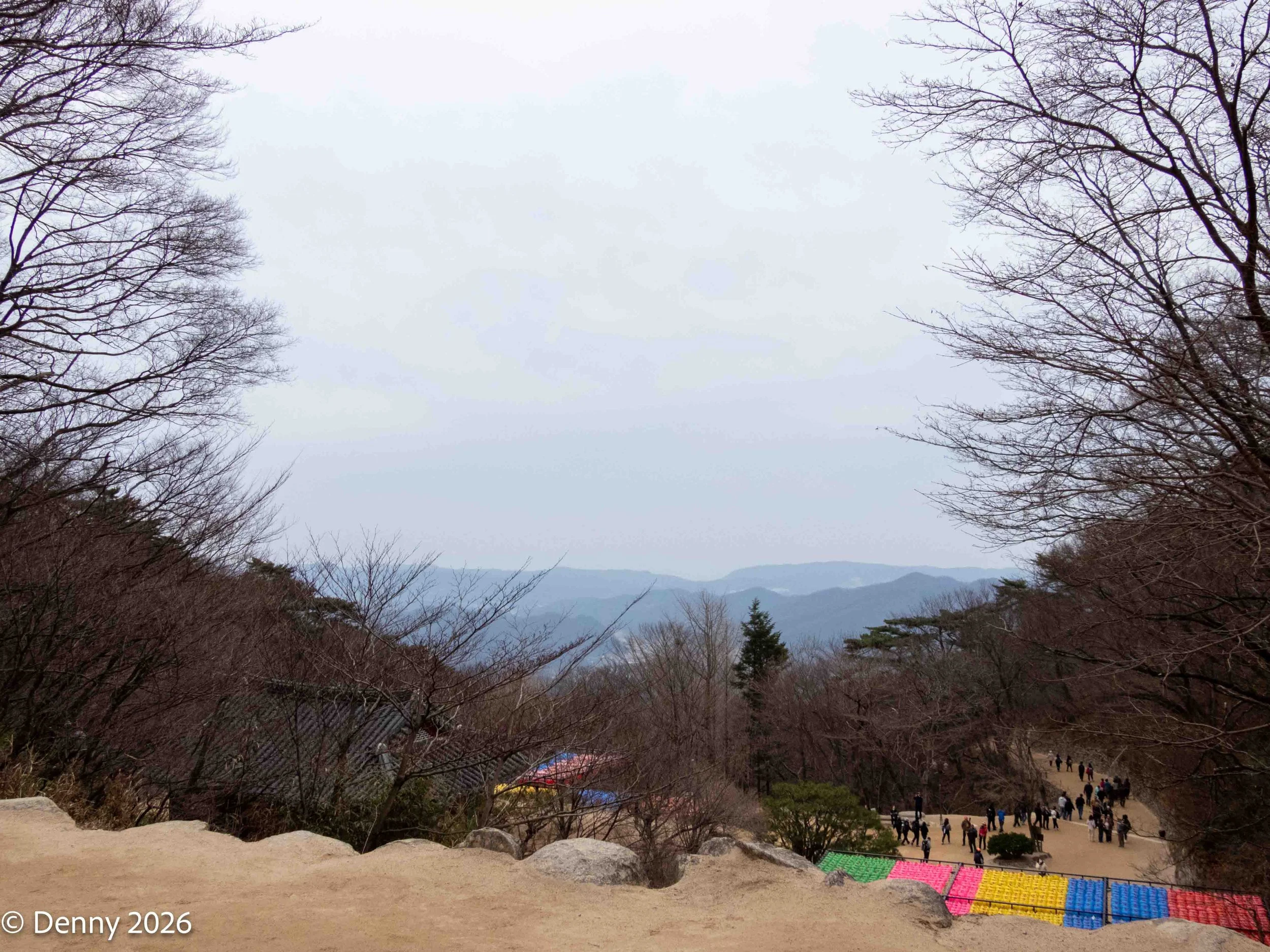
View from Grotto, Seokguram
The image of Buddha was carved from a single block of white granite three metres high. The image is positioned inside an artificial grotto built from large granite blocks with a round interior chamber and a graceful dome shaped ceiling. Unfortunately we were not permitted to take any photos of the image.
The Buddha is accompanied by stone images of eight Generals and four Deva Kings all acting as his guardians. The temple was built during the reign of the Silla King Beopheung around the year 540 AD and is now listed as a UNESCO World Heritage site.
This Sakyamuni Buddha image is generally considered by practitioners and students of Buddhism to be the most perfect of its kind anywhere in Asia and is unequalled in the Buddhist art of the Far East!
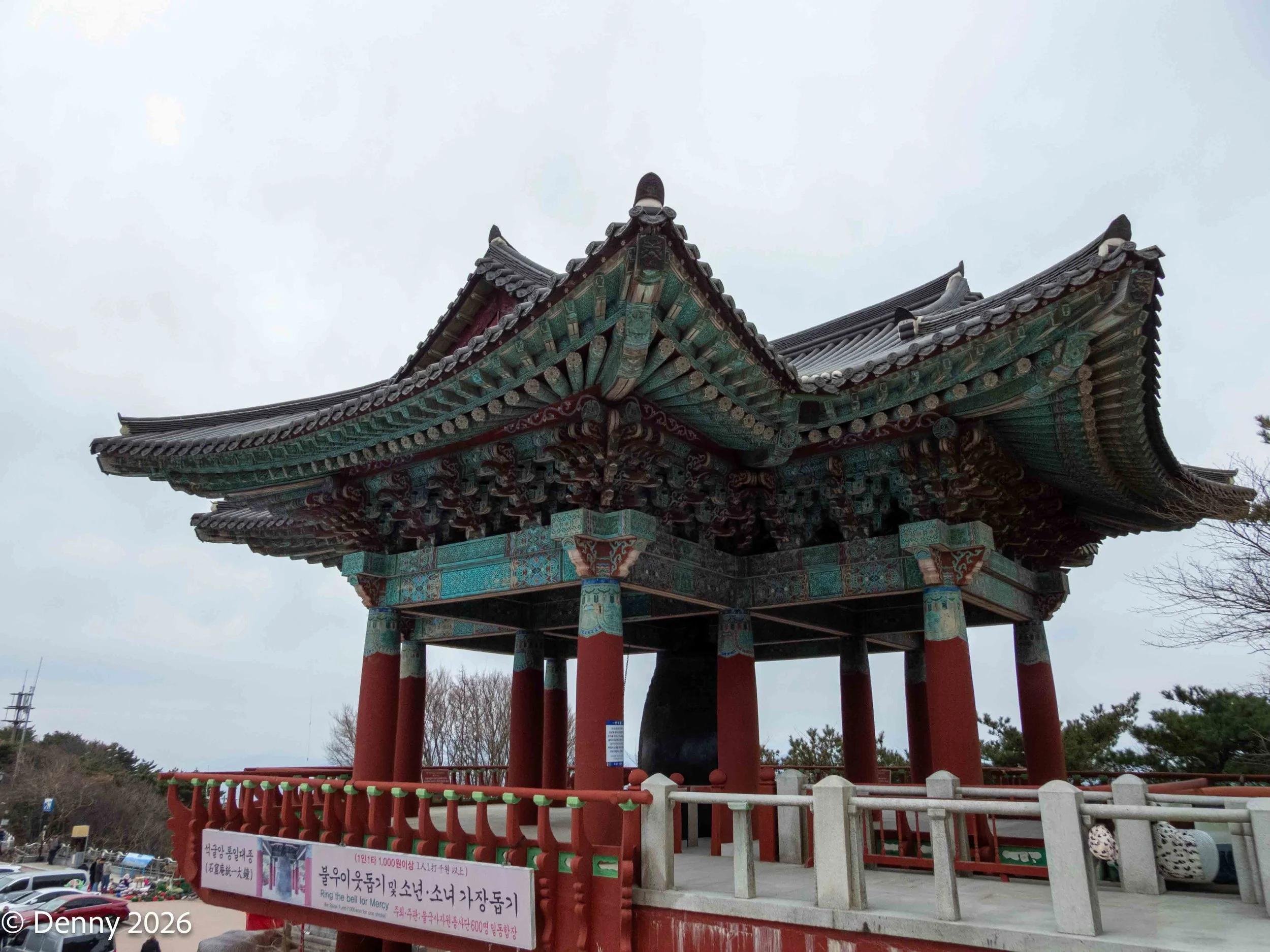
Drum pagoda, Seokguram
We ventured back down the mountain zig-zag roadway and bought some roasted chestnuts from a roadside stall.
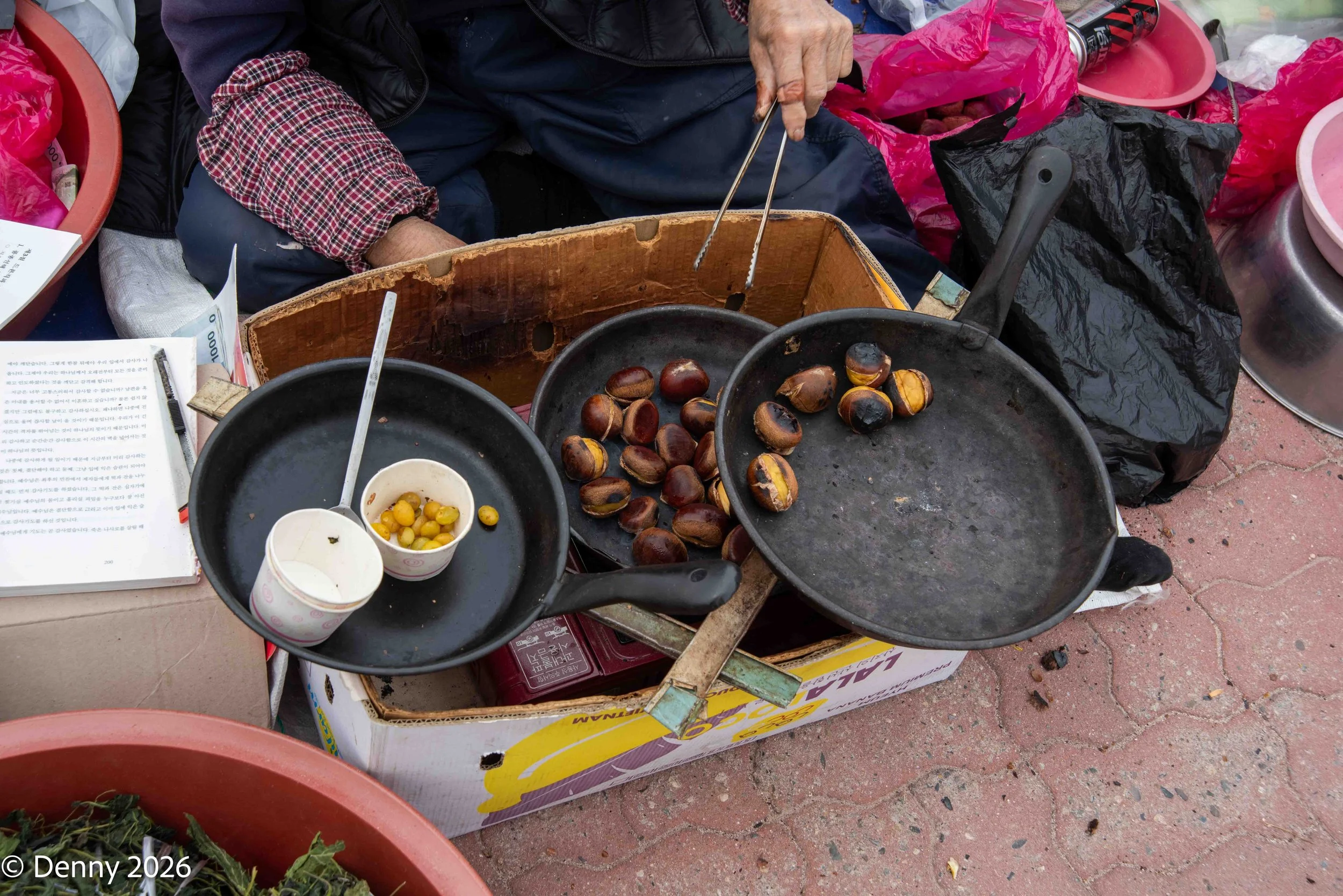
Roasted chestnuts, Seokguram
We then had lunch prior to visiting the second Buddhist temple of the day, that being the Bulguksa Temple.
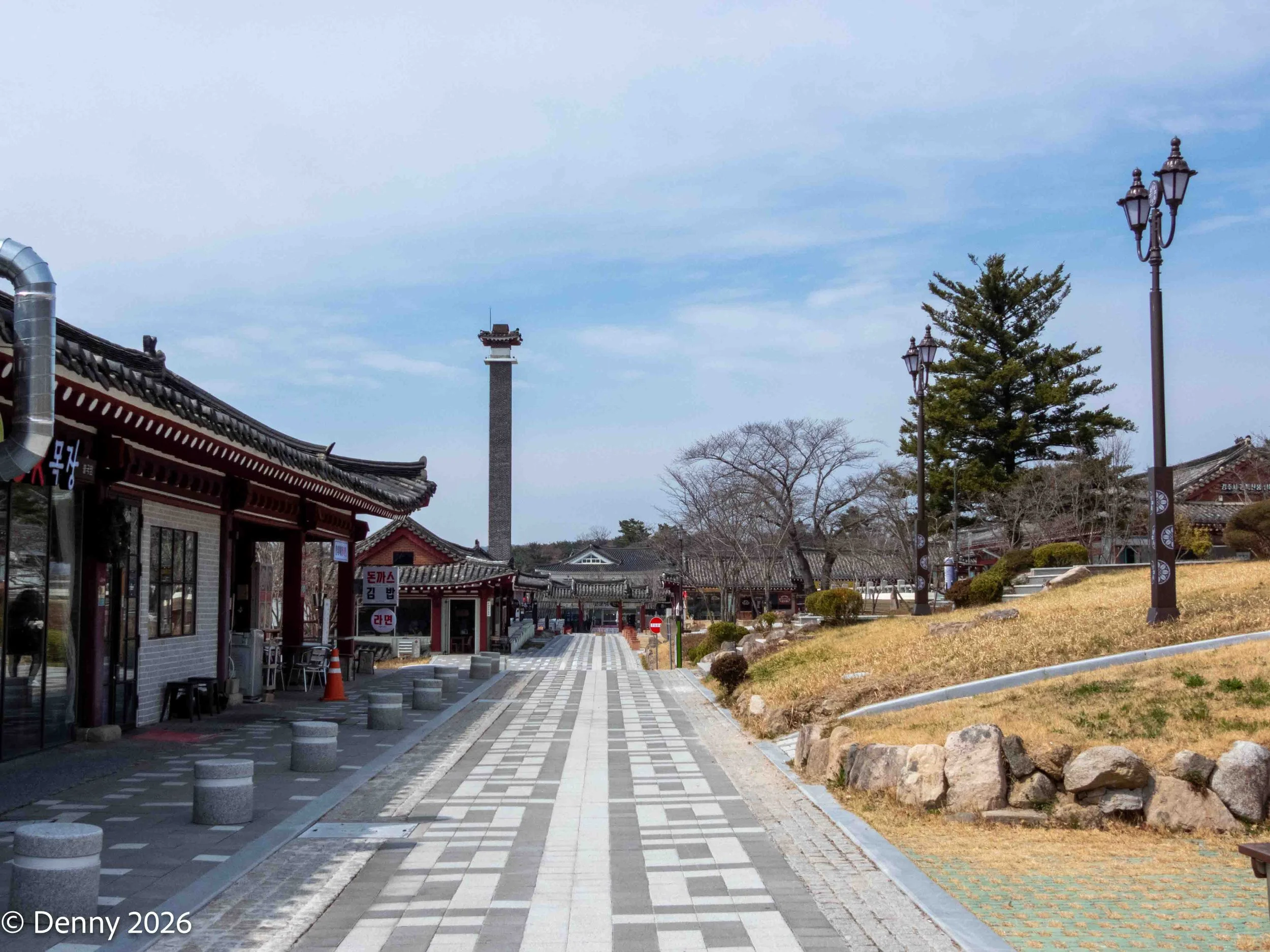
Seokguram where we had lunch
The construction of the Bulguksa Temple began in 528 AD during the Silla Dynasty and served as the centre of Silla Buddhism for the protection of the country from foreign invasion.
The protection worked well for just over a thousand years and then the entire temple was burnt down by Japanese invaders in 1593.
Following extensive research, excavations and investigation, the temple was completely restored in the period 1969-1973.
We entered through the small Jongnu pavilion and arrived at the temple’s main worship hall.
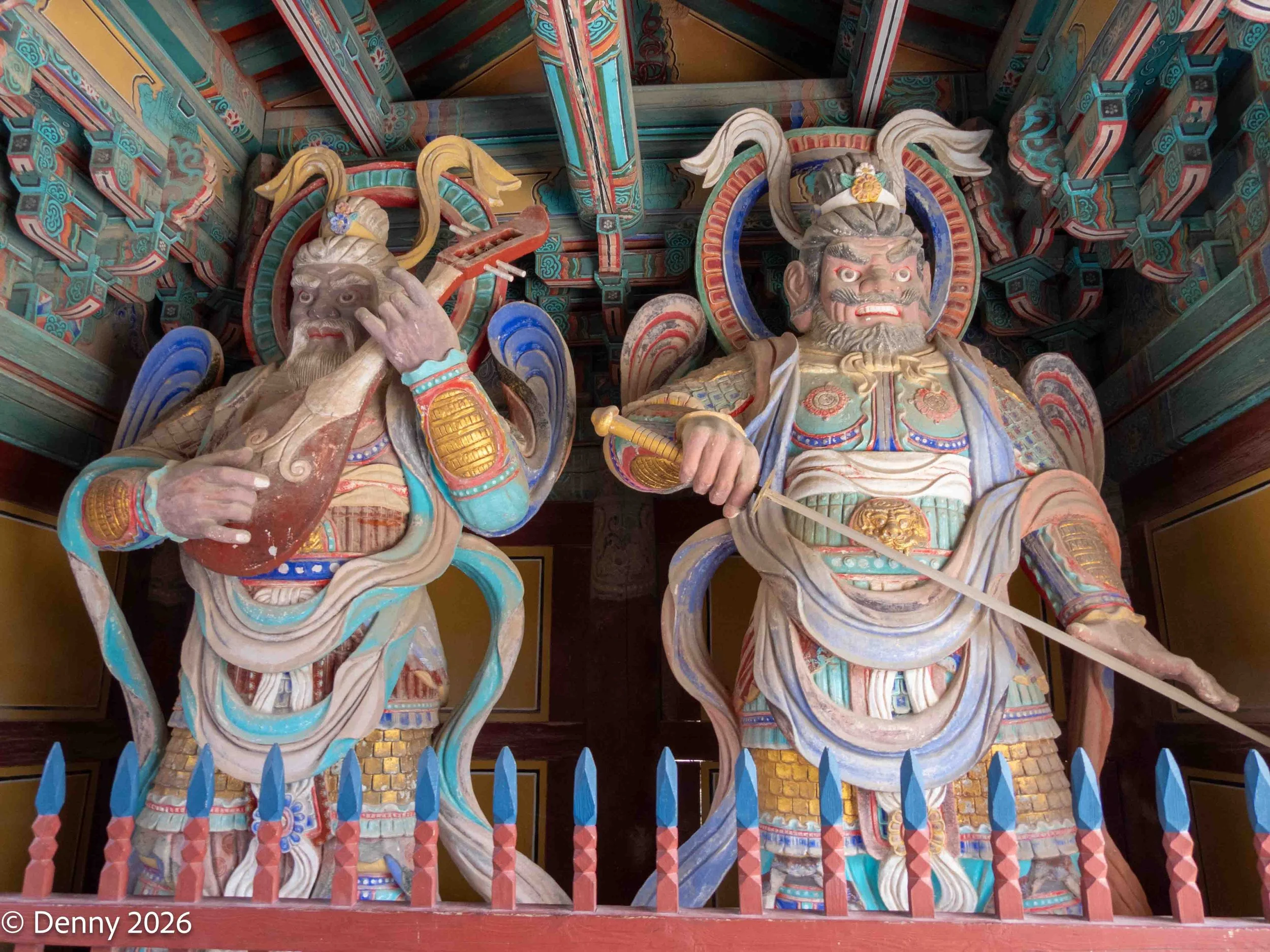
Gate keeper statues, Bulguksa Temple
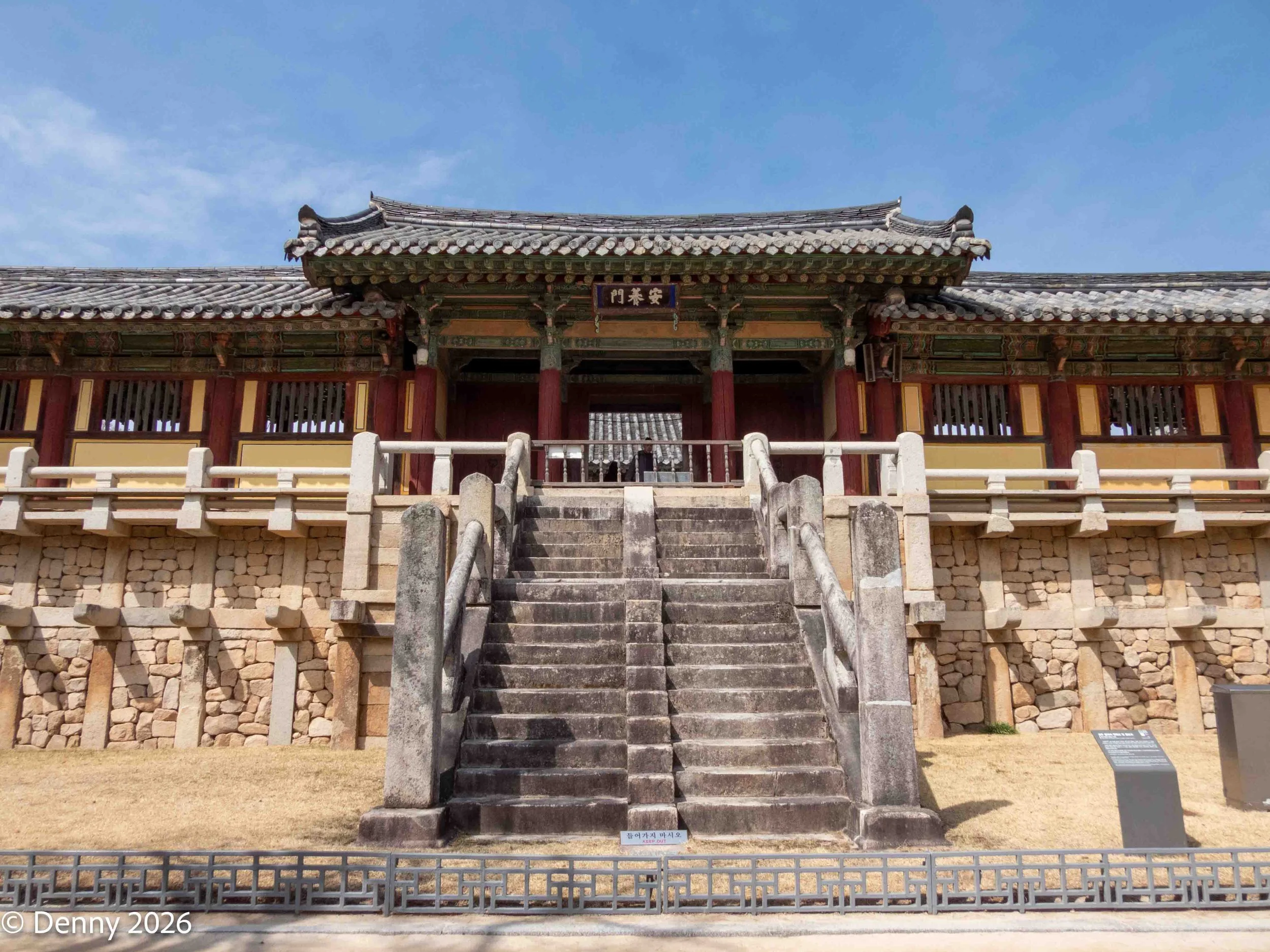
Bulguksa Temple
Here there was an expansive courtyard dominated by two unusual and impressive pagodas that still exist from the original sixth century temple.
The smaller pagoda called Seokgatap is 8.2 m high and the larger one Dabotap is 10.4 m high. Both pagodas which have been restored in recent times are regarded as premier examples of Silla architecture.
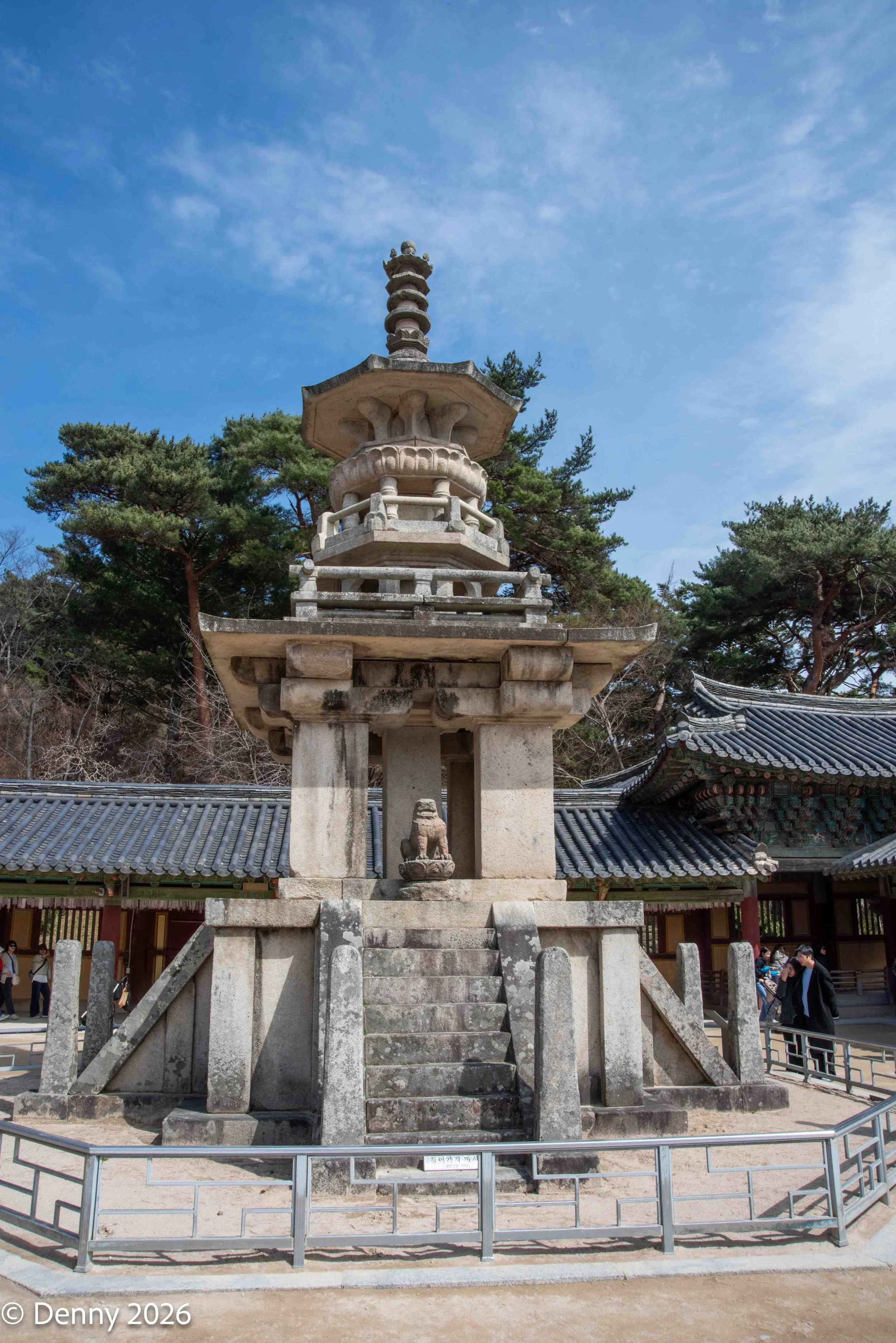
Seokgatap pagoda, Bulguksa Temple
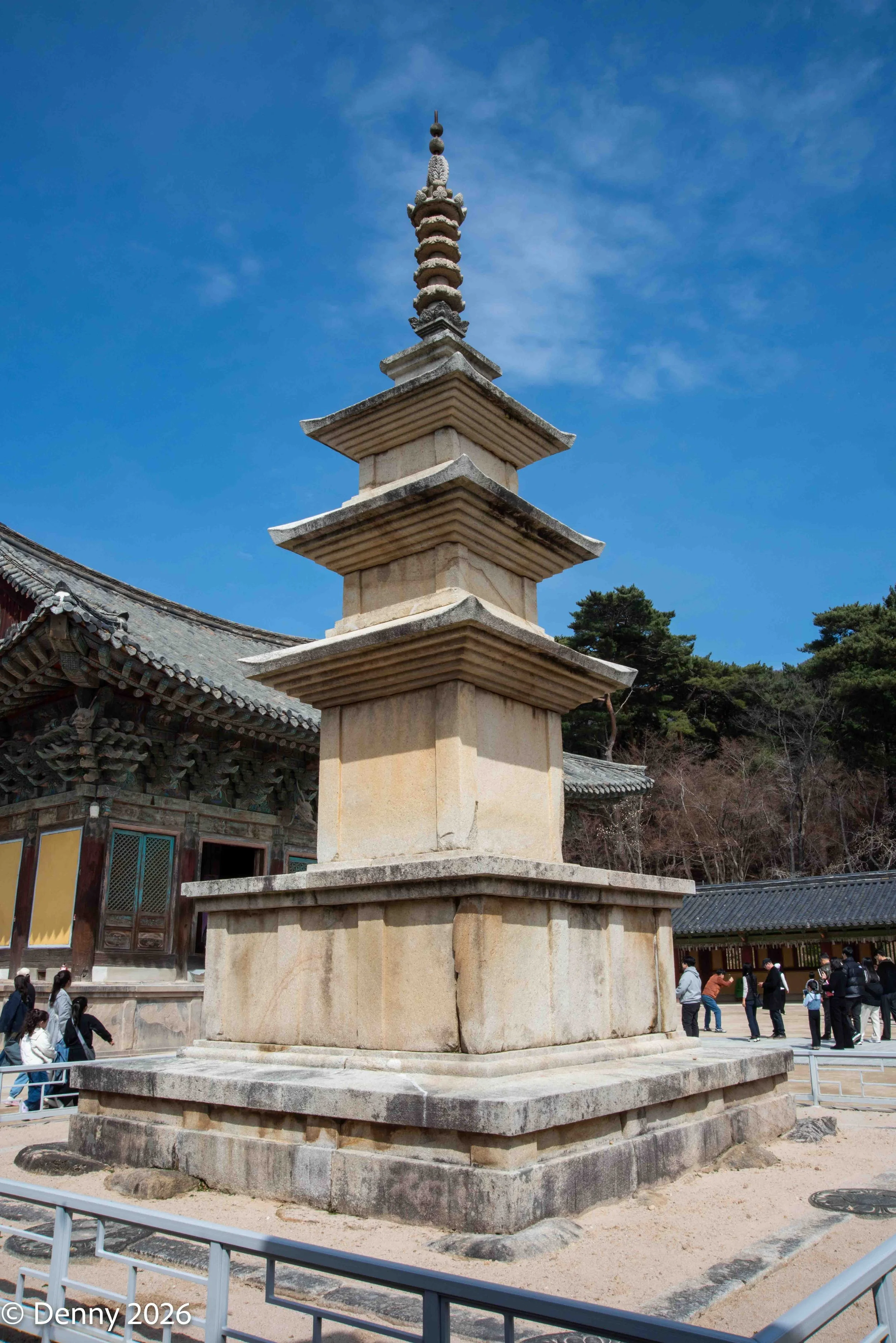
Dabotap pagoda, Bulguksa Temple
Other ‘treasures’ we encountered were a large highly decorated drum, a small growling lion on a lotus pedestal and a bronze boar which when rubbed is sure to bring you untold wealth!
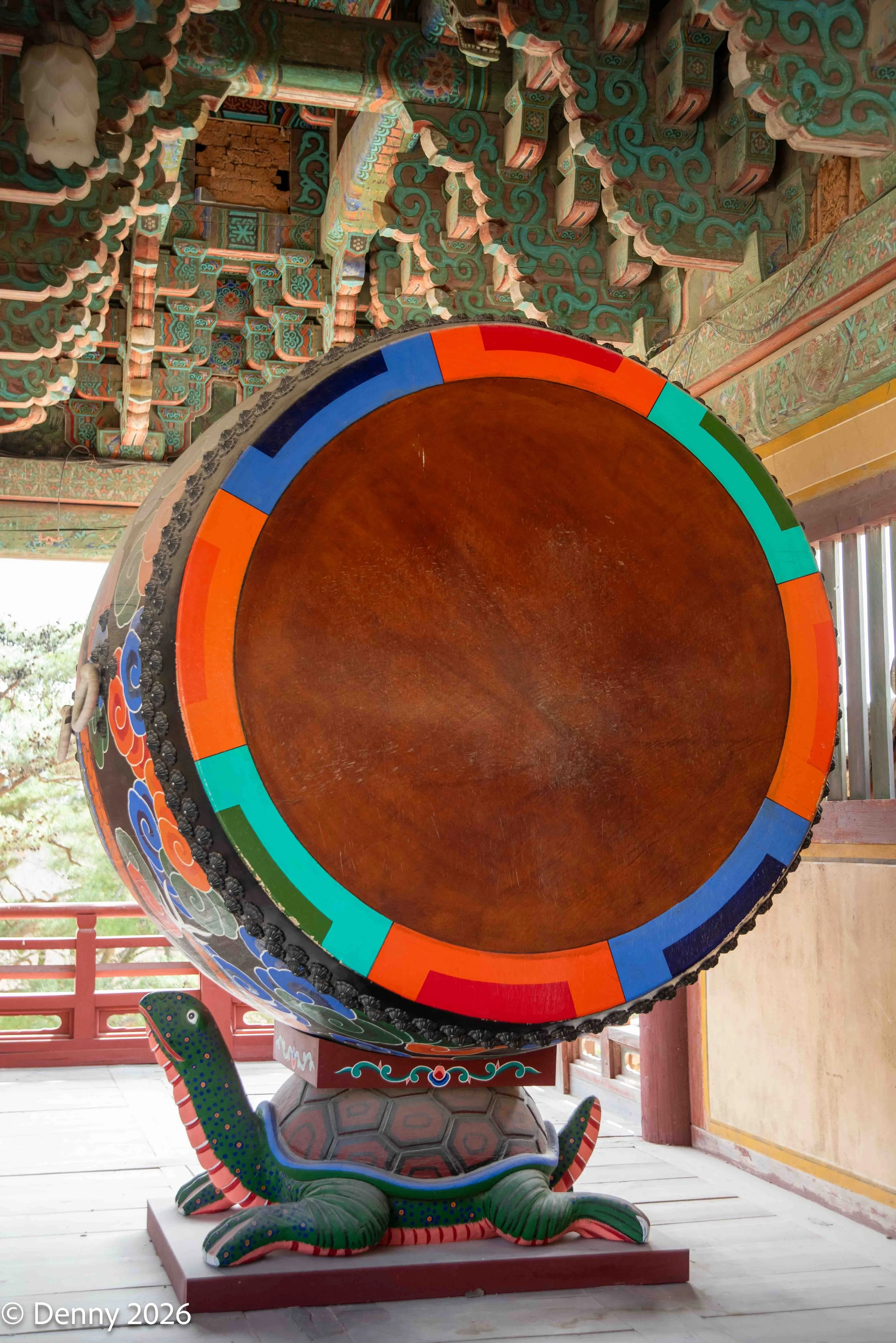
Drum, Bulguksa Temple
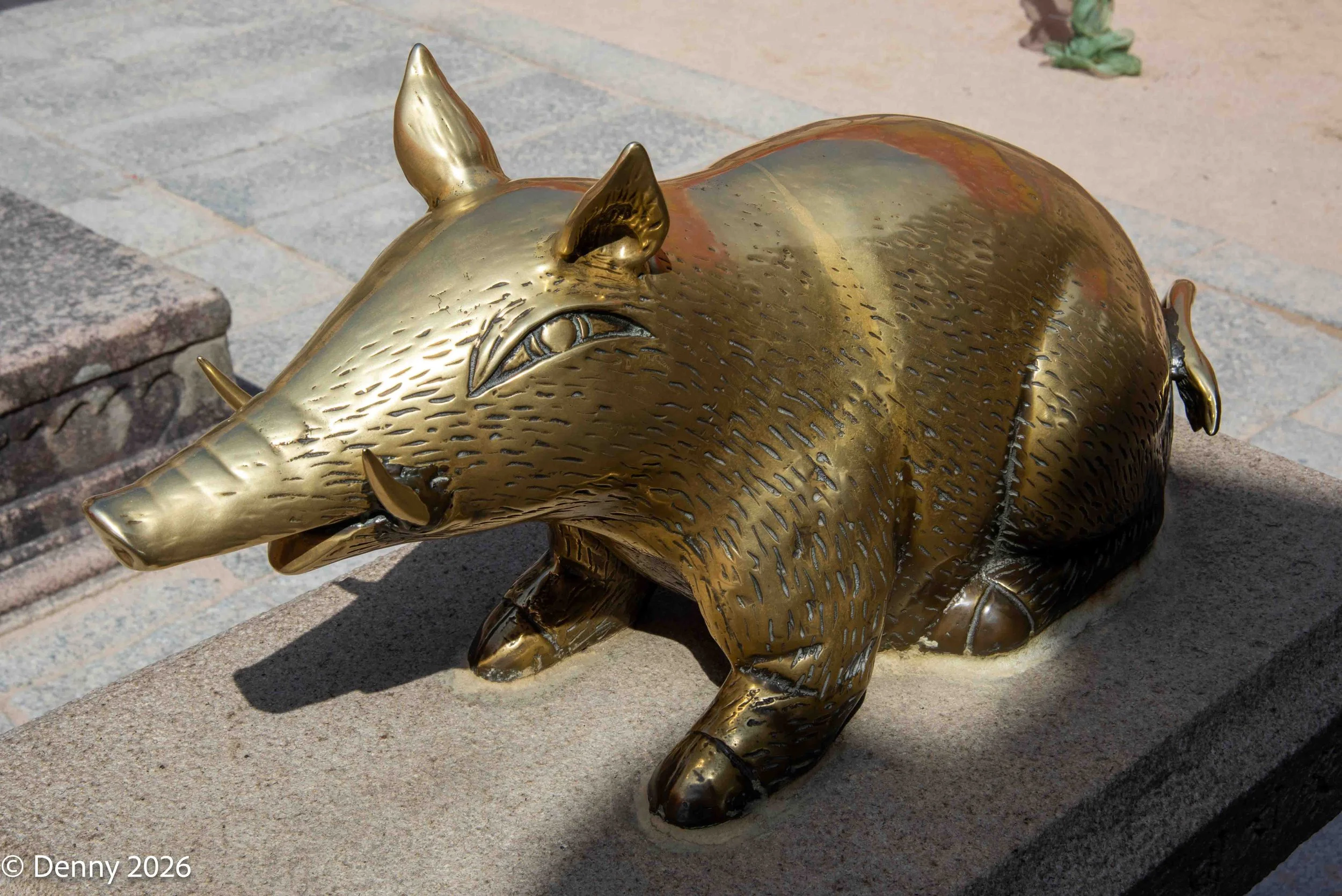
Good luck bronze boar, Bulguksa Temple
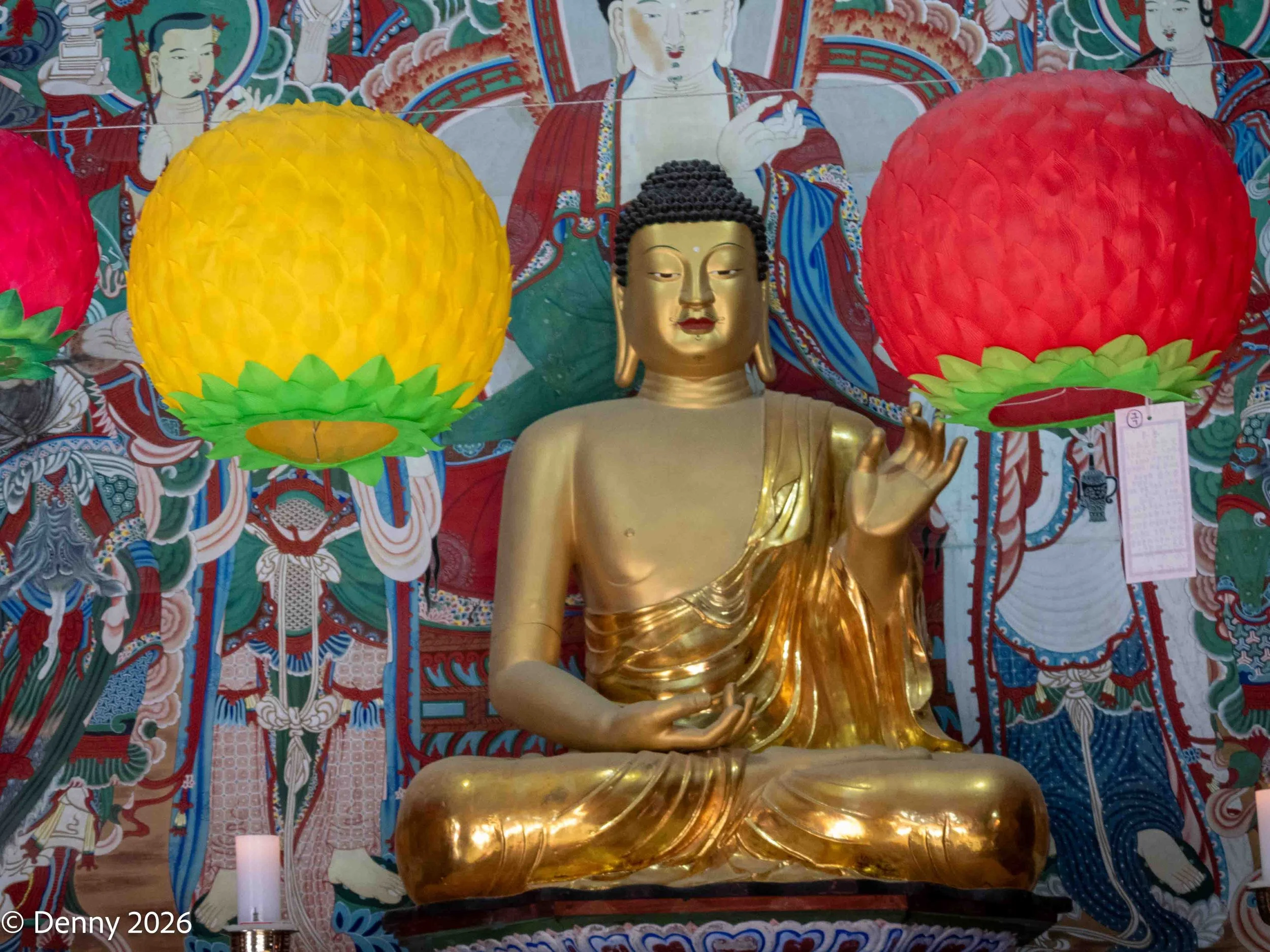
Buddah, Bulguksa Temple
The stone work in the gardens with meandering pathways, cherry blossomed trees and arched bridges made this a particular appealing location.
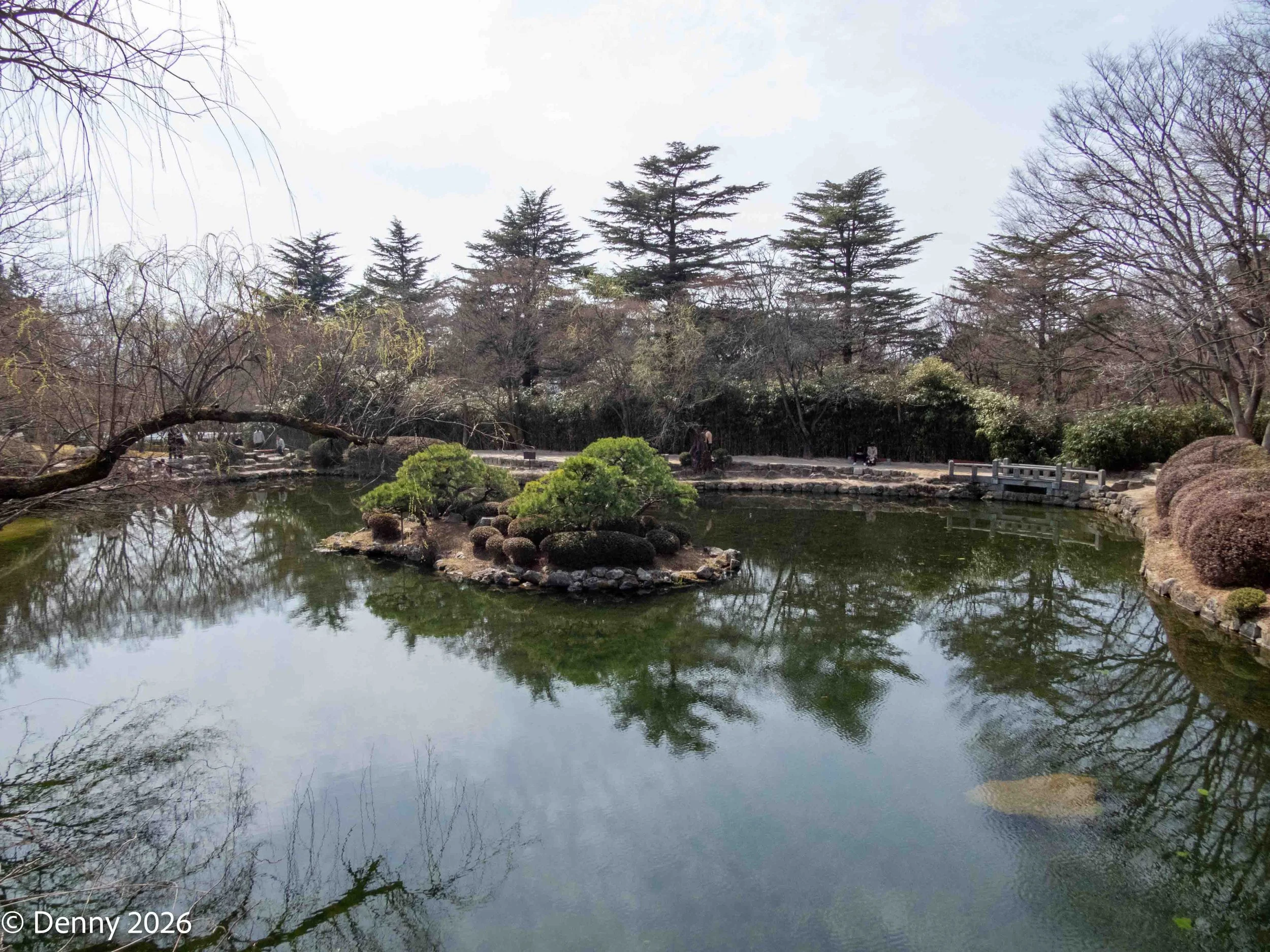
Pond on pathway to Bulguksa Temple

Pagoda and cherry blossom on path up to Bulguksa Temple
At this stage we all felt we’d been adequately exposed to Buddhist temples and it was time to head to our accommodation in Gyeongju for some free time before we have a sunset tour of the city and a Korean barbecue.
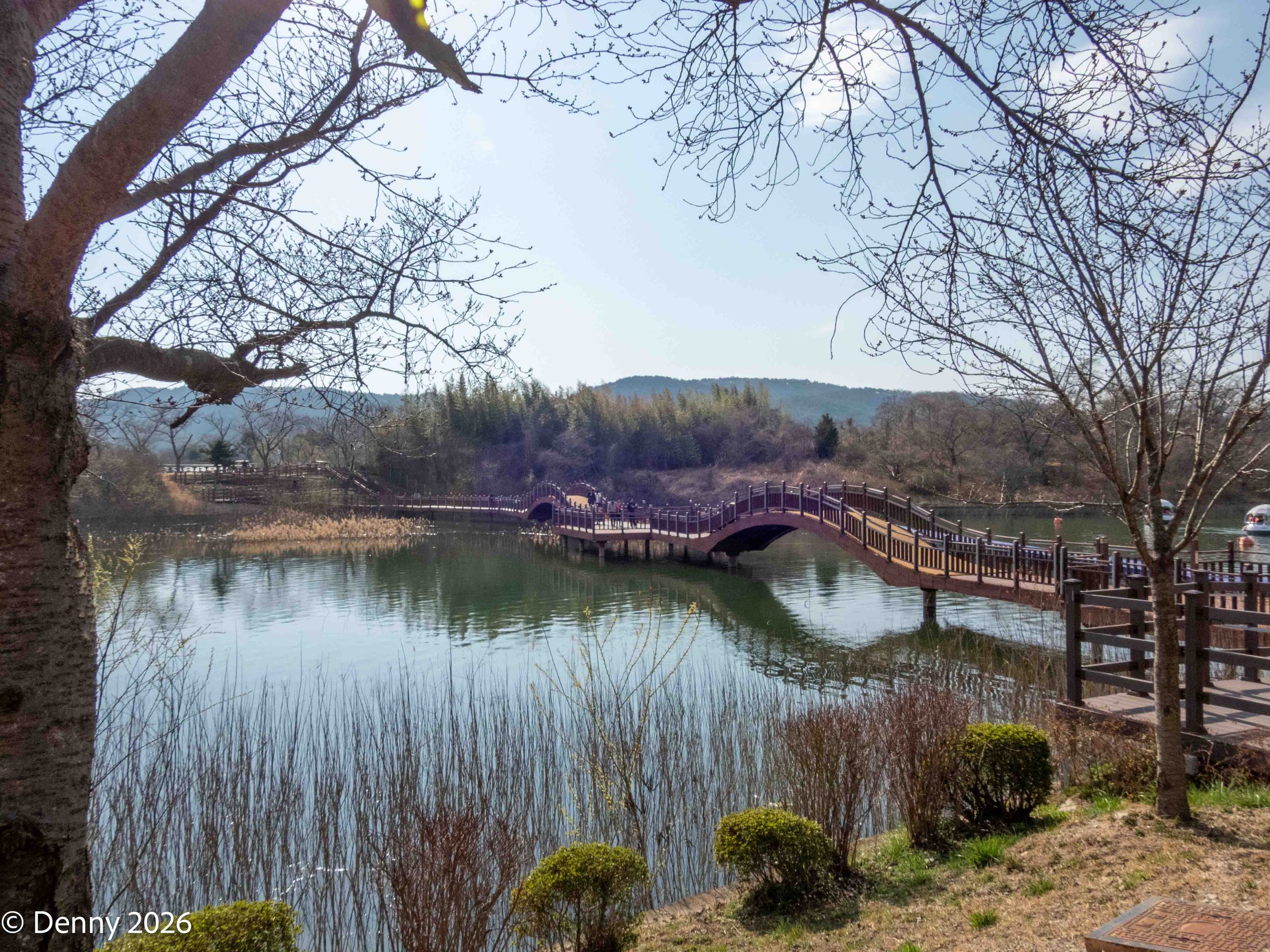
Lake behind Hilton Hotel, Gyeongju

Lake behind Hilton Hotel, Gyeongju
At 18:00 we reassembled and were driven to the Gyeongju Dongjung Palace and Wolji Pond in the local National Park. The artificial pond, formerly known as Anapji is part of the site of the original 1500 year’s old palace of King Munmu.

Isand on Wolji Pond, Donggung Palace (Palace of the Crown Prince), Gyeongju
We spent an hour or more wandering around the pond perimeter taking photos of the comparatively new buildings that are attempts to replicate the original palace structures. The buildings were lit up with floodlights and this effect together with the reflections in the pond was very impressive.
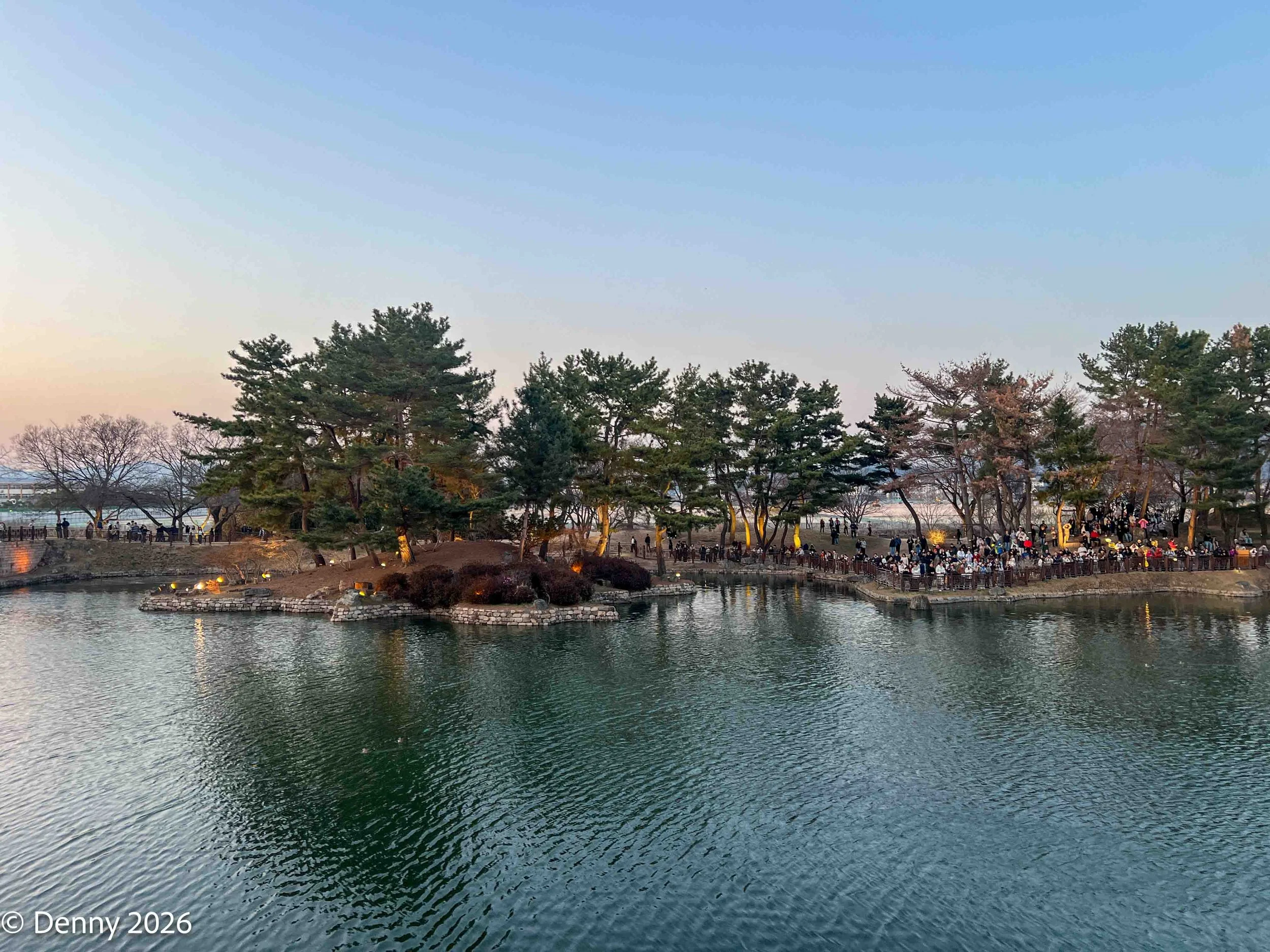
Lake, Donggung Palace (Palace of the Crown Prince), Gyeongju
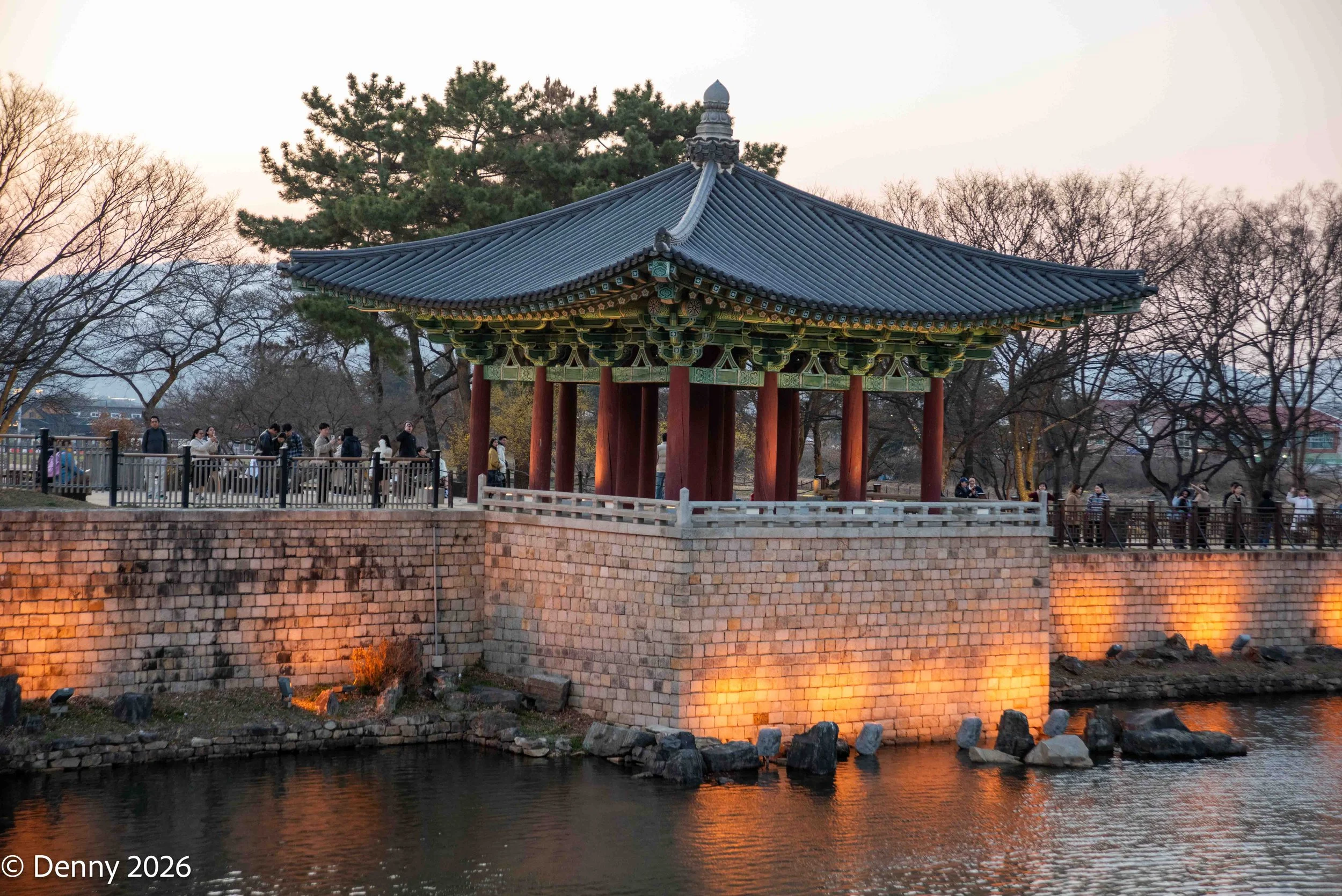
Donggung Palace (Palace of the Crown Prince), Gyeongj
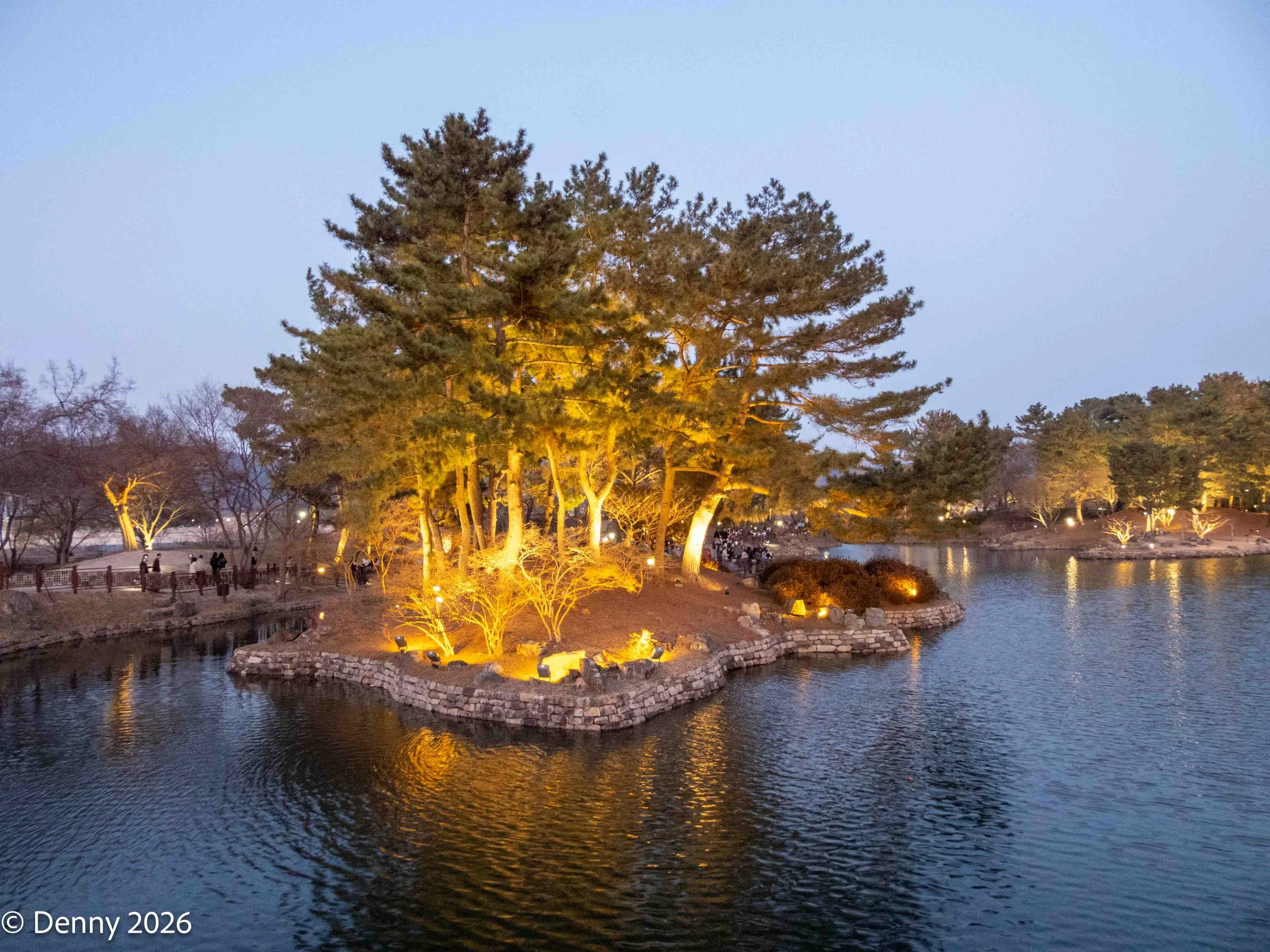
Island on Wolji Pond, Donggung Palace (Palace of the Crown Prince), Gyeongju
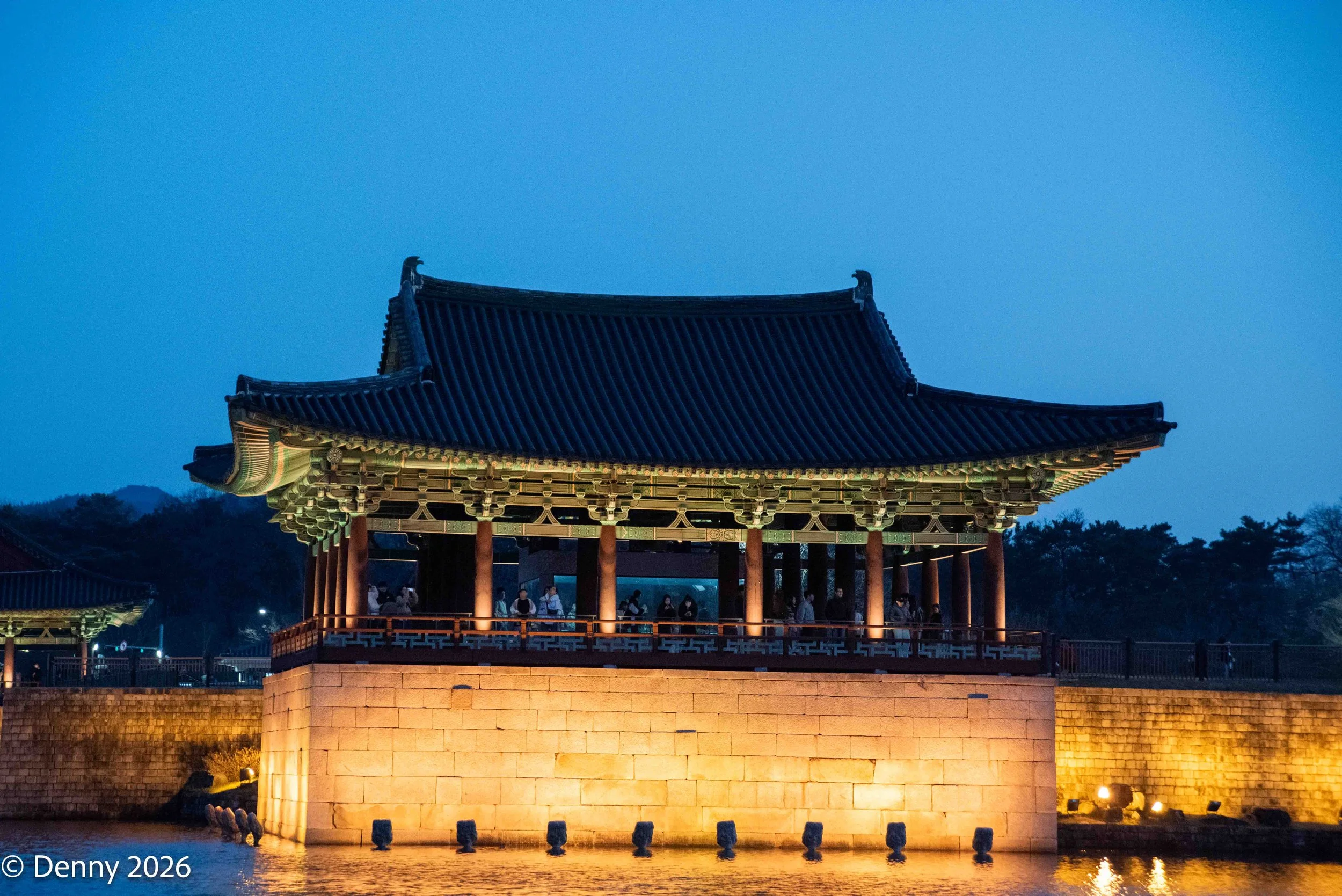
Temple, Donggung Palace (Palace of the Crown Prince), Gyeongju
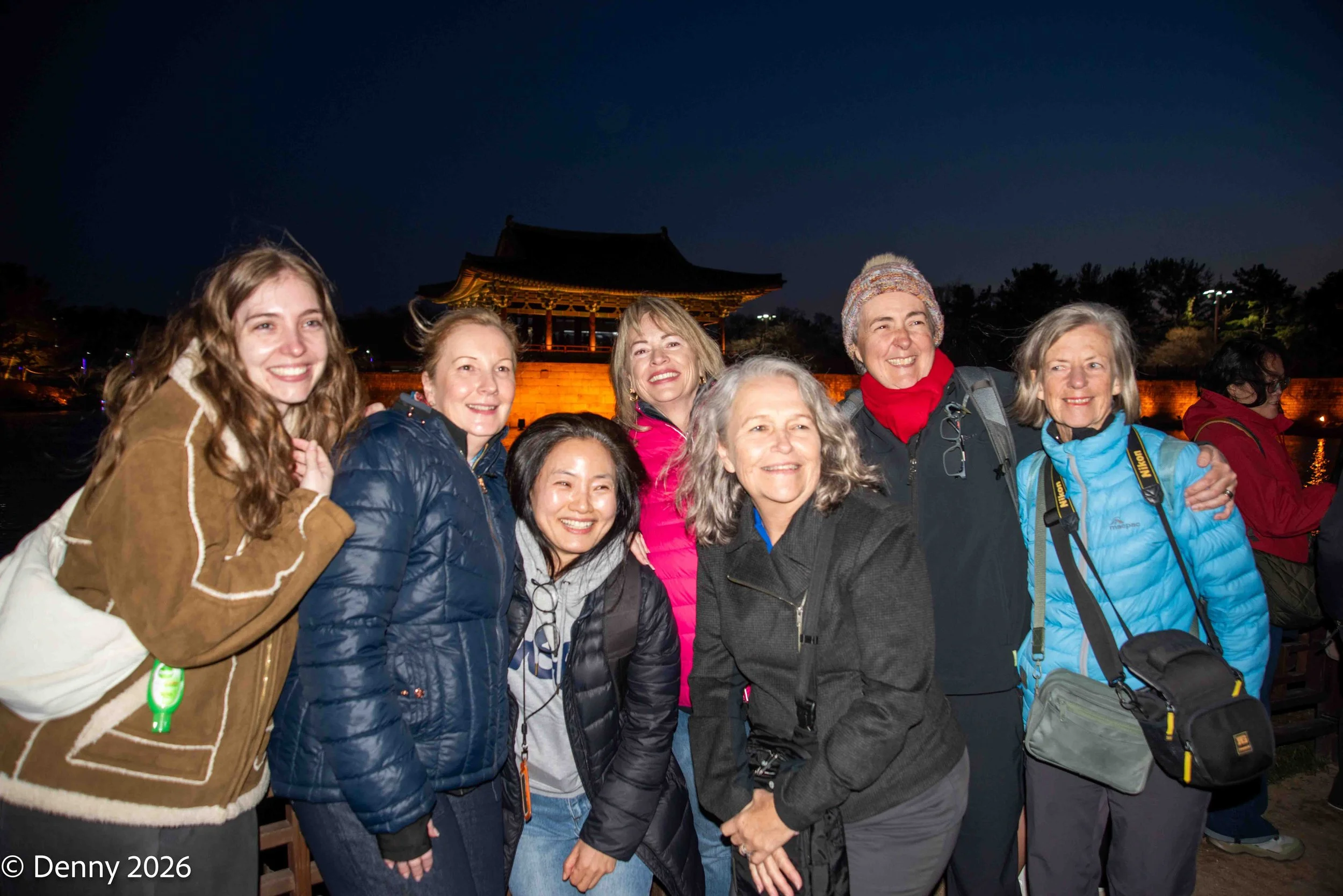
Girls, Donggung Palace (Palace of the Crown Prince), Gyeongju
We then had a most enjoyable Korean barbecue with many Korean dishes and local specialties to supplement the beef and pork barbecued at our tables. There was much merriment with the enjoyment of local beers doctored with a significant dash of a Korean equivalent of vodka.
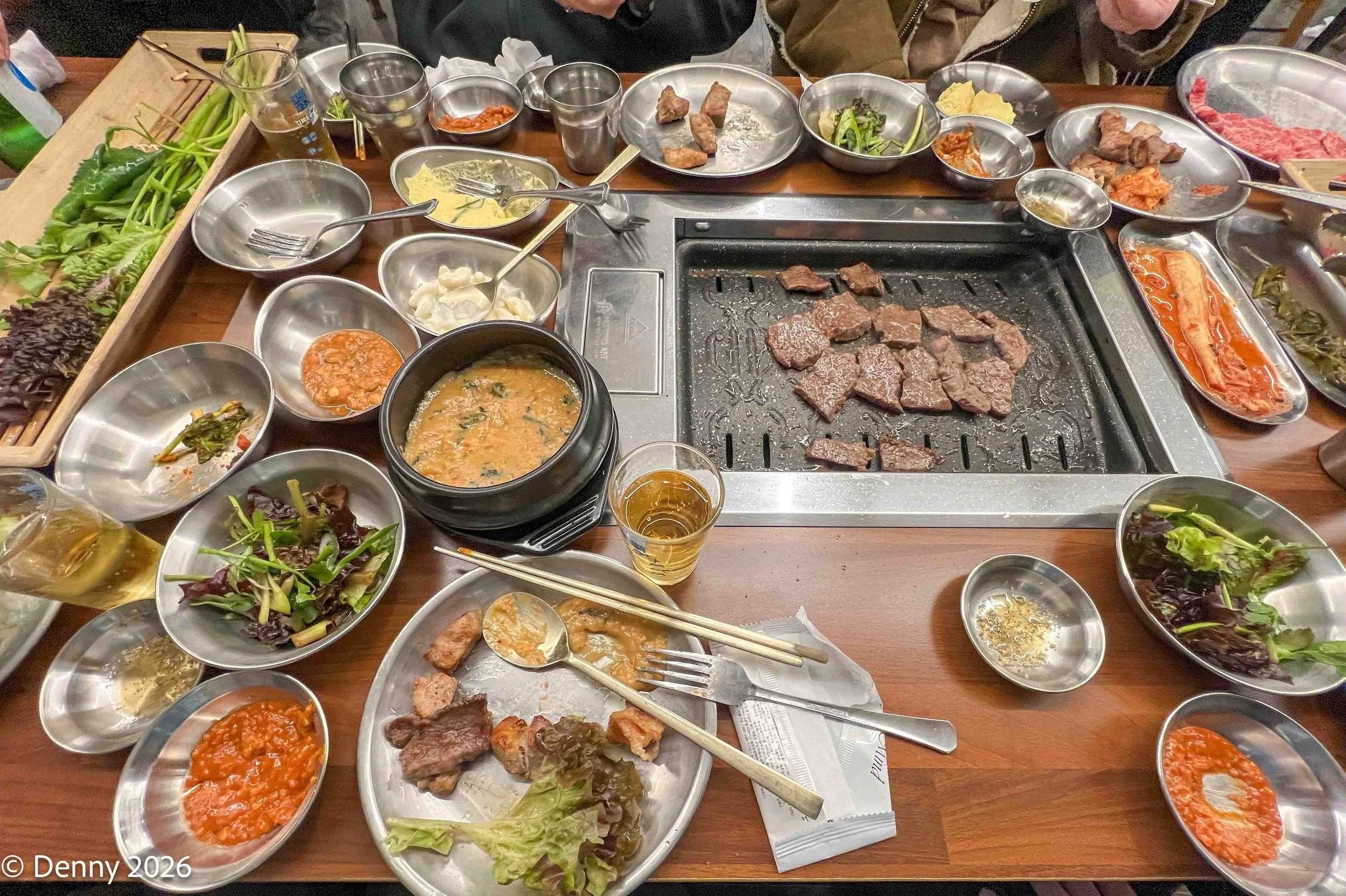
Korean barbecue, Gyeongju
At 21:00, before returning to our hotel we did a short walk along the river bank to enjoy and photograph the stunning night views of the Wolijeonggyo Bridge.
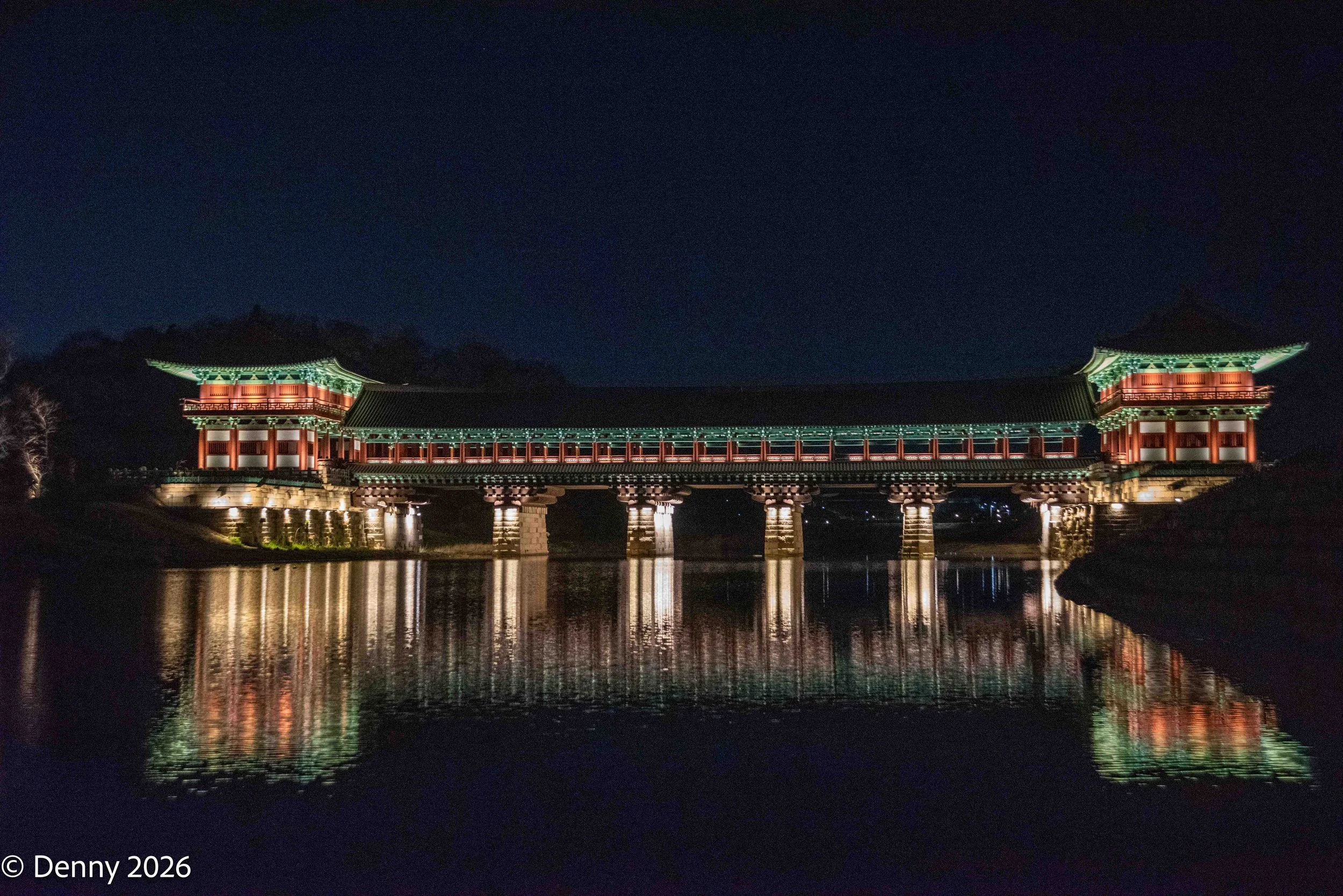
Wolijeonggyo Bridge, Gyeongju
At 22:00 we adjourned for the night after another blue sky day gaining an insight to some of the ancient history of Buddhism in this part of South Korea.
Tomorrow, we explore more of Gyeongju before, in mid-afternoon we catch the bullet train back to Seoul.