
Busan is wedged between a mountain range and the sea and is undoubtedly Korea’s most important port city. It has a population of around 3.5 million and is conveniently divided into two main sections, the old city and the new city.
The old city is where the major port area occurs with a vast area of stacked containers, several kilometres of wharf zone and a multitude of associated container loading cranes. Industrialisation in Busan is extensive with the big companies such as LG, Hyundai, Samsung and SK having major operations in this city region. The world’s production of computer chips is centred here in South Korea.
The new city has a substantial beach frontage and is packed with multi-storied buildings some as high as 400 m. The density of human life in the hundreds of sky-scrapers within a comparatively small area begs the question as to the provision of power, water, sewerage treatment, food, health services etc to all these people. We were informed that South Korea has most of its electricity provided by twenty two nuclear power stations.
Our morning in Busan commenced with a visit to the United Nations Memorial Cemetery which is the only UN Memorial Cemetery in the world.
This cemetery is located at Tanggok in the Nam district of Busan and is the sacred, final resting place of 2,300 UN forces who served and died during the 1950 – 1953 Korean War. However, the total number of those who died in the Korean War was over forty thousand.
The cemetery occupies an area of around 10 hectares and is meticulously maintained with manicured gardens and lawns throughout.
We commenced our visit by viewing a short documentary video giving details of the Korean War plus information on the layout of the Memorial Cemetery.
Each of the twenty-two countries that had soldiers involved in the war has its own section of graves with that country’s flag flying high. The Australian section has 281 graves with each headstone giving name, rank, age and date of death. Sadly, many of the soldiers died in their early twenties with the youngest Australian being J.P. Daunt who died at age 17. There is waterway around the lower garden area named in his memory.
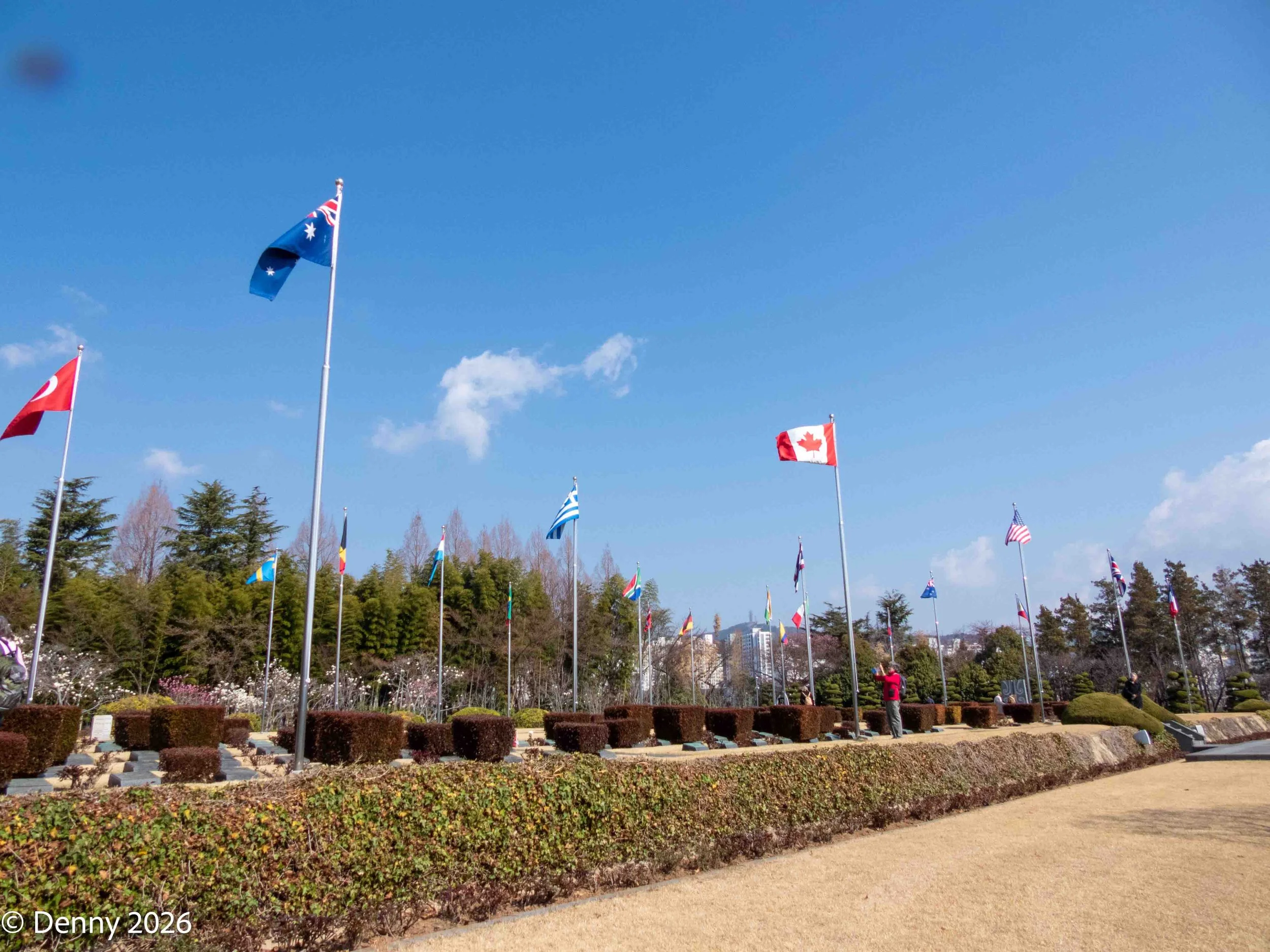
UN Memorial cemetery
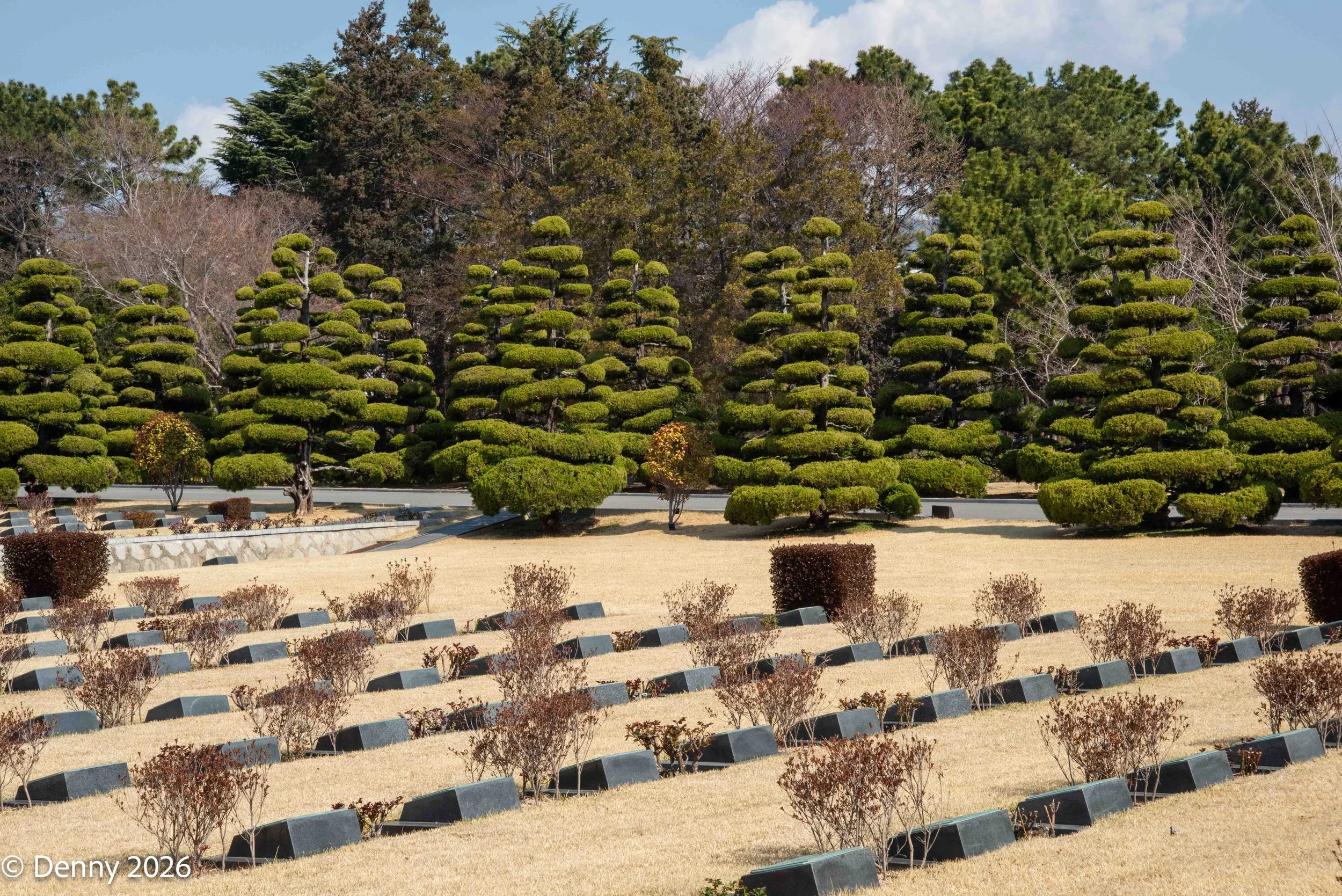
UN Memorial cemetery

UN Memorial cemetery
At right on 10:00 the UN flag was raised together with a bugle call.
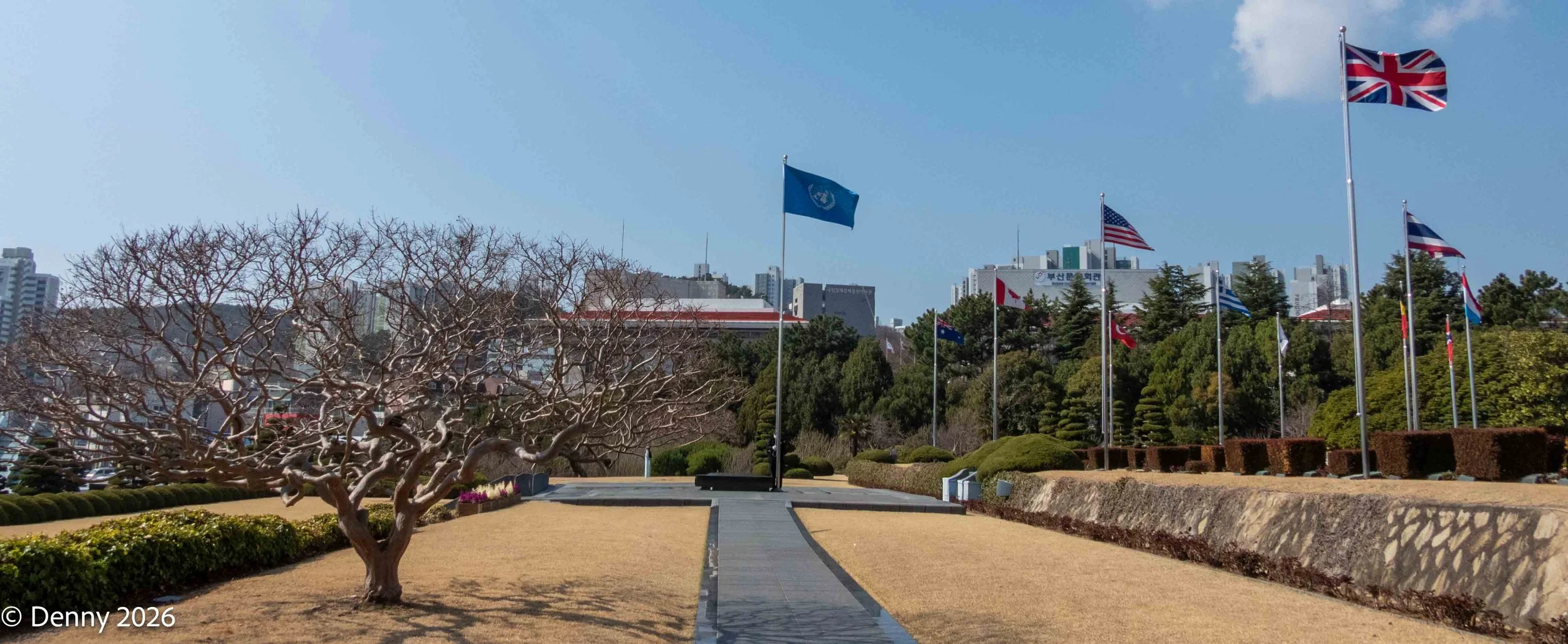
Raising of the flag, UN Memorial cemetery

Gardens, UN Memorial cemetery
We wandered around the grave “Symbolic Area” and then went down to the Wall of Remembrance where the names of the 40,896 who died in the Korean War are listed in alphabetical country order. Each individual name is engraved into black granite and the forty one thousand names provides a stark reminder of the tragedy of war for not only those who lost their lives but those who survived but suffered terrible physical and mental injuries as a consequence of the conflict.

Wall of Remembrance, UN Memorial cemetery

Wall of Remembrance, UN Memorial cemetery
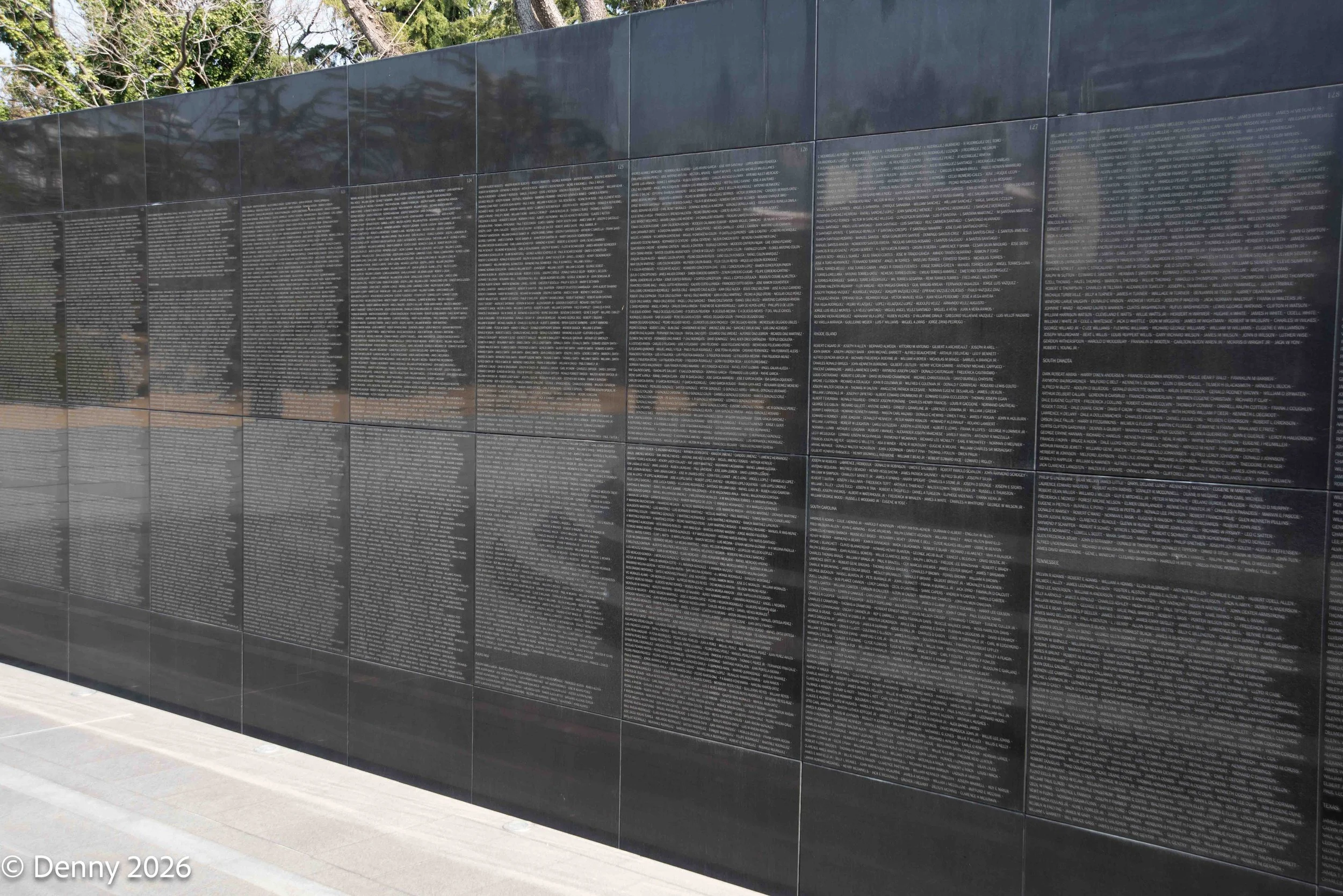
Wall of Remembrance, UN Memorial cemetery
To complete this visit we spent some time in the Memorabilia Hall where there were many old photos of war-time activities and military personnel.
We then drove to the southern part of down-town Busan across a suspension bridge to the island of Yeong-do and stopped just north of the Taejongdae Park.
The views from the lookout point were impressive with a cliff-top panorama over the ocean. From this high point the Japanese island of Tsushima is usually visible although it was a bit too misty today for a clear sight.
We ventured out onto the Oryukdo Skywalk which is a ‘U’ shaped, seven metre long platform made from steel and with a glass floor that protrudes out over the edge of the cliff and ocean below. This is not an ideal pursuit for those who suffer from acrophobia as one looks down through the floor to see the waves crashing into rocky shore eighty metres below.

Oryukdo Islets viewed from Oryukdo Skywalk

Oryukdo Islets viewed from Oryukdo Skywalk

Oryukdo Skwalk viewed from Igidae Park
With time to spare, we climbed the 250 steps to the high lookout point and took more photos of the steep cliffed coastline with the expanse of Busan city and its many beaches as the background.

Oryukdo Skwalk viewed from Igidae Park
In the later afternoon we visited the Haedong Yanggungsa Buddhist Temple. Gauging by the traffic jam we experienced and the number of people visiting, this is a major tourist attraction. The site incorporates not just the temple and the various buildings but its location on the northeastern coastline results in a blend of Buddhist history, architectural splendour and the ocean vista.
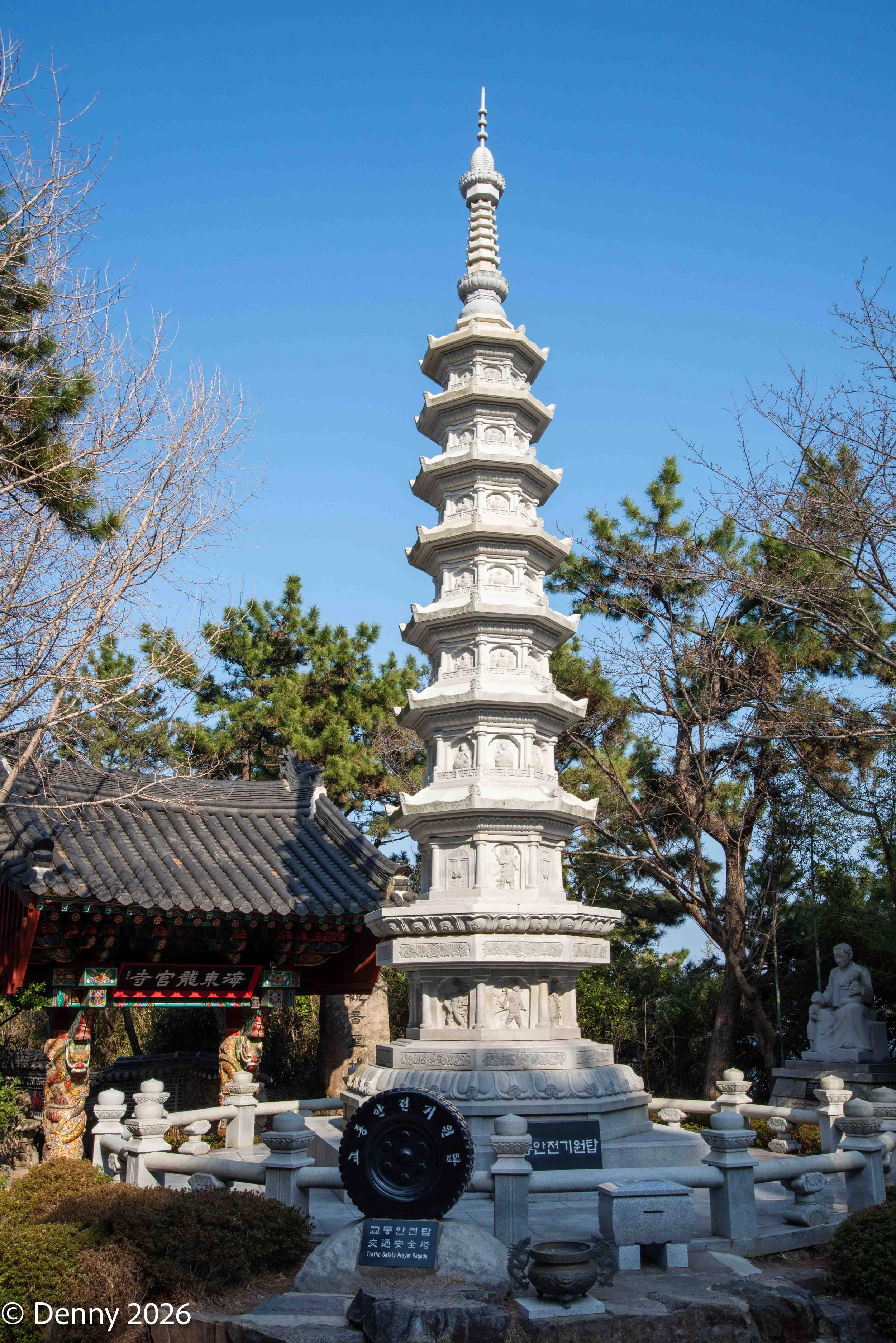
Pagoda at Haedong Yonggungsa Temple
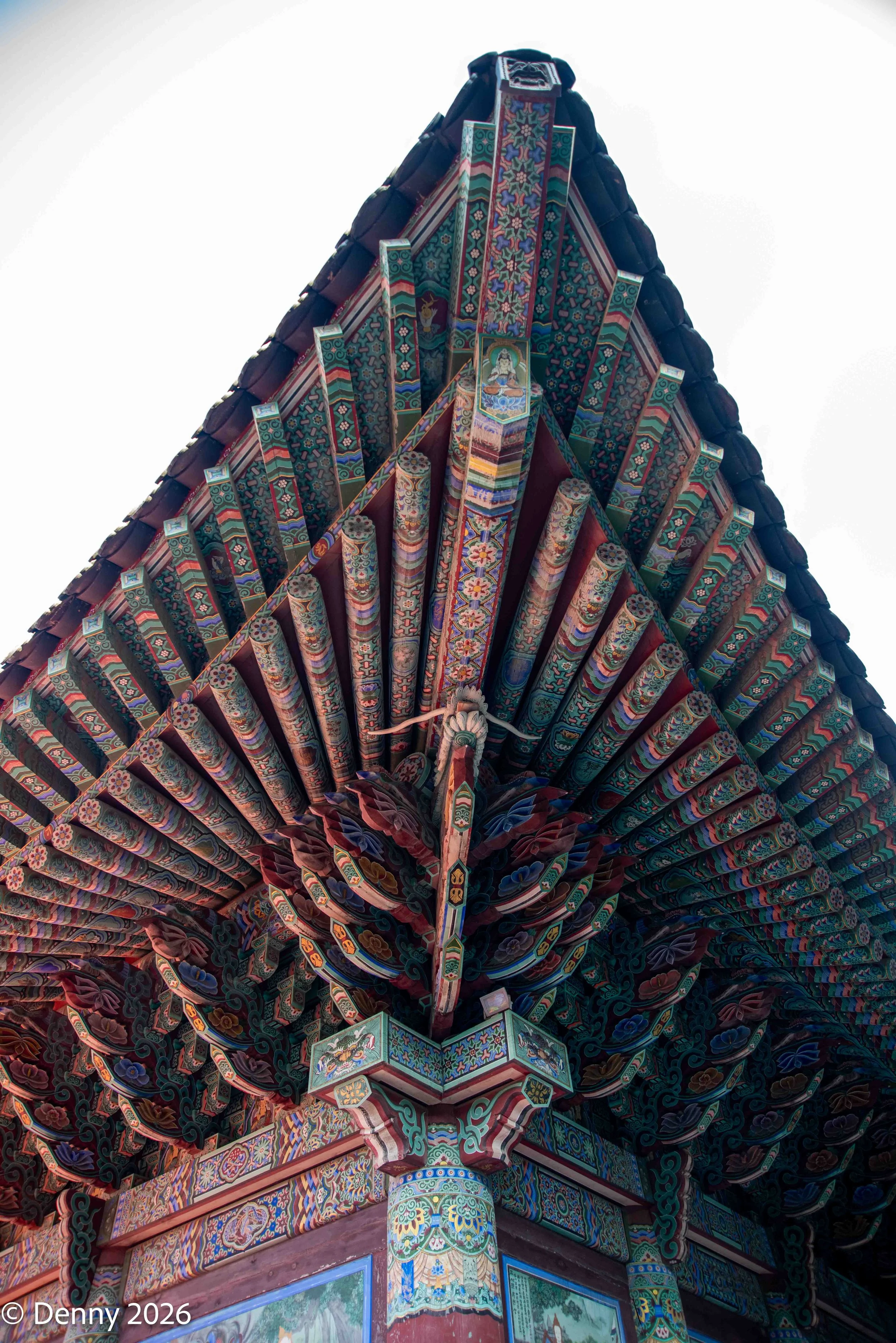
Temple eaves, Pagoda at Haedong Yonggungsa

Buddha, Haedong Yonggungsa Temple

Inside Haedong Yonggungsa Temple
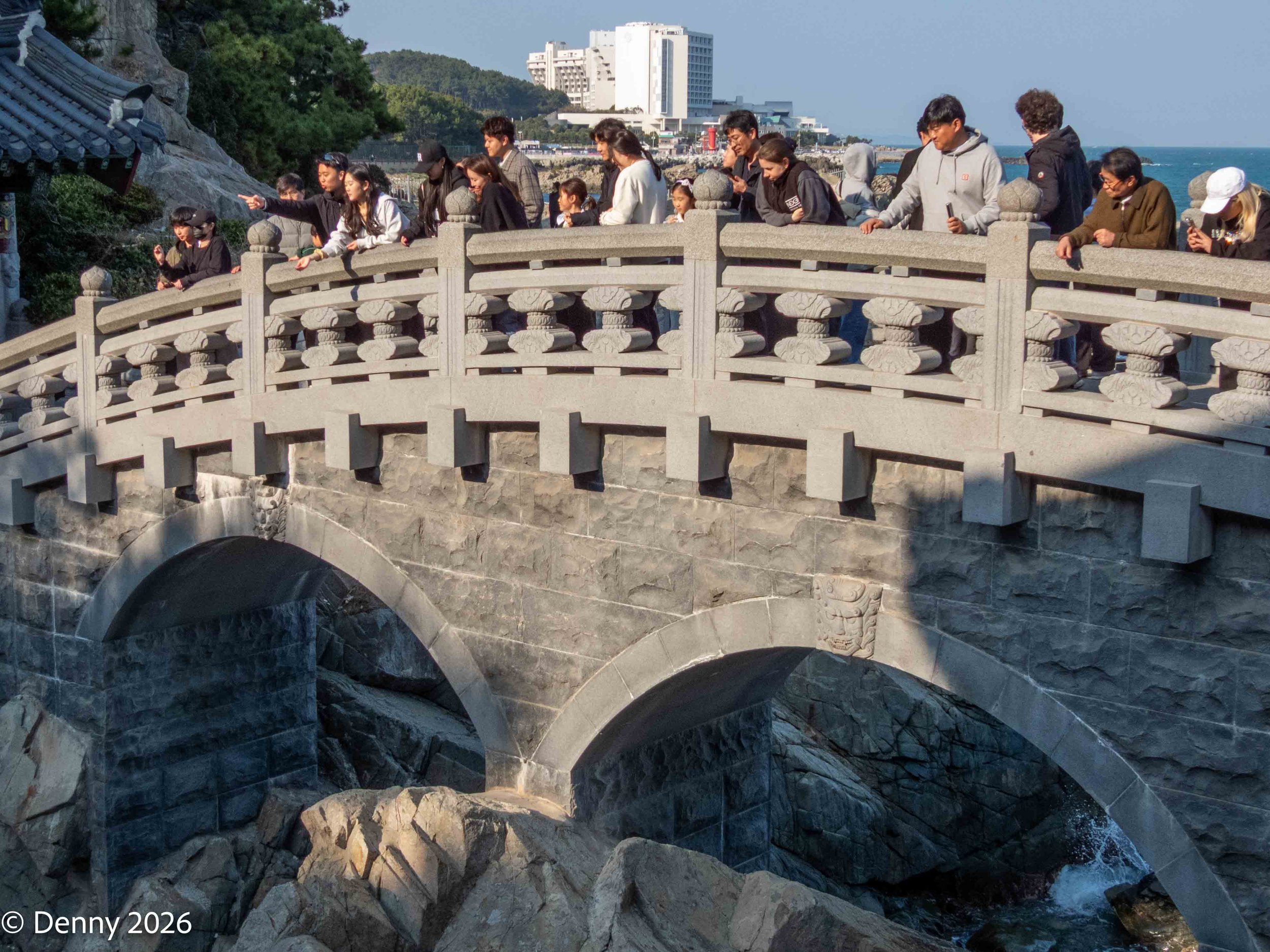
Bridge, Haedong Yonggungsa Temple
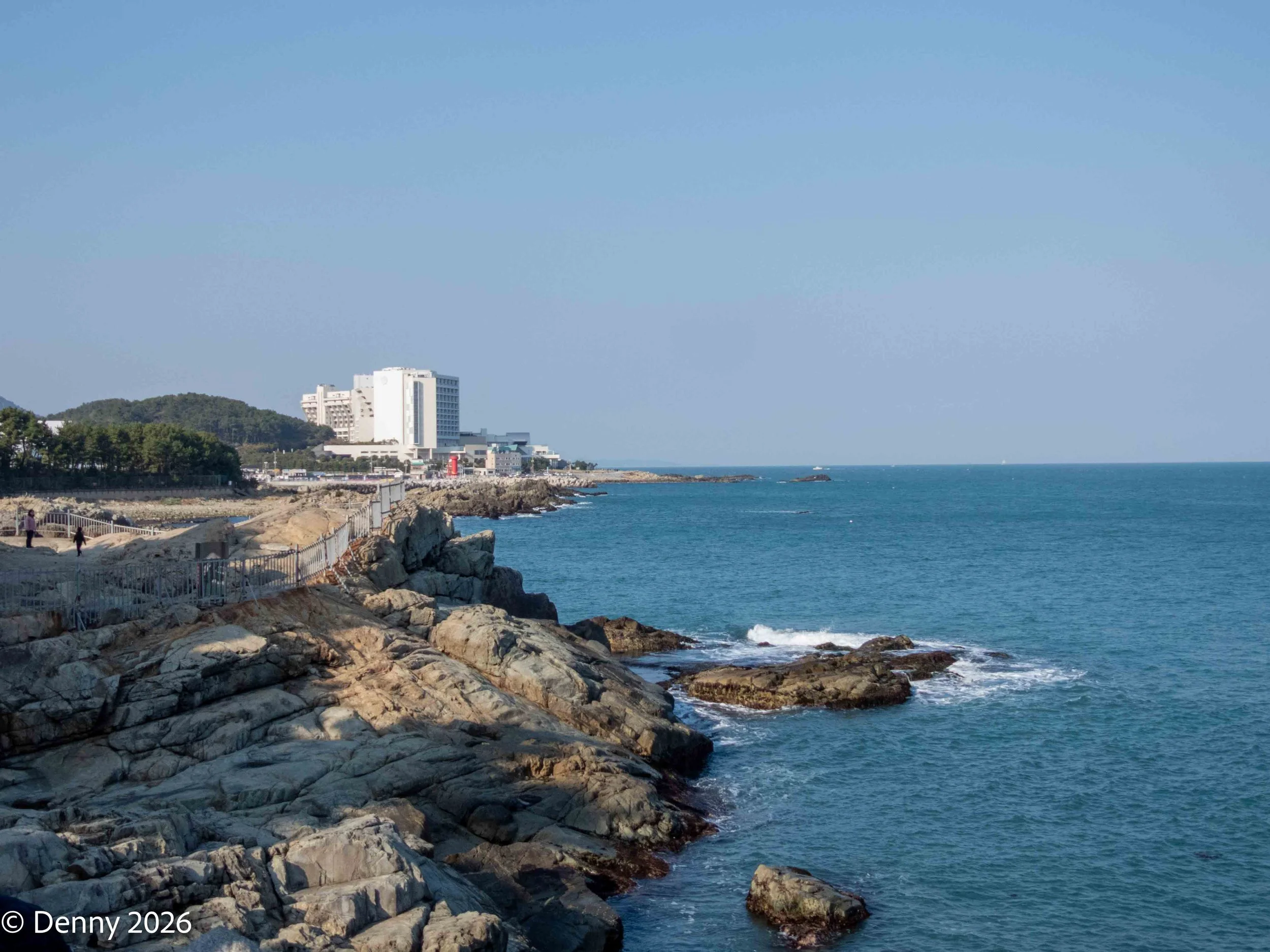
View from Haedong Yonggungsa Temple
The crowd density was too great to make for a totally pleasant visit and by the end of the two hour’s visit we were ready to move even if the traffic situation meant moving on slowly!
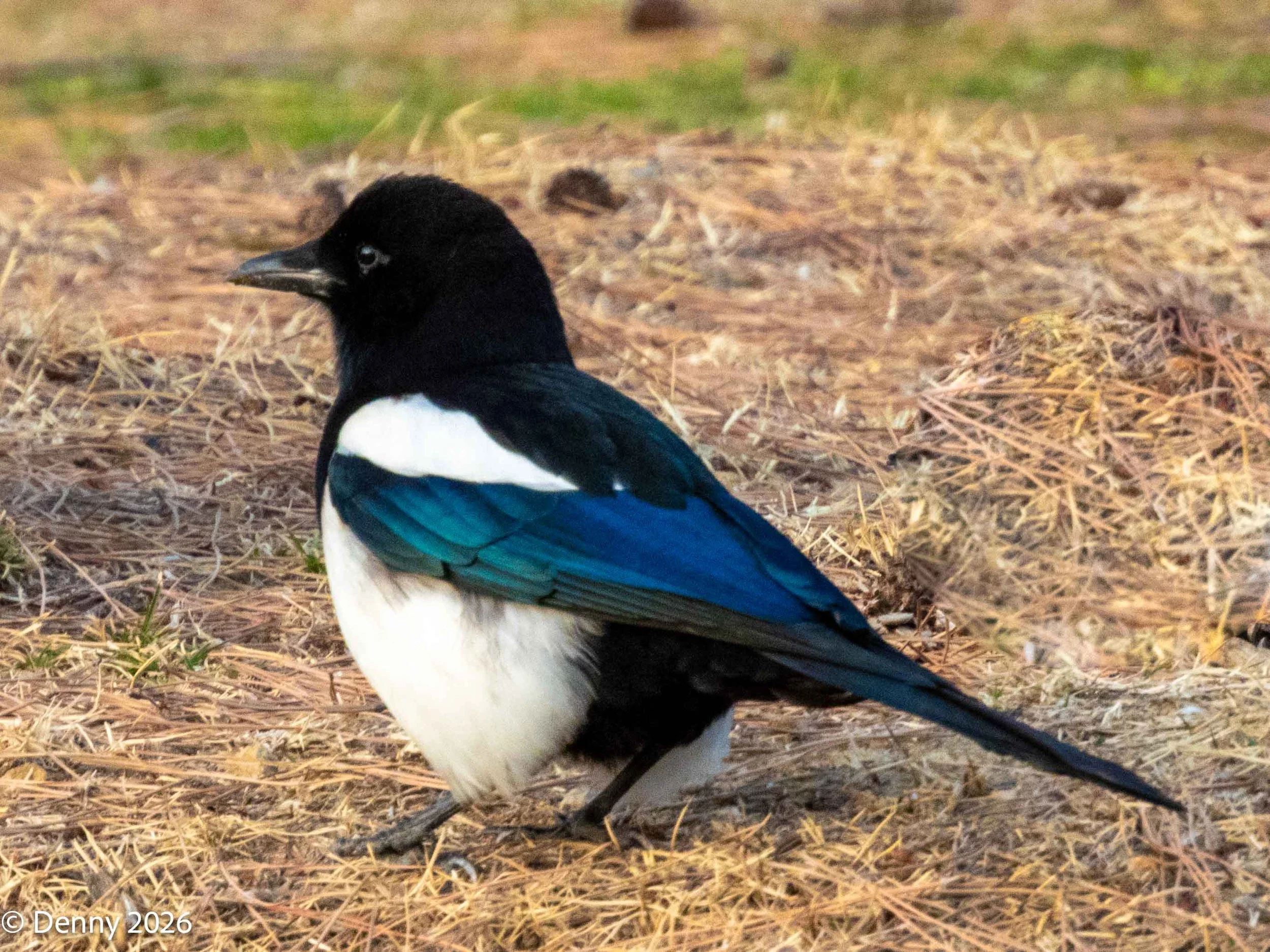
Oriental Magpie (Pica serica) - national bird of South Korea in park near ferry terminal
At 18:30 we boarded a catamaran and spent the next hour on a cruise along the Haeundae River.
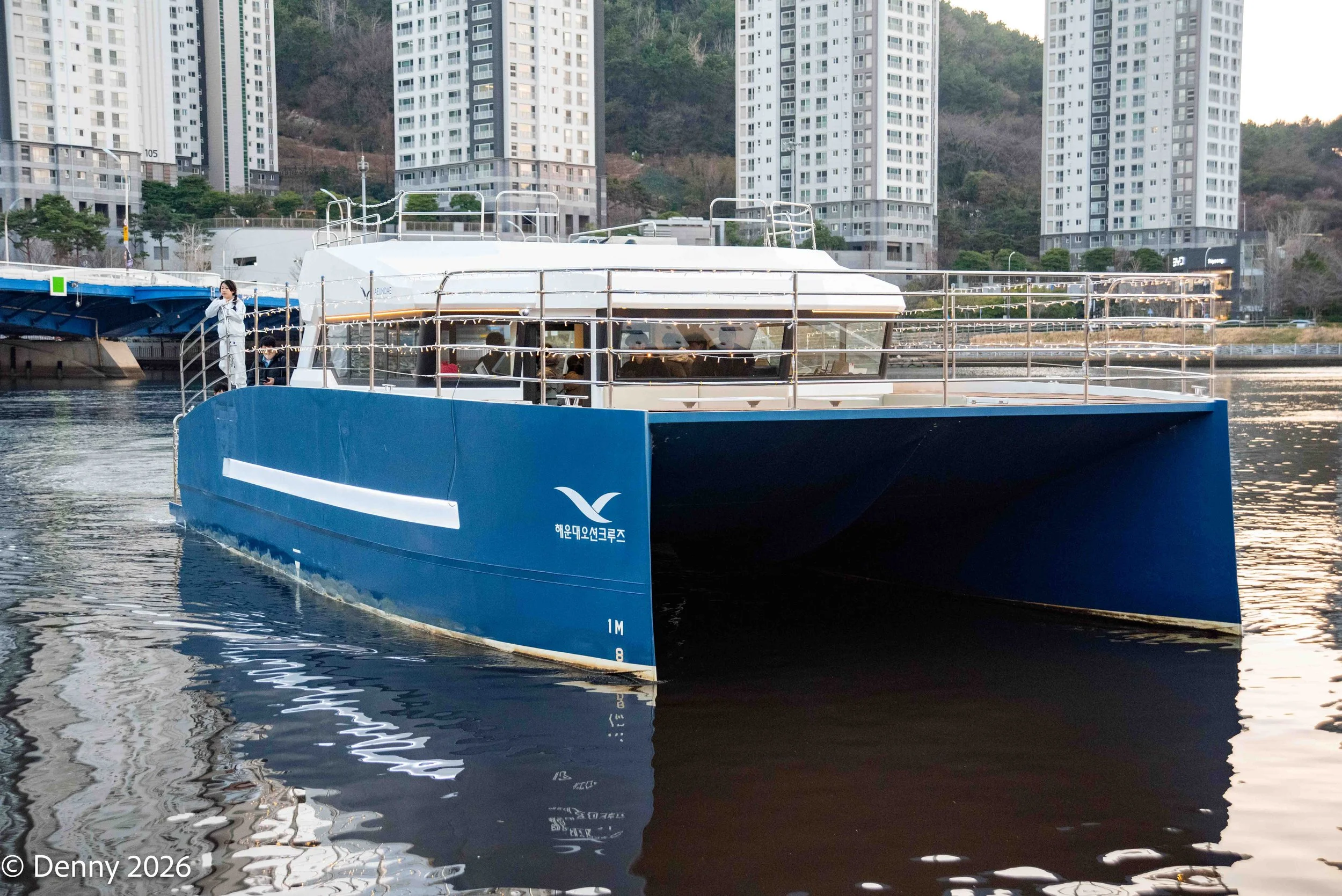
Our ferry
The boat with its thirty or so passengers moved quite slowly, initially up the river and then southwards towards the open ocean but no further than the Gwangan Bridge. When we reached the suspension bridge we sat for a significant period to observe the dazzling array of city lights mostly coming from the surrounding sky-scrapers. The lighting on the Gwangan Bridge was particularly colourful with a large wall section illuminated with a “Busan is Best” message. At this point one of the crew came up onto the foredeck and let off fireworks which for a minute filled the night sky with sparkles and noise.
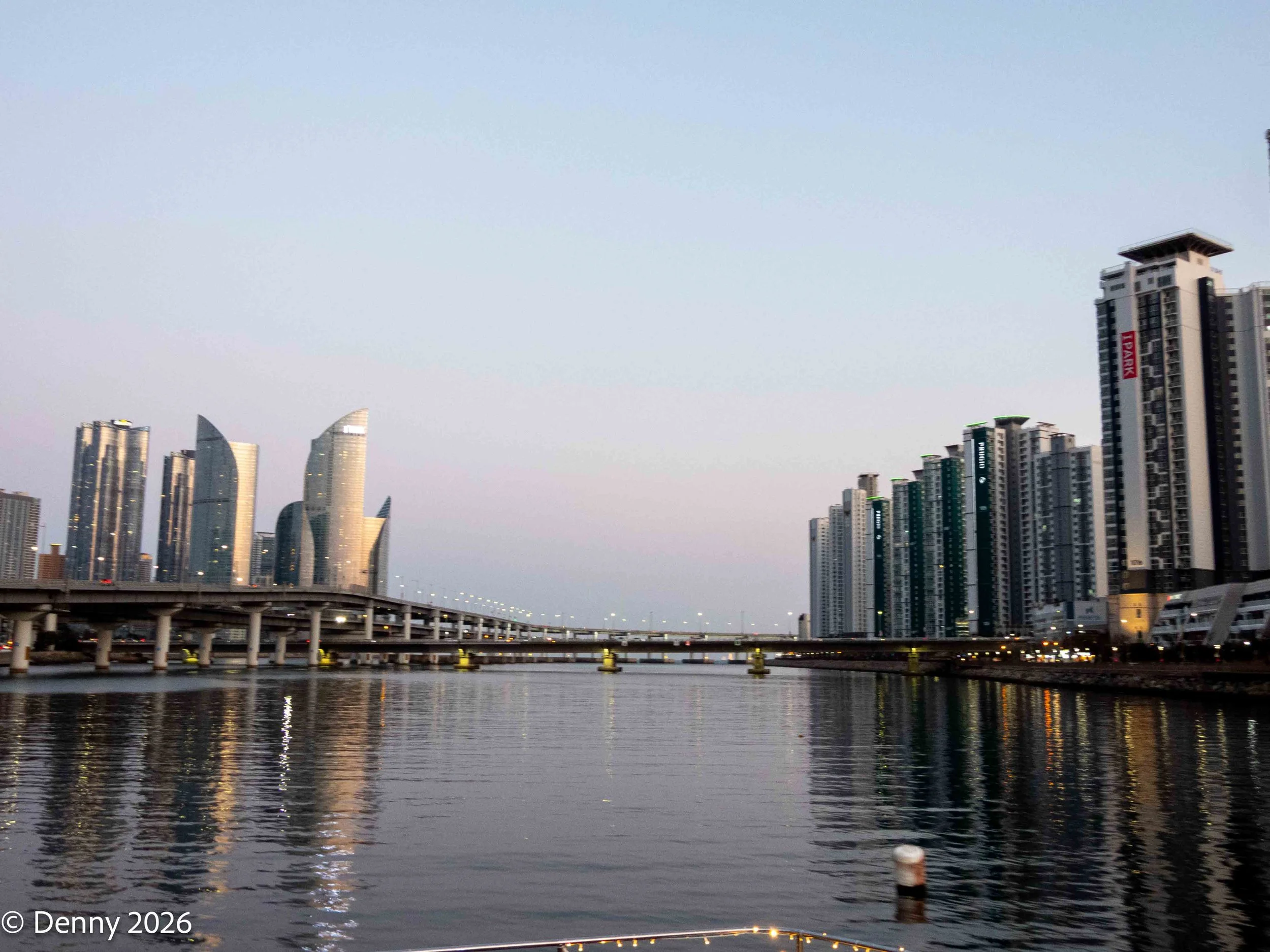
Sunset cruise on Haeundae River
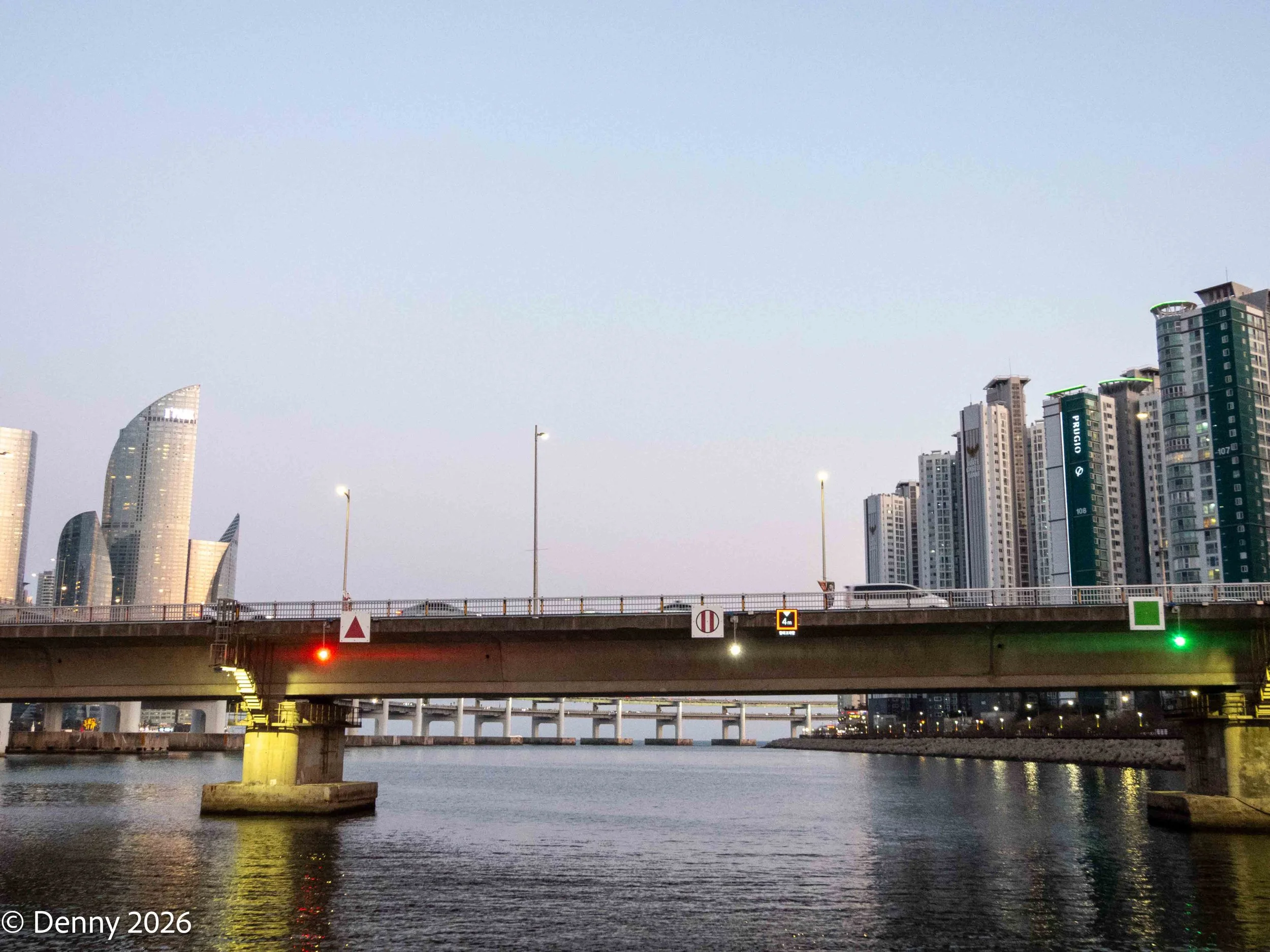
Sunset cruise on Haeundae River
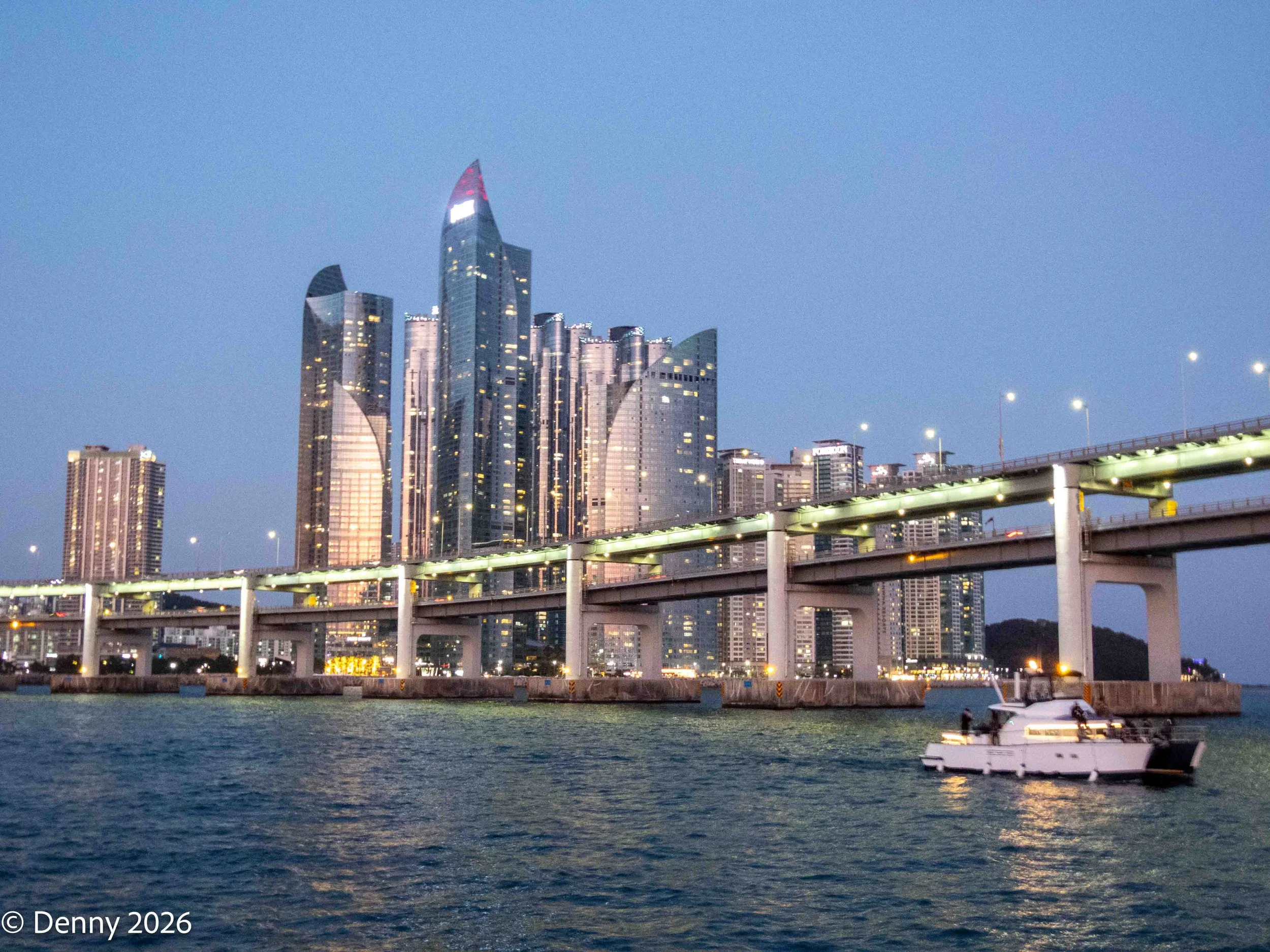
Sunset cruise on Haeundae River

Sunset cruise on Haeundae River

Sunset cruise on Haeundae River

Sunset cruise on Haeundae River

Fireworks during our sunset river cruise on Haeundae River
Although it was not very windy, the cool evening air meant that warm jackets, gloves and head-ware were desirable if not essential.
We returned to our hotel just before 20:00 for a late evening meal and to prepare for our travels tomorrow when we move on to Gyeongju.
Today marks the equinox and it has been once again, a most enjoyable day with lovely blue skies and lots of interesting pursuits.