
We had to wait for a short time in a queue for breakfast this morning as the hotel seems to be saturated with travelling groups like ours. Word has it that there are four separate Bunnik’s tours visiting Tokyo at present and all staying in the Grand Nikko Tokyo Daiba Hotel.
Our group then boarded a bus at 09:00 and we were driven to the Imperial Palace which is pretty much in the heart of Tokyo. On the way, Mitzie explained some of the complexities of travel within this 27 million people metropolis. To illustrate the dilemma that Tokyo residents face when moving from place to place she showed us a map of the intertwining rail networks that cover the city. It’s quite amazing!

Map of rail networks in Tokyo
The Imperial Palace is the residence of the Emperor of Japan and is a modern building and yet has Japanese architectural features and style.
Following the Meiji Restoration in 1868, Japan’s imperial family moved from Kyoto to Tokyo and Edo Castle, the former home of the Tokugawa shoguns was commandeered by the emperor and renamed as the Imperial Palace.
Practically nothing of the main original palace remains but the surrounding stone walls, moats, entrance gates and guardhouses bear testament to the past days of shogun domination and feudal warfare.

Rock wall at entrance, Imperial Palace East Garden
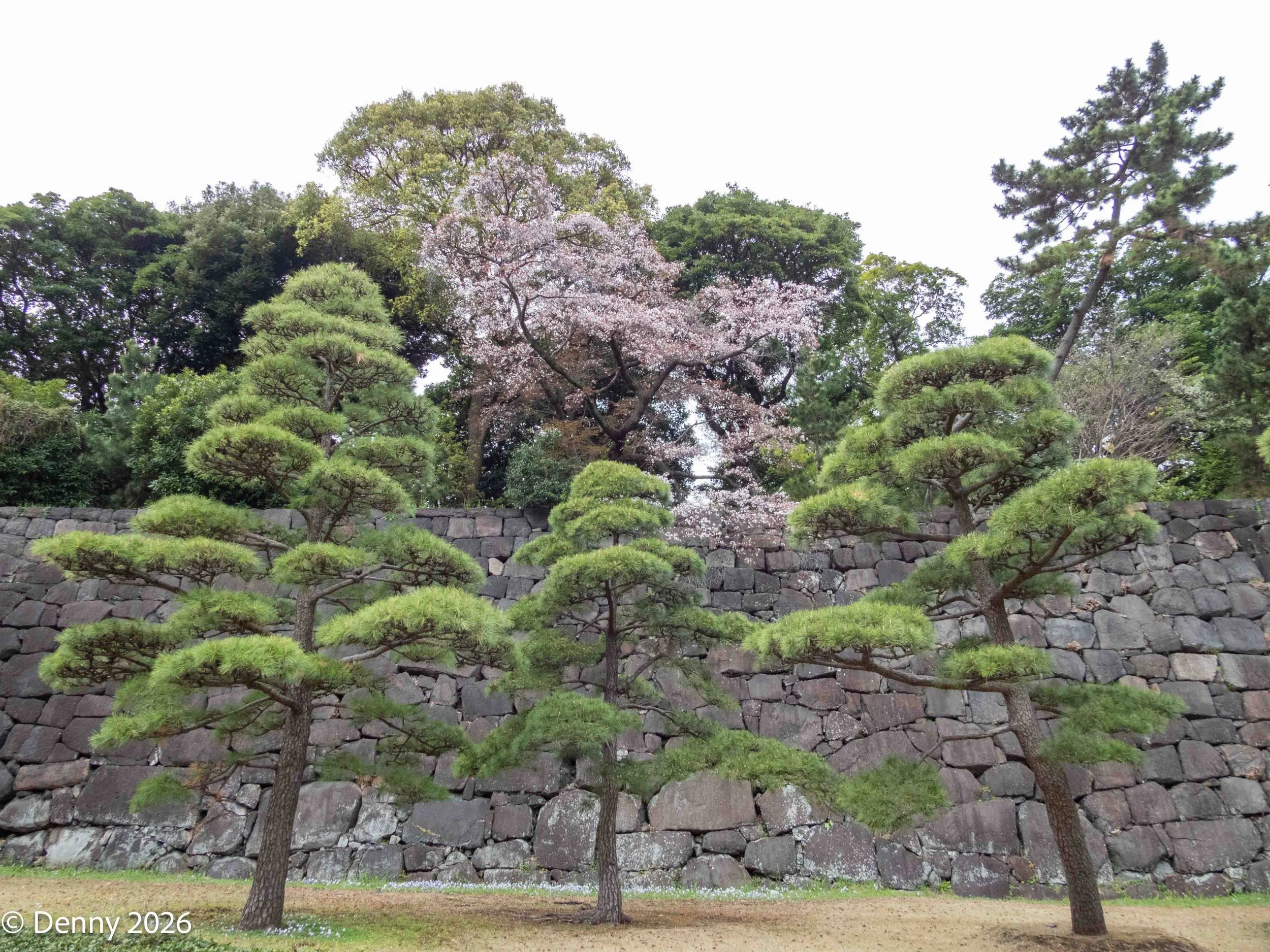
Rock wall and conifers, Imperial Palace East Garden
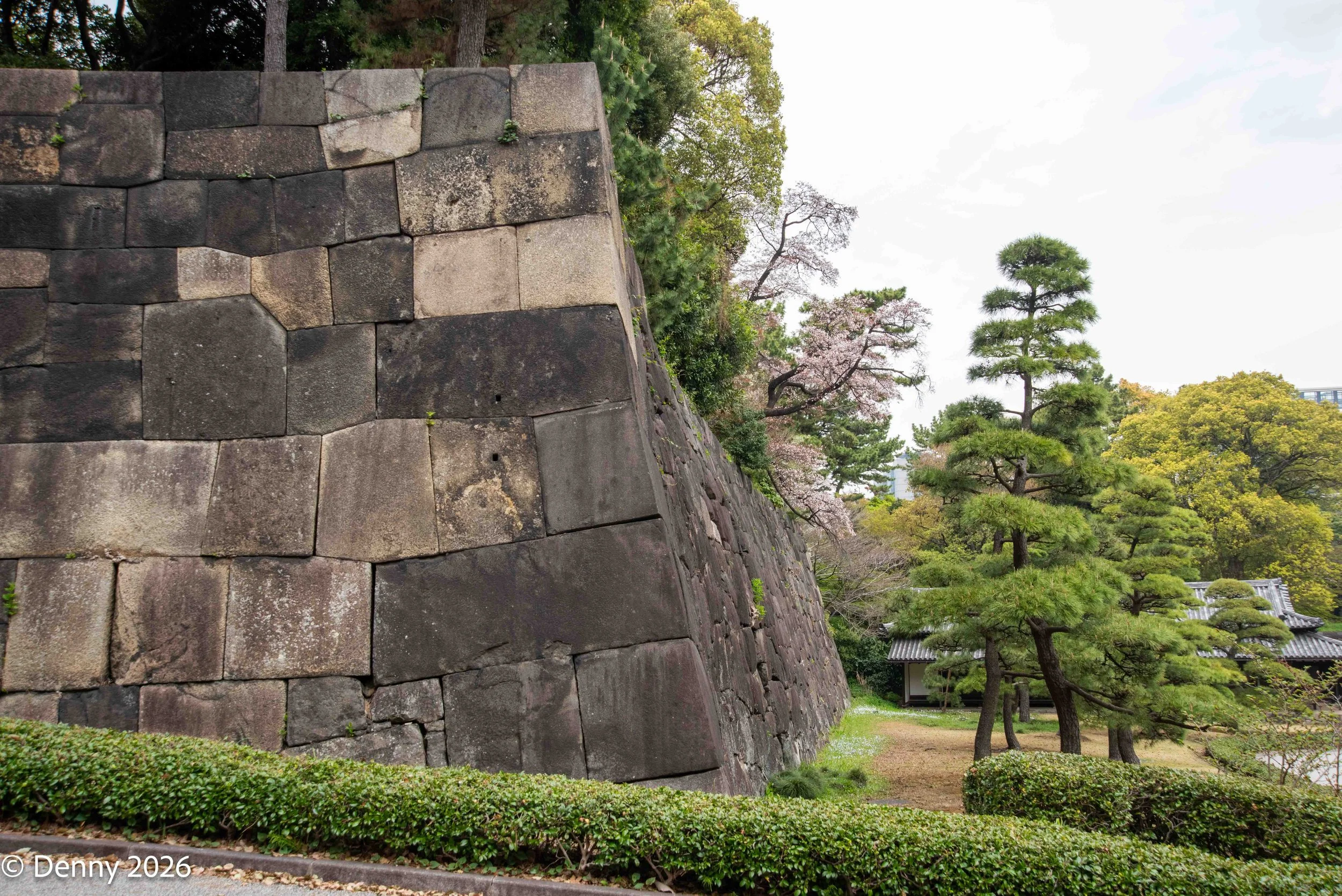
Rock wall, Imperial Palace East Garden
Most of the palace was destroyed during World War II but it has been rebuilt in the original style.
We wandered for an hour or so through the palace gardens where the cherry blossoms were at their best. The lawns, ponds and delicately pruned conifers set a truly ‘typical’ Japanese scene although a rainy period then intervened and spoilt the effect to a slight extent.

Cherry tree with remains of the old palace in background, Imperial Palace East Garden
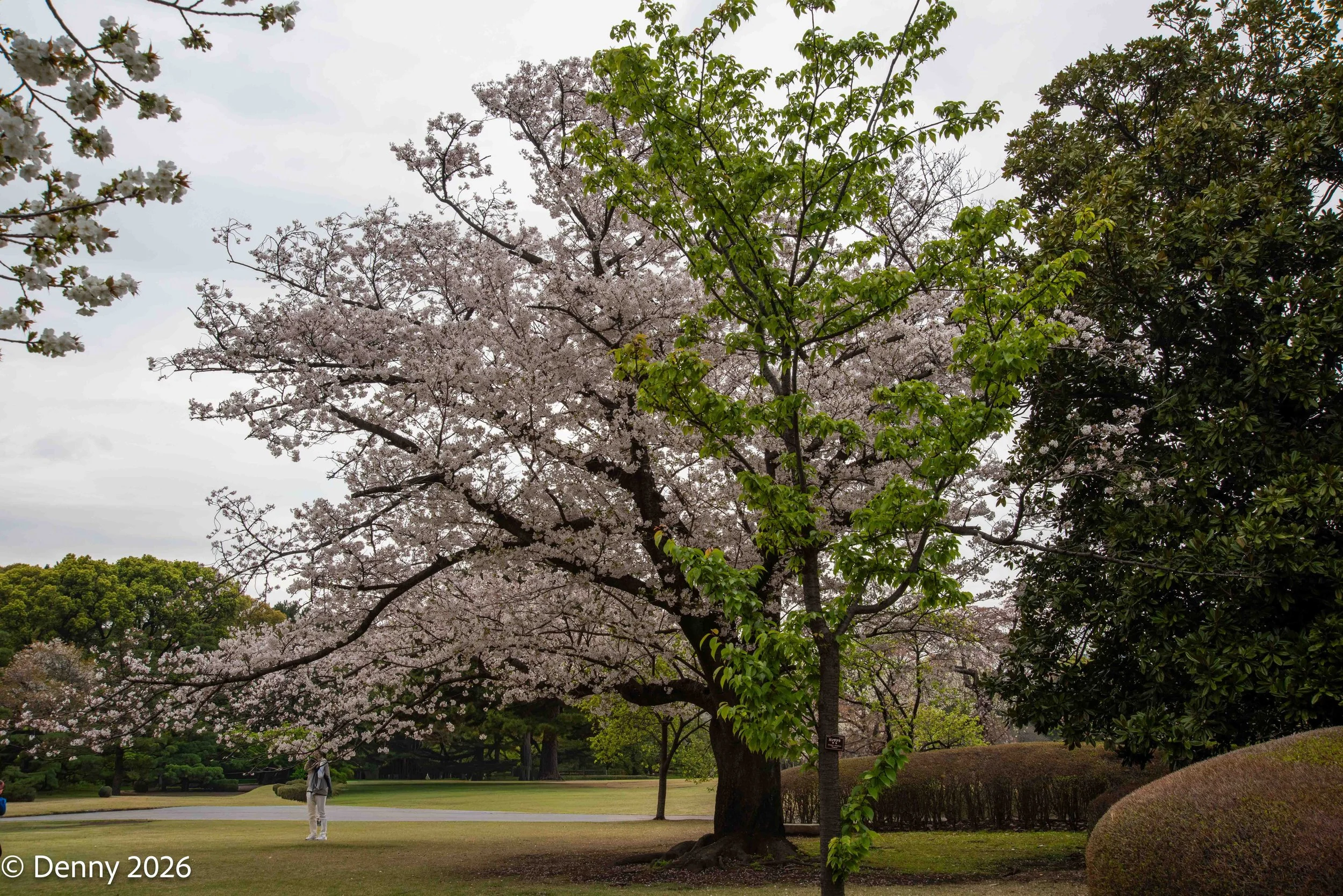
Cherry blossom, Imperial Palace East Garden

View from Shiomizaka Slope, Imperial Palace East Garden
We continued on, despite the less than ideal weather conditions and found a pretty little waterfall cascading into a pond home to a number of large orange and white carp.
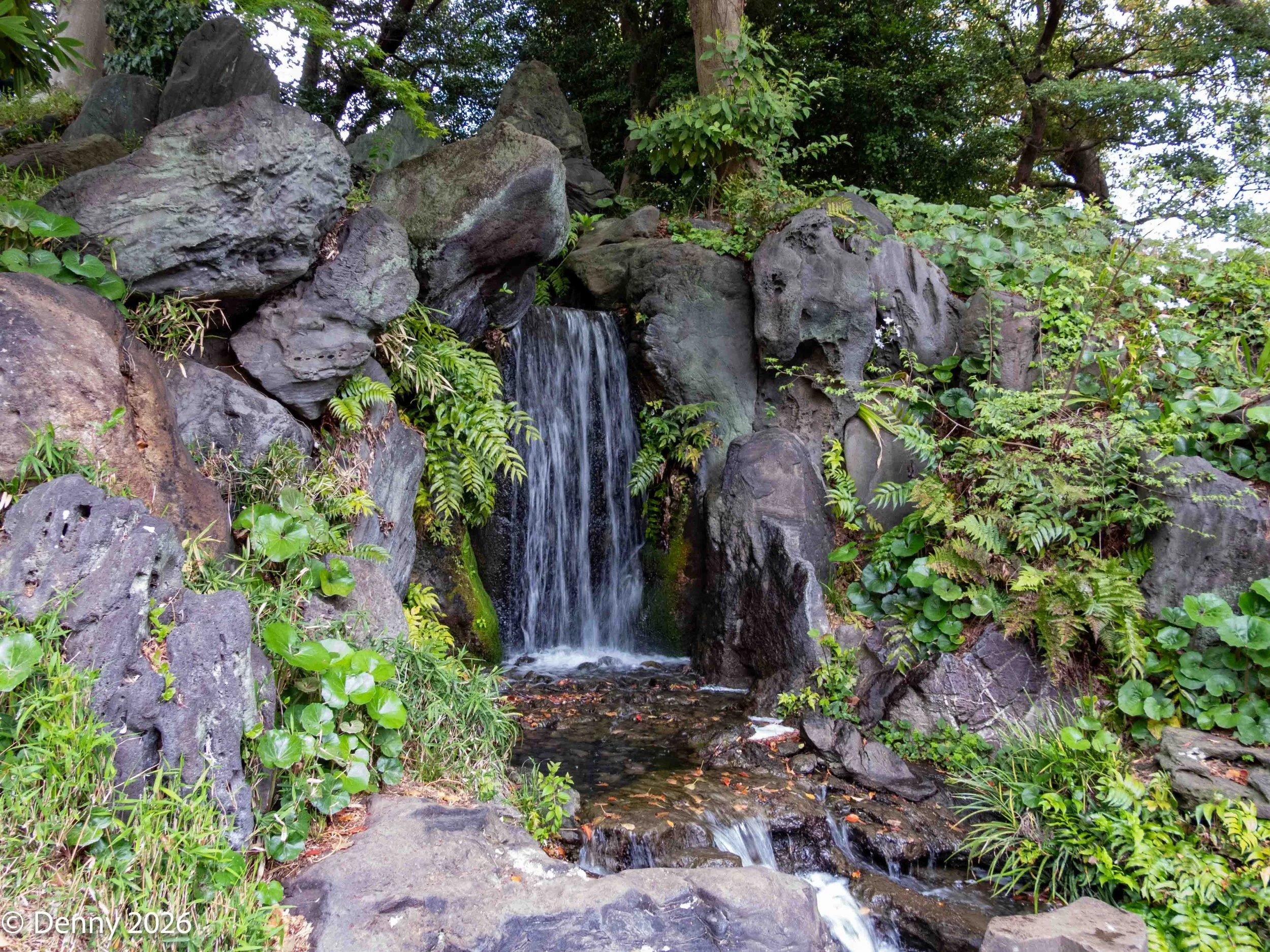
Waterfall, Imperial Palace East Garden
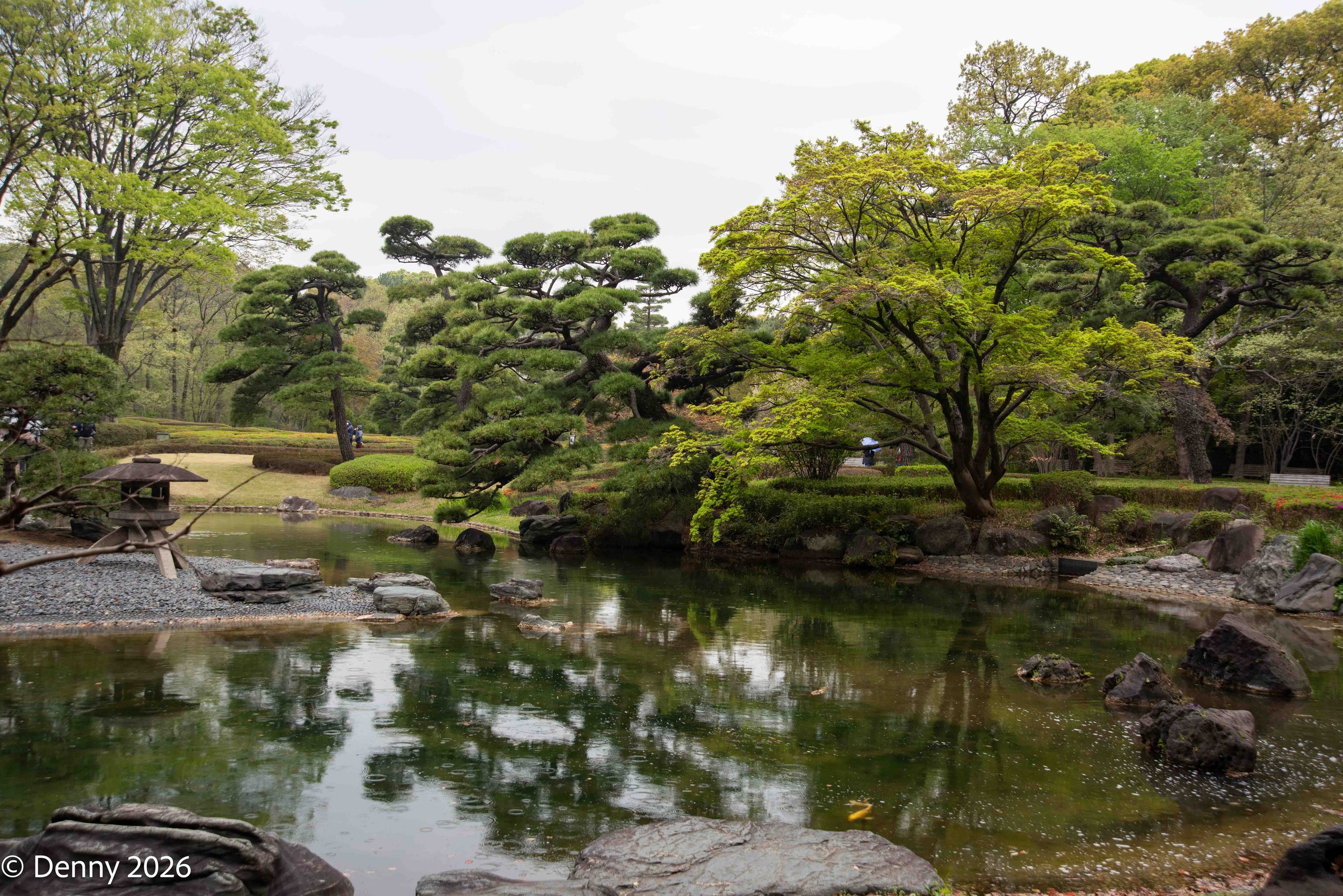
Pond, Imperial Palace East Garden

Carp in pond, Imperial Palace East Garden

Our Bunnik tour group, Imperial Palace East Garden
Apart from the cherry blossom trees, some of which are even more than 650 years old, we found an area with azaleas, rhododendrons, irises and kerria plants in flower.
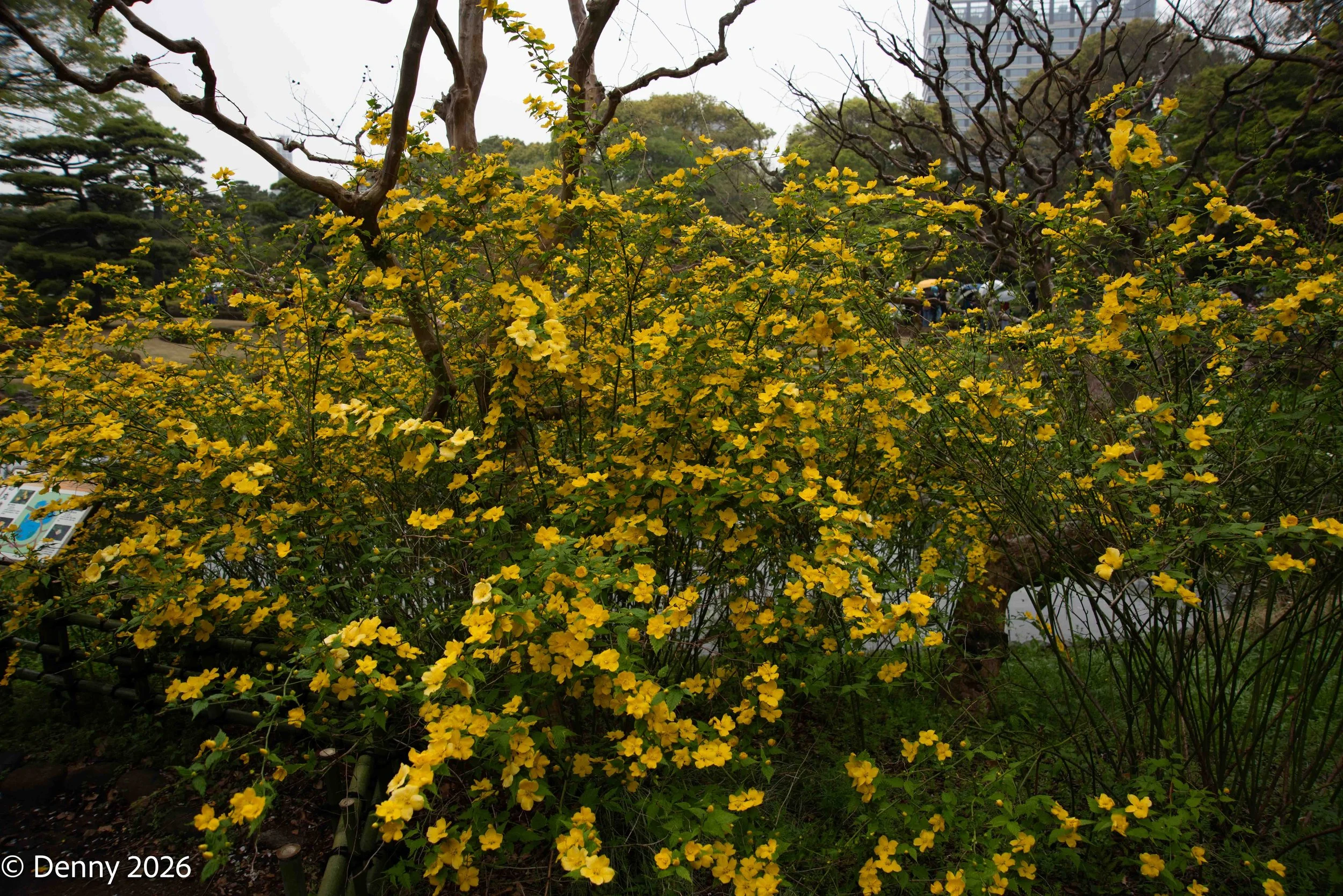
Kerria japonica, Imperial Palace East Garden
We departed the palace grounds and our bus driver then drove us to Ginza which is one of the principal up-market shopping areas of Tokyo. As Mitzie described it, it’s the Oxford Street of Tokyo and as ‘Monopoly’ aficionados will recall, things here are glitzy and equally super expensive.
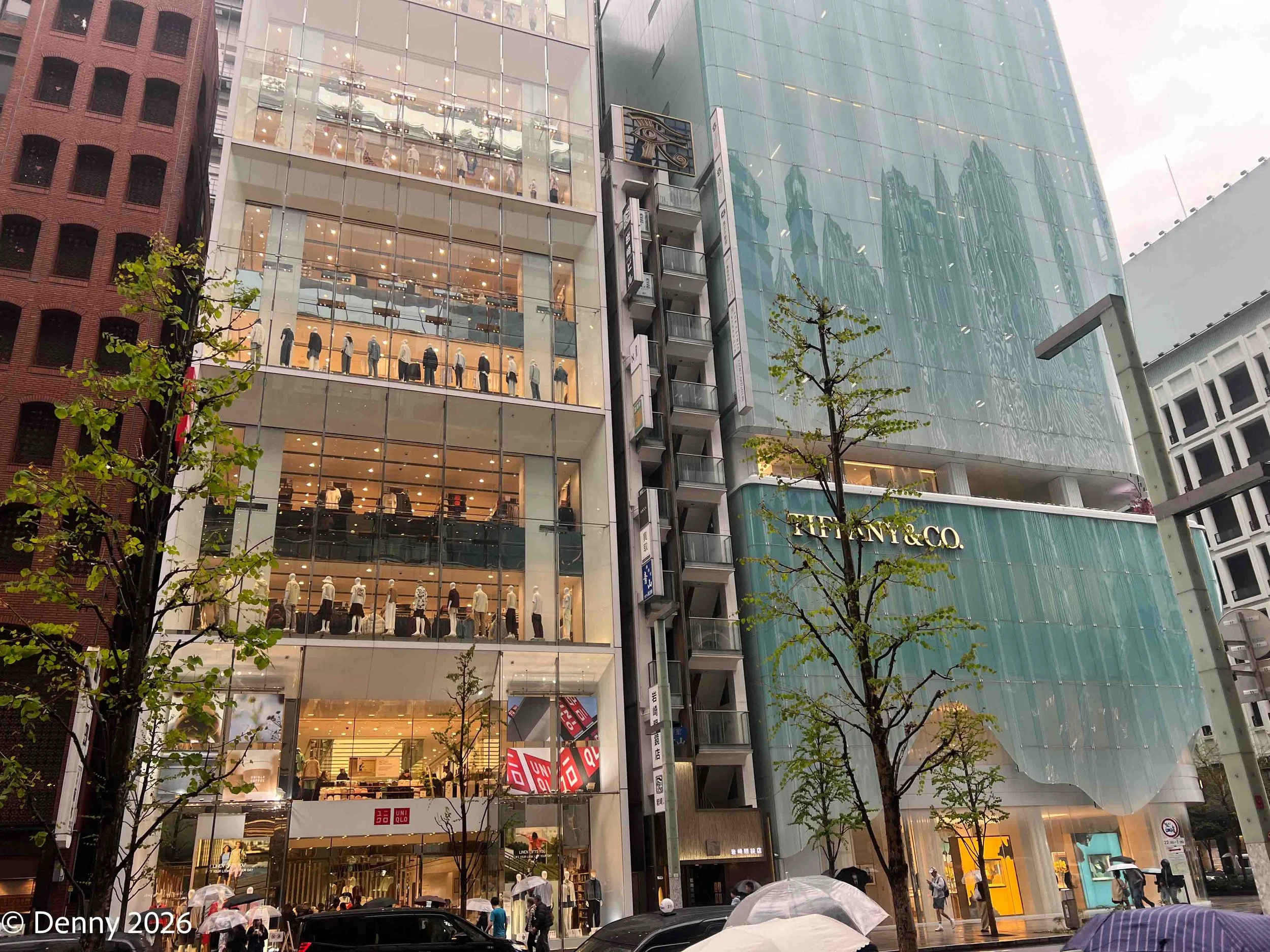
Tiffany & Co, opposite our meeting place at Ginza 5
We spent over two hours in the street’s department stores and were flabbergasted at the prices of some items for sale.
The first jaw-dropping sight was at a butcher’s market selling wagyu beef. The most expensive cuts cost ¥7,000 per 100 grams or approximately AU$650 per kilogram. Nearby we saw large apples for sale individually in neatly packaged polystyrene wraps for ¥1,620 or about $16.
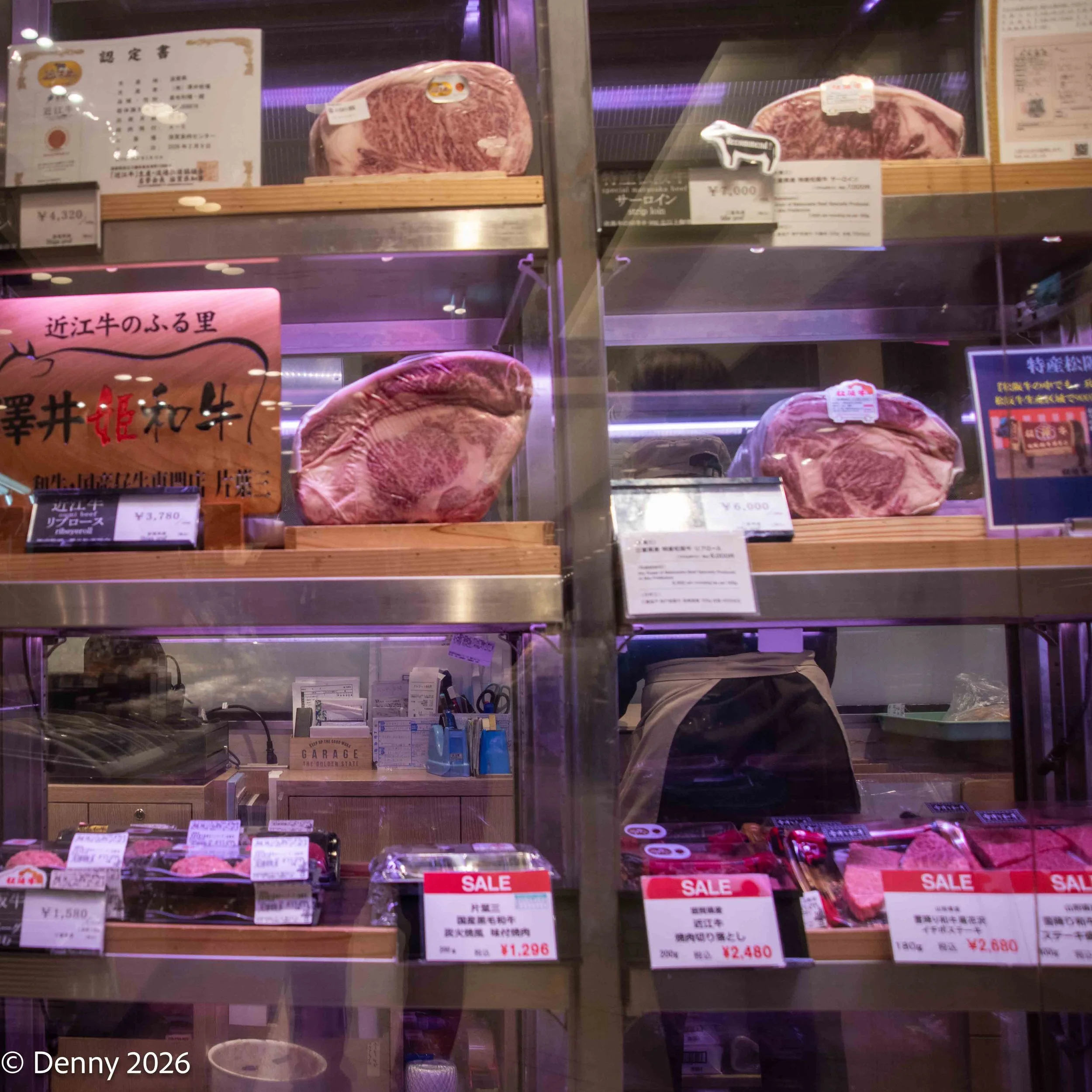
Wagyu beef, Ginza
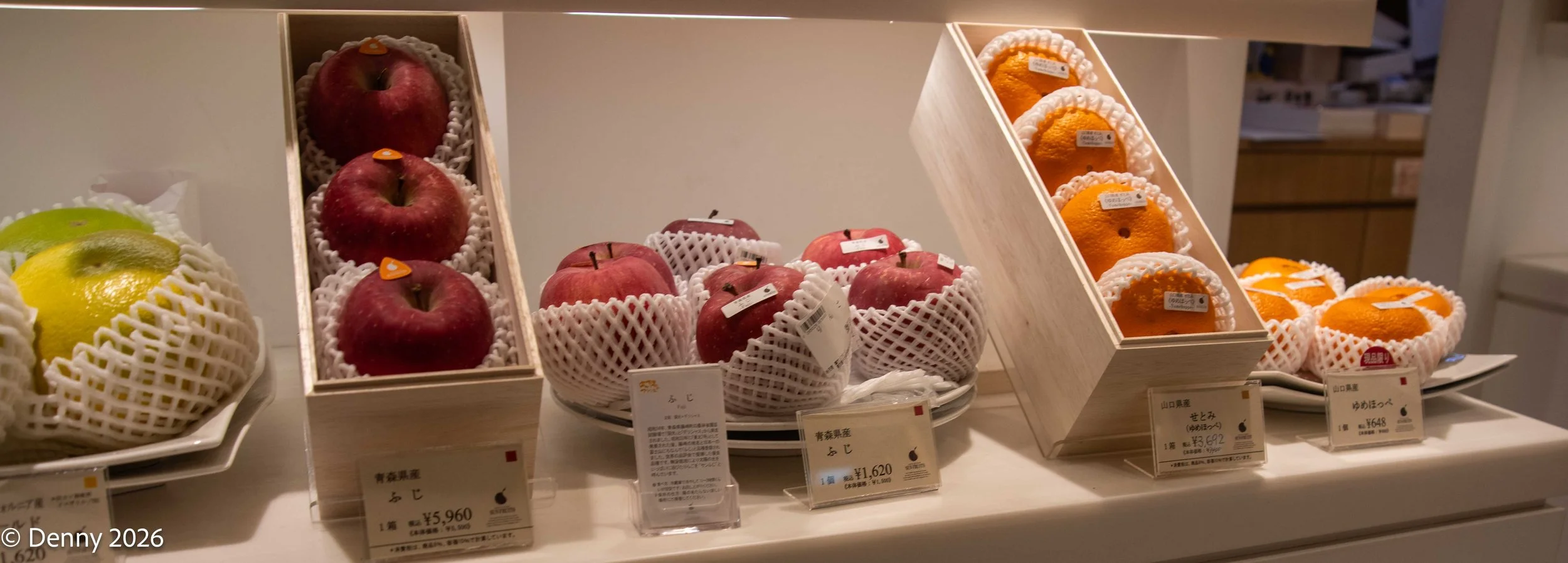
Fruit (apples and mandarins), Ginza
The Enoteca wine shop had an impressive selection of French wines including many in Jeroboam (3.0 L), Rehoboam (4.5 L) and Imperial (6.0 L) volume bottle sizes. Although not shown, one can only guess at the eye-watering price of the six litre bottle of 1991 Chateaux Mouton Rothschild on sale. A selection of vintage wines was available from the 1990s to more recent times.
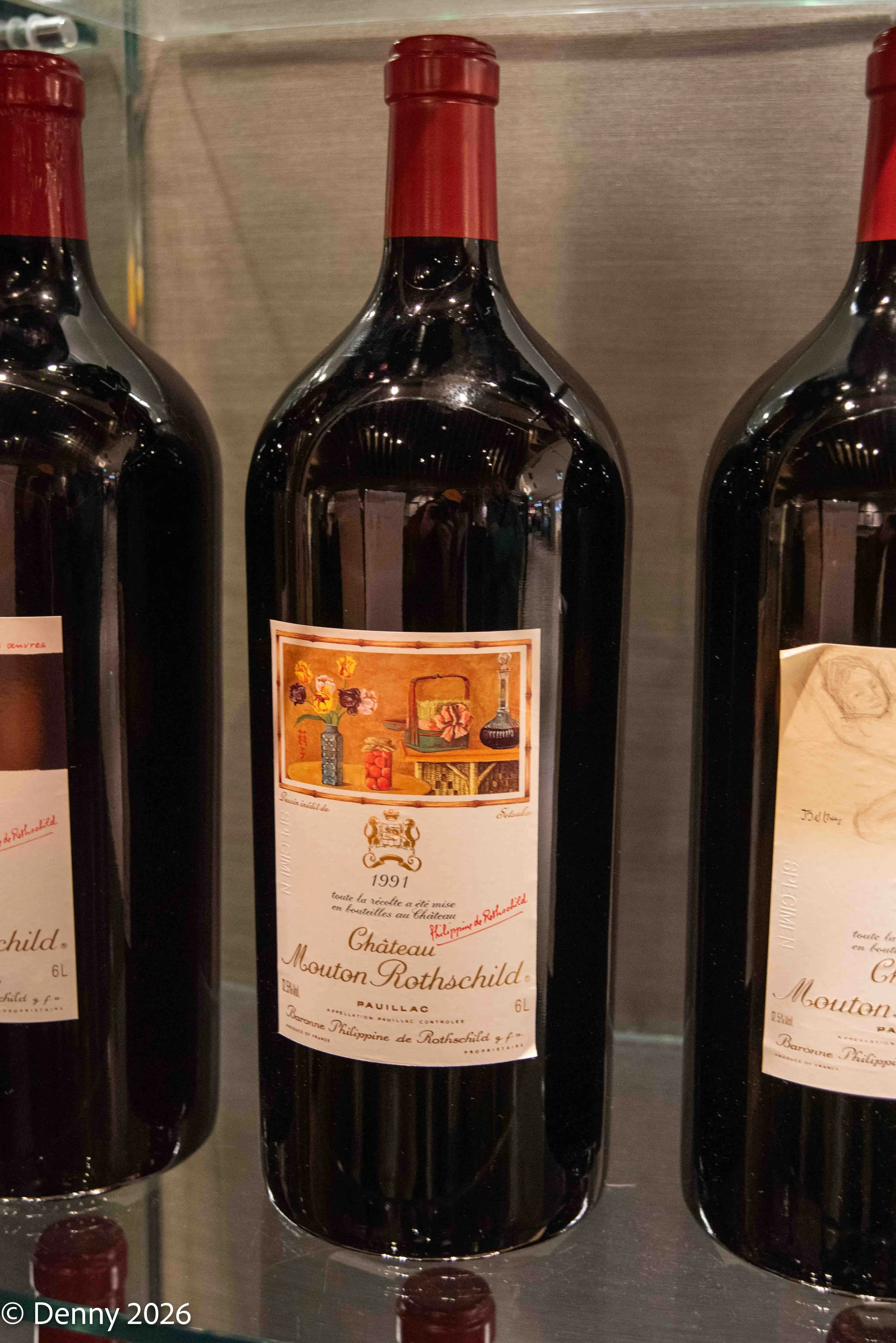
Château Mouton Rothschild, Ginza
Around the corner from the wine shop was a whisky shop and the range of Japanese and exotic whiskies was extraordinary.
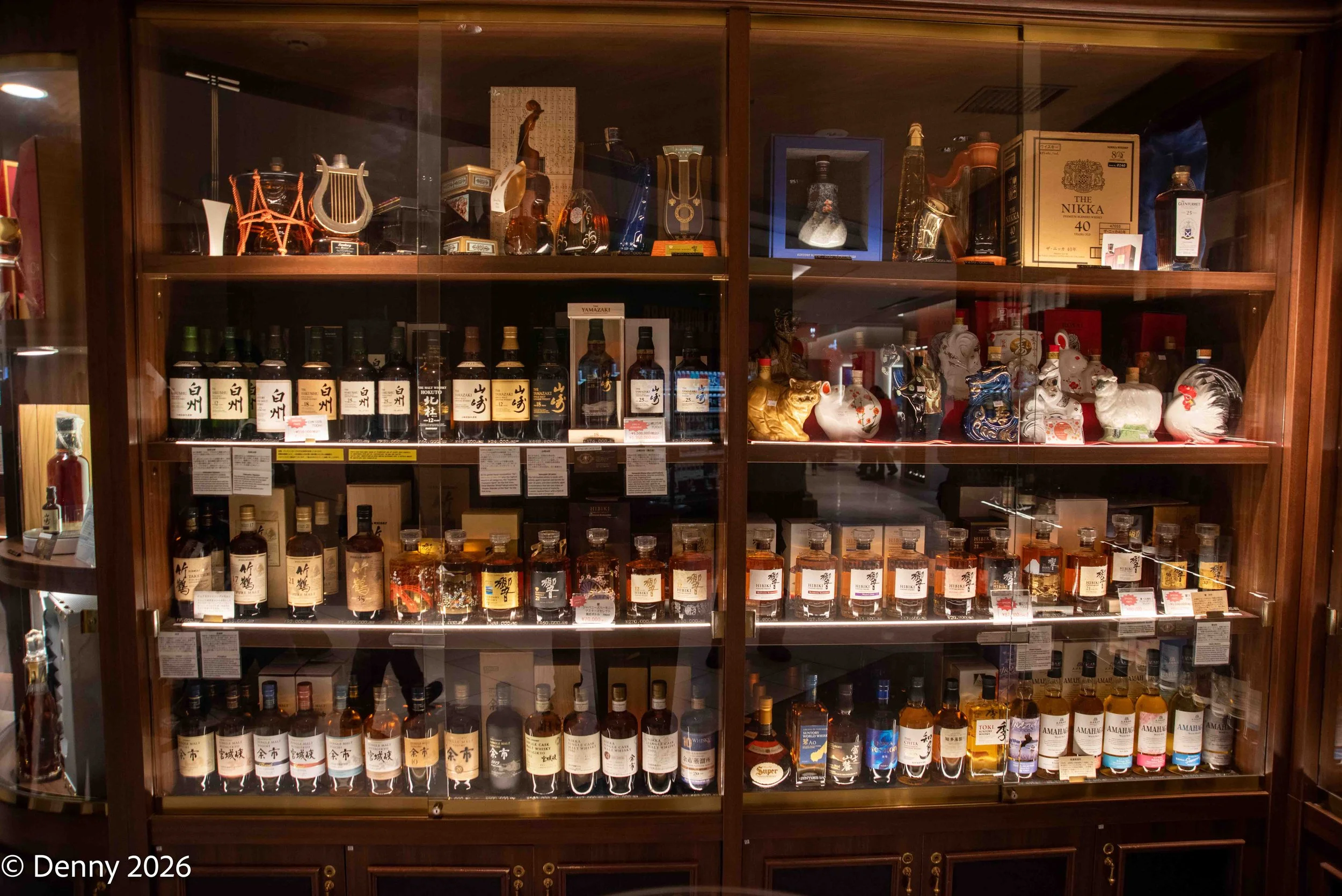
Whisky shop, Ginza
The oldest one I could see was a 50 year old 700 mL Balvenie single malt bottled in 1987 on sale for ¥16,700,000 or let’s say $150,000 Australian.
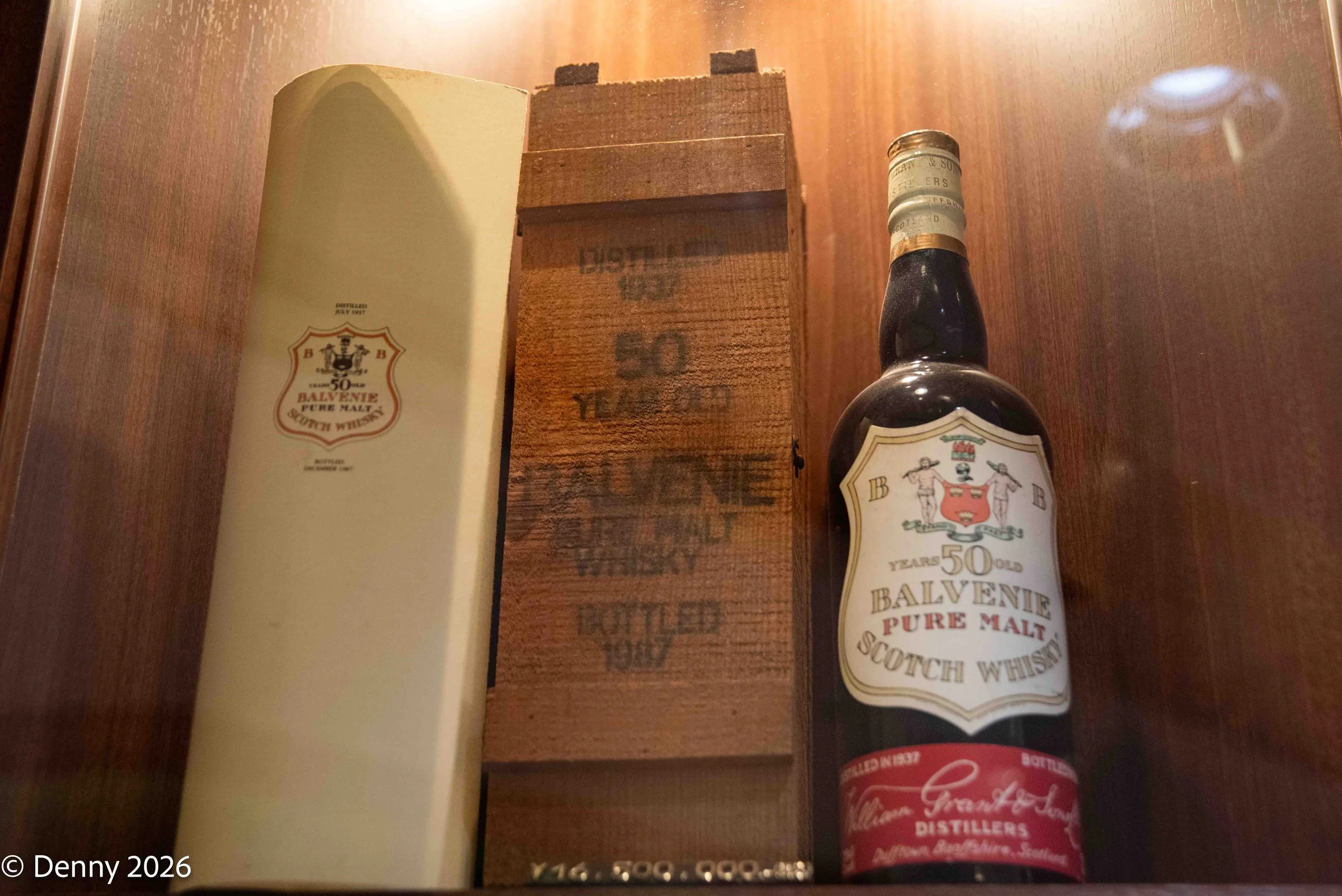
Balvenie Pure Malt whisky, Ginza
After a much needed coffee break at Blue Bottle Coffee Ginza Café, we ventured to the sixth floor of one department store where the whole floor was effectively a book shop called Tsutaya Books. The books on sale were mostly in Japanese and ranged from novels, to textbooks to very large and highly elaborate art books.
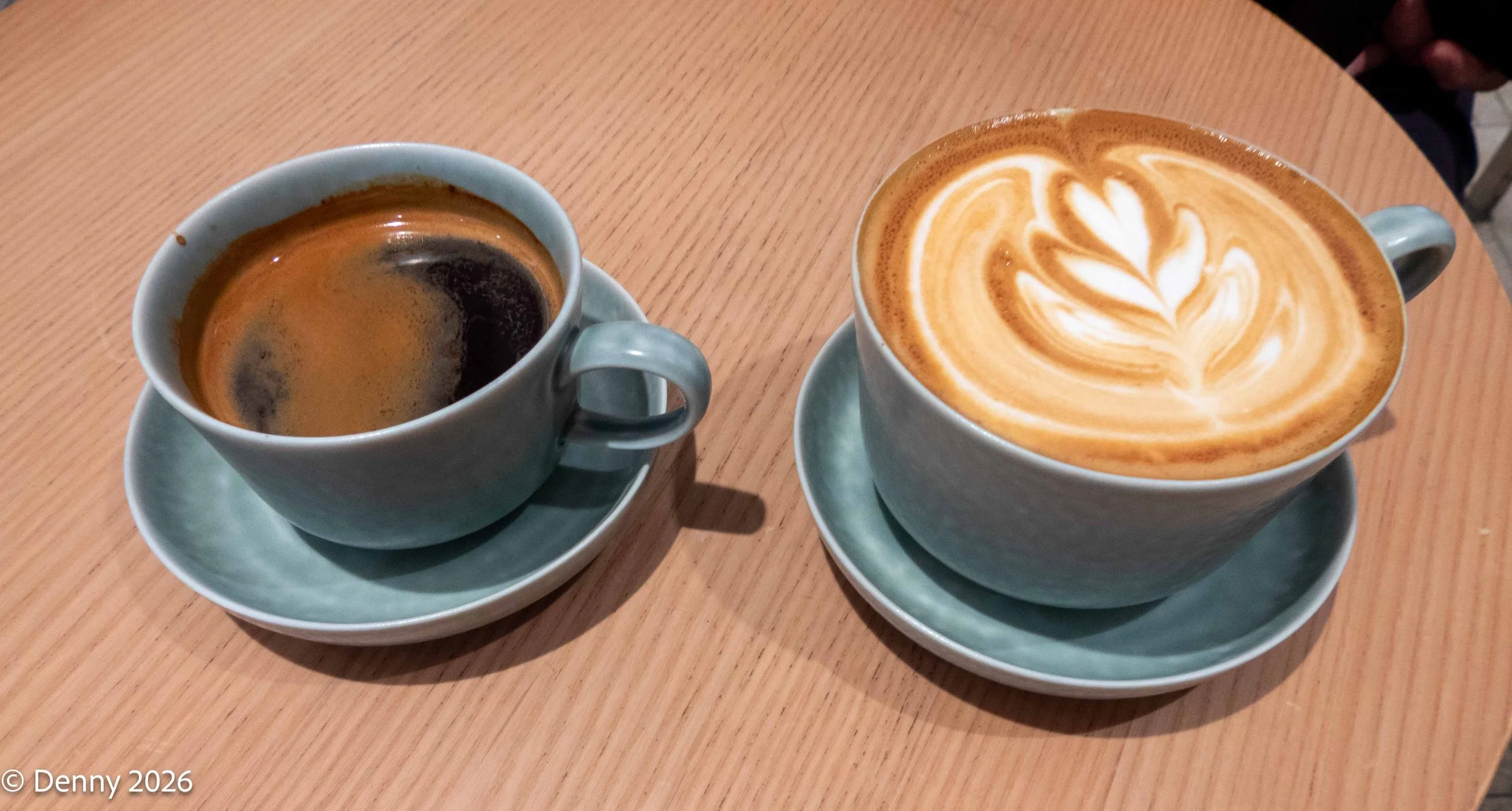
Coffee at Blue Bottle Coffee Ginza Café, Ginza
In one corner was a section that specialised in samurai swords. The swords on display were works of art with fancy inscriptions on the shining steel blades and had sheaths of equal artistic quality.
A camera shop nearby was dedicated only to Leica cameras. We made conversation with the shop person and she showed us some of the more popular Leica cameras presently in vogue.
My favourite was a Leica EV1 35 mm F1.2 for sale at a bargain price of a mere ¥1,397,000 (AU$12,500).
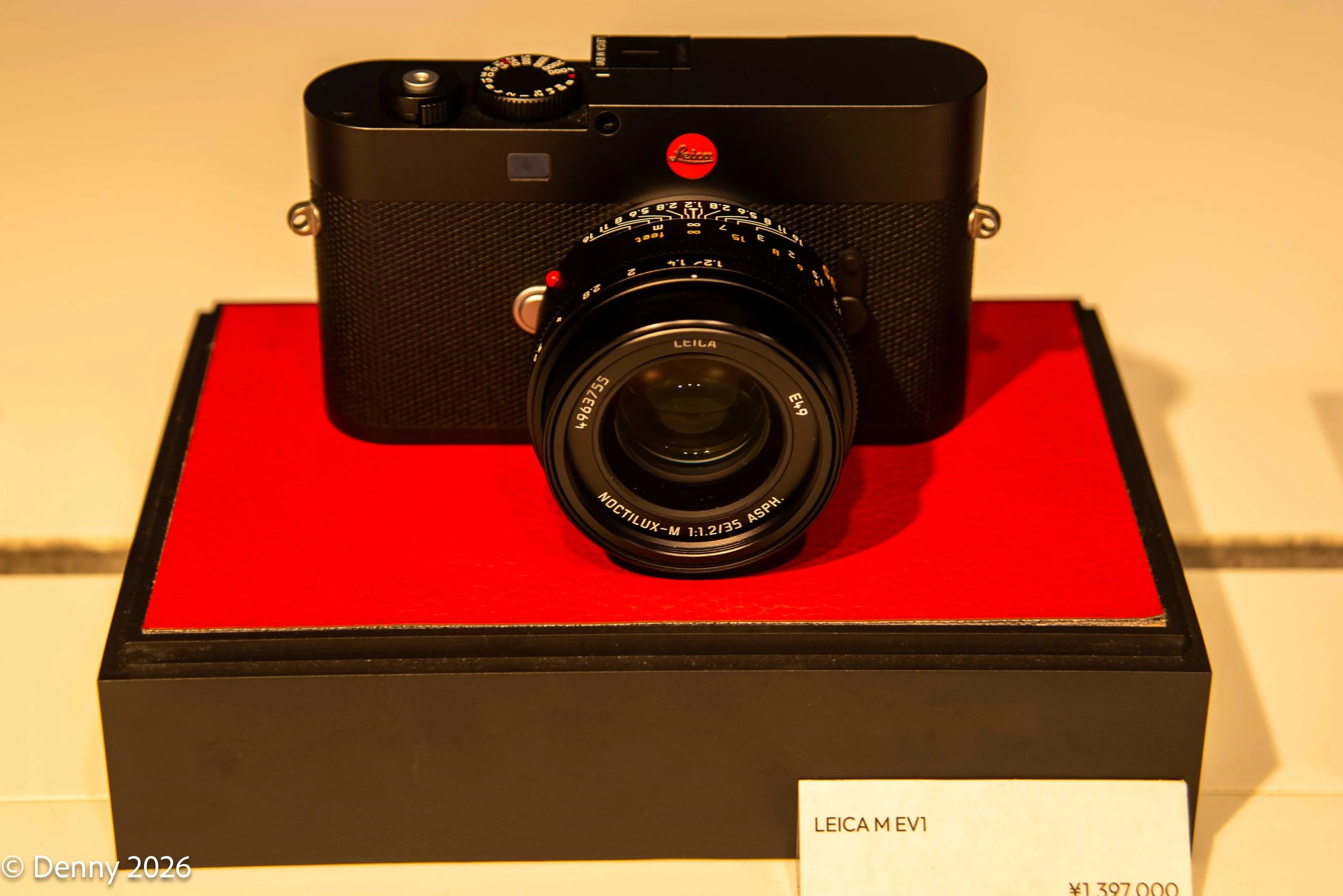
Leica camera, Ginza
With this exposure to consumer excesses, we moved on to another suburb of Tokyo, namely Shibuya. Our visit here was brief but in the half hour we found why this location is world famous.
At Shibuya Crossing there is a multidirectional zebra crossing and at pedestrian peak hour times, in one period of the green ‘walk’ light, over three thousand people cross the complex intersection.
During our visit it was easy to imagine that even more than three thousand people crossed the road. In fact the density of humans was practically enough to induce a sense of claustrophobia.

People crossing the road at Shibuya Crossing
At the edge of the square, close to the Shibuya Crossing is a bronze statue of a famous dog called Hachiko. This 1934 statue commemorates a faithful dog who waited for his master at the station every night for more than a decade after his master’s death.
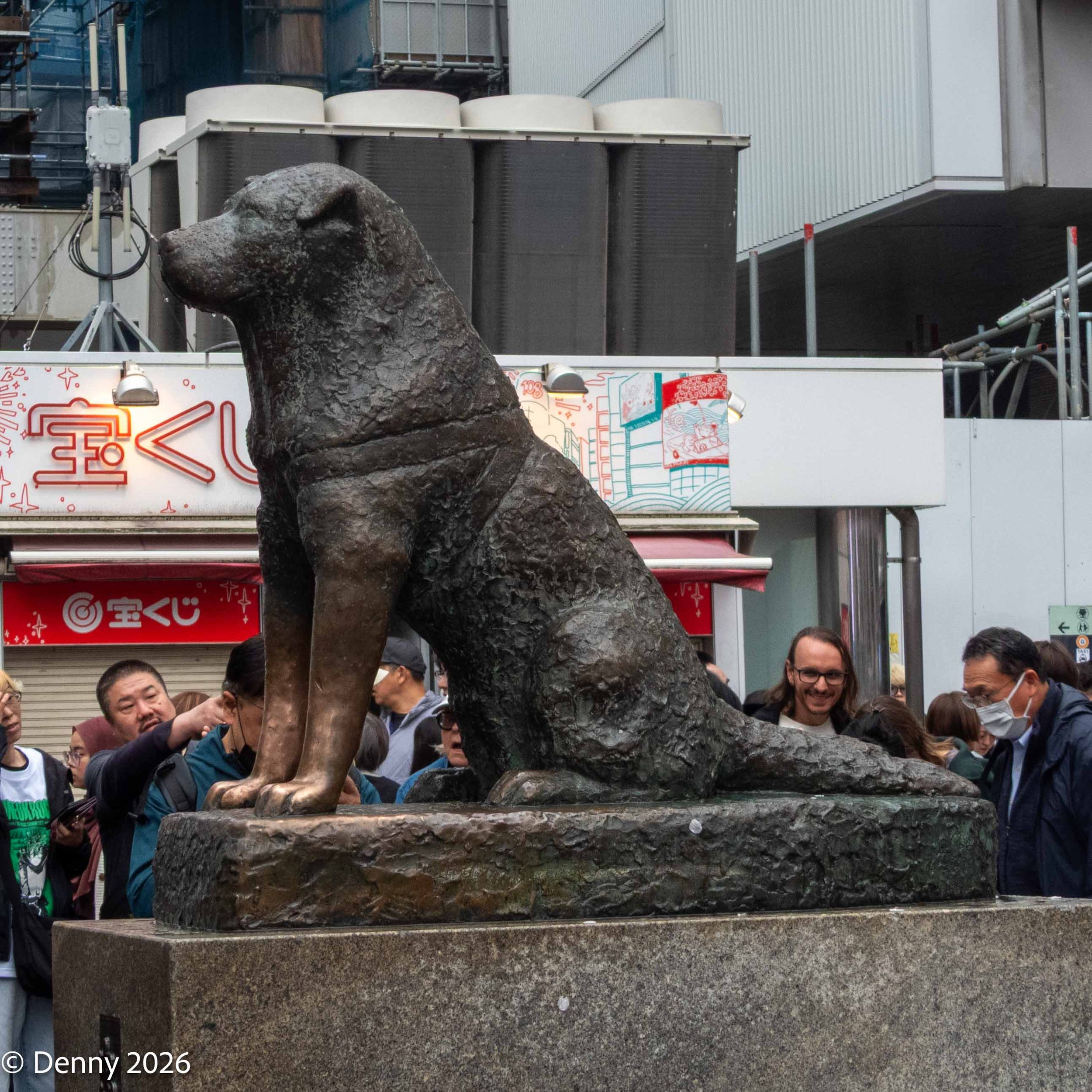
Dog at Shibuya Crossing
Although we weren’t aware of it, this Shibuya Crossing is also famous as it featured prominently in the movie ‘Lost in Translation’ with stars Bill Murray and Scarlett Johansson.
To finish the day, we spent a most enjoyable two hours having a river cruise on a yakatabune or a traditional Japanese house boat. We cruised on the Tokyo Bay and river inlets. We passed under the spectacular Rainbow Suspension Bridge and travelled upstream eventually reaching a point quite close to the Tokyo Skytree tower.

Jak, river cruise on a yakatabune (traditional Japanese house boat)

Jak on Yakatabune (traditional Japanese house boat) going under bridge
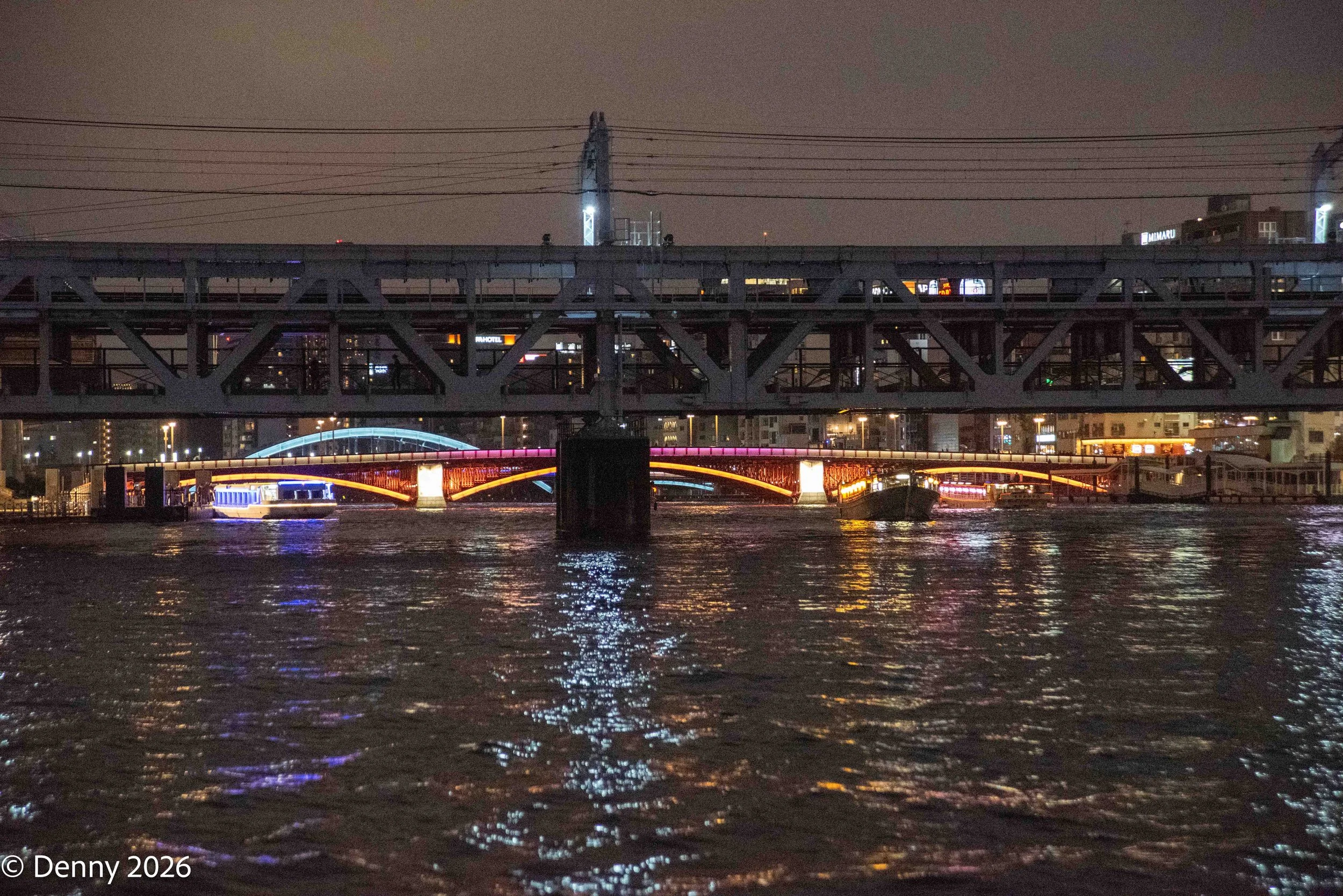
Bridge from Yakatabune (traditional Japanese house boat)

Tokyo Skytree from Yakatabune (traditional Japanese house boat)

Rainbow suspension bridge crossing northern Tokyo Bay between Shibaura Pier and the Odaiba waterfront development in Minato, viewed from from Yakatabune (traditional Japanese house boat)
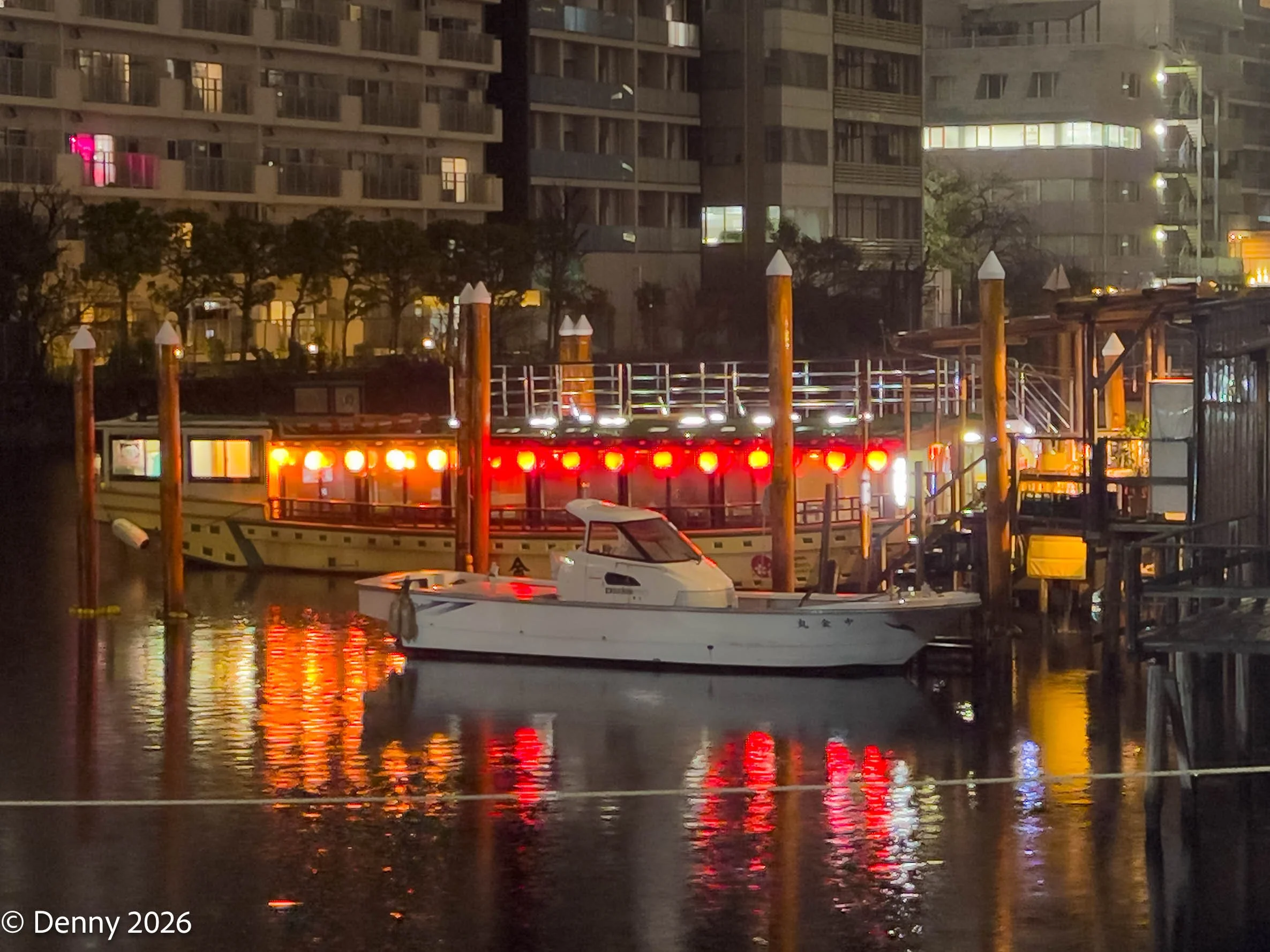
Our Yakatabune (behind white boat)
During our boating travels we were served a most enjoyable meal comprising a broad variety of Japanese culinary specialties.
We returned to our hotel at around 20:00 after a day entailing a diverse range of activities and sights.
Tomorrow, amongst other things we will see some sumo wrestlers in action; this sounds exciting!