
We’d finished breakfast before 07:00 and having checked-out of our hotel we boarded a mini-bus with six other members of our travelling group plus Mitzie and commenced an early morning battle with traffic for our one hour travel to Kansai International Airport with code KIX.
A fair proportion of the trip was close to the waterfront and it was interesting to see the extensive wharf sections assigned to container ships. The level of industrialisation was huge with several large oil refineries and steel works with the landscape being dotted with massive chimneys belching out lots of condensate plus ‘who knows what’?
There were a few minor traffic issues but we arrived at Kansai as expected at 08:30. Osaka’s Kansai airport is where we landed three weeks ago to meet up with Marcus and Bryce prior to the Japanese F1 GP. The airport is built on an artificial island connected to the mainland by the 3.75 km long Sky Gate Bridge. As to whether it’s a claim to fame or otherwise, Kansai has the world’s longest airport terminal being just on 1.7 km.

Sky Gate Bridge R to the Kansai International Airport viewed from the road to the airport, Osaka

Sky Gate Bridge R connecting Kansai Airport to the mainland viewed from the airport, Osaka
We said our farewells to our friends and especially thanked our amazing guide Mitzie who has been like a ‘mother hen’ to us all for these last two weeks.
The flight to Singapore departed at 10:50 and our Boeing 787 had us there in slightly under six hours.
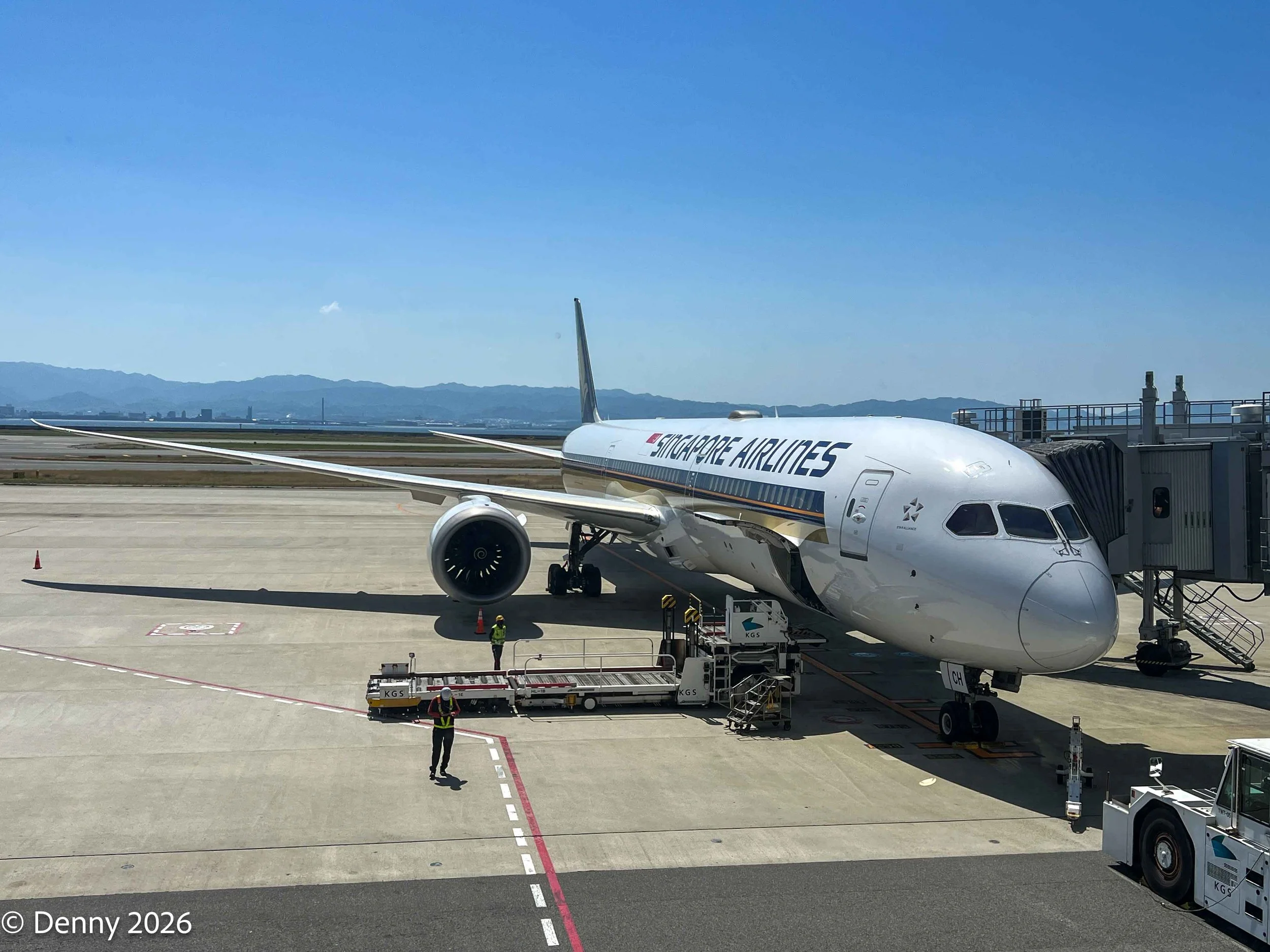
Our plane at Kansai International Airport
We bought an induction power pack for our iphones and then spent two hours in the Singapore Airline’s Lounge.
The overnight Airbus A350-900 flight to Melbourne was another six hour stint but made a little more comfortable by having a spare seat next to us. Short periods of napping were fleeting events and on arrival in Melbourne at 04:05 Friday morning, we were certainly feeling the effects of sleep deprivation.
With four hours to wait in Melbourne before our Hobart flight, it was a godsend to have the Virgin Lounge as a sanctuary for rest and partial recovery.
Needless to say, we were back happily on firm Tasmanian land by Friday mid-morning after a full day of planes and airports.
Our five week holiday adventure in South Korea and Japan has been one of much activity with lots of exciting things to see and do and a whole new part of the world’s history to contemplate and study further.
The delightful scenery in rural areas was a pleasant change from the big cities with their skyscrapers and dense crowds. The trip entailed a fair amount of walking which we really enjoyed. Two key features of our South Korean and Japanese holiday were the warm reception we received throughout and the opportunity to experience two quite different cultures and yet both heavily based upon a special interest in food and its preparation.
Within both countries we were amazed at the extraordinary road and rail infrastructures that existed. Major freeways crisscross the big cities with many sections supported on concrete bridges with numerous overpasses, underpasses and tunnels. The engineering involved in the construction of this network of roads and rail-lines within the cities is mind-blowing.
The complex network of intercity railways and the subways are phenomenally well planned and cater for millions of passengers every day. Train travel plays a critical role for everyday life in both Korea and Japan.
We found train travel comparatively easy to use and fantastically convenient. Even on some of the really crowded train trips we had, we never felt any unease and it’s pleasing to hear that petty and serious crime in both countries is comparatively uncommon. Corrupt government officials were often mentioned when matters of criminality were raised.
Another interesting observation we made was the role that religion plays in lives. Although South Koreans are predominantly protestant and many Japanese are Buddhist, there doesn’t appear to be a preoccupation with religion as one sees in many south-east Asian countries. The Japanese have a culture that tends to be prone to beliefs that inculcate superstition although this is disappearing amongst the youth who are clearly influenced much more so by a modern pop-culture.
A special note is, as Mitzie commented at the end of our Japan Discovery trip, we could not have been any luckier than we were in terms of being at the perfect time for the cherry blossom season.
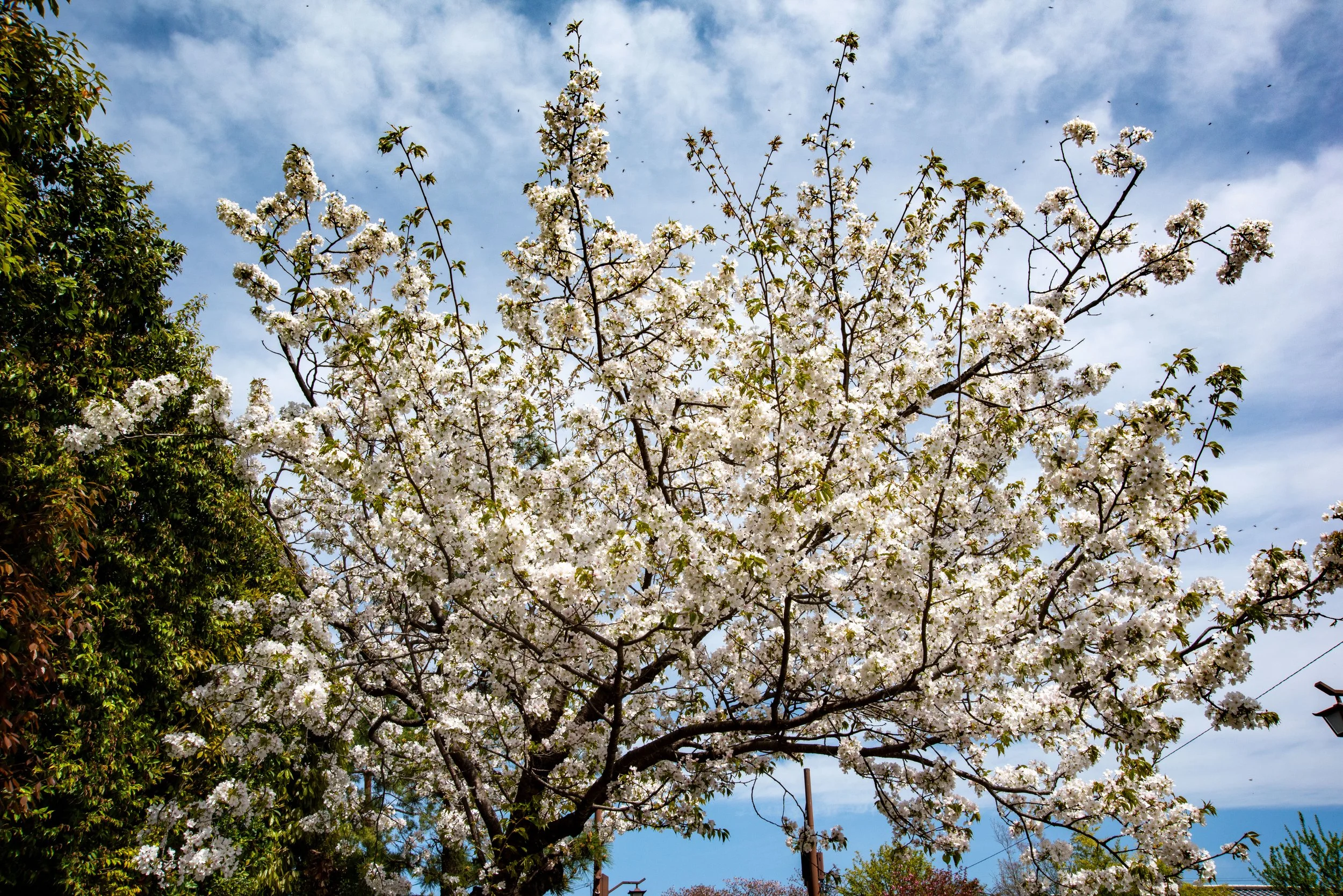
Cherry blossom, Sogenchi Garden, Arashiyama district, Kyoto