
In the past week we seem to have alternated between rainy days and then sunny days. This day was to be very pleasant with a maximum temperature of 24°C reached in the mid-afternoon.
We had the full day in Kyoto starting with a visit to the Kinkaku-ji Temple which is in the north-western quarter of Kyoto.
The Kinkaku-ji Temple is also commonly referred to as the ‘Golden Temple’. It was first built by the third Ashikaga shogun (Yoshimitsu) in the 14th century.
The shogun relinquished his official titles, but not his hold on power and entered the priesthood at the age of 37.
The temple initially served as his retirement villa and being a fervent follower of Zen, he directed that the villa become a temple after his death.
The approach to the temple is a one-way path starting along a magnificent tree lined avenue of Japanese maples. We then turned a corner and emerged into a vast garden area surrounding a small lake with tiny islands having decorative miniature conifers.

Japanese maples on approach to the Kinkaku-ji (Golden Pavilion)
Across this lake we could now see the Golden Temple shining resplendently in the early morning sunshine.
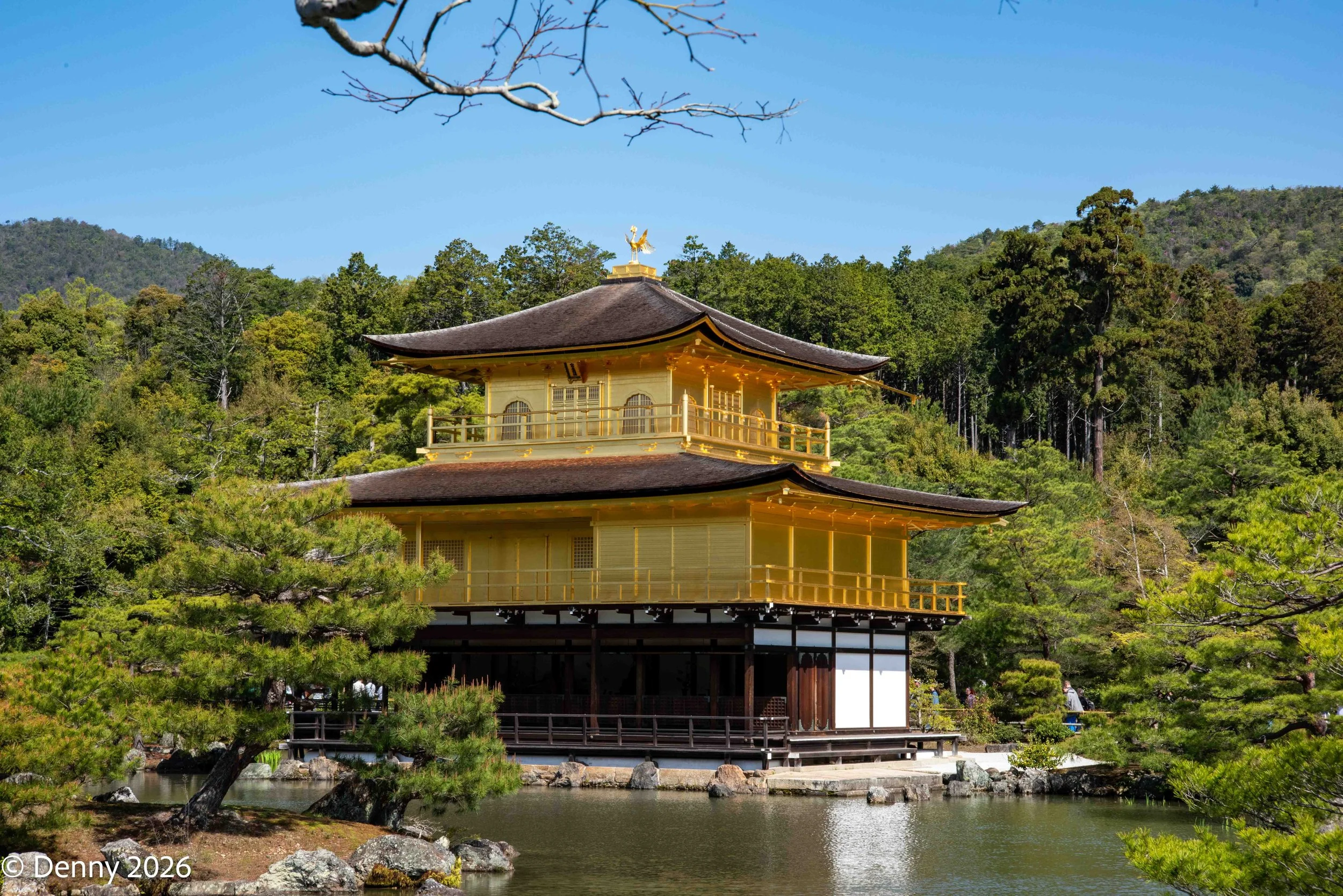
Kinkaky-ji (Golden Pavilion)
The top two stories of the temple are covered in pure gold leaf with the total weight of gold being about 20 kg. The gold is applied over a lacquered wooden surface and at the top of the temple is a bronze phoenix covered with gold-leaf.
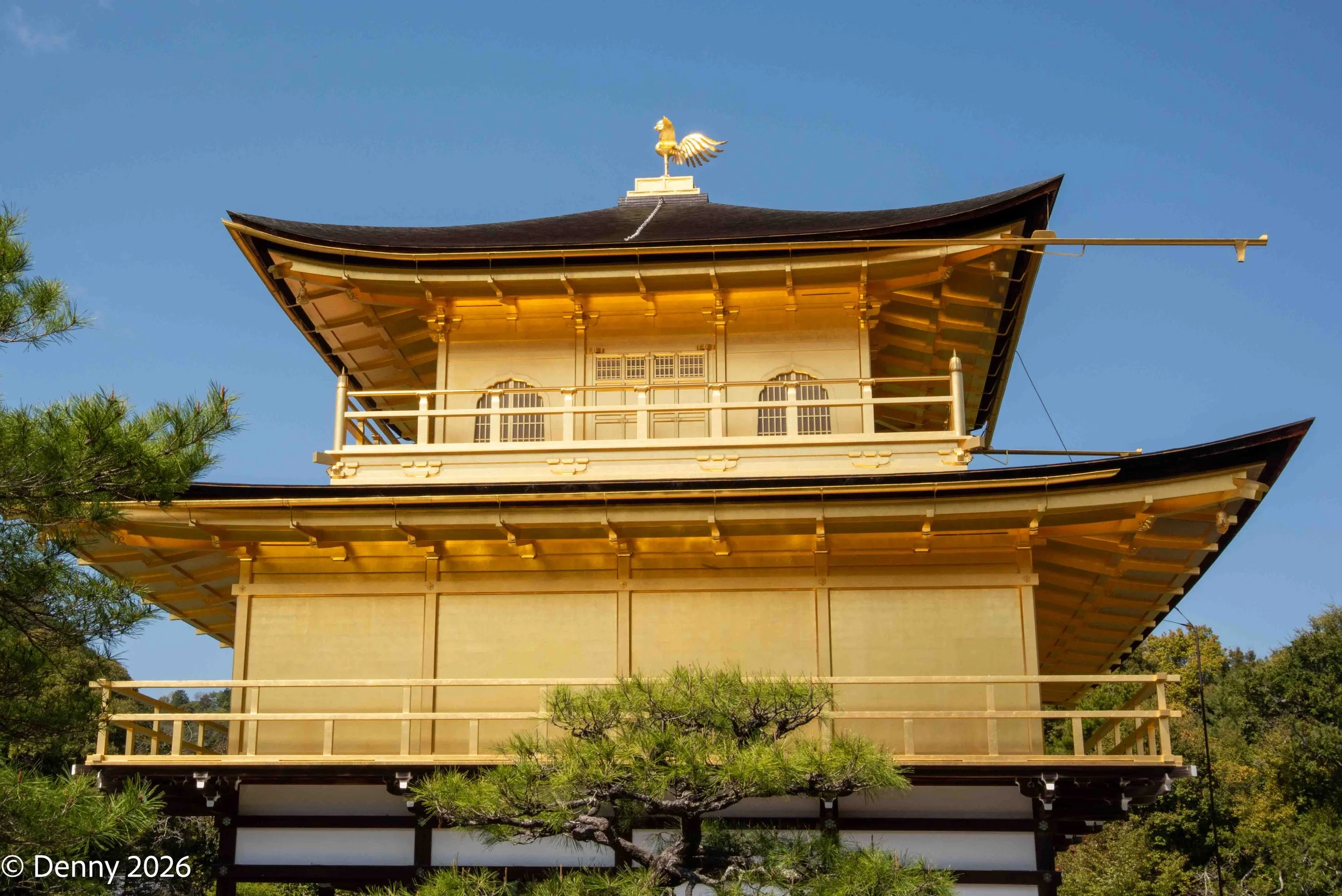
Kinkaky-ji (Golden Pavilion)

Phoenix on top of Kinkaky-ji (Golden Pavilion)

Bell on corner of Kinkaky-ji (Golden Pavilion)
We were informed that the Buddhist priests polish the golden surfaces as part of their pre-dawn labours.
While the temple has historical roots from 1397, the current structure was rebuilt in 1955 after being burnt down by a monk in 1950.
The Zen temple looked glorious with the morning sunshine and it’s not surprising that it is now listed as a UNESCO World Heritage site.
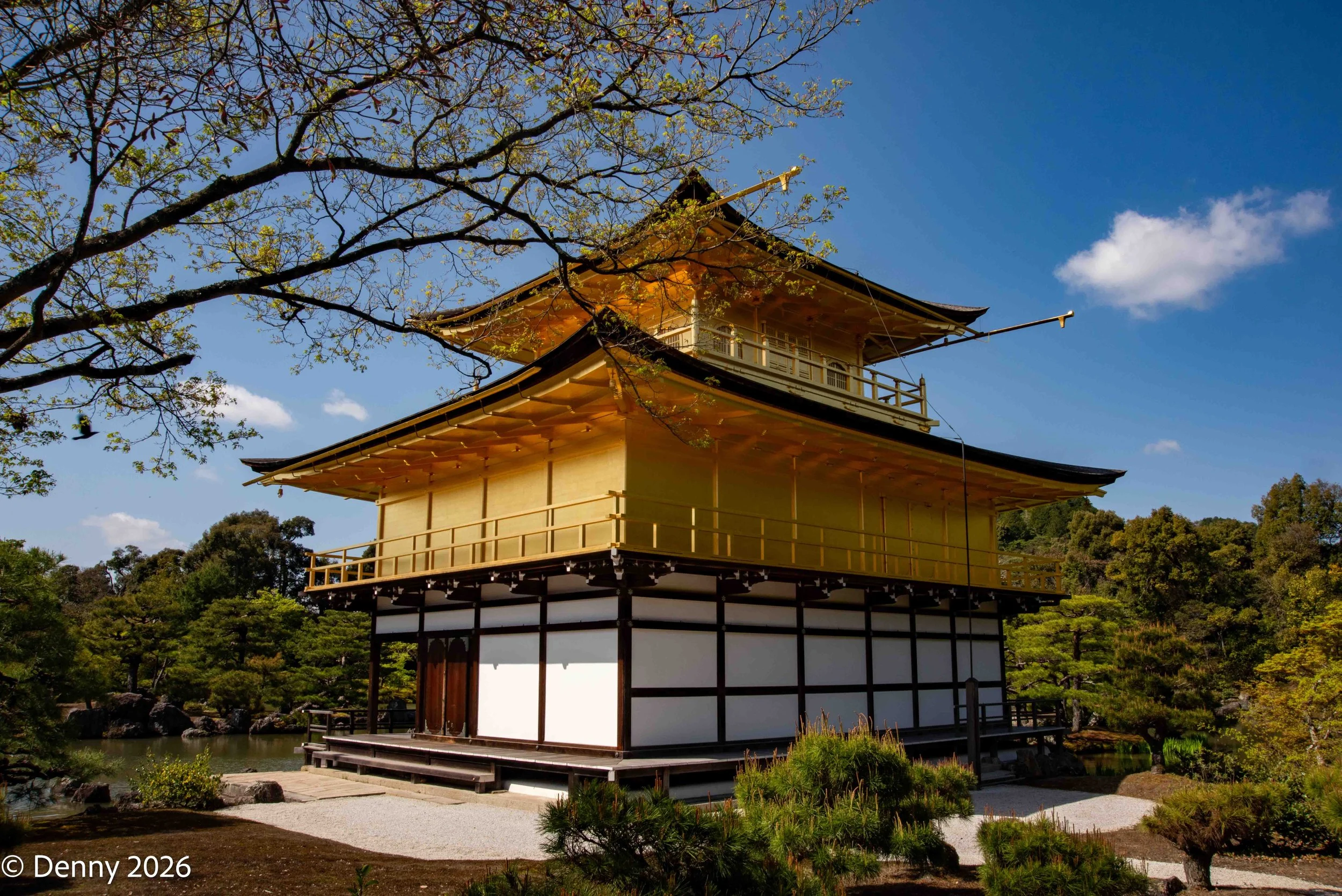
Kinkaky-ji (Golden Pavilion)
Visitors to the Kinkaku-ji Temple follow a one kilometre pathway though beautiful gardens, waterways and avenues of ancient trees. One conifer in the garden is famous as it has been shaped as a bonsai tree to represent a boat. The shogun was to use this as his transport to heaven.
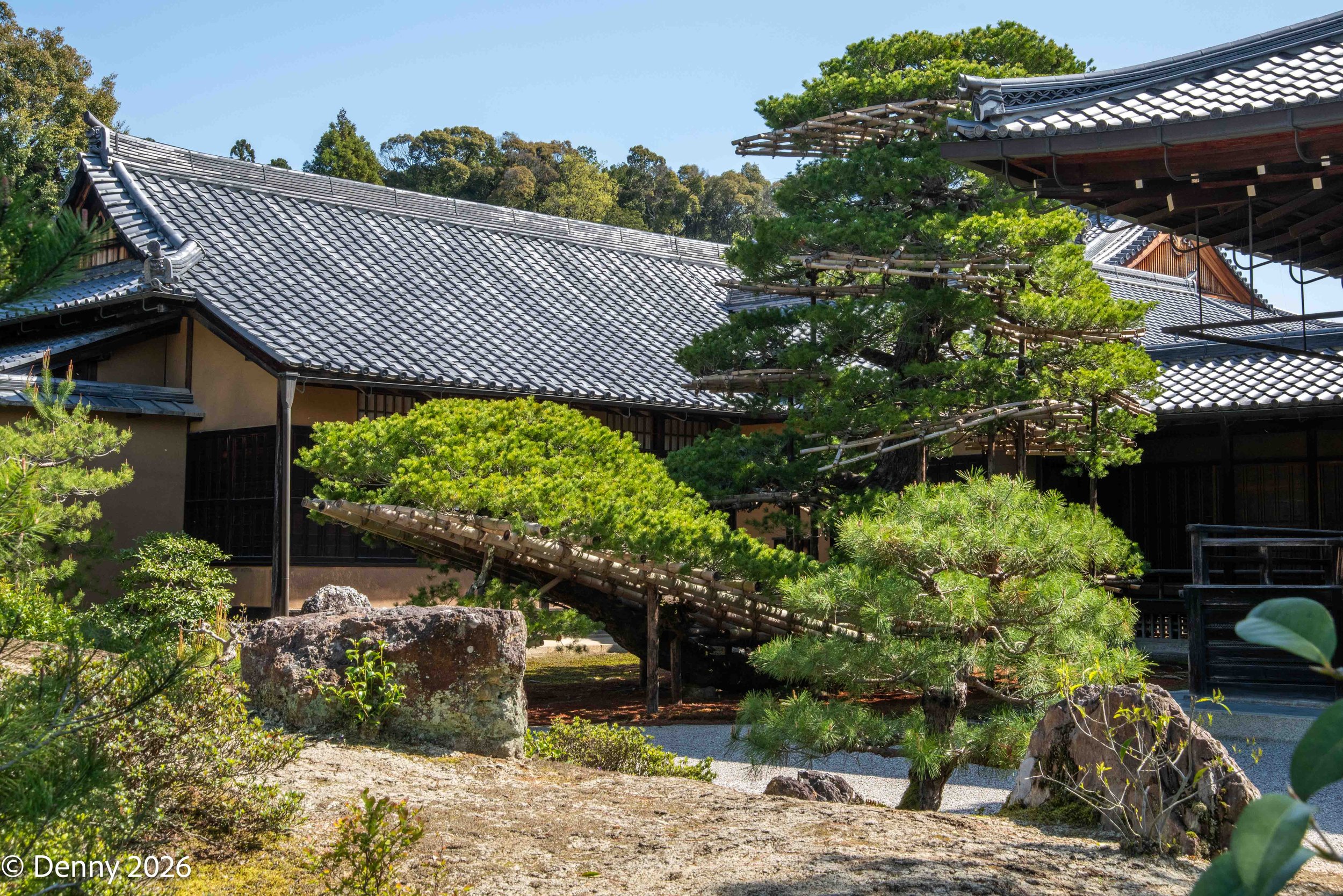
Bonsai pine tree representing a boat, Kinkaky-ji (Golden Pavilion) complex

Mallard duck (Anas platyrhynchos) in pond, Kinkaky-ji (Golden Pavilion)

Gray Heron (Ardea cinerea), Kinkaky-ji (Golden Pavilion) complex
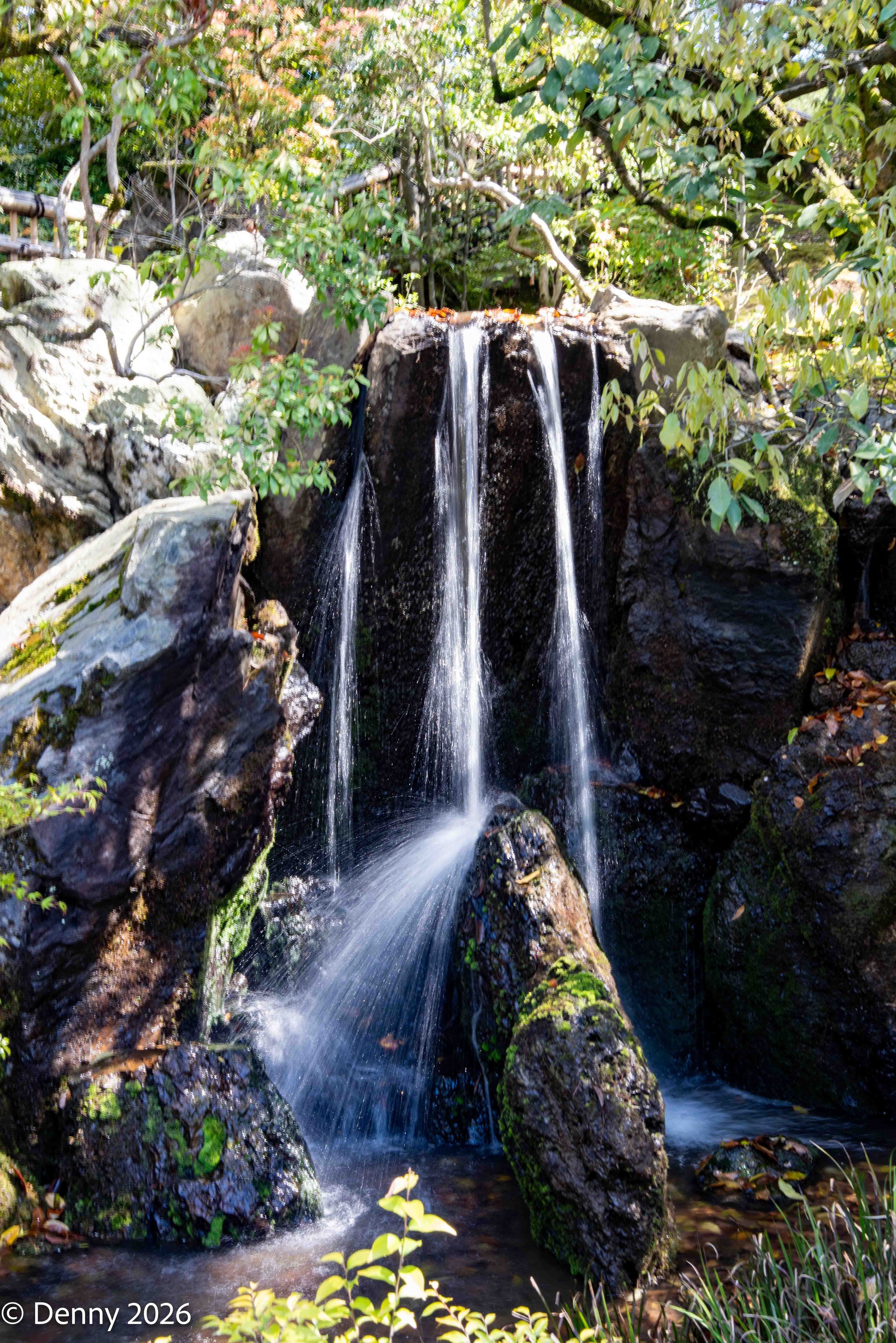
Waterfall, Kinkaky-ji (Golden Pavilion) complex
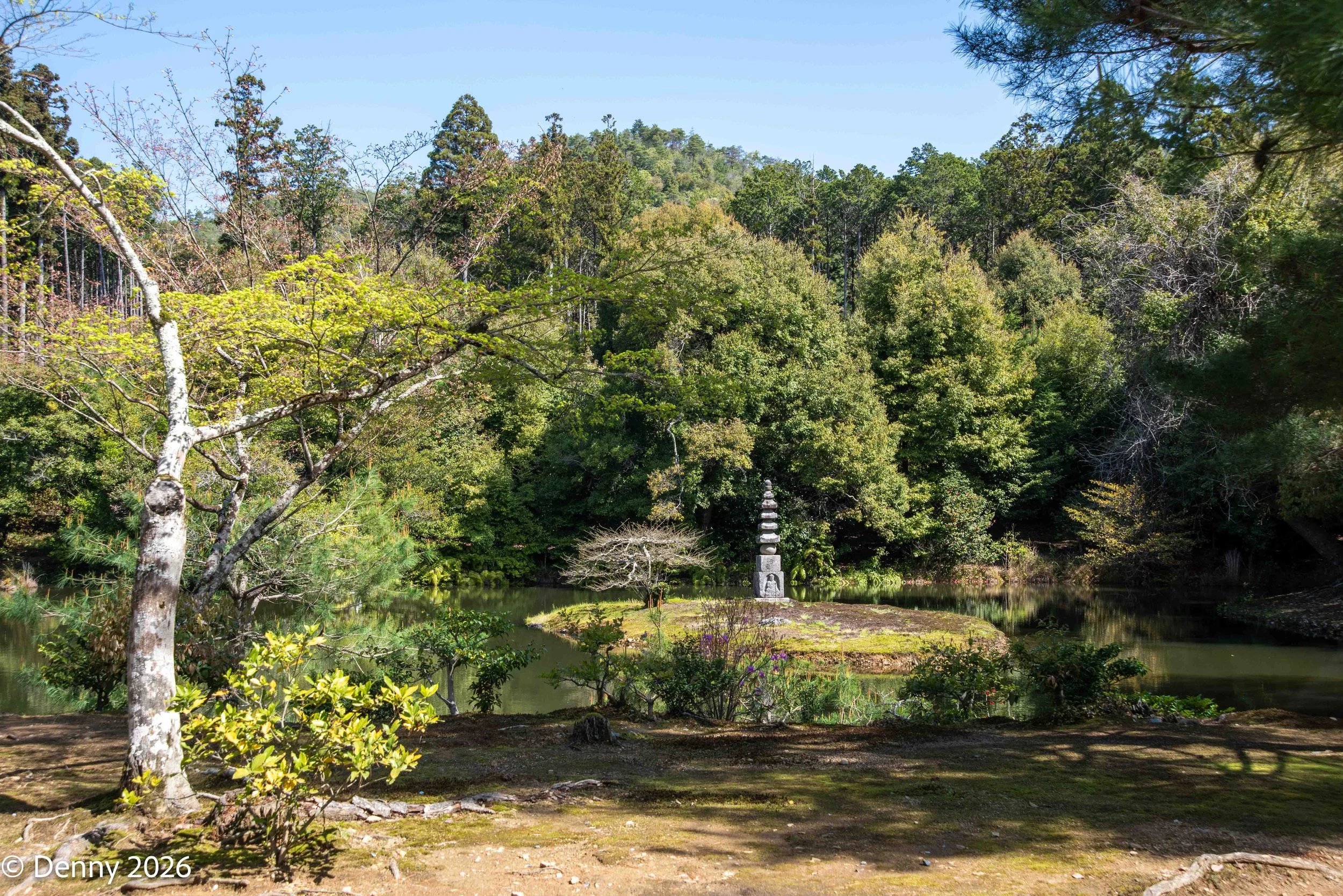
Garden, Kinkaky-ji (Golden Pavilion) complex
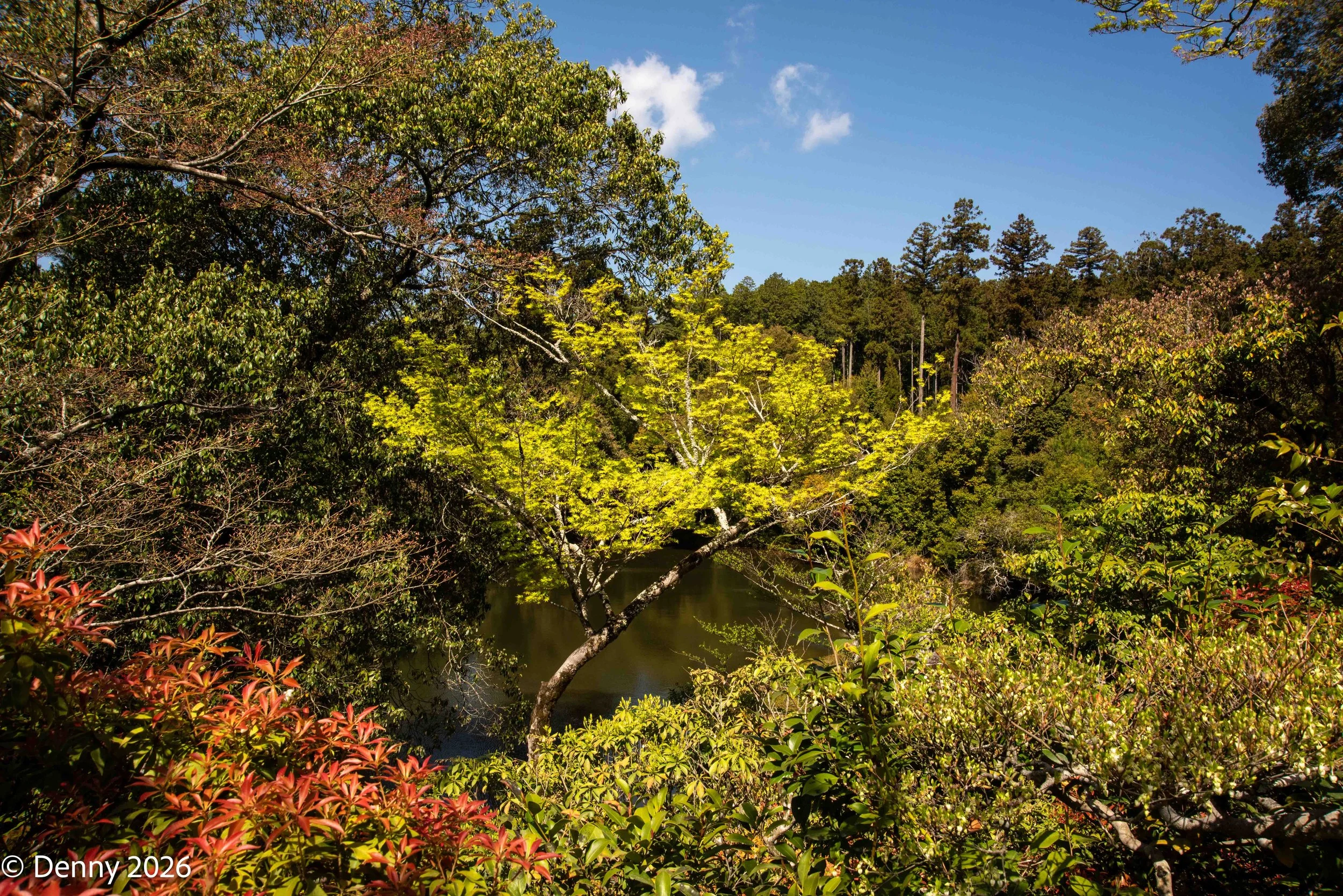
Garden, Kinkaky-ji (Golden Pavilion) complex
Following this inspiring temple experience, we then changed to a very different mindset visiting a tourist centre that offers an insight to the production of tofu.

Condiments ready to make our shichimi (Japanese seven-spie blend)
We were put into small groups and started by boiling a soy milk mixture which was made by blending beans that had soaked overnight.
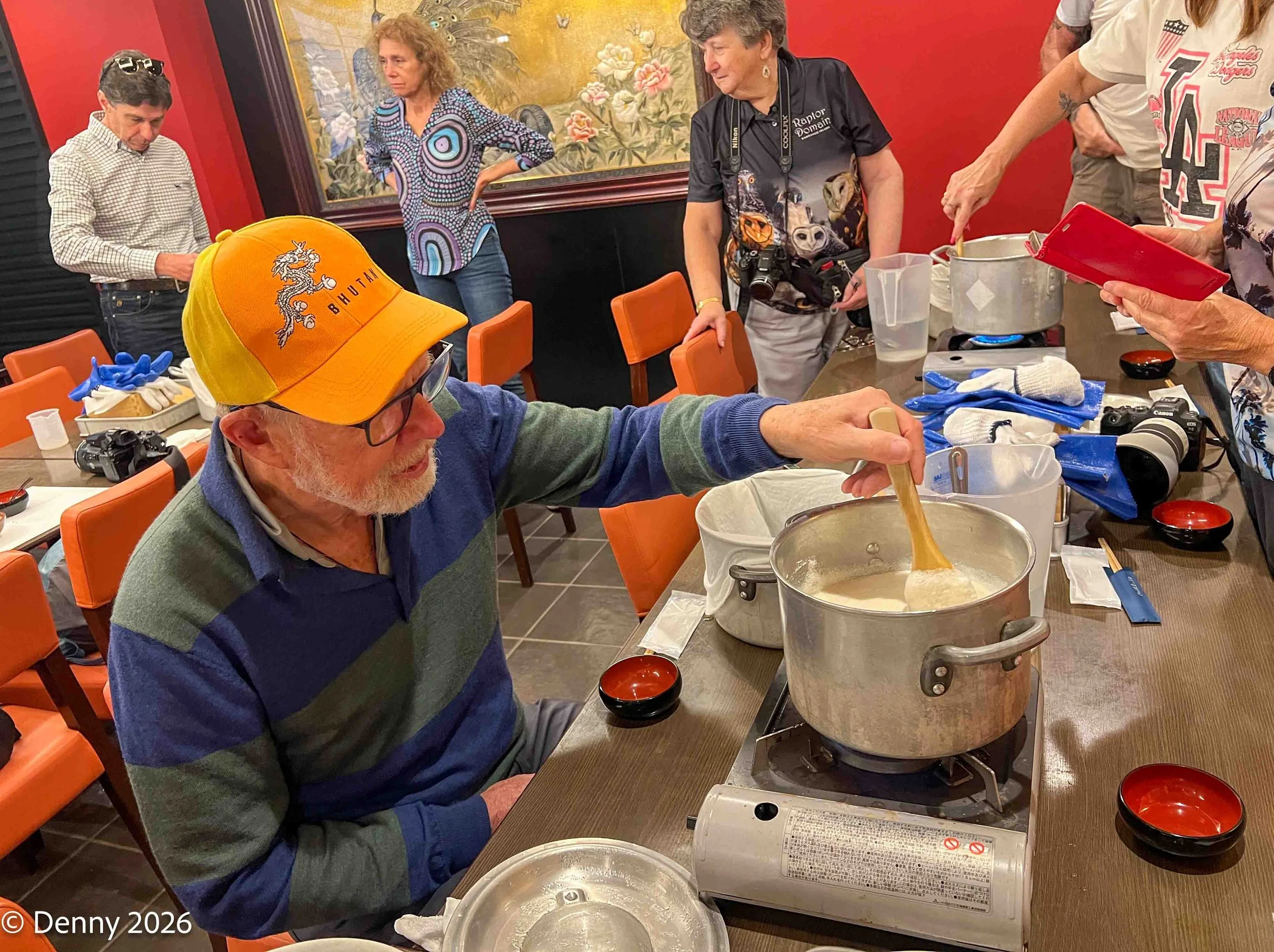
Jak preparing tofu, local restaurant
The boiling hot mixture was then strained through muslin and the solid curds discarded. To the whey we added a small amount of liquid bittern which is a coagulant and then heated the mixture to just 75C.
After a few minutes we had a semi-solid material that was hand compressed leading to a rectangular block of tofu about the size of a standard envelope.

Our host assisting us with preparing tofu
With our tofu product in hand, we then moved to the dining area where we had a mini-barbecued lunch with lots of Japanese food specialties as well as our tofu.

Table set up for our lunch, local restaurant
The tofu tasted nice and was especially enjoyable as we’d all worked through the comparatively complex preparation process. Mitzie, with obvious experience in eating tofu, made very positive comments about the general quality of our morning’s work!

Lunch, including the tofu we had made
The building where the tofu was made has a souvenir shop and a museum gallery upstairs exhibiting an amazing range of art work done using hand embroidery. Some of the larger works were apparently ones that took their artists years to complete.
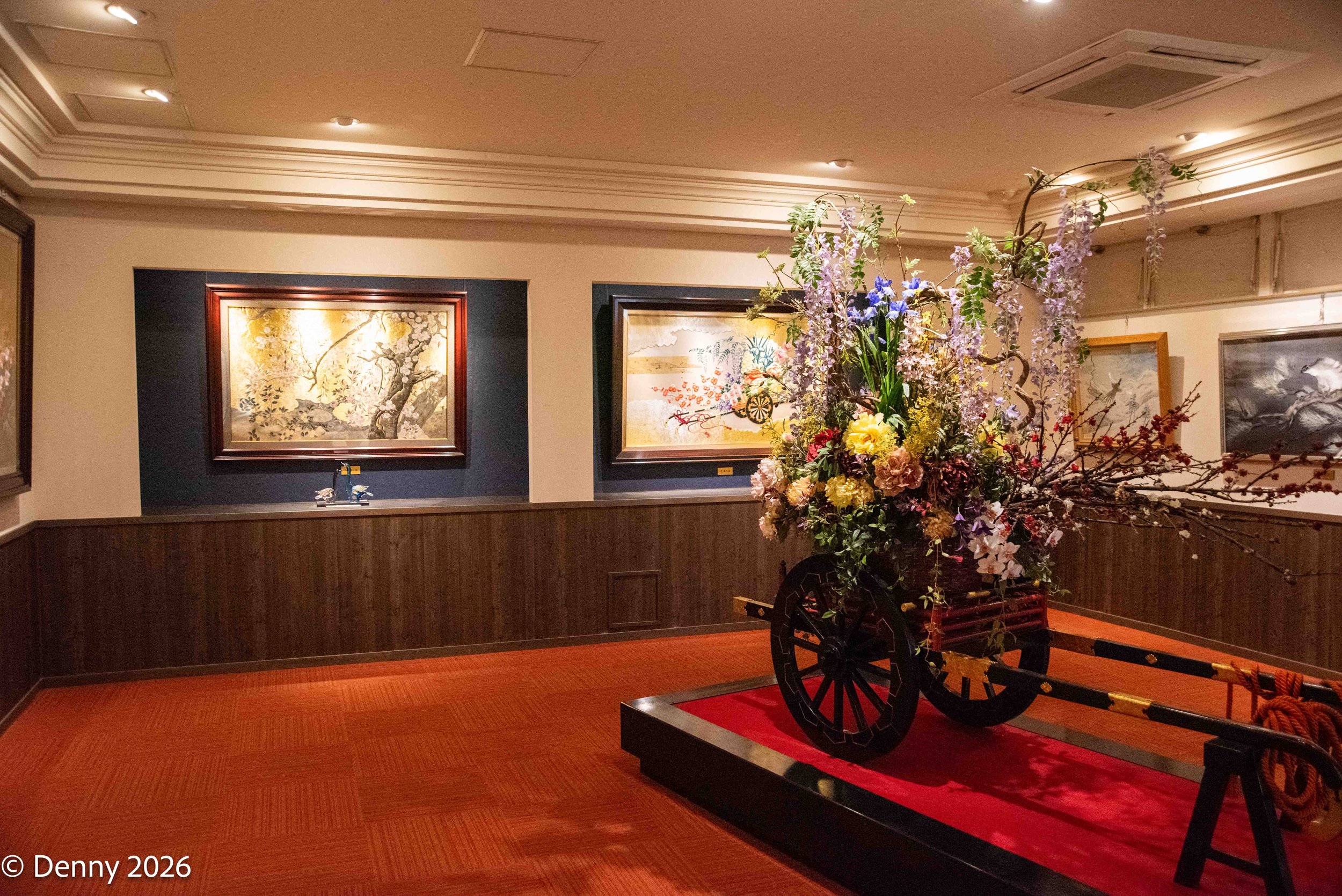
Embroidery display room

Embroidery of wine goblets in a basket

Close up of stitches, embroidery of wine goblets in a basket
We returned to our hotel at 14:00 and rested before crossing to the other side of the Kyoto Station to go to the top of the Kyoto Tower.
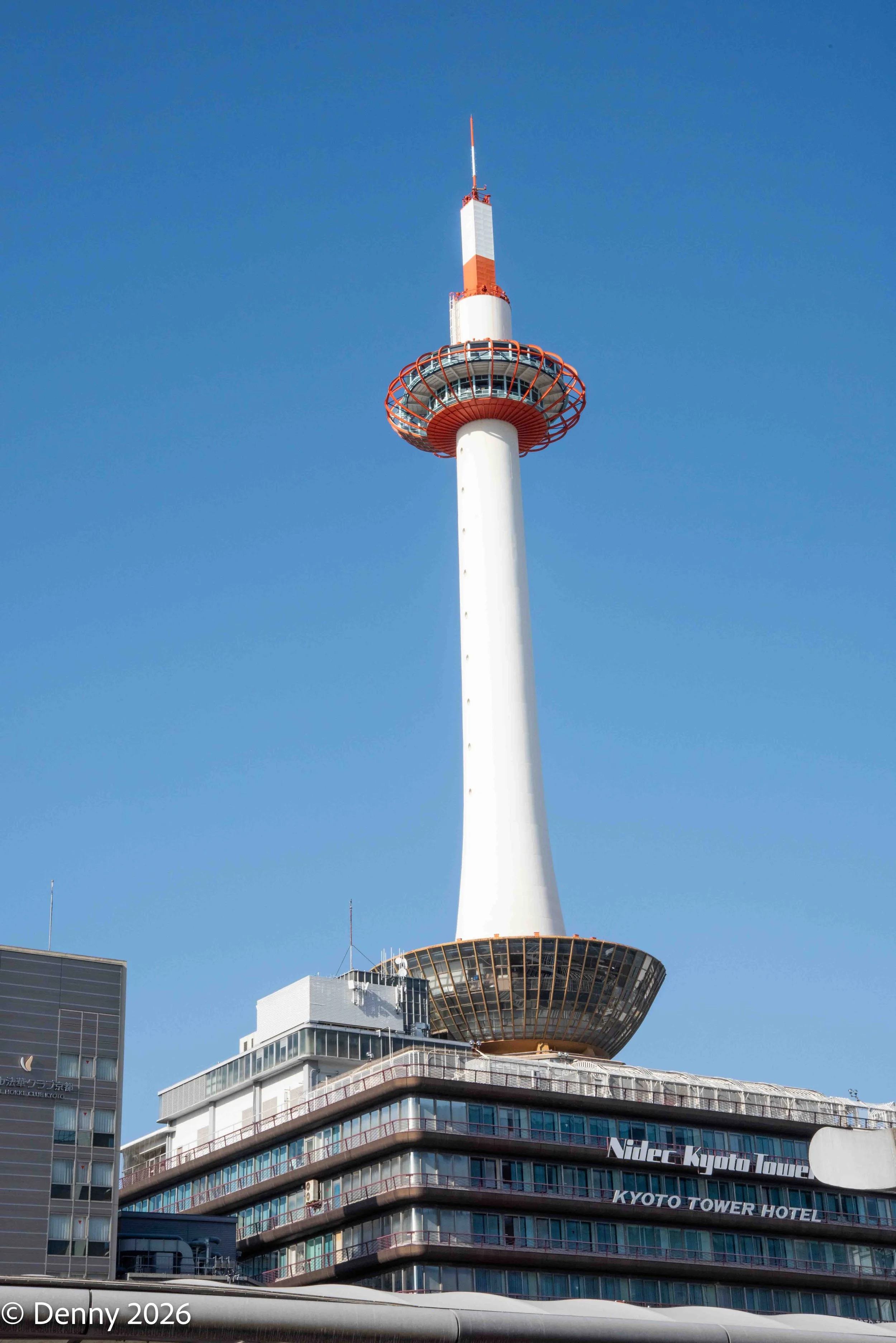
Kyoto Tower
The 360 degree view from 100 m above the streets below was panoramic and looking south-westwards through the haze, we may have been able to just see Osaka. We were a little concerned to notice the amount of corrosion on the steel beams that supported the upper lookout dome of the tower.

View of our hotel, Miyakoo Hotel Kyoto Hachijo (building with green roof - our room is 2nd from the top on right hand end)
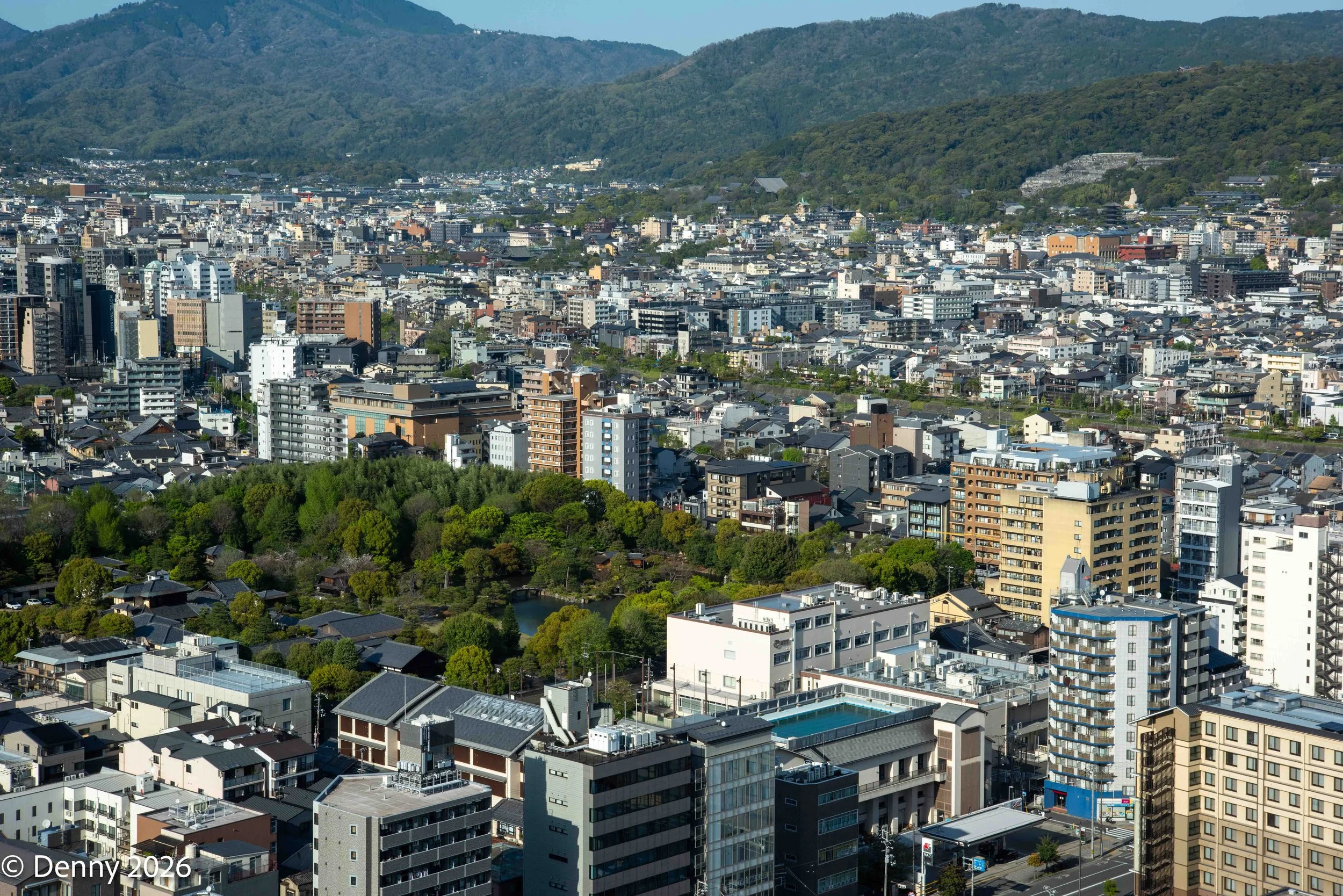
View from Kyoto Tower

View towards Osaka from Kyoto Tower,

Top of Kyoto Tower, viewed from the ground
On our way home we had a coffee and then went to the Avanti Shopping Complex and bought a few items including the electrical plug adapter we’ve needed as a spare.
After having such a big meal at our lunchtime tofu session, we decided that we didn’t need much for our evening repast. We had a wine, savoury biscuits and cheese dinner and then set about preparing our luggage issues for the next three days.
Tomorrow we will transfer to Hiroshima but our big bags will be transferred to Osaka and so we need an overnight bag to cover us for the two evenings before we end up in Osaka.
Our Japanese Discovery tour is sadly now approaching the final stages and today like every other day has been a truly memorable experience. We are deeply indebted to Mitzie who has been amazing in her organisational skills, her knowledge of Japanese history and her unbounded enthusiasm for showing us her enthralling country.