
We commenced our final day’s tourist activities in South Korea by visiting the Demilitarised Zone (DMZ) about a forty-minute drive north-west of Seoul.
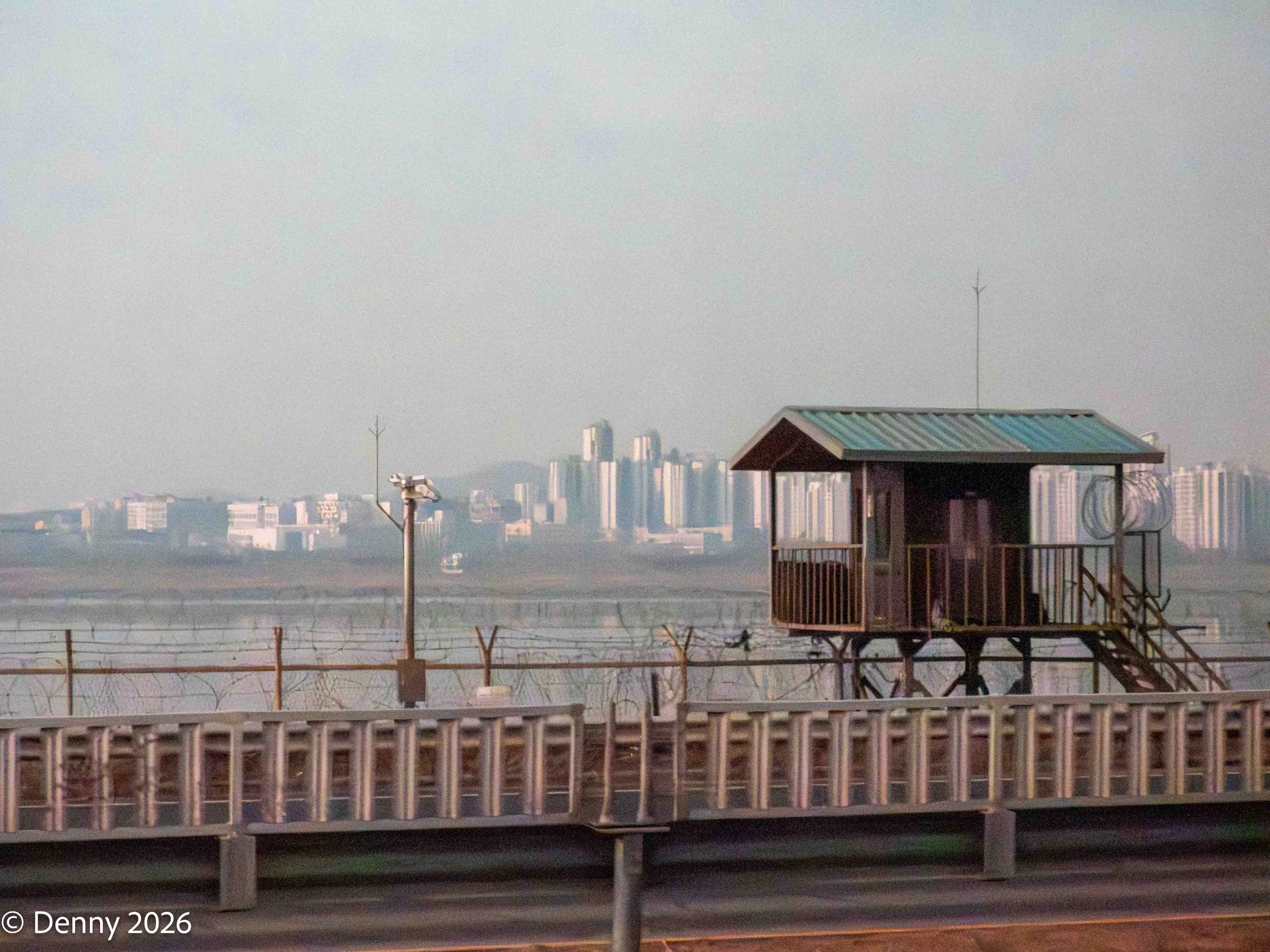
Military post en route from Seoul to DMZ
The DMZ is a heavily fortified border with North Korea. The two countries of North and South Korea remain technically at war although it would be more apt to describe the relationship as fluctuating between frosty and luke warm. Diplomatic things deteriorated dramatically with the warlike proclamations from the North’s capital Pyongyang and the subsequent sinking of a South Korean naval vessel in 2010 and then further nuclear and missile tests in more recent times.
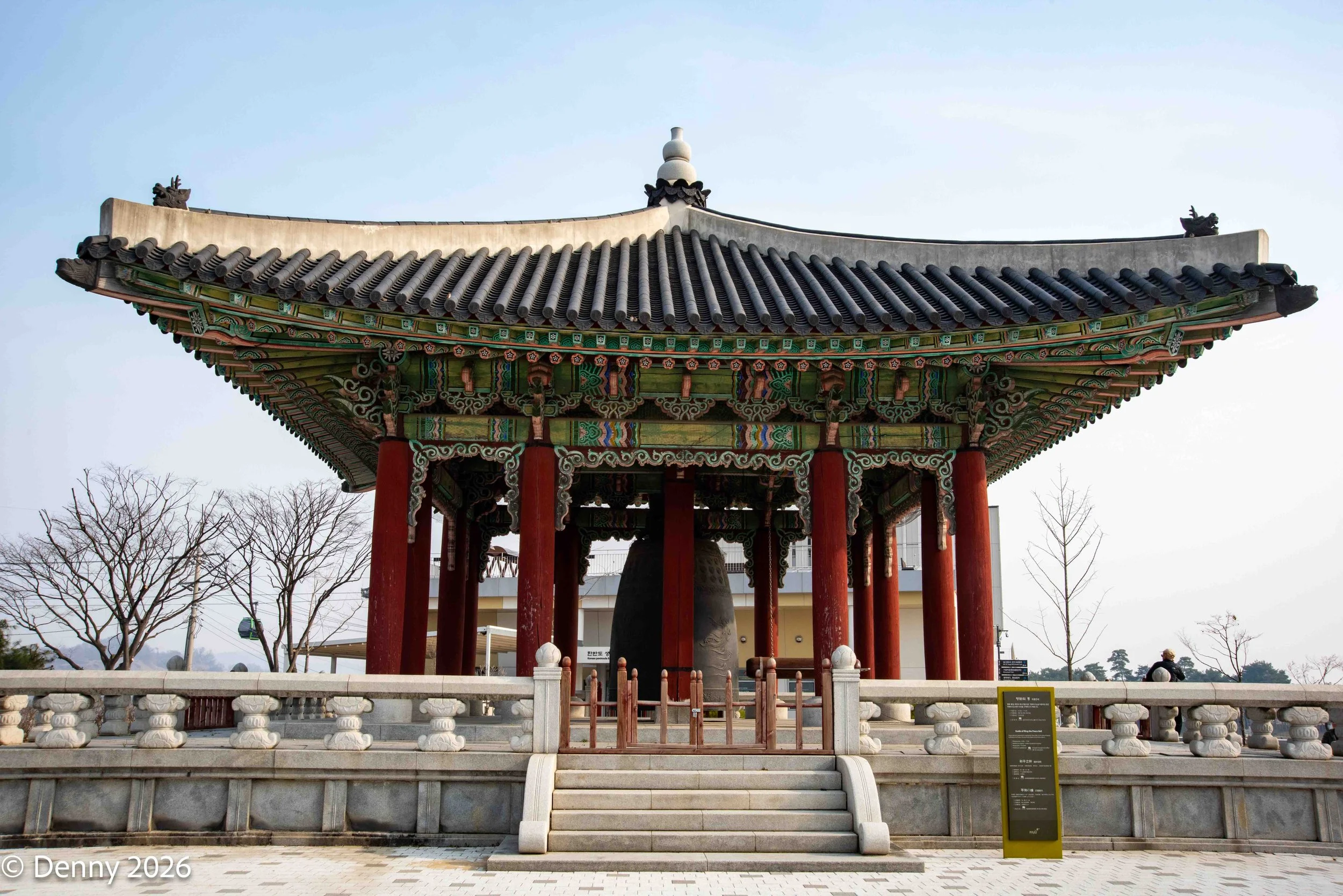
The Peace Bell, DMZ
Our visit to the DMZ involved passing through checkpoints and past an enormous South Korean flag and then arriving at Panmunjeom which sits in a broad valley just 56 km northwest of Seoul. Panmunjeom was the site of a small farming village that was obliterated during the 1950 – 1953 Korean War. It lies on the 38th parallel where the cease-fire truce was signed between warring parties on July 27th 1953. Panmunjeom straddles a stretch of land at the western end of the DMZ which is a military demarcation region about 4 km wide that winds its way for 250 km across the waist of the Korean Peninsula. The area around Panmunjeom had numerous warning signs that the DMZ is a heavily land-mined ‘no-go’ zone and accessible only to South Korean soldiers and a few hundred farmers who have rice paddies close to the Imjin River.
At Panmunjeom there is a bronze sculpture representing the Earth split into two hemispheres representing the division of the Korean Peninsula at the end of the Second World War in 1945. People are desperately pushing the two halves together offering a desire and hope for reunification some day.
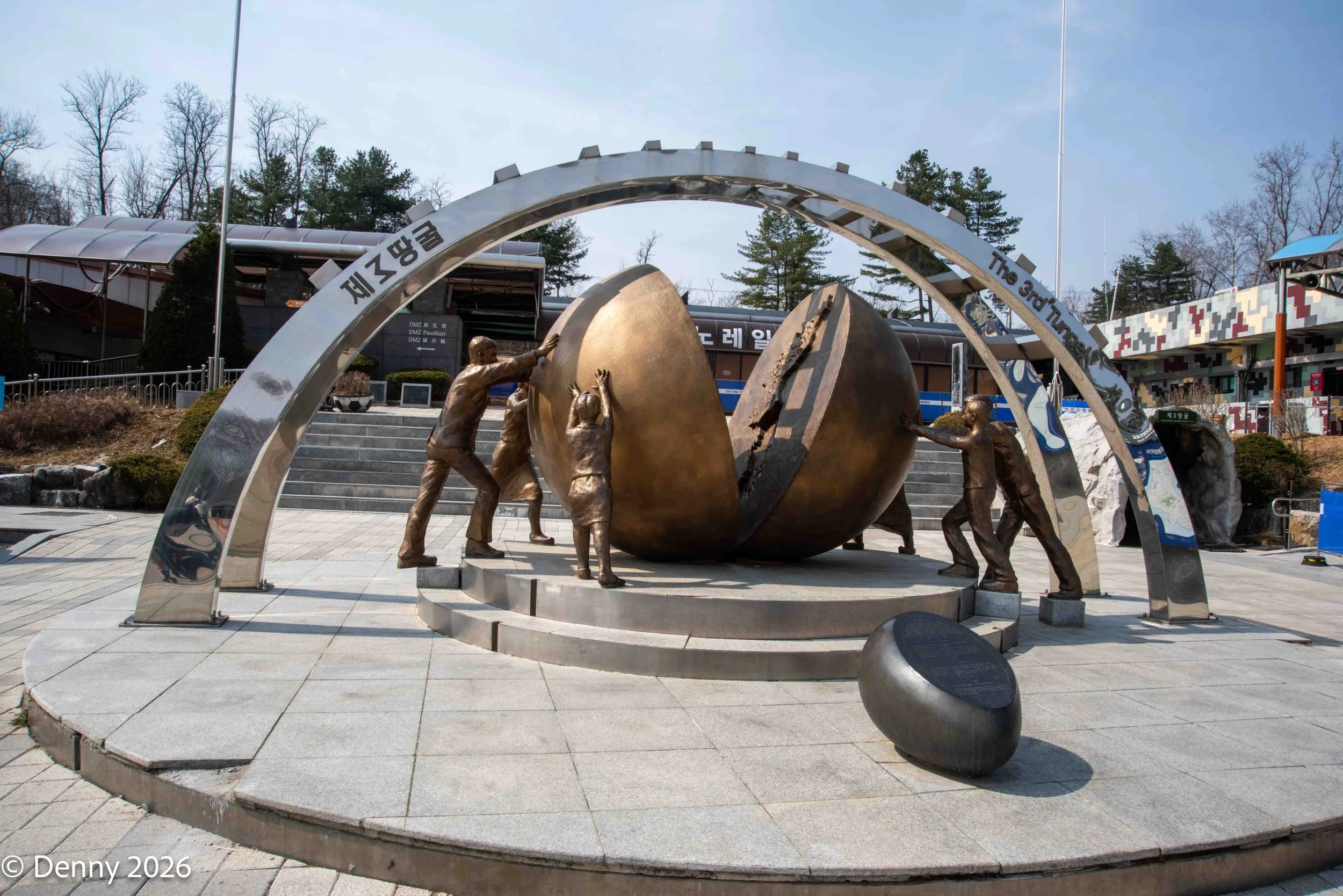
Bronze sculpture, Panmunjeom, DMZ
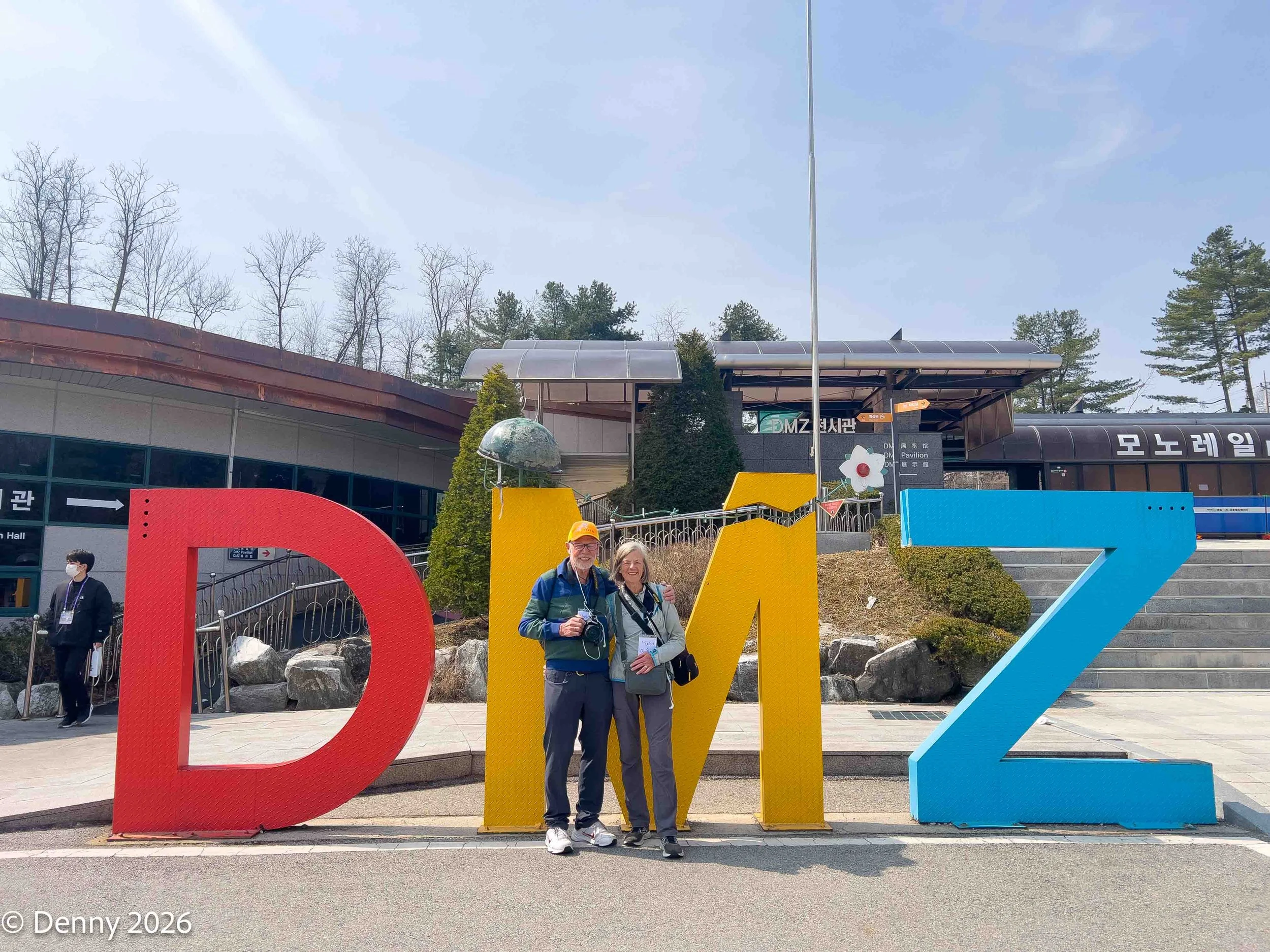
Corinne & Jak, DMZ
We next boarded a special bus that drove us a short distance to the ‘Third Tunnel of Aggression’. This is one of a number of tunnels that the North Koreans dug under the DMZ in order to sneak troops into the South. Since the discovery of this and other tunnels, there is a 24/7 detection team ensuring the North Koreans are kept out.
At the ‘Third Tunnel’ we donned hard hats and commenced an 85 m vertical descent down a fairly steep ramp for a distance of 450 m. At the bottom we encountered a section of the actual tunnel which was an average of only 1.5 m high. It was dug or more correctly blasted with dynamite through hard granite.
We walked cautiously in a semi-crouched stance along a section of the 2 km tunnel for about 250 m and then reached a stop point where we were practically in North Korean territory.

Jak & Corinne at exit from tunnel, DMZ
After the return climb, we were driven to the ‘Freedom Village’ where from the top of prominent lookout point on the ornate ‘Freedom House’ we could look across the DMZ and see the so-called North Korean propaganda village of Gwijeongdong with its massive flag atop a tall pylon.

End of Separation, Beginning of unification building, Freedom Village

Bronze bull sculpture, Freedom Village
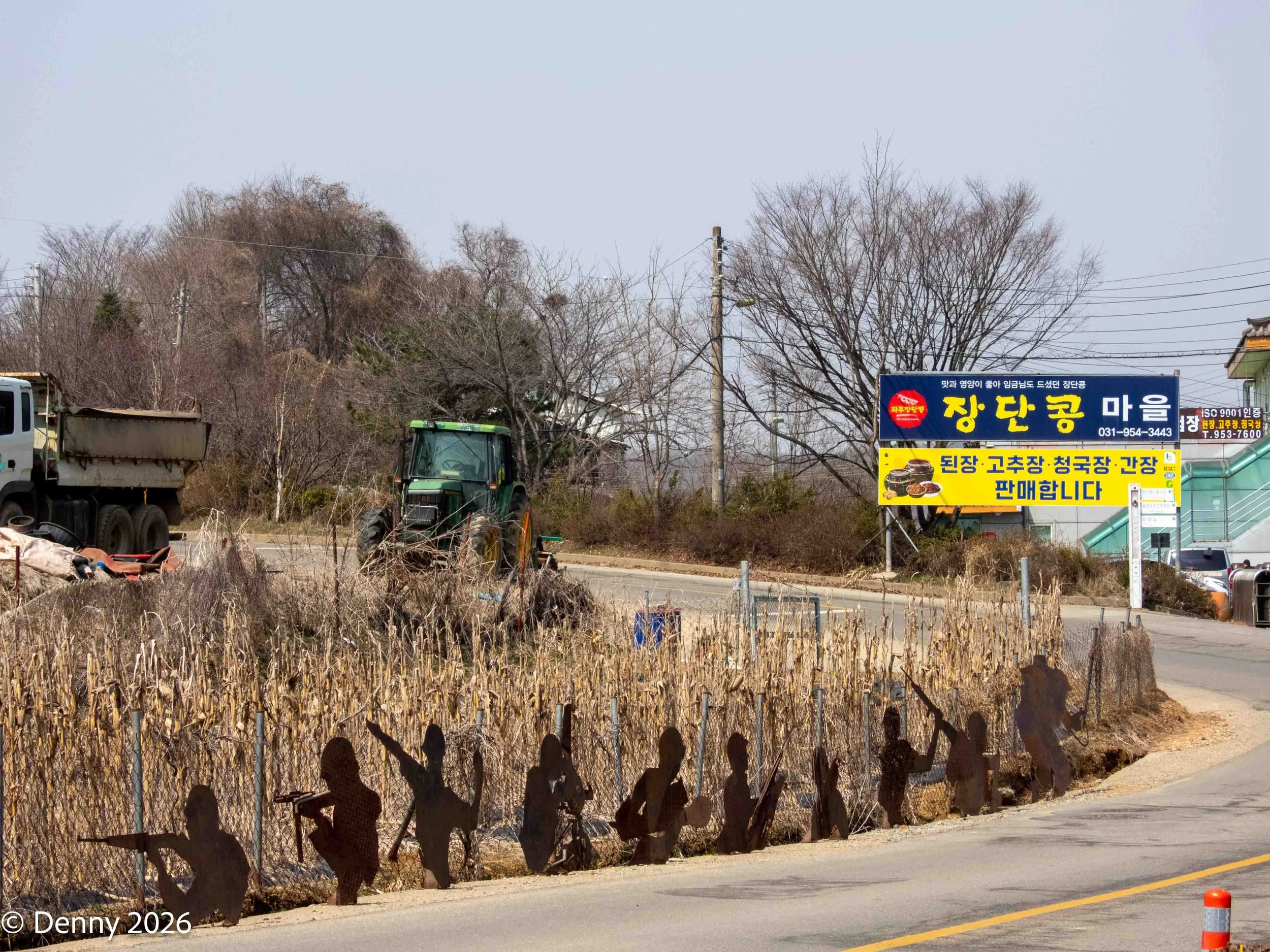
Freedom Village
The village is said to be the biggest in the world but no one seems to live there and the windows on the concrete shell buildings appear to be nothing more than black paint with lights that are automatically switched on and off at designated times to suggest activity. Undoubtedly Gwijeongdong was designed by the North Koreans to convince the world that the North lives in unbounded prosperity!
Before returning to Seoul we had a further brief stop just outside the DMZ to buy a DMZ cap and have some refreshing drinks that were called for after all our energetic sub-terranean exploits.
On returning to Seoul we had two hour’s free time to spend wandering around a major shopping area that seemed to specialise in cosmetics, clothes and sports shoes. Corinne found an interestingly designed beanie to replace the one she misplaced a few days ago.
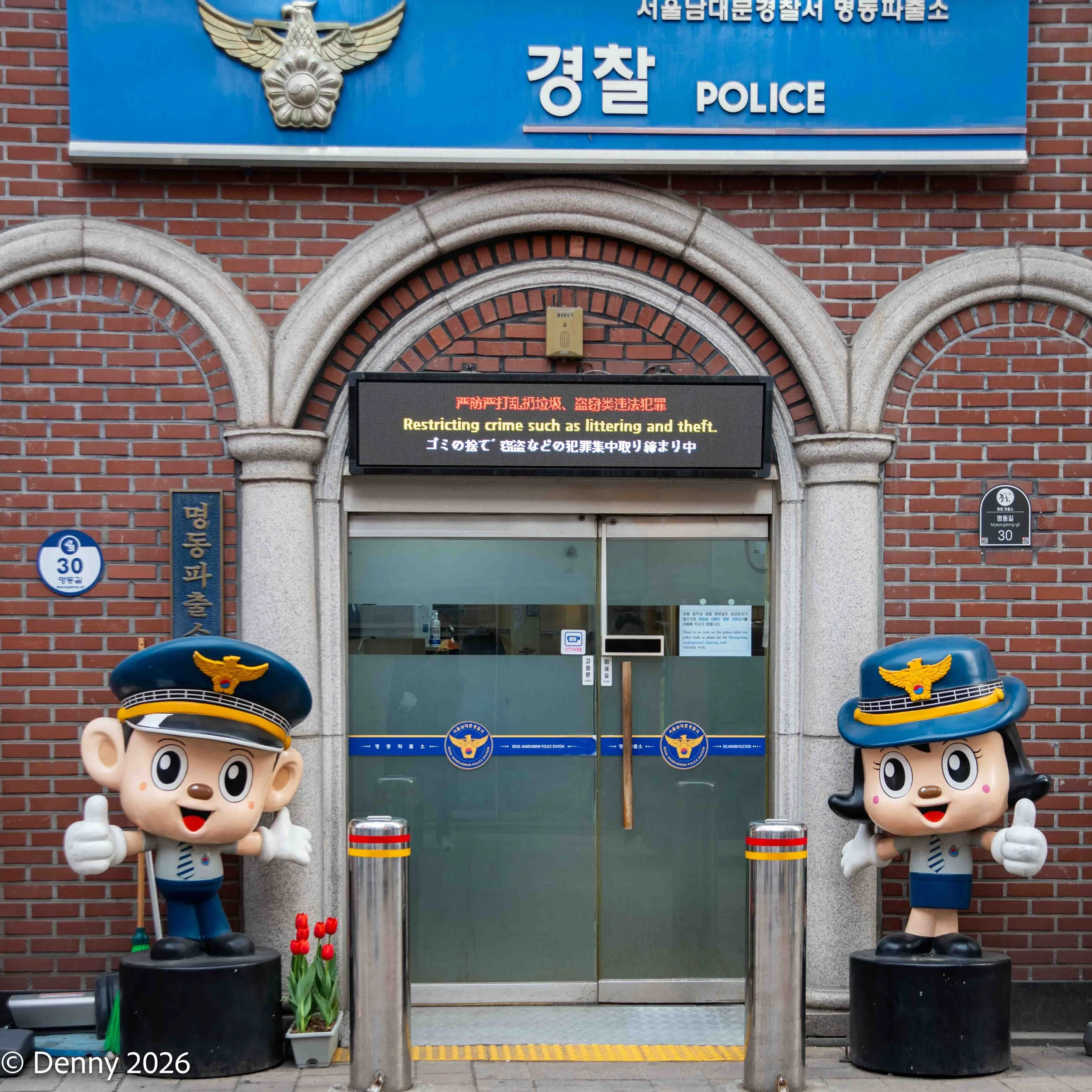
Police station in market area, Seoul
As evening approached, the main pedestrian mall area underwent a major transformation to become a food market. Dozens of vendors arrived with their wheeled food carts and lined up forming a gastronomic extravaganza for half a kilometre. Amongst the wares for sale were kebabs of every imaginable type, lots of fruits, battered vegetables, seafood stews, drinks and a good range of Korean foods like kimchi, bibimbap and mayak gimbap (sticky rice rolled in seaweed).
We bought a bag of yummy roasted chestnuts but a food stall that gained our interest was one selling chocolate and custard encased in batter. These delicacies were cooked in a rotating collection of gas heated jaffle irons the shape of a fish. This vendor was flat out keeping up with demand.
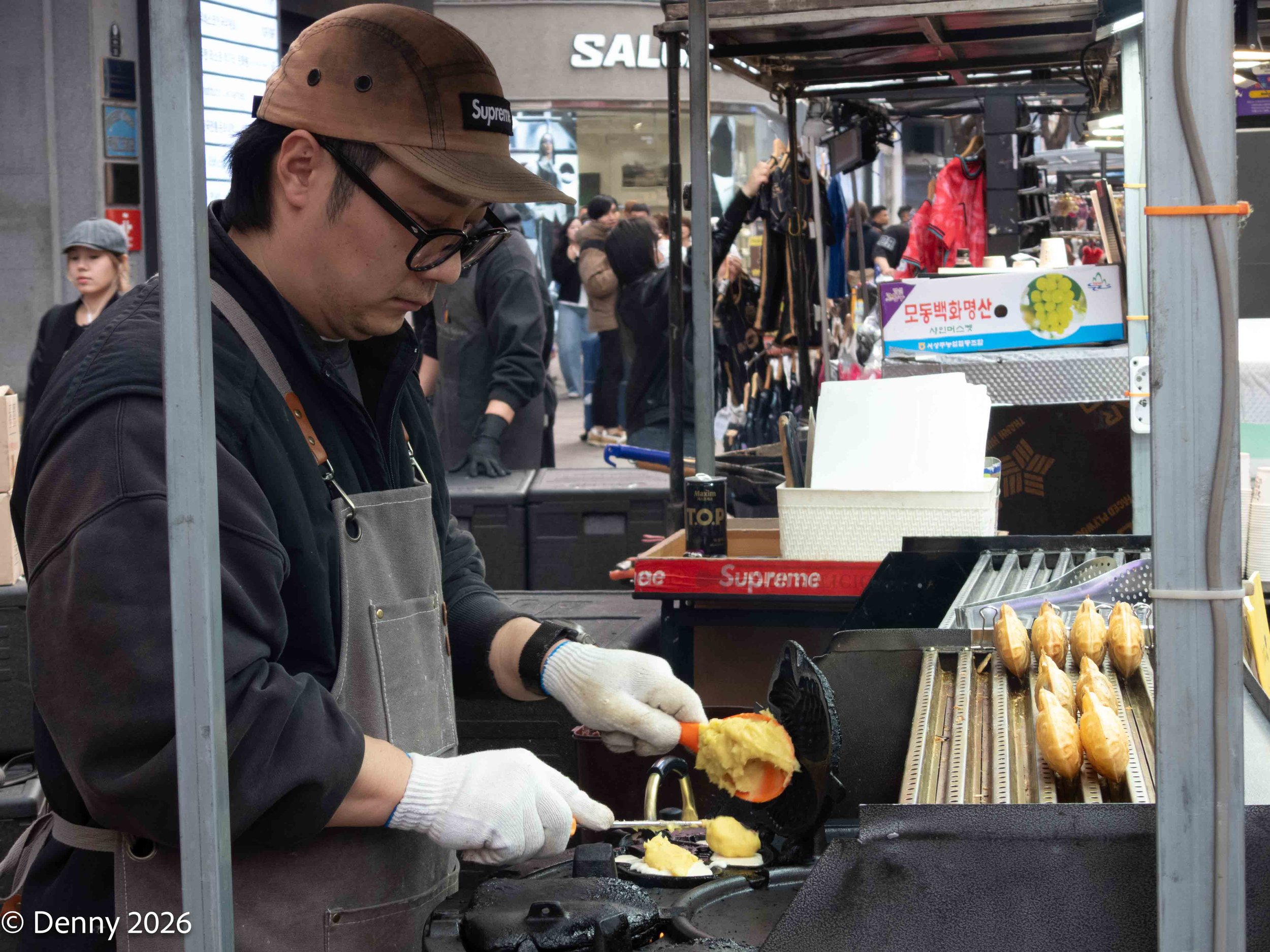
Market, Seoul
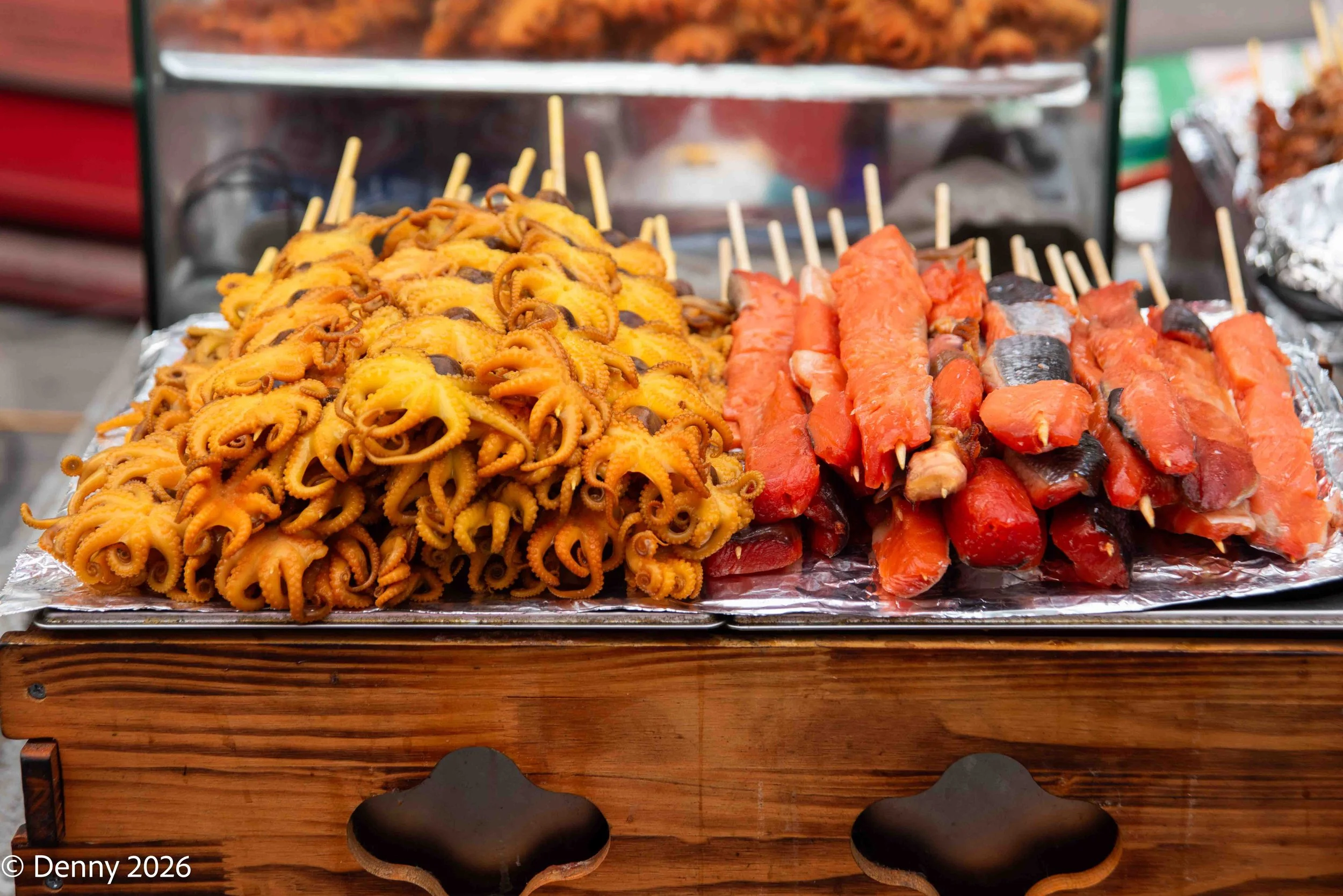
Market, Seoul
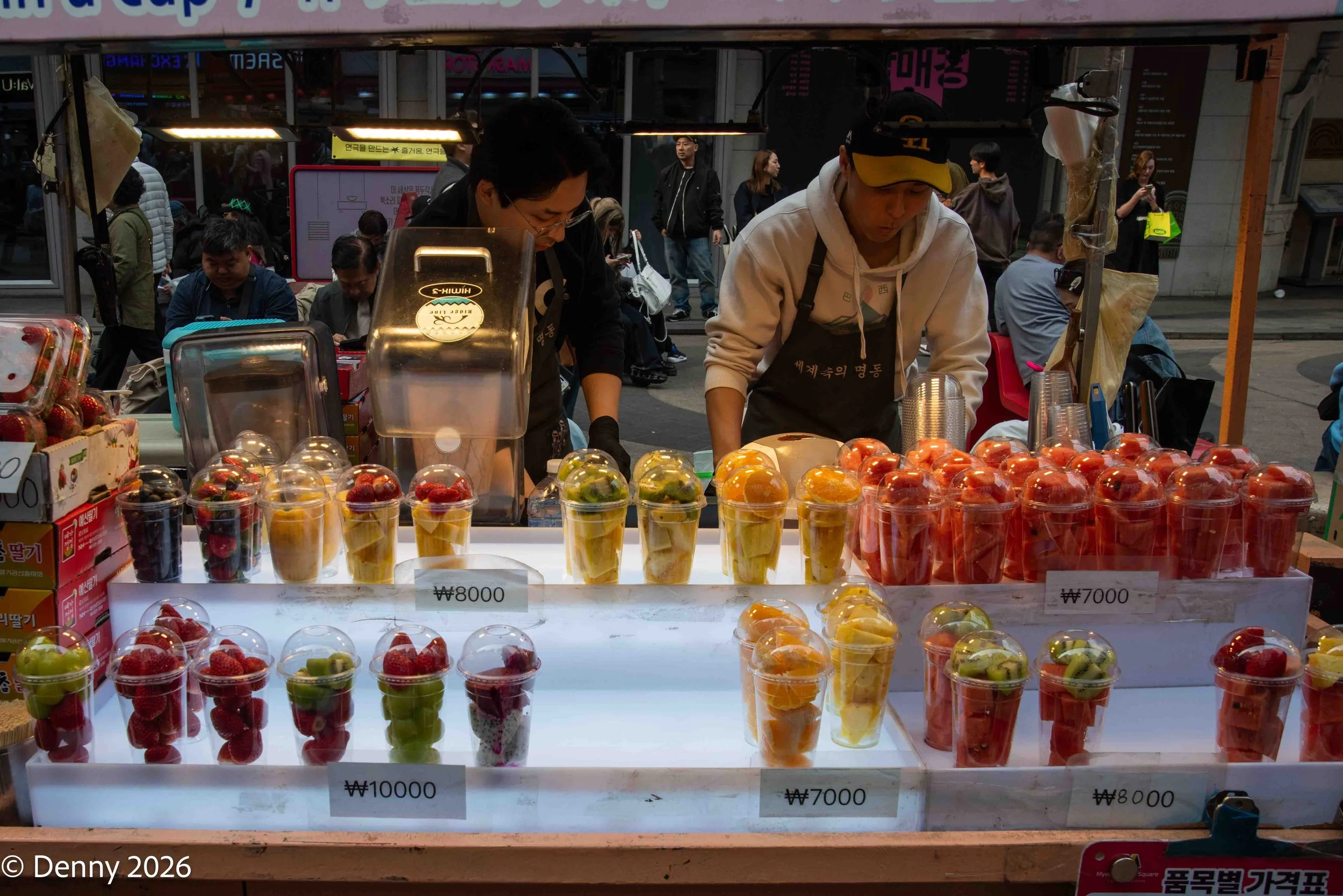
Market, Seoul

Roasted chestnuts, Market, Seoul
From 17:00 to 18:30 we attended a nearby theatre to watch the Nanta Show which was fabulous fun. Five very talented performers acting as ‘chefs’ put on an extraordinary high energy musical drama with kitchen utensils transformed into musical percussion instruments. Nanta has very little Korean speech used and the meanings of any spoken phrases are obvious. There was much comedy throughout plus cleverly choreographed dancing, lots of juggling and even some magic tricks. The show has been presented to audiences of over fifteen million people and since 1997 has travelled the world and performing in 326 cities in 61 countries. This includes 50,005 shows in Broadway N.Y. (No photos allowed!)
We finished this very busy day with our ‘Farewell Dinner’ or as Monica at one stage inadvertently described it as our ‘welfare dinner’!
The meal was held in a high quality restaurant with a five or six course banquet entailing a delectable selection of mostly Korean foods complemented with wines, bubbles and beers. The décor and table service were top standard.

farewell dinner at traditional restaurant, Seoul, South Korea, 24 Mar 2026.
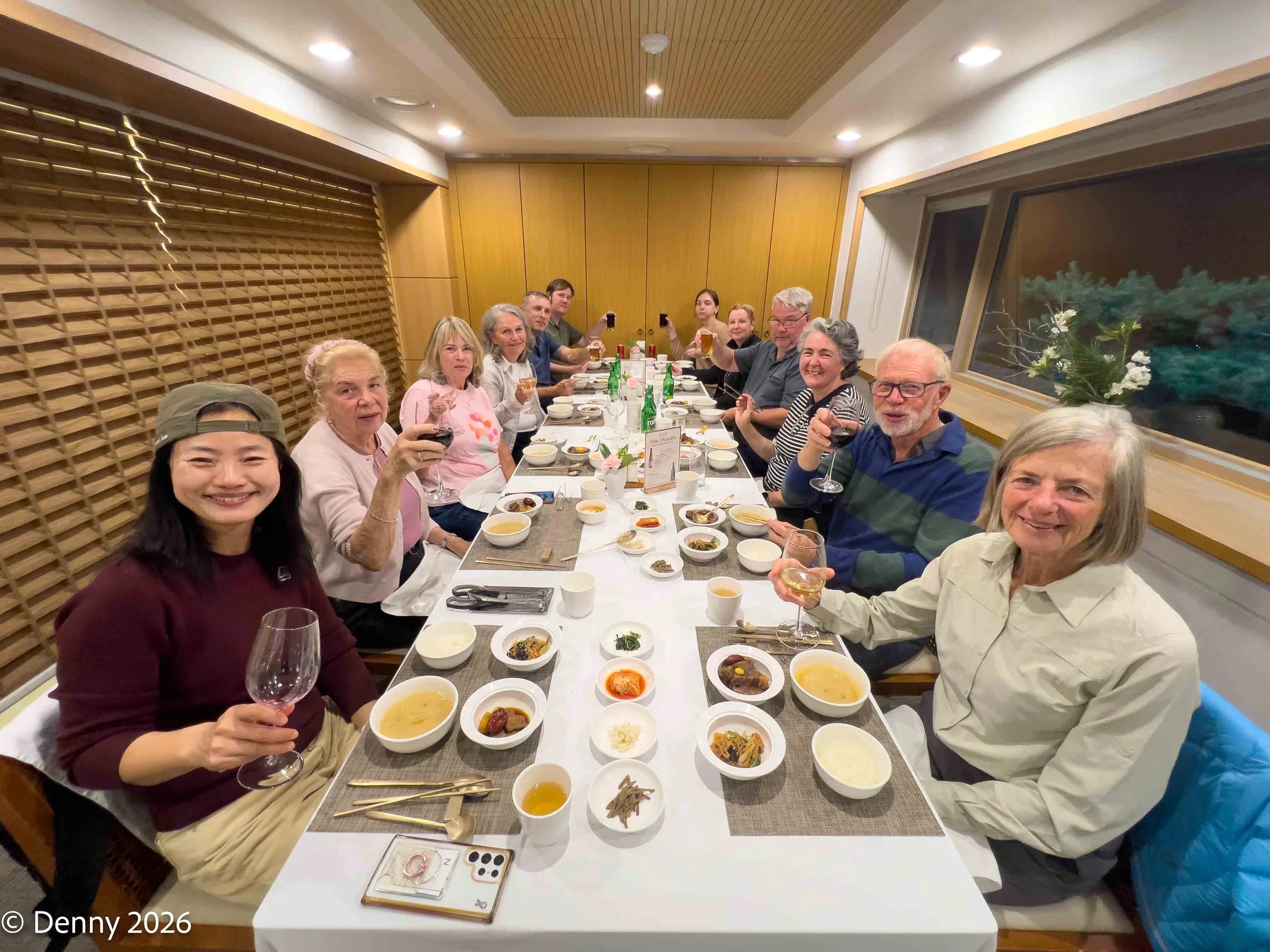
Our group at farewell dinner at traditional restaurant, Seoul
Due to the late hour, it was now approaching 23:00, our group was much more reserved in our behaviour than it had been at our most recent barbecue.
We returned to our hotel at 23:45 and said goodbye to Monica and Mr. Kim, offering them both our heartiest thanks for their sterling efforts over the last eleven days.
We said farewell to our travelling companions with us all having good intentions of keeping in touch.
Tomorrow we leave Seoul at 07:00 for the airport where we fly to Osaka in Japan to commence the second section of this travel adventure.