
We awoke to find the predictions of rain for today were absolutely correct. Having had breakfast we boarded our bus and headed back towards Damyang, a town we’d passed through yesterday on our way to Gwangju.
Our thirty minute journey had us arriving at the Juknokwon bamboo garden in Damyang and at this stage the rain had abated somewhat and was now just a slight drizzle.
Bamboo or ‘daenamu’ is one of the most revered plants in Korea and has multiple uses. It’s employed as sturdy construction material especially for scaffolding but other uses include basket weaving, being splintered into chopsticks, carved to make spoons and harvested for its delicious tender shoots. Bamboo is immortalised in Korean paintings, literature and poetry.
We spent about two hours at the Juknokwon bamboo garden wandering with our umbrellas through a maze of branching tracks that fortunately eventually led us back to the main gate as desired. The track signs were mostly in Korean and it would be very easy to become ‘bamboozled’ and get lost!
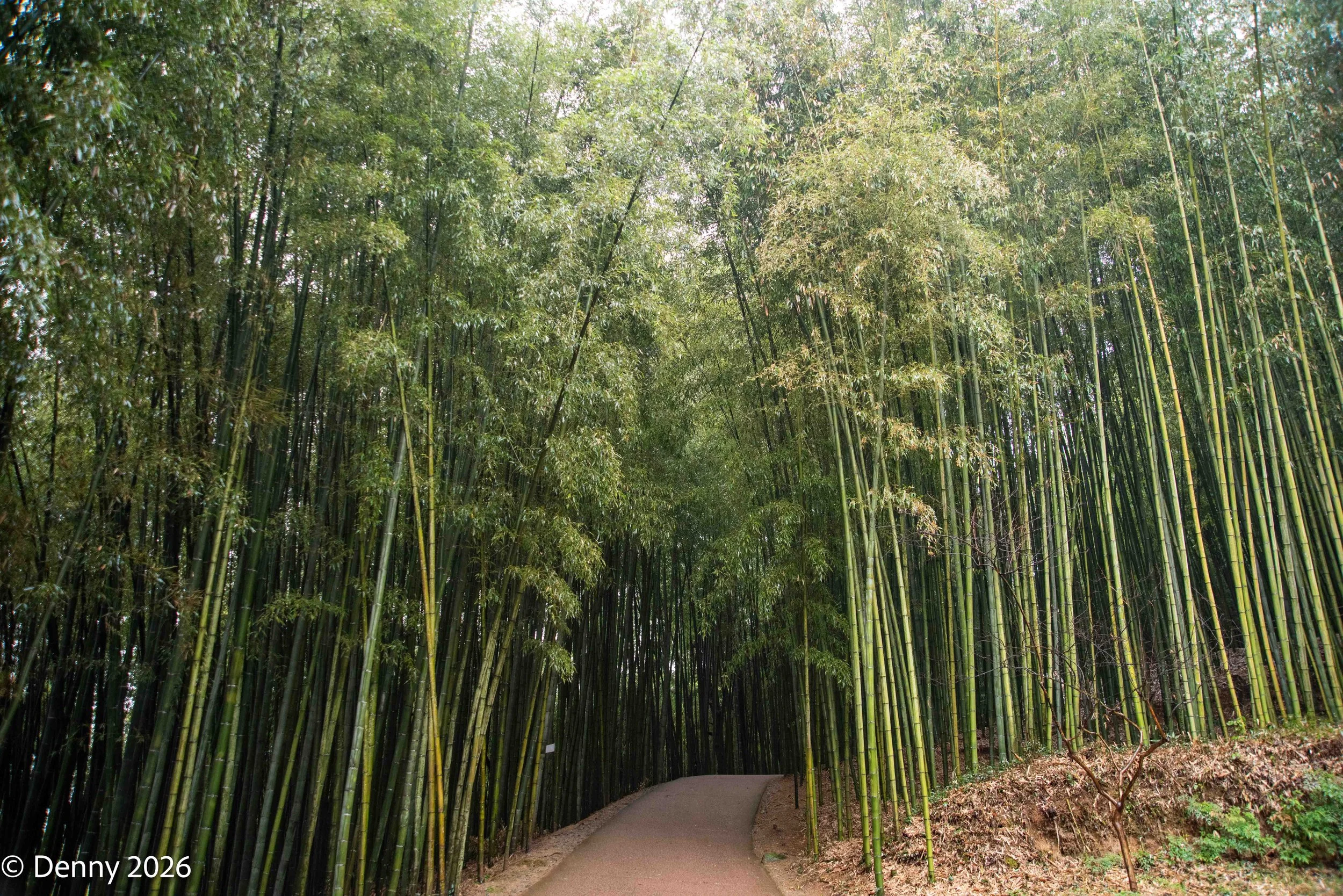
Bamboo, Juknokwon Bamboo Garden
We noted that there were several different species of bamboo some with large and deep green trunks and some others with thin yellow stems. It’s hard to rationalise when wandering through this giant forest that bamboo is a member of the grass family.
The experience of meandering amongst these very tall bamboo plants was somewhat enhanced by the rain due to the wet trunks and leaves being shiny and glistening.

Bamboo stem

Bamboo leaves
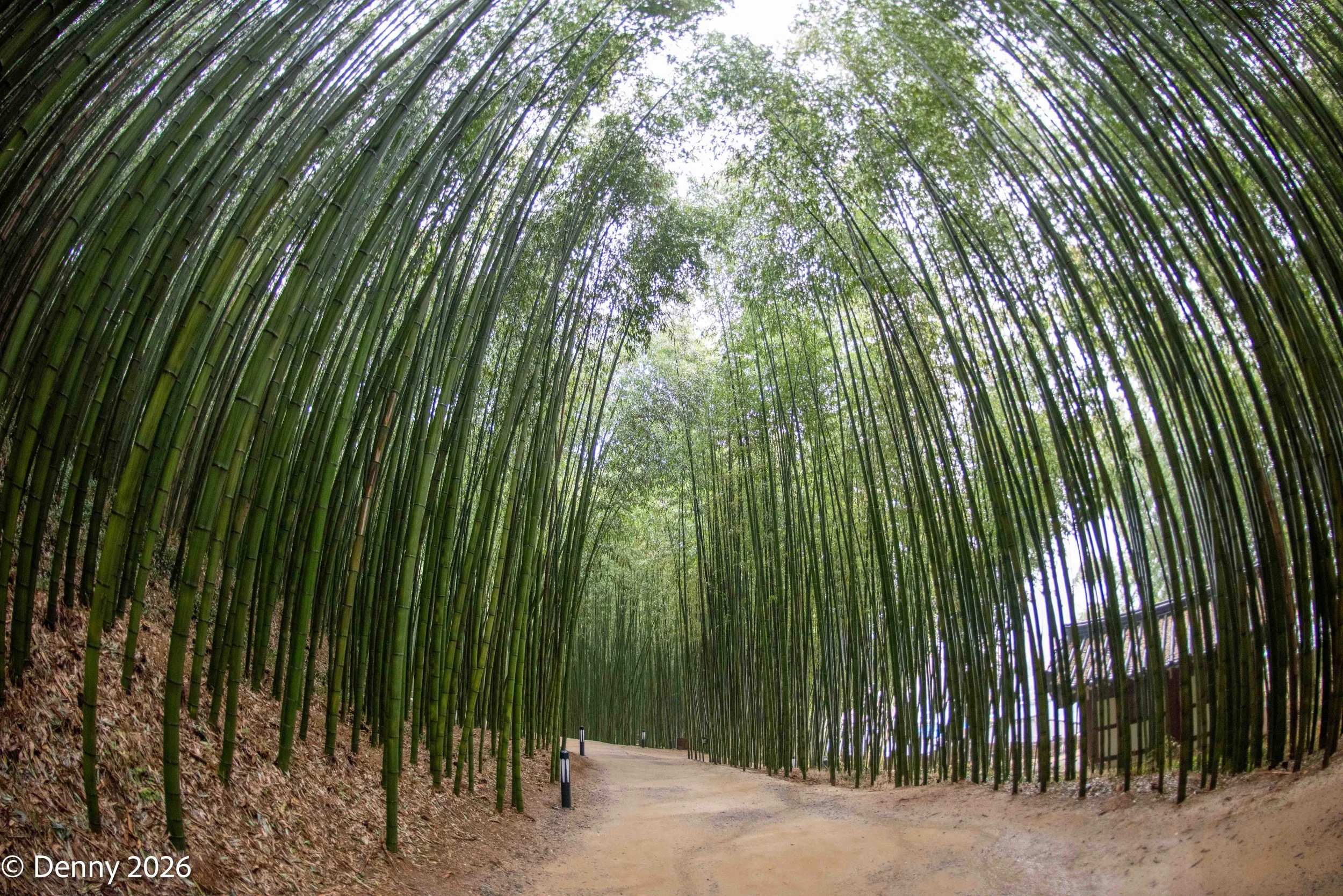
Juknokwon Bamboo Garden
The experience of being in a bamboo forest reminded us of our travels in a Chinese nature reserve where we encountered pandas eating bamboo. Juknokwon’s forest was not to be outdone by China as it has dozens of pandas although made from plaster of Paris!
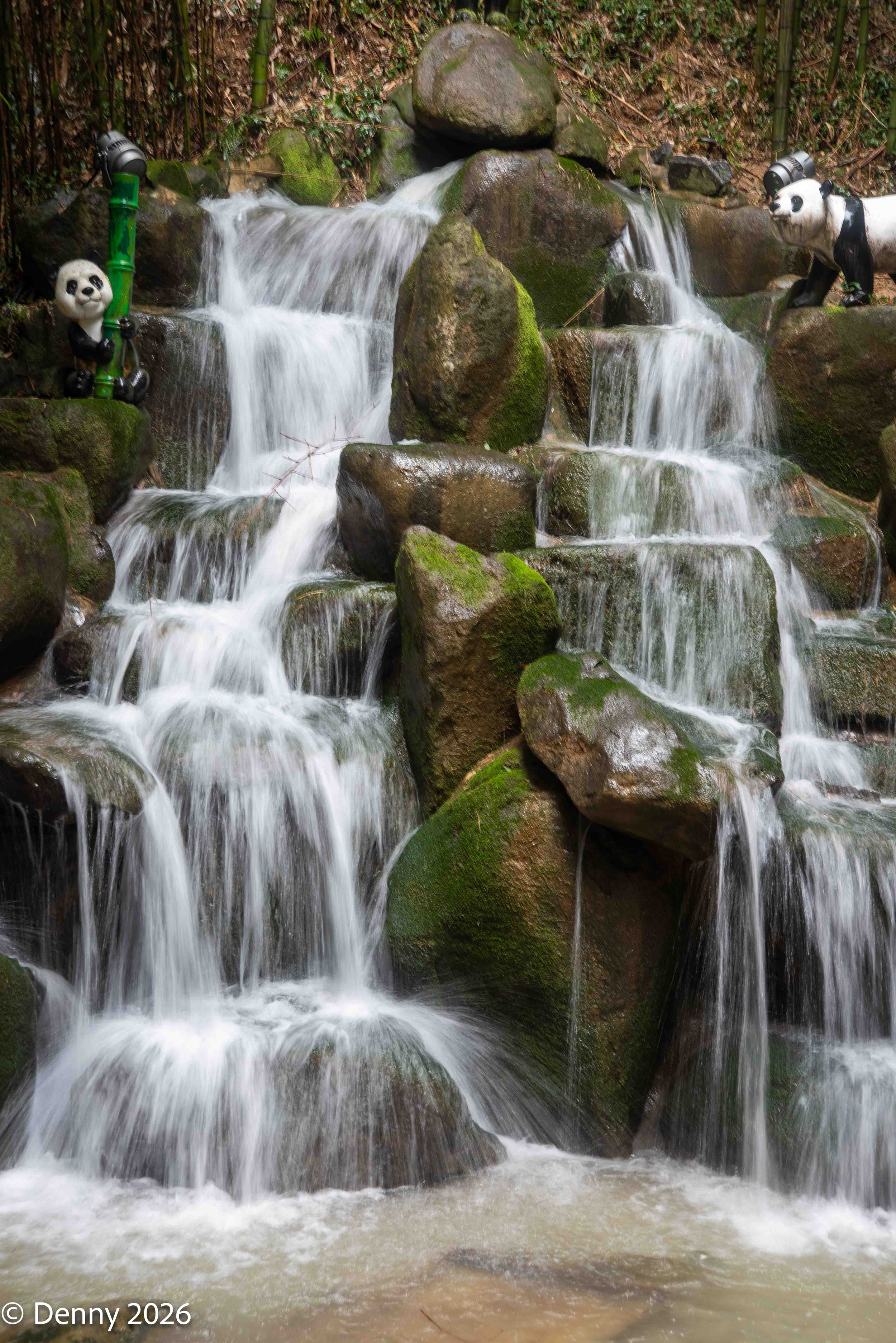
Waterfall, Juknokwon Bamboo Garden
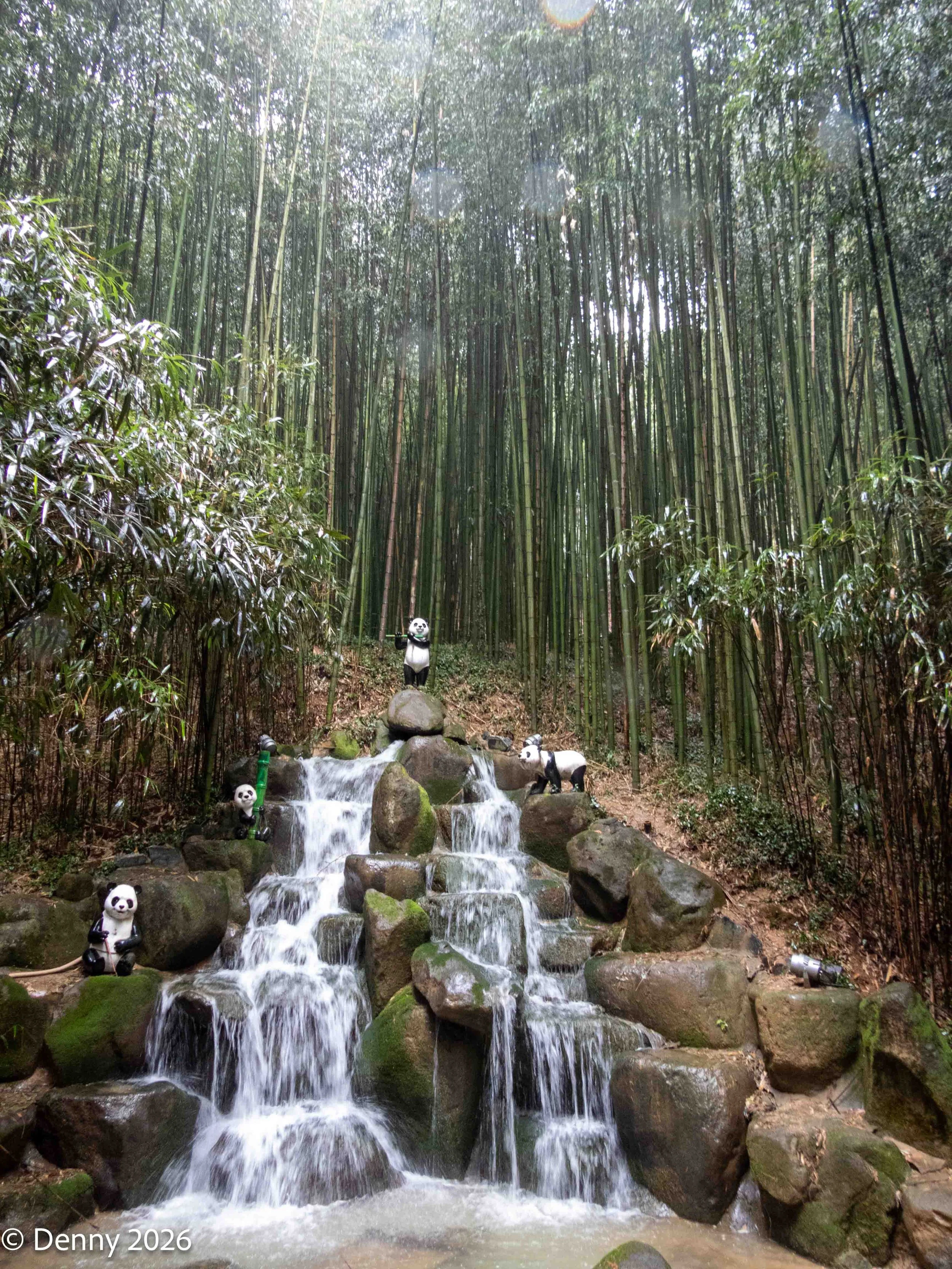
Waterfall with pandas
We then headed back to Gwangju and alighted at Chungjang-ro street with its numerous boutiques renowned for shopping, fashion and cafes.
We spent some time walking along one of the side streets and were amazed to see the number of shops that specialised in enticing children to seek toys. There were lots of places where people were encouraged to buy random ‘mystery’ plastic balls from a machine with the hope that inside the ball was a gift worth more than the starting cost. There were many other shops where, for a small fee you could manipulate a miniature clasp and crane and hopefully with skill snare a toy from a bin filled with fluffy rabbits, dolls, puppies and other delightful gems.

Toy shop
We visited several shoe shops but most were sports shoes and the only one with women’s dress shoes had them priced at near the $300 mark.
Rather than spending time in the shopping precinct we wandered further afield and went to the Democracy Bell Pavilion. This is an area that has historic significance as its where student activists were tortured and killed during protests against corrupt governments in 1974, 1980 and 1982. The memorial to these brave Koreans is in the form of a giant bronze bell which is 4.2 m high and weighs just over 30 tonnes. It is held within a Korean modelled wooden shrine adjacent to the large open concourse area where student protests occurred all those years ago.
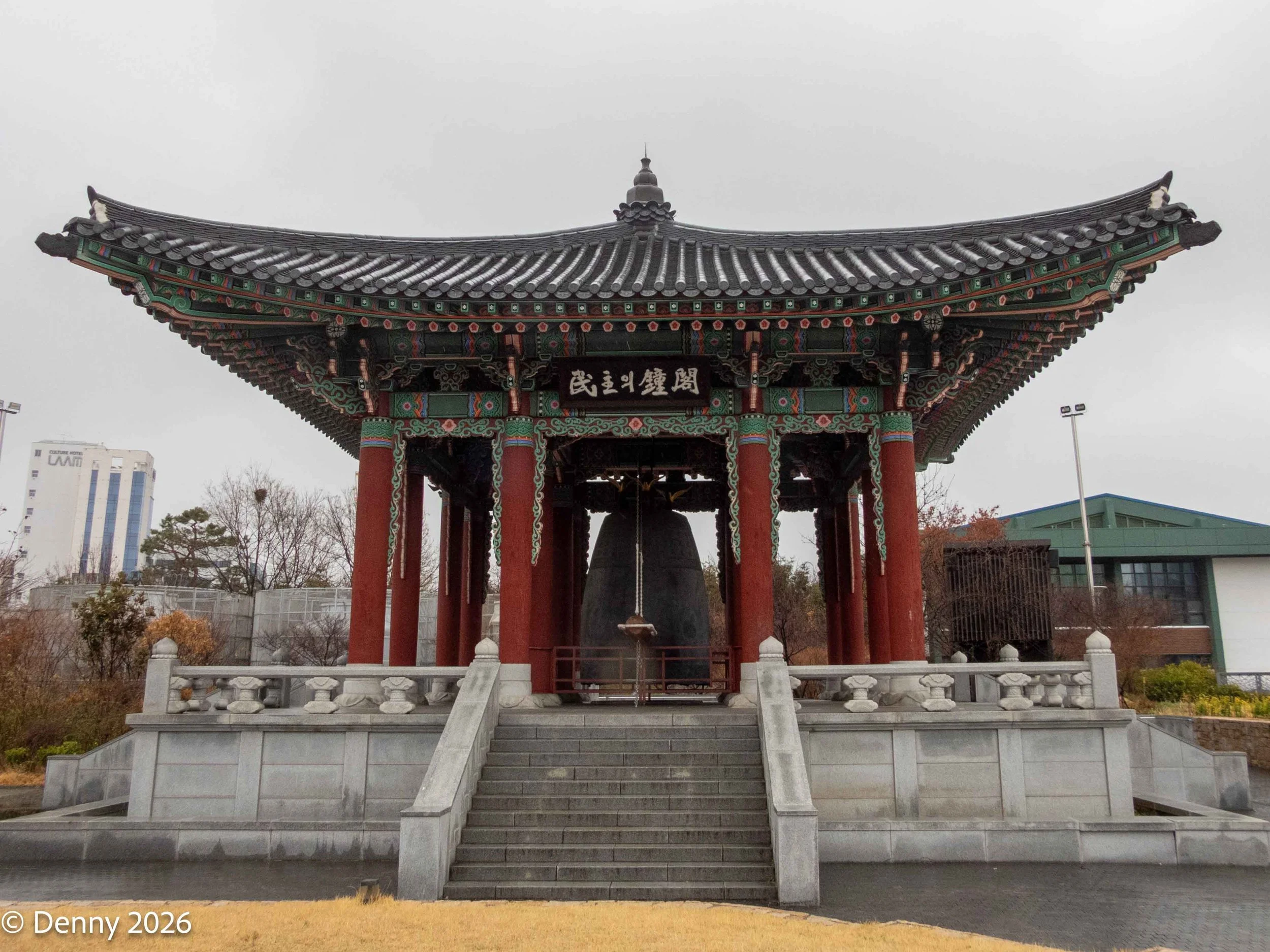
Democracy Bell Pavilion
We then spent a short time in the close by National Asian Culture Centre but with time running short we did little apart from visit the library.
Our group having reassembled, we took a short bus trip to the Gwangju Traditional Cultural Centre for an opportunity to learn something of Korean traditional music and dress.
As students, we spent an exhilarating hour of drum practice under the captivating control of our enthusiastic drum master. The drum we each had was a traditional double ended Korean drum somewhat like two fused bongos. We learnt various patterns of drumming style and by the hour’s end we were reasonably well coordinated with our master and his assistant who accompanied us on occasions with an ancient cornet.

Musicians, Gwangju Traditional Cultural Centre
Our next experience was to dress in traditional Korean hanbok involving multicoloured attire. Our cultural expert on Korean dress gave us an interesting summary of the variation in dress characteristics depending on the wearer’s class status. She also covered the ins and outs of customary etiquette.

Our group with our cultural experts, Gwangju Traditional Cultural Centre
To finish the day we had a Korean barbecue at a local restaurant. The tender Korean fillet and sirloin beef was cooked at our table and was complemented by an extensive range of tasty side dishes.
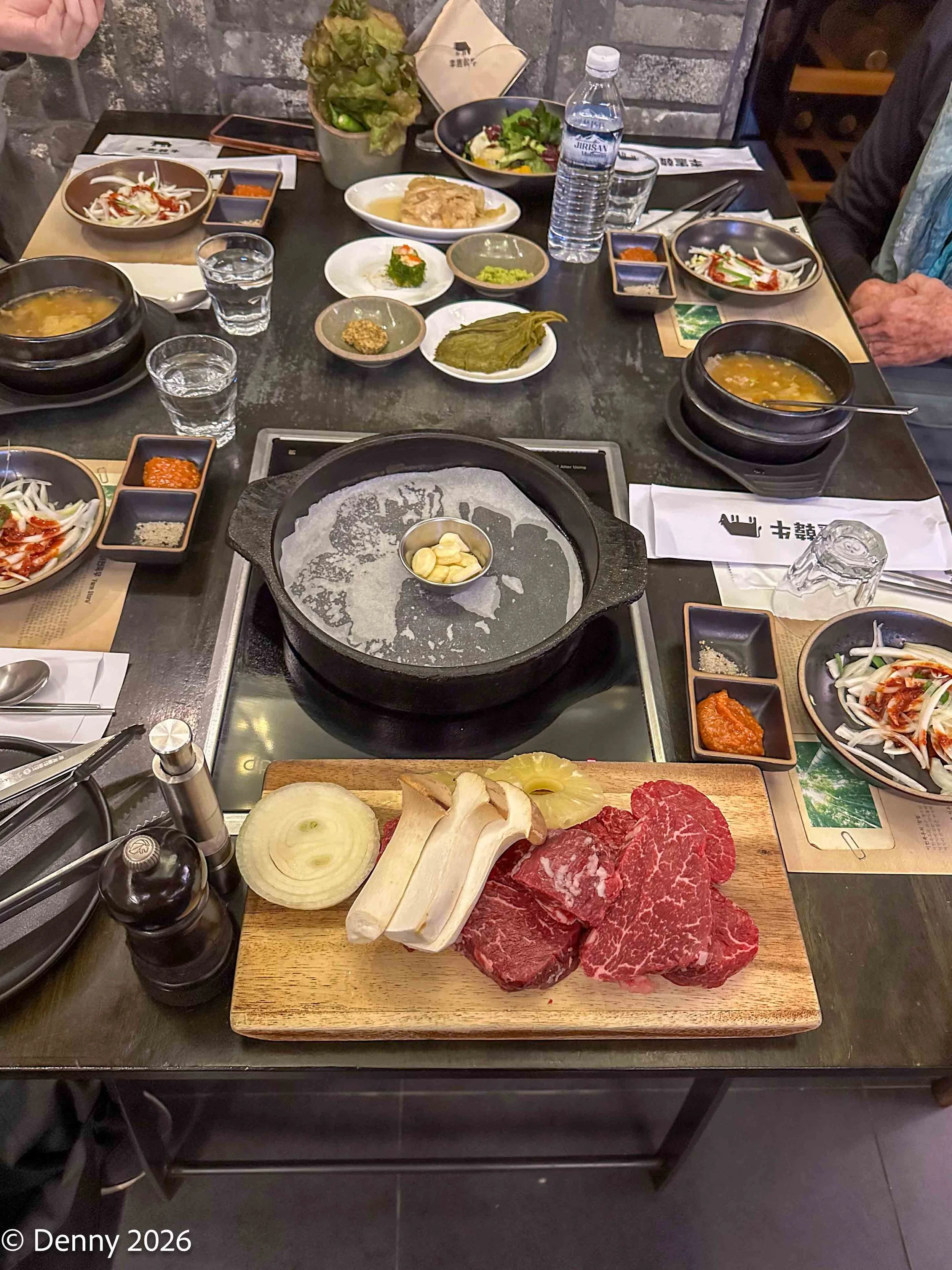
Korean barbecue
The meal was delectable and thoroughly enjoyed by all.
We returned to our hotel at around 20:30 and took time to catch up on diaries, down-loading photos, checking emails and laundry issues.
Despite the disappointing weather, we’ve had an entertaining day and tomorrow we leave Gwangju and head for the coastal city of Yeosu.