
After a much needed evening’s sleep we awoke at 06:00 to a cloudy morning with hints that drizzly rain had occurred overnight.
We had a hearty breakfast and when we returned to our hotel room we were pleasantly surprised to observe on the street below, the commencement of the Seoul marathon. Apparently there were over 20 000 runners in the combined marathon and 10 km events and the stream of athletes from super-fast to weekend joggers continued past our hotel for over an hour.
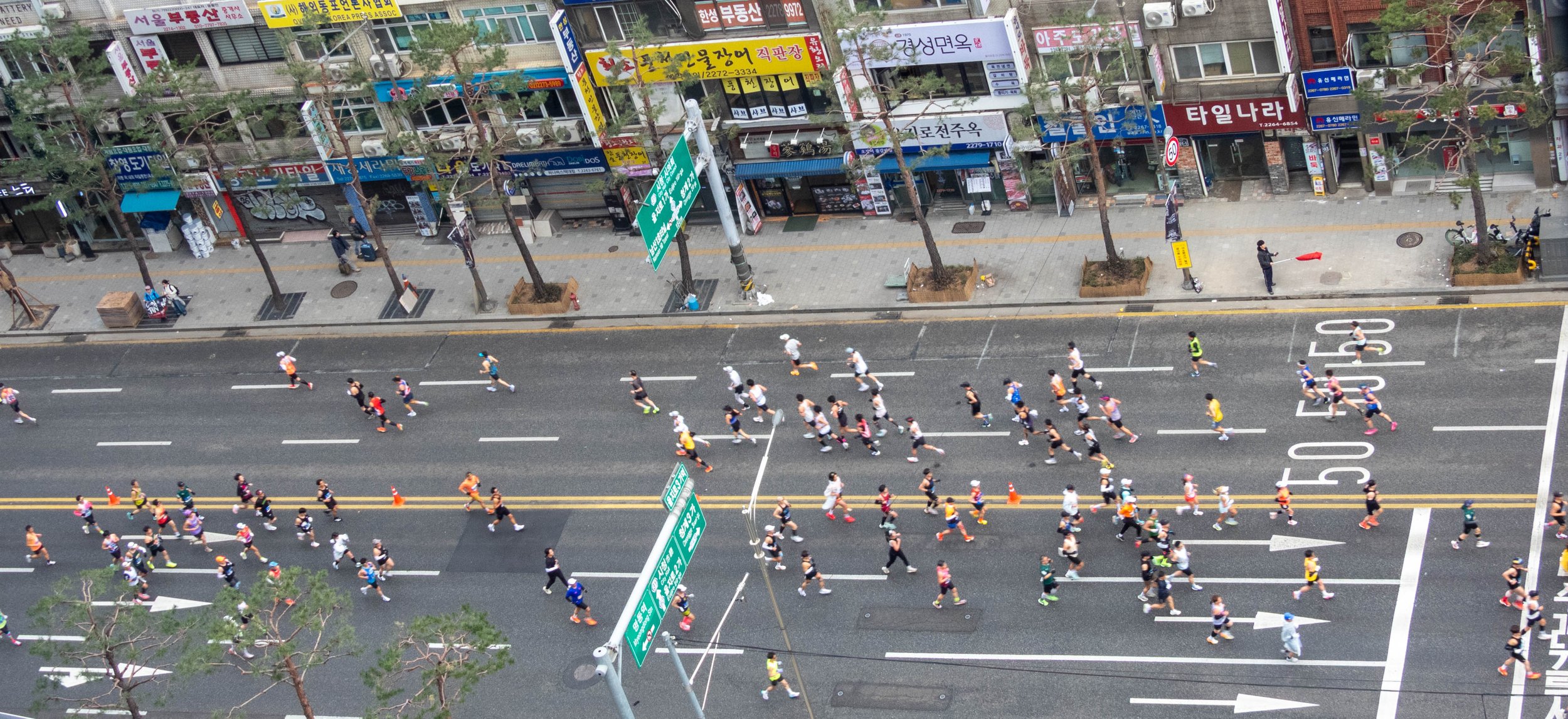
Seoul marathon
At 09:00 we met up with Monica and boarded our bus which is big enough to accommodate forty passengers and yet our group is just twelve including our guide.
Seoul is regarded as the most cosmopolitan of the Asian capitals and the density of sky-scrapers is extraordinary. The population of Seoul city is about nine million although the greater metropolitan region comprises around twenty four million which is about half the total population of South Korea.
Our first stop on this brief tour of Seoul was at the Gyeongbokgung Palace referred to as the Palace of Shining Happiness. The palace built in 1395 is at the heart of the old walled city and was the residence of King Taejo and his successors up to 1592 when it was burnt down during a battle with Japan. It was rebuilt in 1867 as the King’s centre of government and administration.

Gyeongbokgung Palace from outside
The palace occupies an extensive area much of which is now open garden space but formerly provided housing for the government officials and general staff.
Within the grounds there are a number of pagodas built from granite stone and having decorative roofs with elaborately painted timber eaves and concrete cylindrical tiles.
Amongst the pagodas we visited was the King’s throne palace with its wall behind the throne being a famous Korean painting illustrating the ying-yan opposites of the sun and the moon.

King's Throne building, Gyeongbokgung Palace

King's throne, Gyeongbokgung Palace

Pavilion in gardens, Gyeongbokgung Palace
A highlight of our visit to the Gyeongbokgung Palace was the opportunity to observe the ceremony of the Changing of the Palace Gate Guards. The ceremony is conducted much as it would have been when kings and queens occupied the palace in times past.
The participants wear elaborate and highly colourful costumes with ancient brass instruments and very loud drums providing the marching music. The guards have very stern and some even scowling faces suggesting that they regard this ceremony as a highly serious formal event each day and not an act for tourists’ entertainment.

Changing of the Guard, Gyeongbokgung Palace
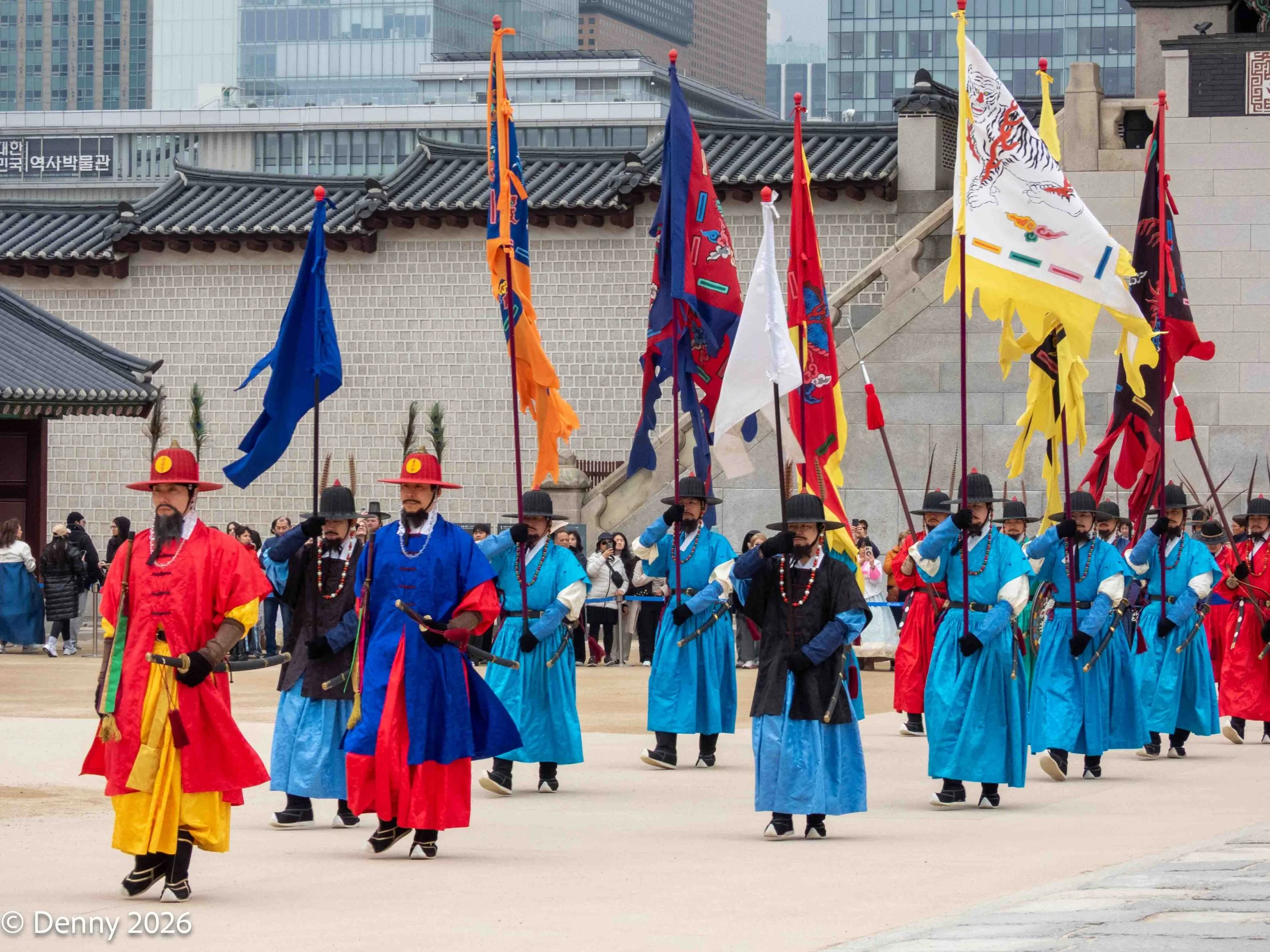
Changing of the Guard, Gyeongbokgung Palace

Changing of the Guard, Gyeongbokgung Palace
After our palace visit our bus driver drove us to the in-door Gwangjang Market where we had free time for an hour to wander and observe the hustle and bustle of Sunday market.
The huge market area was very crowded with queues of people lining up to buy a varied and often unusual collection of foods. Amongst the more peculiar offerings were fish intestines, live octopus, cows stomachs, seaweeds, dried fish and some unknown larvae.
We enjoyed sampling mung bean pancakes called bindaetteok and also tasted kimchi which is a spicy and tangy fermented cabbage treat. Others tried the mini seaweed rice rolls called mayak gimbap that are very similar to sushi. The range of dried fruits, spices and sweets on offer was extensive but the selection of uncooked meats and associated animal offerings didn’t have our taste buds tingling despite our guide’s suggestions.

Lady making mung bean pancakes

Gwangjang market

Gwangjang market

Preparing fish intestines, Gwangjang market
We then moved to visit the Bukchon Hanok village area. This part of the city showcases the traditional architecture of early Korean times. The buildings occupy a comparatively small hillside area where tourists are able to walk through laneways in amongst these highly attractive homes that are presumably occupied by wealthy residents. Several of the houses seem quite new or possibly they may just have been refurbished.
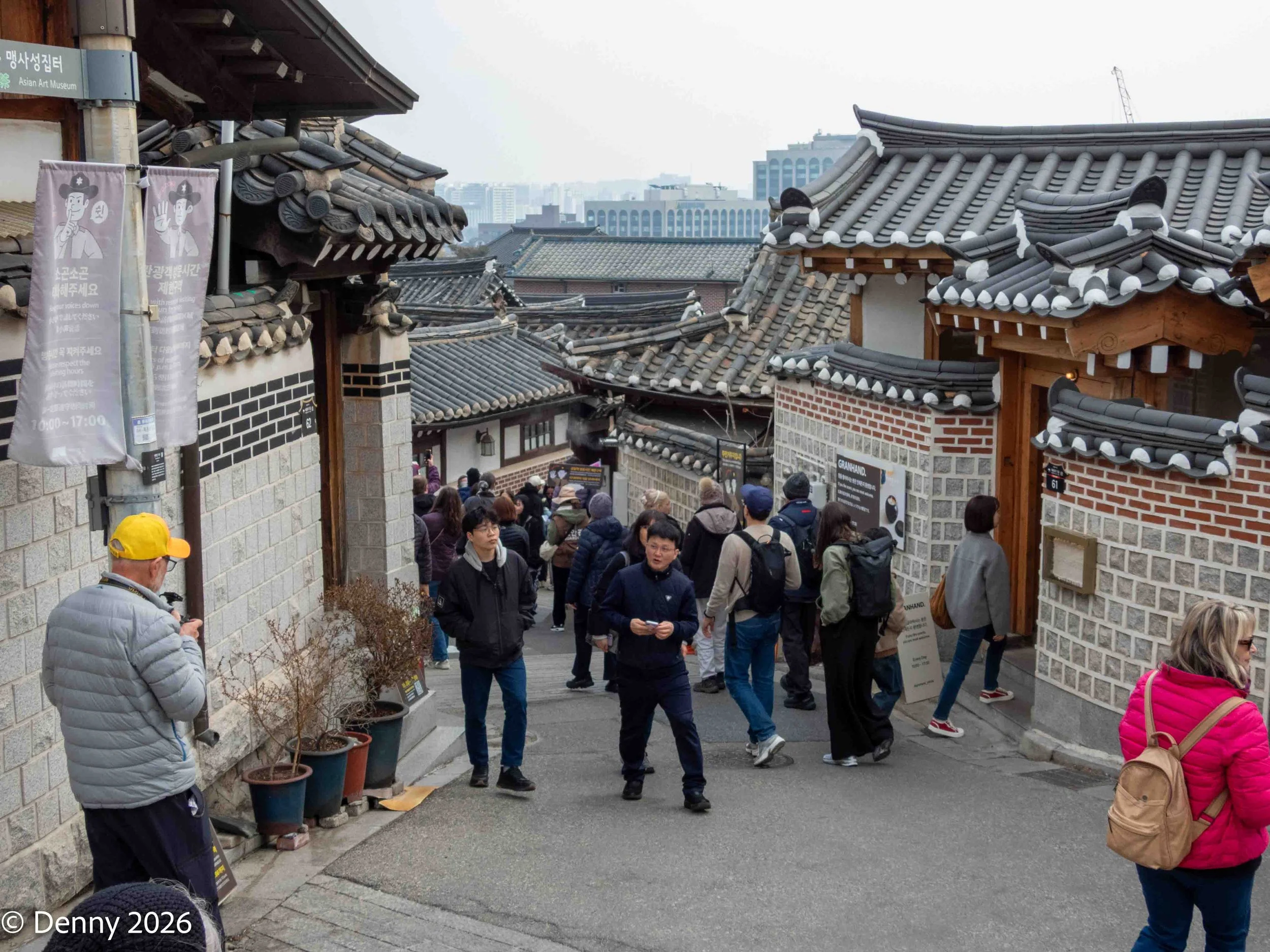
Walking through Bukchon Hanok village
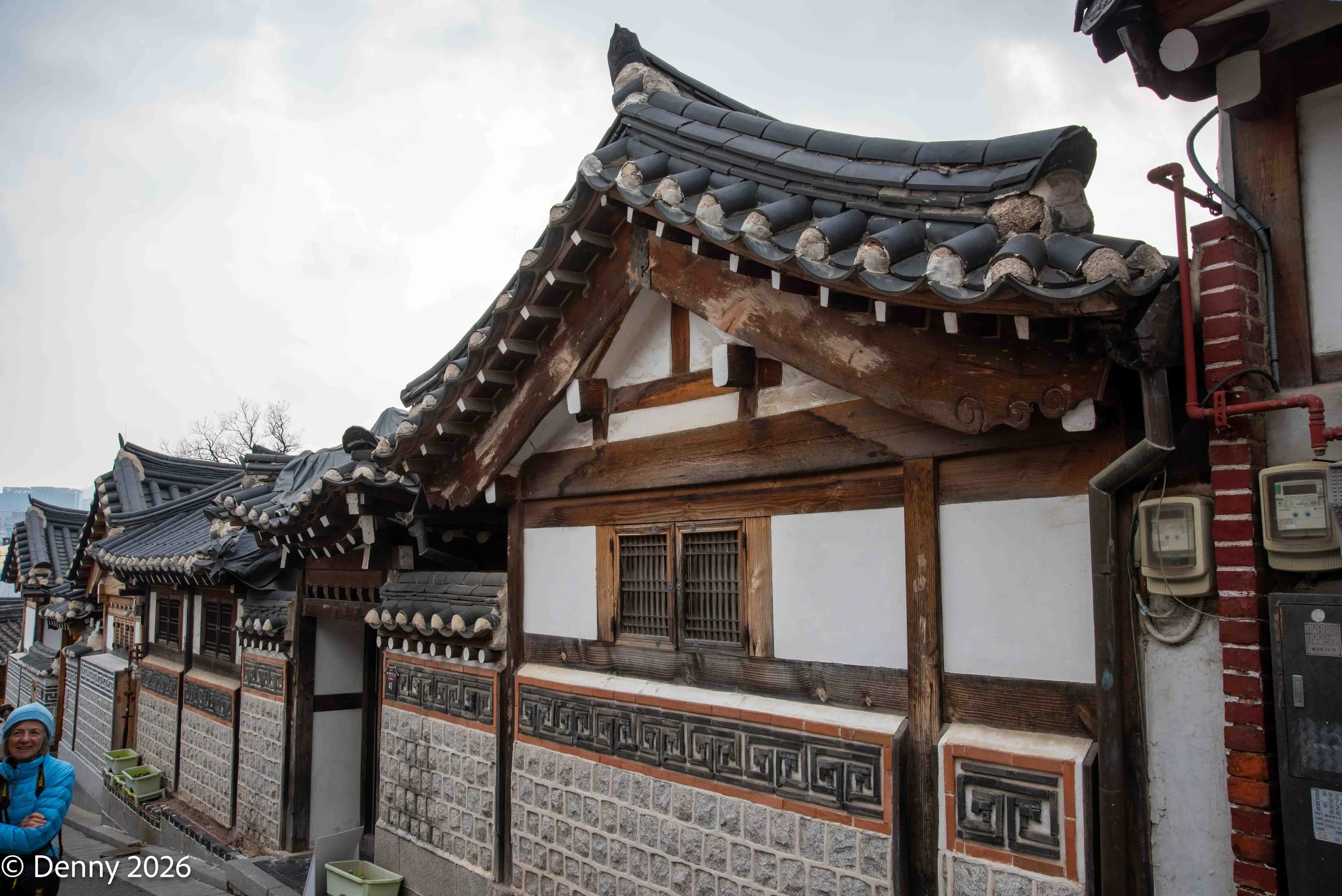
Bukchon Hanok village

Laneway with bin for collecting snow

Plum blossom, Bukchon Hanok village
To complete the day’s sight seeing we headed skyward to Namsan or ‘South Mountain’, it being a 243 m high wooded mini-mountain which topographically is pretty much the centre of Seoul.
Atop of Namsan is the N (new) Seoul Tower which rises a further 243 m providing a very popular viewing platform. We had a less than perfect view as the conditions were initially cloudy and quite misty although things improved later when sunshine broke through.

N Tower on Mt Namsam
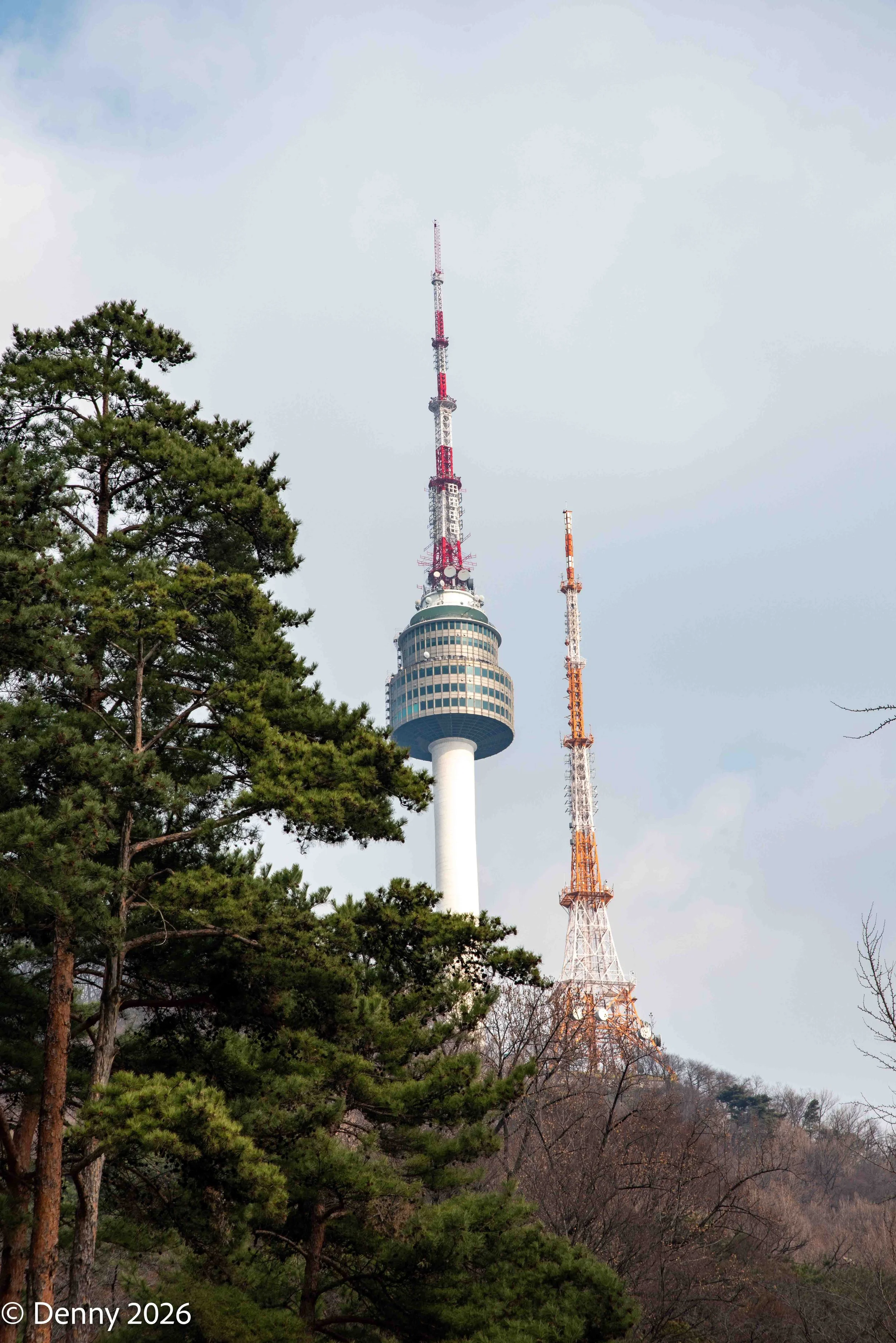
View of tower on Mt Namsam
From the tower we had a panoramic view of the metropolis below its multi-storied buildings in every direction. We could see to the north the conically shaped Bugaksan (north peak mountain) and in the opposite direction we observed the Han River which flows from west to east through the southern suburbs of Seoul.

View from N Tower on Mt Namsam
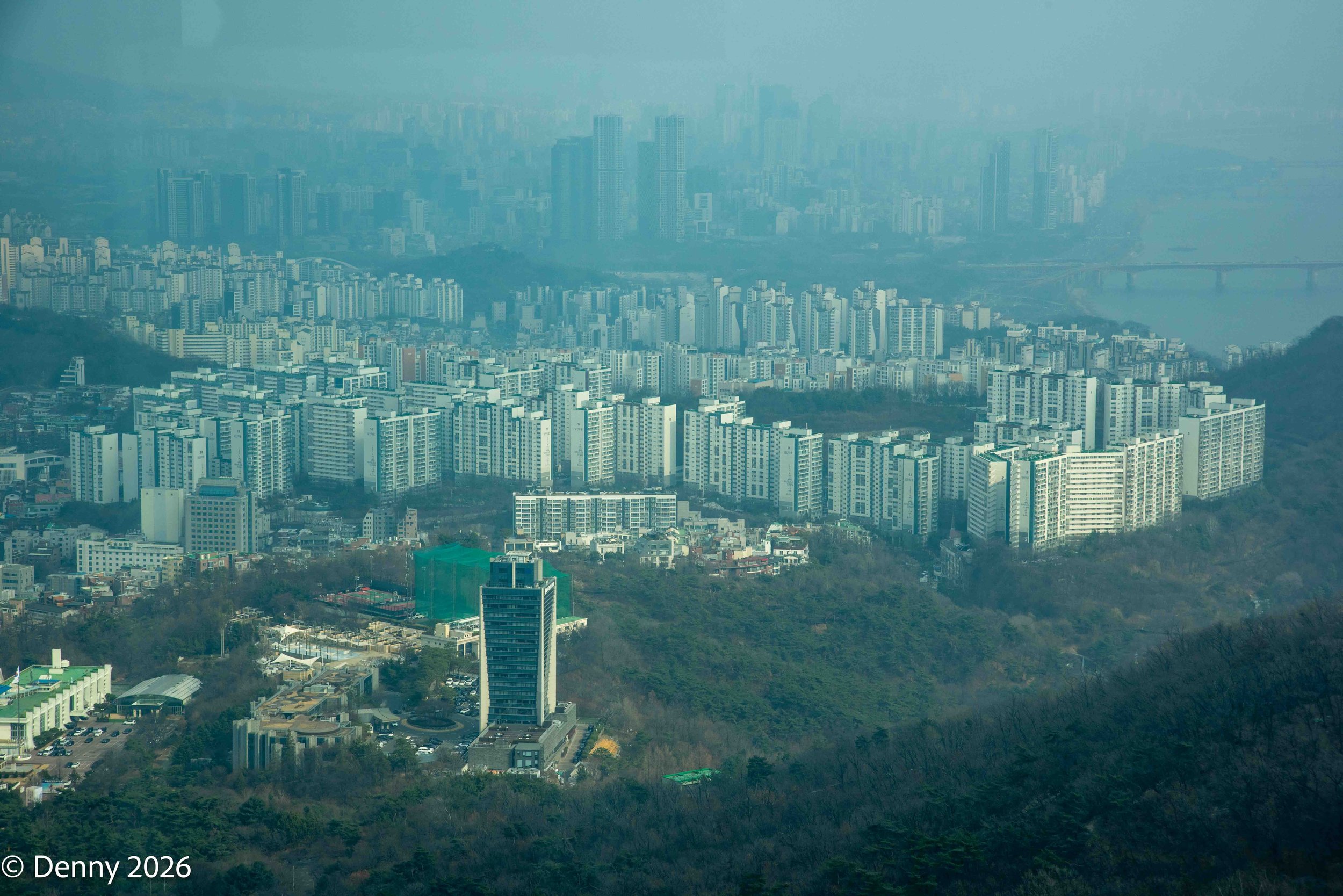
View from N Tower on Mt Namsam
At this stage of the day we’d been on our feet for eight hours or more and we headed back to our hotel for refreshments and an evening meal.
Tomorrow we leave Seoul for the present time and drive initially to Suwon and then finish the day at Jeonju.
This day in Seoul has been most enjoyable and given us a preliminary insight to the history, culture, people and architecture of this fascinating country.