
The weather early on looked as if rain was imminent so we planned to spend the day indoors and the agreed best option was the National Museum of Nature and Science in Uenokoen, Taito. This required a train trip on the subway from Shinjuku, the suburb where we are staying, to Ueno.
With raincoats at the ready we walked quickly to the nearby Shinjuku Station. This station has over three and a half million passengers passing through each day and is considered the busiest train station in the world!
We needed to use the Yamanote Line this morning and decided to wait until the rush hours had finished because between 07:30 and 09:00 staff are employed to push the last few commuters onto the train.
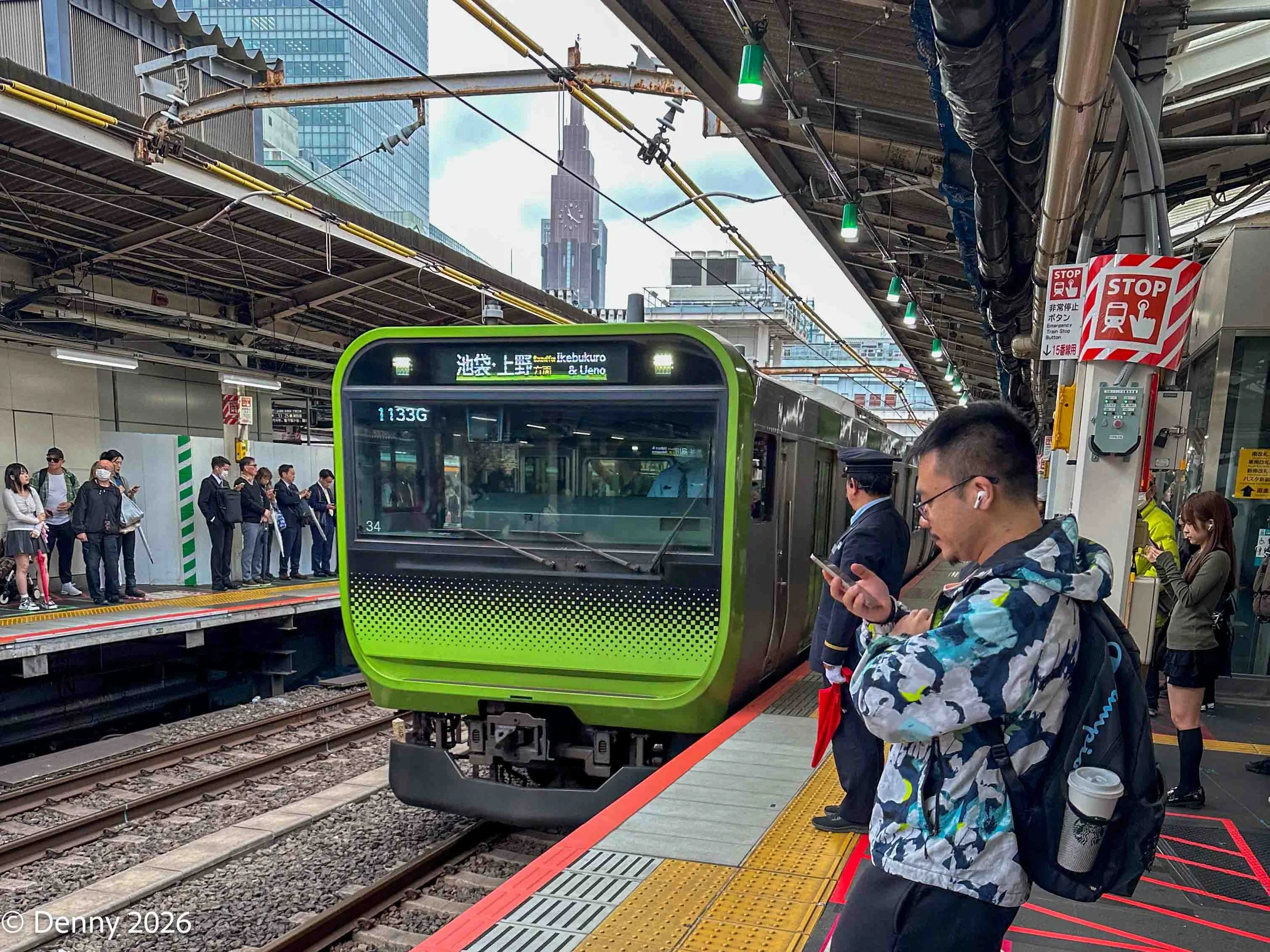
Our train arriving at Shinjuku station
We boarded the train at Shinjuku (Y17) and got off the train at Ueno (Y05) twenty-three minutes later. During the trip I sat next to a lady holidaying from Singapore and she was keen to hear about our experiences at the recent Suzuka GP. She said that we should book accommodation early if we intend to go to the Singapore GP as hotel prices double if not triple during the month prior to the race in mid-March.
On arrival at Ueno we were pleased to find that the predicted rain had yet to appear so we strolled slowly through a corner of Ueno Park. Our pathway led us amongst the cherry blossoms and elms now sprouting new leaves to the National Museum of Nature and Science which is located in the northeast corner of the park.
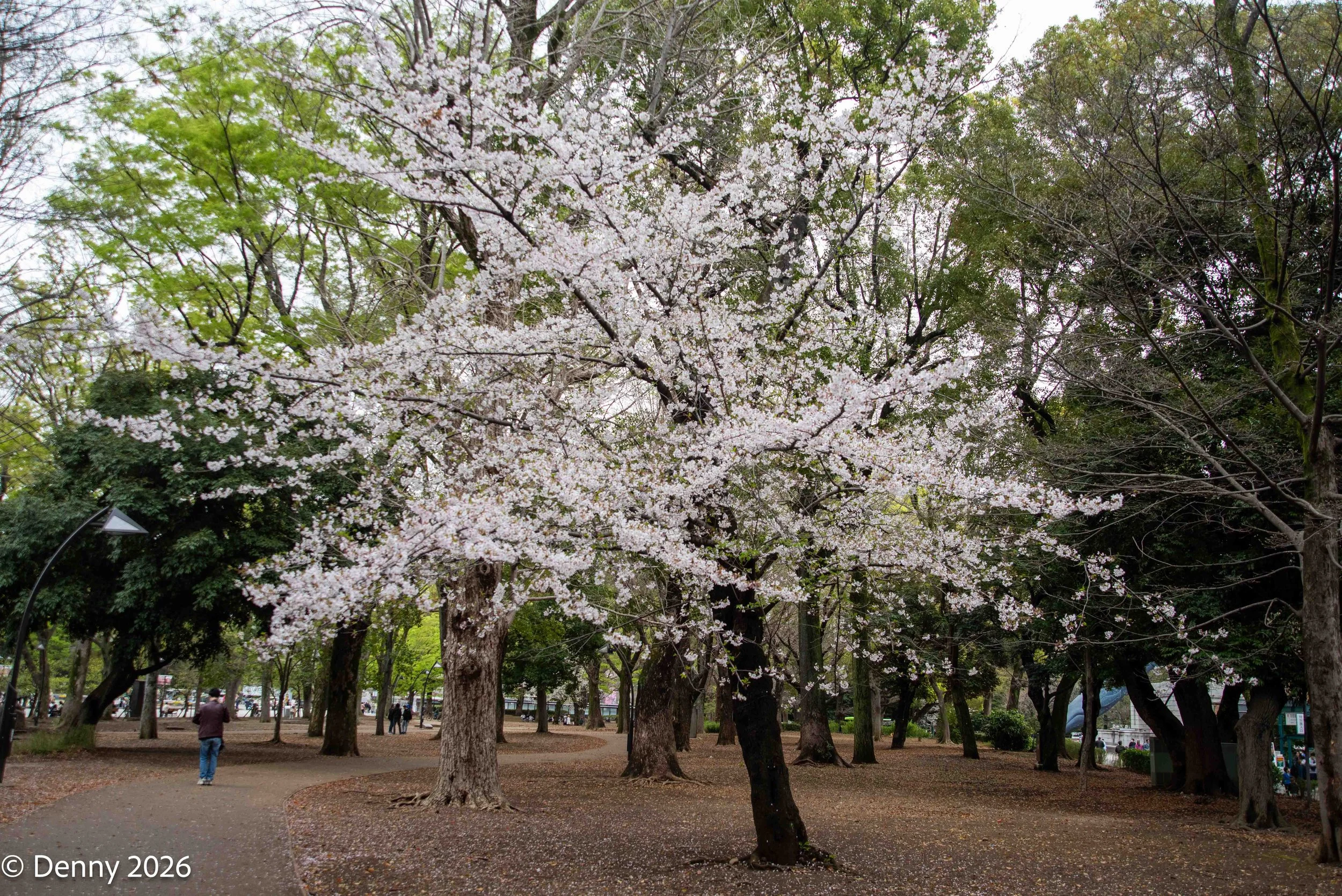
Cherry blossom at Ueno Park
On the way we passed a bronze statue of Dr. Hideyo Noguchi (1876 – 1928) who was a famous Nobel Prize nominated Japanese bacteriologist whose image now appears on the ¥1000 note.
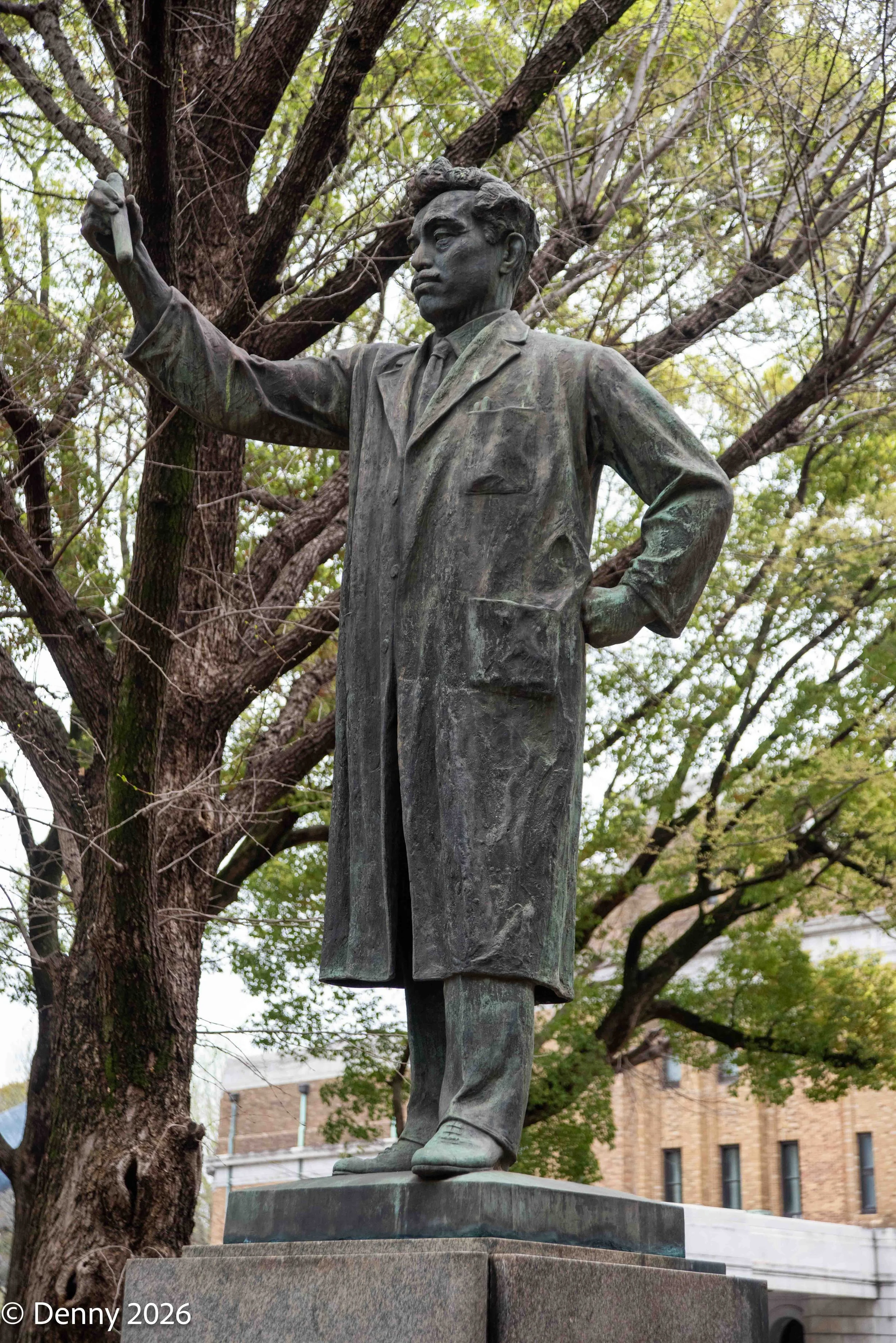
Statue of Dr. Hideyo Noguchi, Ueno Park
Outside the museum’s entry are a beautifully restored steam train (D51231) and a life-sized model of a blue whale.

National Museum of Nature and Science
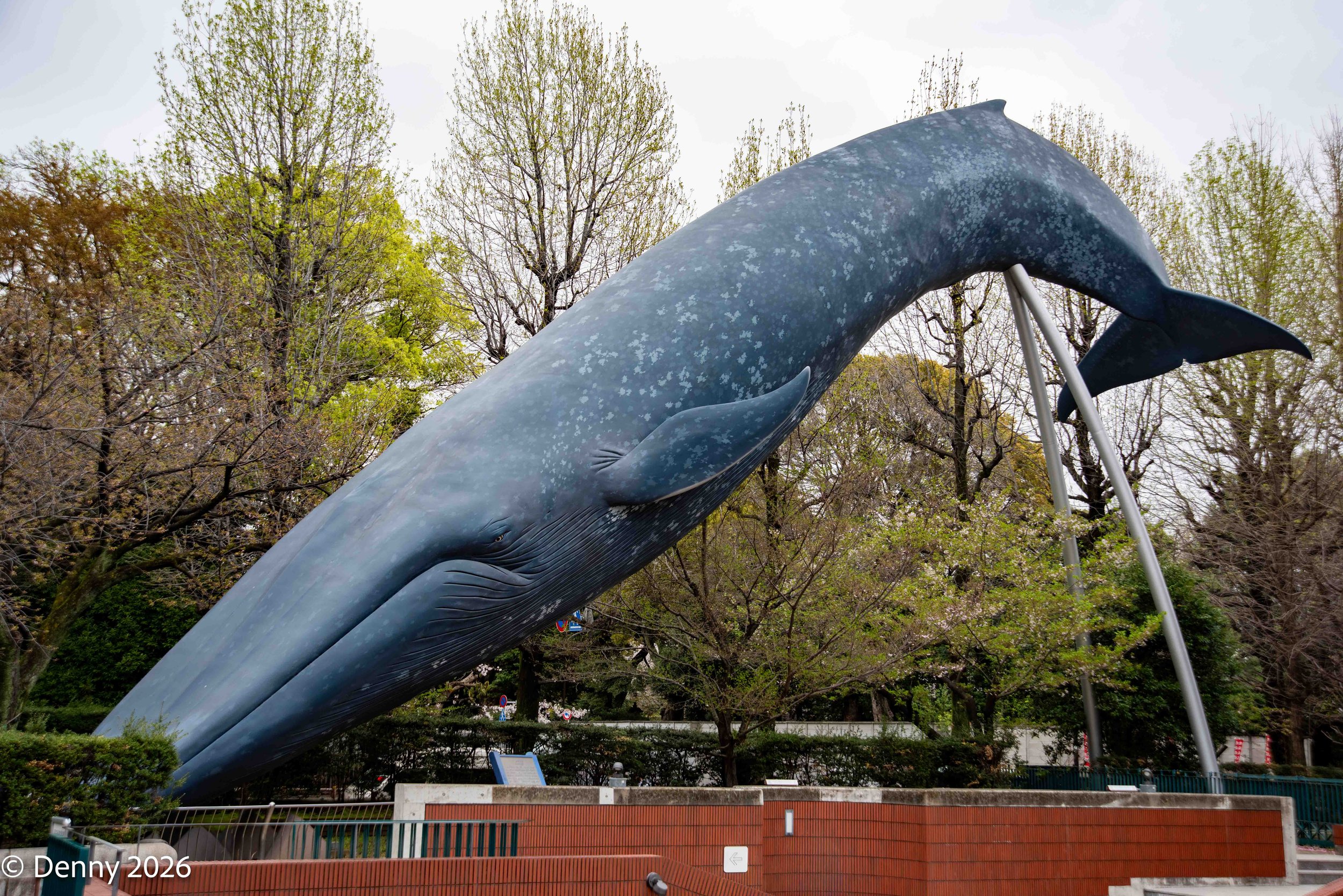
Blue whale model at entrance to National Museum of Nature and Science,
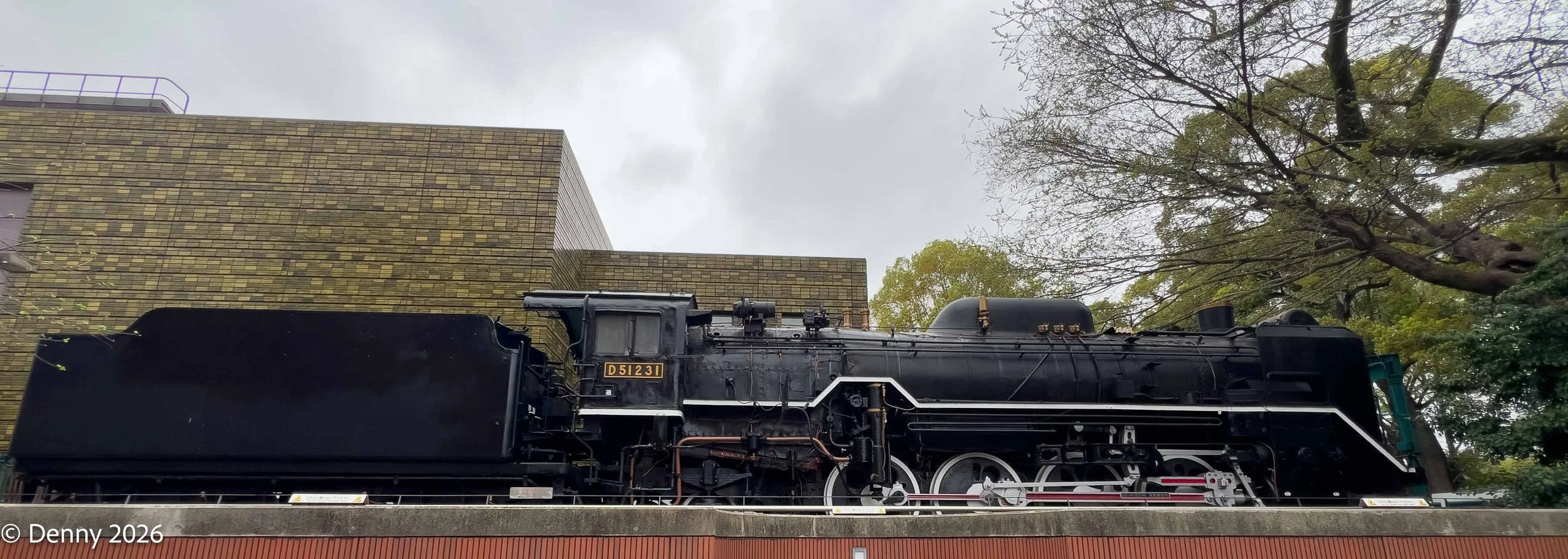
Train outside National Museum of Nature and Science
We were not charged entry to the Museum of Nature and Science as we are over the age of sixty-five. Nonetheless, we were required to show passport evidence of our age.
We then started our visit in the Natural History section. There was an incredible range of exhibits but the fossil collection, especially that of dinosaurs, was particularly impressive. A fossil of a Flightless Gruiform Bird was amazing in detail considering it is around 150 million years old!
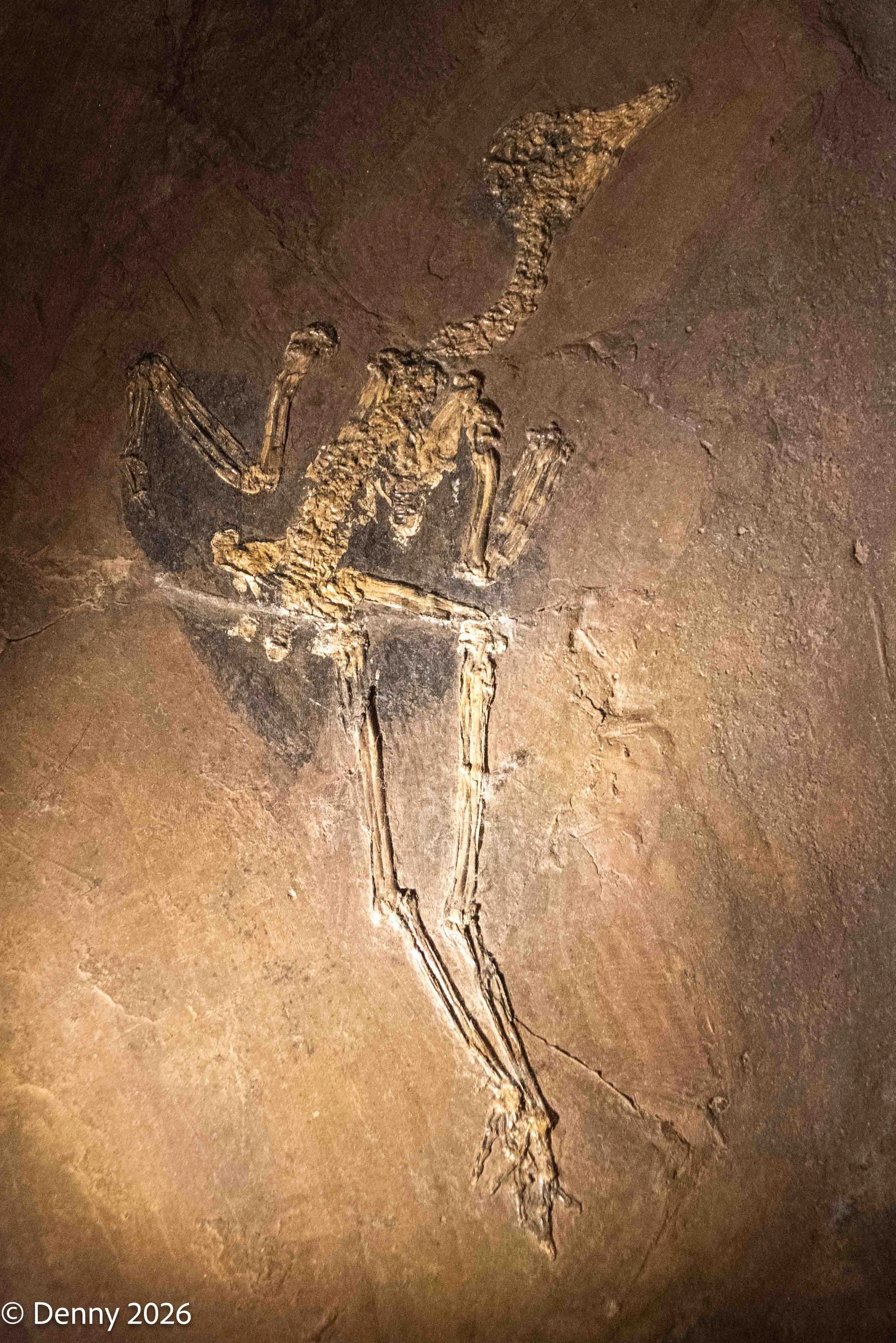
Flightless Gruiform Bird fossil

Notebook of H. Nagaoka (Japanese Physicist)

Freshwater ray fossil
We spent a good deal of time in the life-sciences area where marine life was particularly emphasised. The skeletons of numerous animals were on display but the elephant and the sperm whale were the most prominent. A video showing the highly complex process of assembling the sperm whale’s skeleton was most interesting.

Sperm whale (right hand side)

Sperm whale skeleton (left hand side)
We then moved on to the Science and Technology section which was to be the highlight of the day.
There were lots of displays involving viewer interaction and there was significantly more information in English to explain the functioning of individual exhibits.
The first technological part to catch our attention was a magnetometer which when your mobile phone was moved near it gave 3D (x, y, z axes) readings of the present magnetic field strength in microtessla (µT). These reading varied dramatically as one moved the phone randomly.

Corinne holding mobile phone against magnetometer
A major technology section was dedicated to Japan’s space missions. There was an amazing collection of actual satellites and manned spacecraft on display.

Space Flyer Unit (SFU
Amongst the displays that appealed most to us were the exhibits of historically significant calculating devices and computers.
There was an intriguing 1944 machine for solving simultaneous equations in nine unknowns.
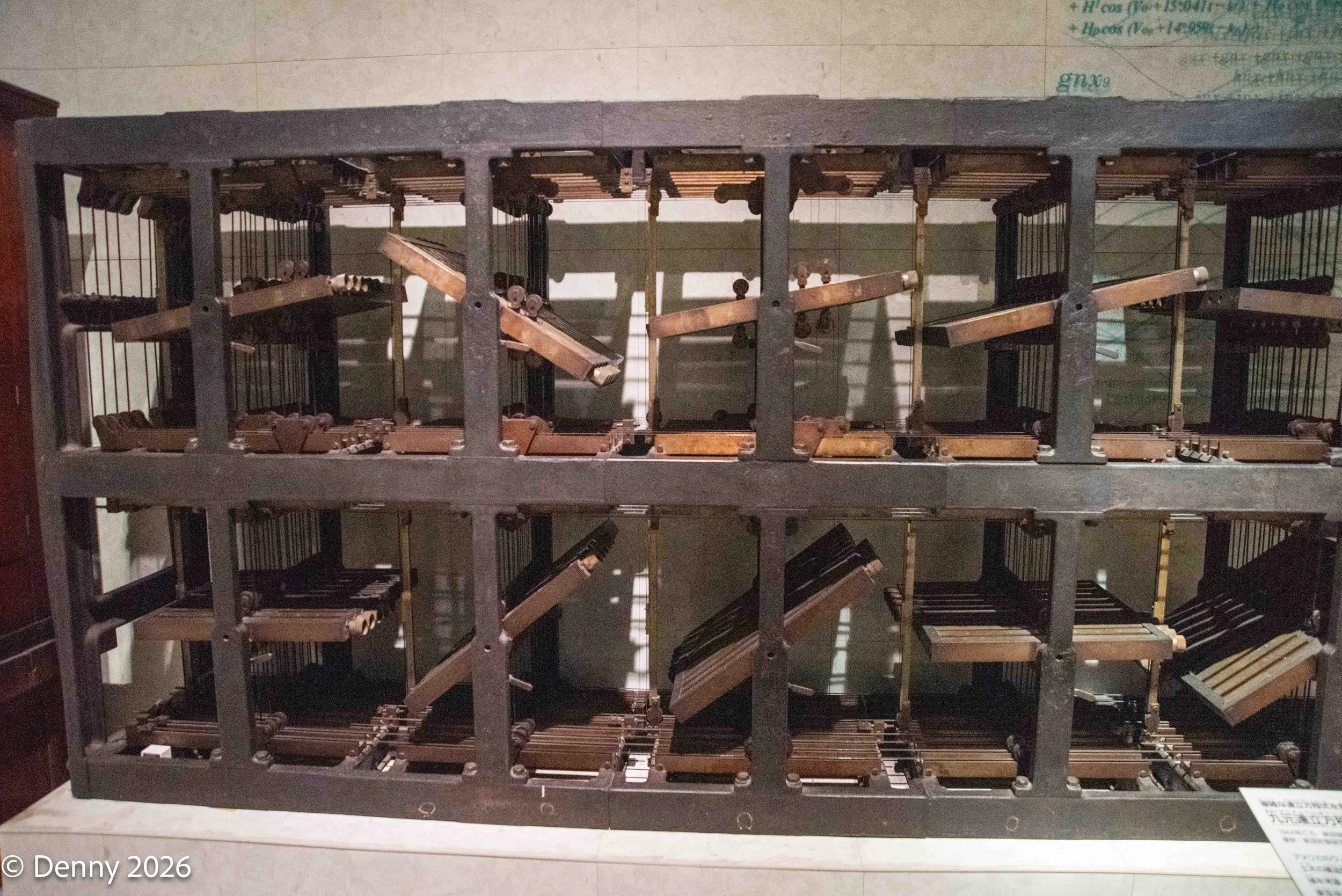
Machine for solving niine simultaneous equations (around 1944)
Next door was a phenomenally complex machine invented by William Thomson Kelvin (Lord Kelvin) for predicting tides. This exquisite computational machine involved nine interconnected pulleys and wires that transformed the complex wave motion of tidal flow into a predictable pattern which was shown on a graph.

Machine for predicting tides
There were computers on display from the early days such as the multi-valved types we had in Tasmania in our 1960s university times.

FUJIC, a vacuum tube digital electronic computer 1956
Another area of special interest was the deep-sea submersibles section. It included deep underwater research units from the small Japanese Hornet to the large three person Shinkai 6500 craft capable of achieving depths of 6,500 m. This incredible submersible has been at the centre of world-wide deep underwater research and has undertaken 1,619 dives.

Shinkai 6500 (Human-occupied research submersible)
At this point we were suffering from excessive ‘museum information input’ and decided to call it quits and head home.
It was now raining quite heavily so on our return to the Ueno Station we took shelter in a busy restaurant/coffee shop where we had hot coffees and shared a pizza.
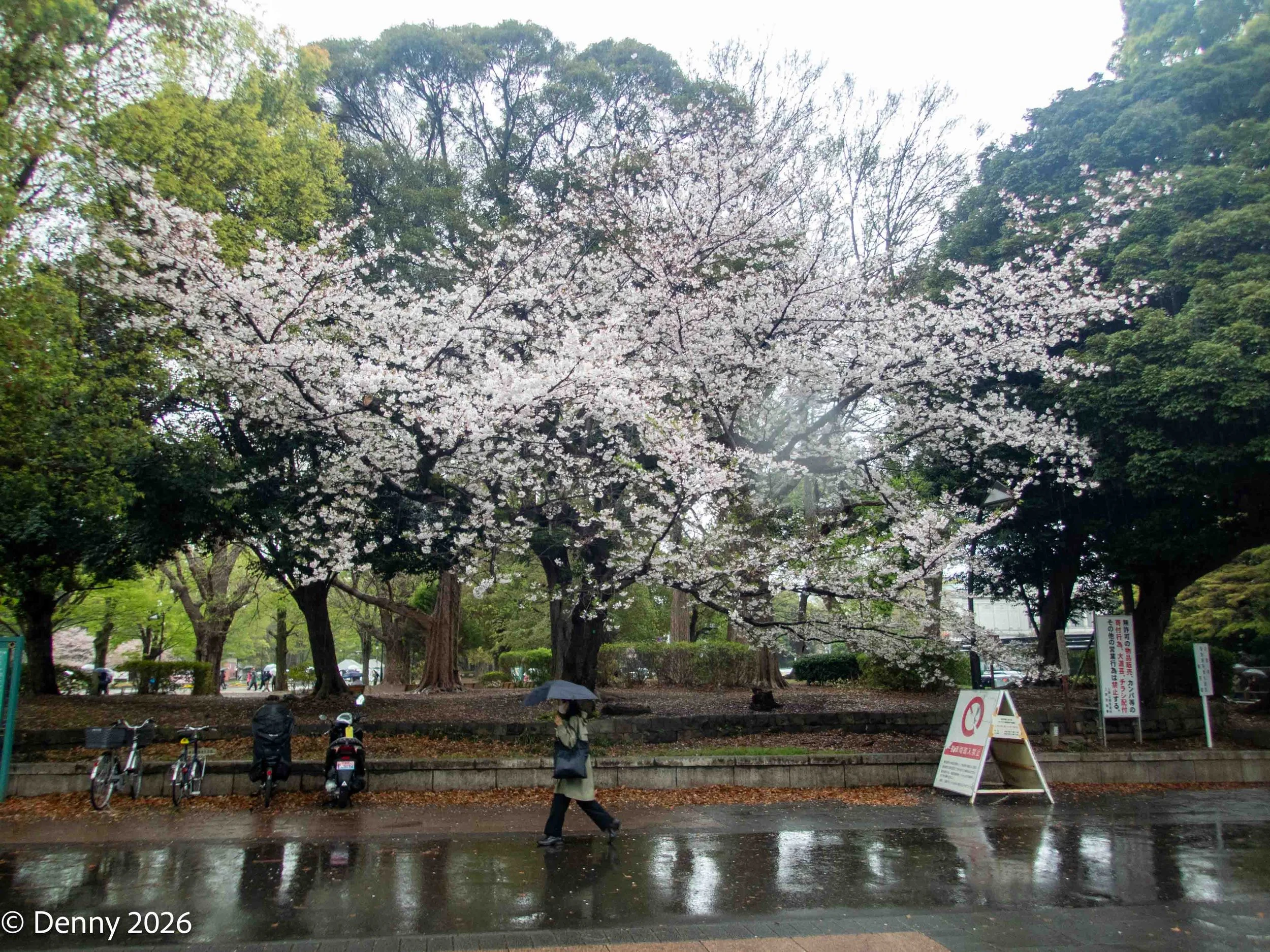
Cherry trees outside National Museum of Nature and Science

Jak walking back to the station from National Museum of Nature and Science
At Uemo we were soon back on the Yamanote Line and after twelve stops we arrived back at Shinjuku Station. We exited by a door that our Apple Maps didn’t locate for quite sometime but eventually we worked things out and navigated our way back at the Gracery Hotel.
We then enjoyed a G&T while resting and summarising our day’s visit.