
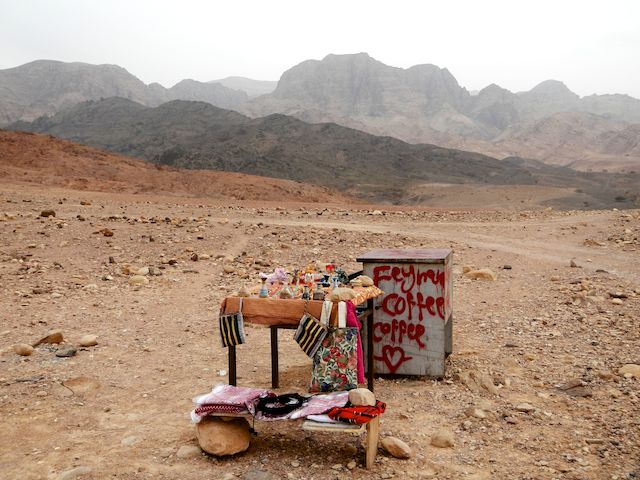

School near Feynan Ecolodge
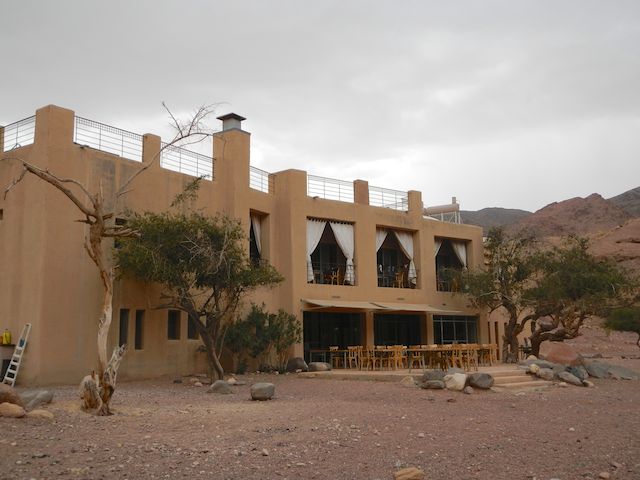
Feynan Ecolodge

Lunch at Feynan Ecolodge

Early morning view from our balcony, Feynan Ecolodge

Bedouin camp near Feynan Ecolodge
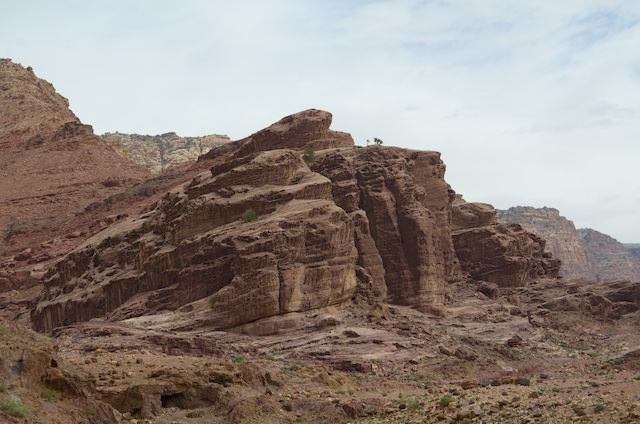
Mountains near Feynan Ecolodge
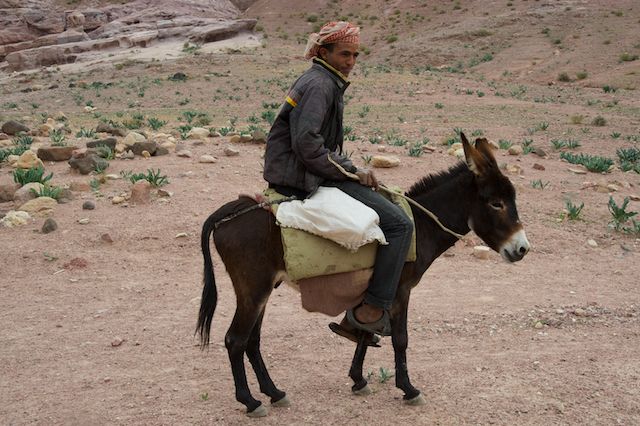
Bedouin man riding donkey, near Feynan Ecolodge
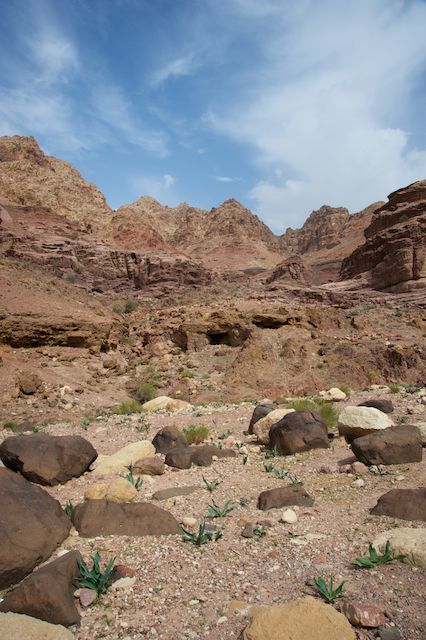
Mountains near Feynan Ecolodge
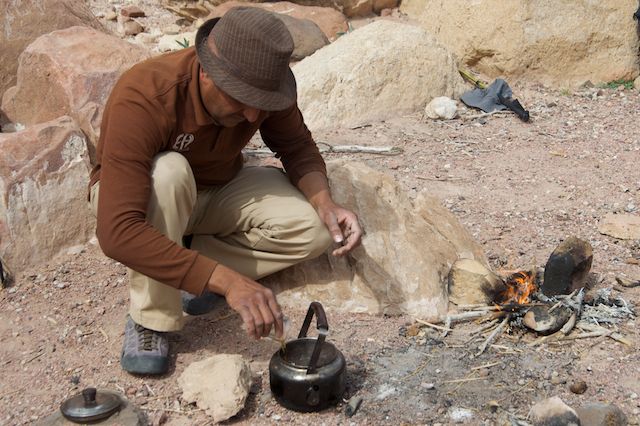
Our guide Ahmed making bedouin tear near Feynan Ecolodge

Group photo near Feynan Ecolodge

Oleander flower near Feynan Ecolodge
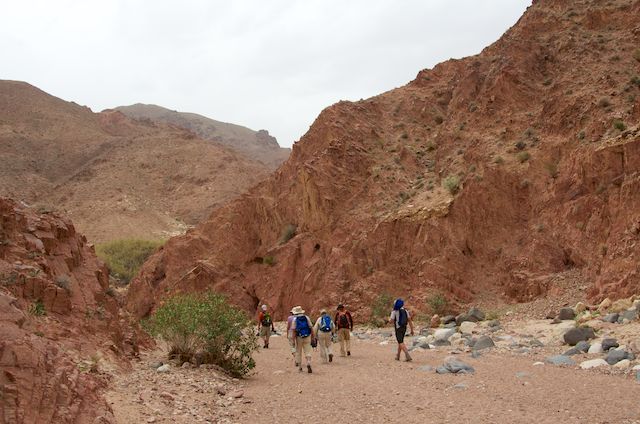
Trekking near Feynan Ecolodge
The Feynan Eco-Lodge we’re staying in has accommodation for only about 20 and last night the place was full as the resort is the focal point for trekking in the Dana Biosphere Reserve.
After breakfast we were joined by Ahmed, a local guide and we commenced a walk upwards and south eastwards towards Dana although our intention was to go only about one third of the way. The track followed the dry river bed in the bottom of this broad valley (wadi) with sheer mountain ridges on either side.
The geology is fascinating with huge red granite outcrops protruding into the river course forcing the river to meander about.
On high banks above the river there were several Bedouin Camps with their traditional long black tents and associated animal enclosures. These are their winter ‘lowland’ camps and when the heat of summer comes they will move to higher regions in the mountains where there is more feed for their herds of goats.
Along the path one occasionally comes to a small spring where water slowly exudes from between the rocks and the locals have tapped this valuable resource with polythene pipes directing water to the Bedouin camps. These oases are the only green areas and it seems incredible to us that goats could find sufficient greenery to survive in this arid and rocky landscape. The only plants seen included bamboo, poison onions, thorny acacias, poison apples, cedars and oleanders most of which is inedible. It’s a point worth considering that the barren surroundings and paucity of plant life is in fact due to the extraordinary number of goats in the area. Herds of one hundred goats per family appears to be an average.
A number of important small plants grow in gravelly places between the rocky crags and their various medicinal and antiseptic uses were described by Ahmed. He also found succulent leaves of a plant that when crushed produced a lathering soap-like foam which is used by Bedouins for hand washing.
Although this is supposedly a nature reserve the Bedouins still have entitlements to graze their goats and until further restrictions are imposed the area is fraught with this perennial problem of goats denuding the environment.
After about two hours of walking up the wadi we stopped and Ahmed lit a small fire and produced a billy and water from his pack together with cups, tea, sugar and Artemisia (a plant like camomile) that was to give nice herb flavour to the tea.
The brew was thoroughly enjoyable and the ceremony marked our turn around point as we then commenced back down the wadi to the Lodge, arriving after about four hours of easy strolling in this desert landscape.
In the later afternoon we were to do a ‘sunset walk’ but the increased cloud cover meant that it was more appropriately called a ‘dusk stroll’. We walked from the Lodge back along the road towards Finan a couple of kilometres and past the local elementary school which looked to be surprisingly modern and well kept. We then diverted up a steeper track to the top of a small rocky hill where a local had set up a coffee shop and souvenir stall (surprise, surprise!!). Our guide Mohammed then set about preparing a small camp fire and making his own hot brew of tea and herbs for us. We sat down and enjoyed our tea while Mohammed gave us a detailed talk on life as a Bedouin including such intimate details as sexual expectations of multiple wives and how toileting is performed in the open in a rocky environment.
Darkness came quickly and we headed back to the Lodge for some pre-dinner drinks and then our evening meal which once again involved a very interesting and comprehensive range of local vegetarian foods.
Tomorrow we head for Petra which for many of us is the key reason we’ve come to Jordan; let’s hope we’re not disappointed! We’ll let you know soon.